DbcultAccessing Vault...
6.2/10
Senior Film Conservator
A definitive 6.2/10 rating for a film that redefined the boundaries of cult cinema. Taming the West remains a cornerstone of transgressive art.
The opening sequence of Taming the West feels like a visual haiku: a lone cattleman, his face streaked with dust, is cornered by a slick‑talking Eastern crook whose ambition outweighs his moral compass. Lillian Hackett’s heroine, a sharp‑tongued heroine with a penchant for improvisation, intervenes with a blend of daring and wit that instantly establishes her as the film’s moral anchor. Harry McCoy’s counterpart, a lanky figure whose clumsy bravado masks a surprisingly strategic mind, provides the perfect foil, his physical comedy echoing the traditions of early silent slapstick while hinting at a deeper, almost subversive commentary on the myth of the rugged individualist.
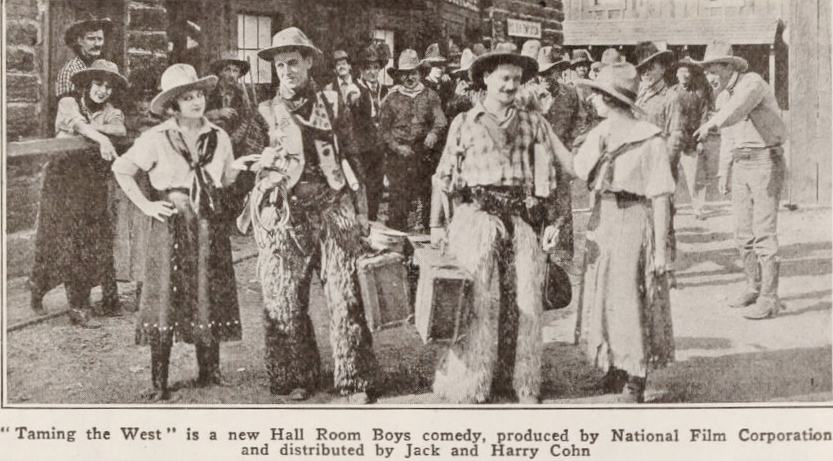
Once the duo crosses the threshold into the western hinterland, they encounter a troupe of cow‑punchers whose hospitality is as erratic as the desert wind. Sidney Smith’s portrayal of the lead rancher exudes a charismatic menace, his eyes glittering with the promise of both camaraderie and conflict. The cow‑punchers’ antics—ranging from a chaotic cattle‑rounding contest that devolves into a slap‑slap‑slap of hooves and hats, to an impromptu dance on a creaking saloon floor—serve as a vivid tableau of frontier life’s paradoxical blend of hard labor and hedonistic release. The film’s cinematography captures these moments with a kinetic energy that feels almost modern, each frame composed to emphasize the contrast between the vast, unforgiving landscape and the intimate, often absurd, human interactions that play out within it.
The narrative reaches its most audacious peak when the protagonists, armed only with a set of polished golf clubs—an anachronistic prop that underscores the film’s self‑aware humor—accidentally thwart a feared bandit. The bandit, portrayed by Hugh Fay with a swagger that borders on caricature, is reduced to a bewildered target as wayward golf balls pepper his hat and shoulders. This scene, while undeniably comedic, operates on a deeper level: it juxtaposes the genteel pastime of golf—a symbol of Eastern refinement—with the raw, unregulated violence of the frontier. The resulting tableau is a satire of cultural clash, suggesting that even the most genteel tools can become weapons in a lawless environment. The audience is invited to laugh, but also to contemplate the thin veneer separating civilization from chaos.
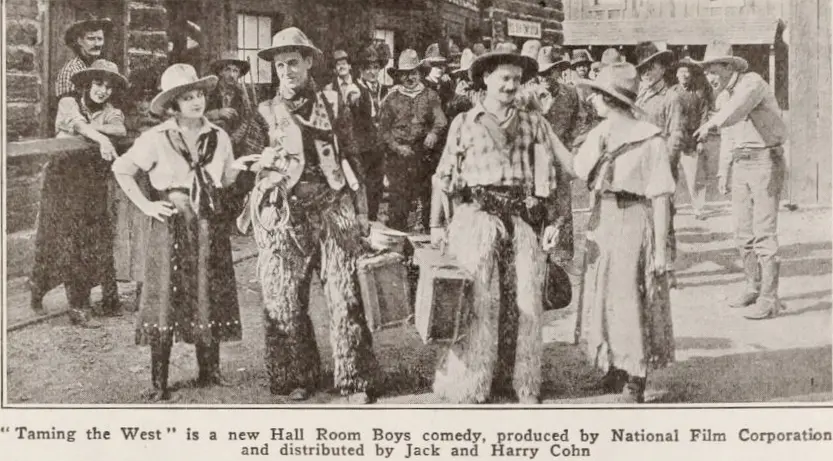
Following the accidental capture, the townsfolk shower the duo with a sizable reward, a moment that briefly lifts the narrative into a celebration of heroism. Yet, the film swiftly pivots, thrusting the characters into a high‑stakes poker game that becomes a microcosm of the broader economic gamble of the West. Edward Flanagan’s seasoned gambler, with a face etched by countless losses, mentors the pair through a series of bluff‑laden hands that mirror the earlier cattle‑rounding chaos—each card a metaphorical cattle, each bet a stake in the unforgiving terrain. The climax of this gambling subplot arrives when a sudden, unseen authority—suggestive of the encroaching reach of Eastern law—forces the protagonists to abandon their winnings and flee, stripped of clothing but not of spirit. The visual of them sprinting across a sun‑baked plain, their garments trailing behind like discarded skins, is both comical and poignant, underscoring the perpetual tension between freedom and responsibility.
Hackett’s performance is a masterclass in silent-era expressiveness. Her eyes, darting between mischief and resolve, convey a spectrum of emotion without a single spoken word. McCoy, meanwhile, balances physical comedy with moments of surprising introspection; his lanky silhouette against the desert horizon becomes a visual metaphor for the outsider navigating an alien culture. Sidney Smith and Hugh Fay provide the necessary counterweights, their characters oscillating between antagonism and reluctant admiration. Neely Edwards, though occupying a smaller role, delivers a scene-stealing cameo as a cantankerous saloon owner whose rapid-fire gestures echo the frenetic energy of the film’s editing.
When placed alongside contemporaneous works such as True Heart Susie or the later Pardners, Taming the West distinguishes itself through its unabashed embrace of absurdity. While True Heart Susie leans toward sentimental melodrama, and Pardners offers a more polished, dialogue‑driven comedy, Taming the West revels in the physicality of its humor, employing slapstick as a vehicle for social critique. The film’s pacing, punctuated by rapid cuts and exaggerated reactions, anticipates the kinetic editing style later popularized by the Marx Brothers, yet retains a uniquely Western flavor.
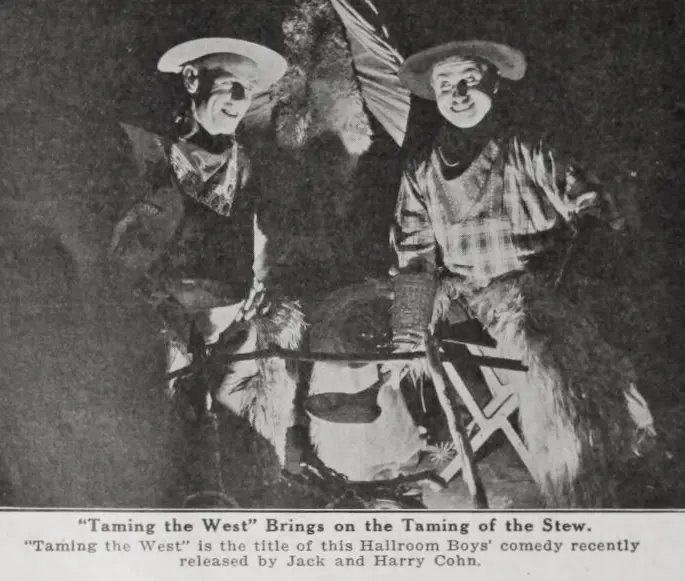
The cinematography, though constrained by the technological limitations of the silent era, demonstrates a keen awareness of contrast. The stark black‑and‑white frames are occasionally tinged with a sepia hue during flashback sequences, subtly guiding the audience’s emotional response. The film’s set design—ranging from the weather‑worn wooden facades of the saloon to the sprawling, sun‑bleached plains—creates a palpable sense of place. The use of props, particularly the incongruous golf clubs, serves as a visual leitmotif, reinforcing the thematic clash between Eastern propriety and Western ruggedness.
Beyond its comedic veneer, Taming the West interrogates the myth of manifest destiny. The protagonists’ journey—from saviors to outcasts—mirrors the larger narrative of American expansion, where the promise of opportunity is frequently undercut by unforeseen hardship. Their reliance on ingenuity over brute force suggests an early cinematic endorsement of intellect as a survival tool, a notion that resonates with contemporary audiences navigating an increasingly complex, technologically mediated world. The film’s conclusion, wherein the heroes retreat eastward with nothing but their wits, can be read as a subtle admonition against the hubris of unchecked ambition.
Although Taming the West did not achieve the commercial heights of later western comedies, its influence can be traced through the evolution of genre hybridity. The film’s blend of slapstick, satire, and frontier drama prefigures the narrative strategies employed by later auteurs such as Buster Keaton in The Master Hand and the comedic timing evident in Chumps and Cops. Moreover, its daring use of anachronistic props anticipates the postmodern pastiche seen in modern westerns like Rider of the Law.
In sum, Taming the West is a rare artifact that captures the transitional moment when silent cinema began to experiment beyond pure visual storytelling, daring to embed cultural commentary within its comedic framework. Its performances remain vibrant, its visual gags retain their punch, and its underlying critique of frontier mythos offers fertile ground for scholarly exploration. For aficionados of early westerns, silent comedy, or anyone interested in the interplay between humor and social critique, this film stands as a testament to the inventive spirit that defined the era.
IMDb —
1915
Community
Log in to comment.