DbcultAccessing Vault...
3.4/10
Senior Film Conservator
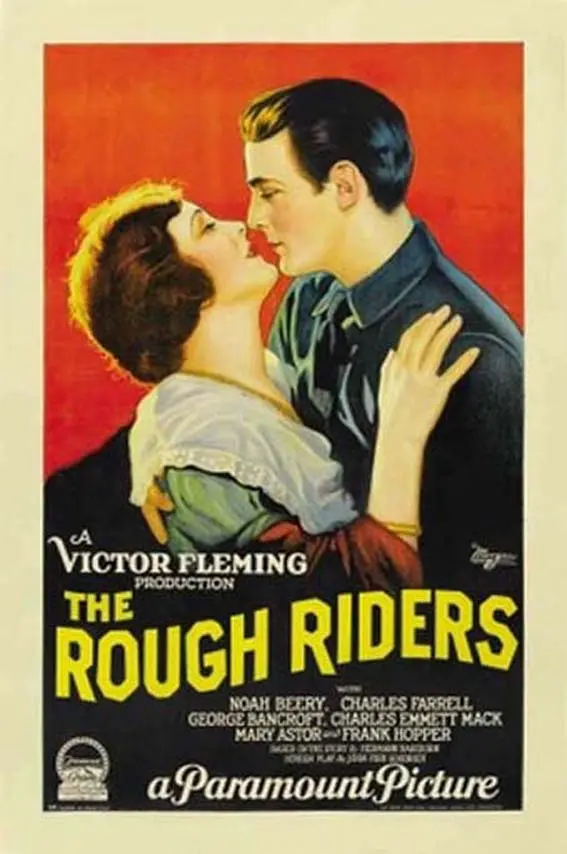
A definitive 3.4/10 rating for a film that redefined the boundaries of cult cinema. The Rough Riders remains a cornerstone of transgressive art.
Is 'The Rough Riders' a cinematic journey worth embarking on today? Short answer: yes, but with significant caveats that demand a specific kind of viewer. This film, a product of its time, offers a fascinating glimpse into early Hollywood's attempt to capture a pivotal moment in American history, yet it struggles under the weight of its own ambition and the limitations of its era.
This historical epic is best suited for aficionados of early cinema, military history buffs, and those with a keen interest in the portrayal of national identity through an early 20th-century lens. It is decidedly not for audiences seeking modern pacing, nuanced character development, or an uncritical historical account. If you demand crisp dialogue, complex plotting, or a revisionist perspective on war, you will likely find it wanting.
This film works because it captures a raw, untamed energy inherent in its subject matter, showcasing the sheer spectacle of massed cavalry and infantry movements with an earnestness rarely seen today. It fails because its narrative is often simplistic, its characterizations broad, and its historical context presented through a lens that feels almost quaint by contemporary standards. You should watch it if you appreciate the foundational artistry of silent filmmaking and are willing to engage with a piece of history, both cinematic and national, on its own terms.
Directed by Victor Fleming, known later for his work on epics like 'Gone with the Wind' and 'The Wizard of Oz', 'The Rough Riders' showcases an early, nascent talent for scale. The battle sequences, particularly the charge up San Juan Hill, are surprisingly ambitious for a 1927 production. The sheer number of extras, horses, and the logistical challenges involved are commendable. Fleming leverages wide shots to convey the chaos and magnitude of combat, a technique that, while rudimentary by today's standards, was groundbreaking for its time.
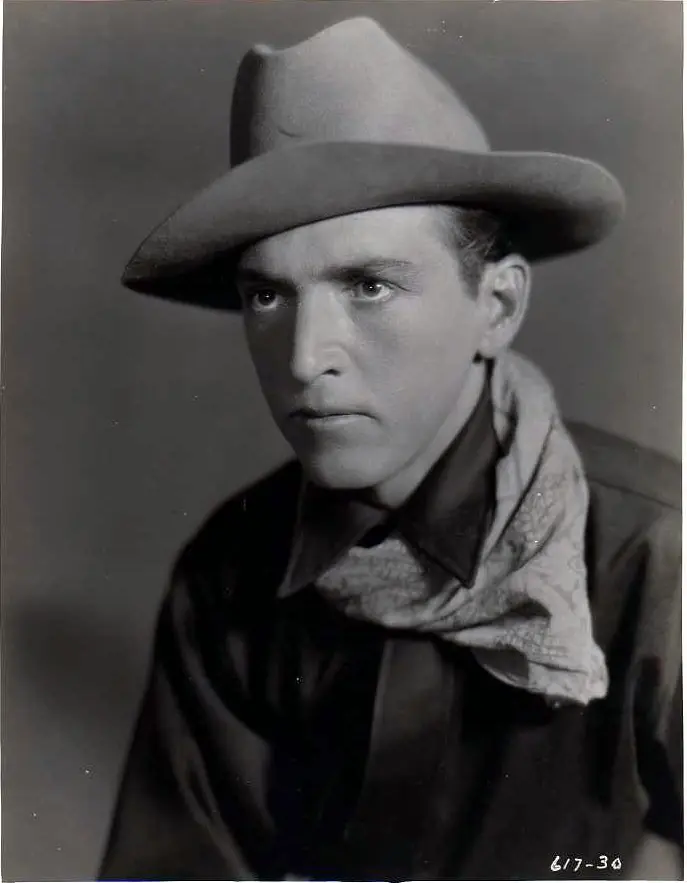
There's a raw, almost documentary-like feel to some of these scenes, a testament to the era's practical effects. When the cavalry thunders across the screen, kicking up dust, you sense the physical effort and danger involved. This isn't CGI; it's tangible, sweat-soaked reality. The cinematography, while limited by black and white and a static camera for much of the film, still manages to evoke a sense of grandeur. The sun-drenched Cuban landscapes, though often just backdrops, contribute to the oppressive atmosphere of the campaign.
However, the limitations are equally apparent. The sense of individual peril is often lost in the wide shots, and the editing, while effective for its time, can feel disjointed to modern eyes. There’s a noticeable lack of close-ups during key moments of action, which prevents a deeper emotional connection to the soldiers’ plight. The film's ambition often outstrips its technical capacity, resulting in moments that are more impressive in concept than in execution. It’s a bold attempt, no doubt, but one constrained by its technological infancy.
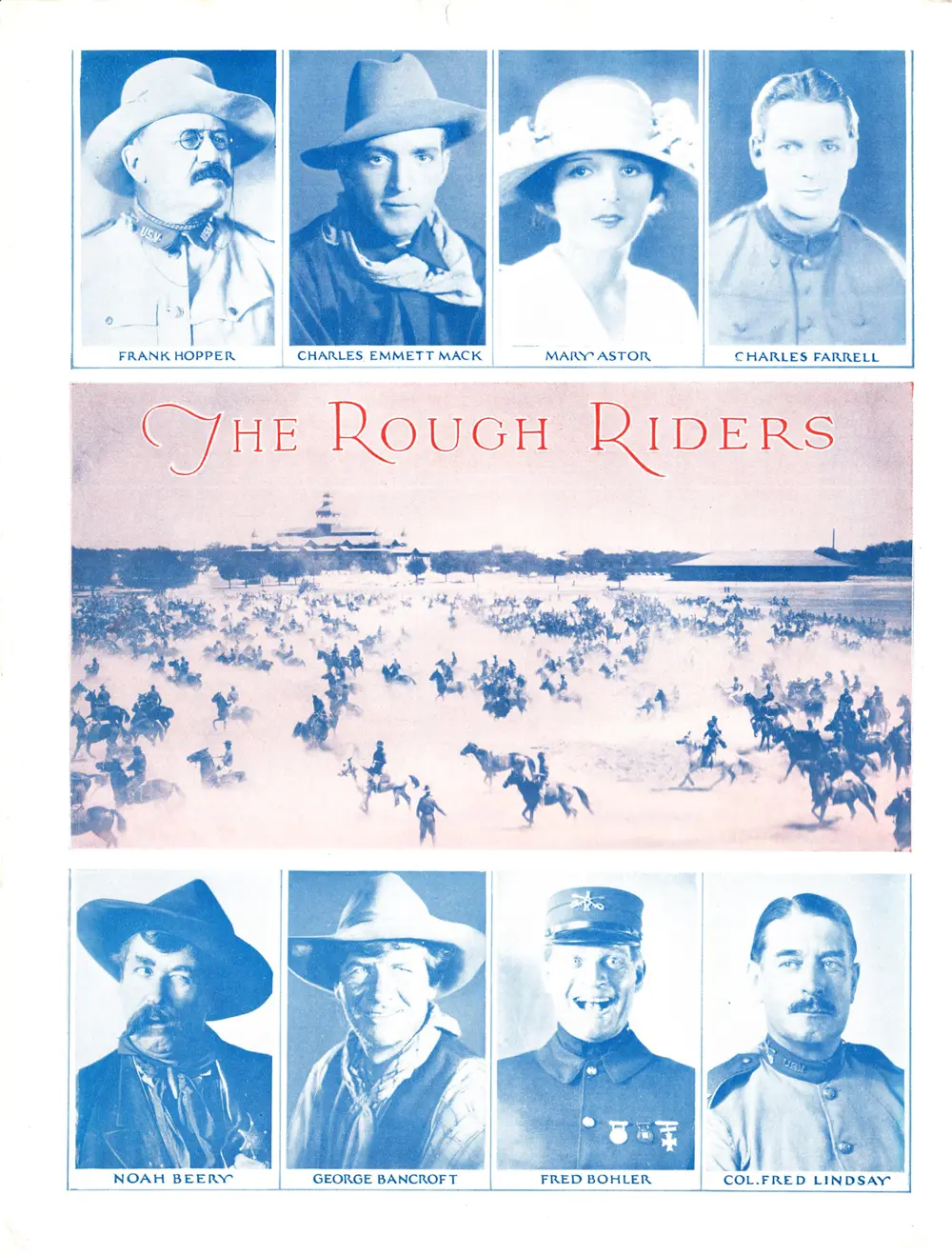
The cast, featuring names like Mark Hamilton as Theodore Roosevelt, Mary Astor, and Noah Beery, delivers performances typical of the silent era: grand, often exaggerated, and reliant on physical presence and facial expressions to convey emotion. Mark Hamilton's Roosevelt is a force of nature, capturing the future president's famous vigor and enthusiasm with a commendable, if sometimes over-the-top, energy. He embodies the 'charge first, ask questions later' mentality that defined Roosevelt's public persona.
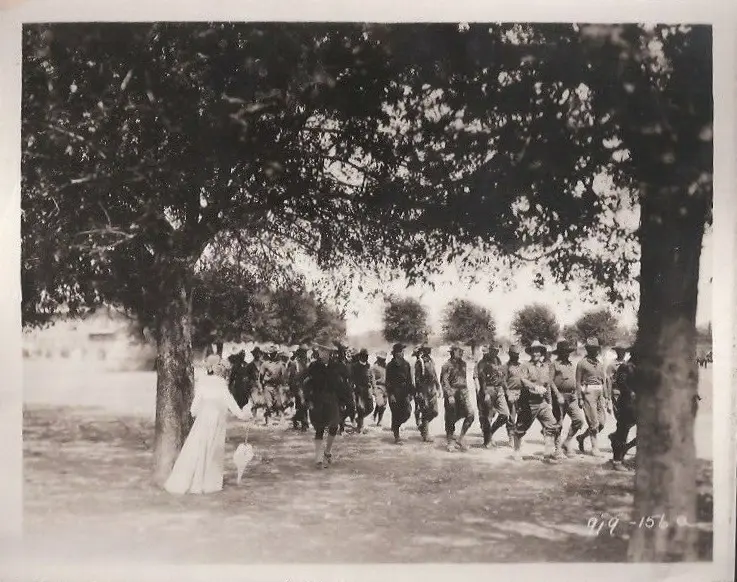
However, the film struggles with truly developing its ensemble. Characters beyond Roosevelt often serve as archetypes rather than fully fleshed-out individuals. We see the brave cowboy, the loyal lieutenant, the concerned love interest, but rarely do we delve into their motivations or inner lives. Mary Astor, a future star, is relegated to a somewhat two-dimensional romantic interest, a common fate for female characters in films of this period. Her screen presence is undeniable, but the script gives her little to do beyond reacting to the men's heroics.
Noah Beery and George Bancroft, both stalwarts of early cinema, bring a certain gravitas to their supporting roles, even if their characters are thinly sketched. Beery, in particular, has a menacing presence that adds a touch of grit to the proceedings. The film's focus is clearly on the collective spirit of the Rough Riders and the larger-than-life figure of Roosevelt, often at the expense of individual character arcs. It is a film about a unit, not necessarily about the individuals within it, a distinction that shapes its dramatic impact.
The screenplay, credited to a team including Robert N. Lee and Keene Thompson, attempts to weave together the disparate elements of recruitment, training, and combat into a cohesive whole. The pacing, by modern standards, can feel languid in its initial setup. The film takes its time to establish Roosevelt's drive and the diverse backgrounds of his volunteers, which, while historically informative, can test the patience of contemporary viewers accustomed to more rapid narrative progression.
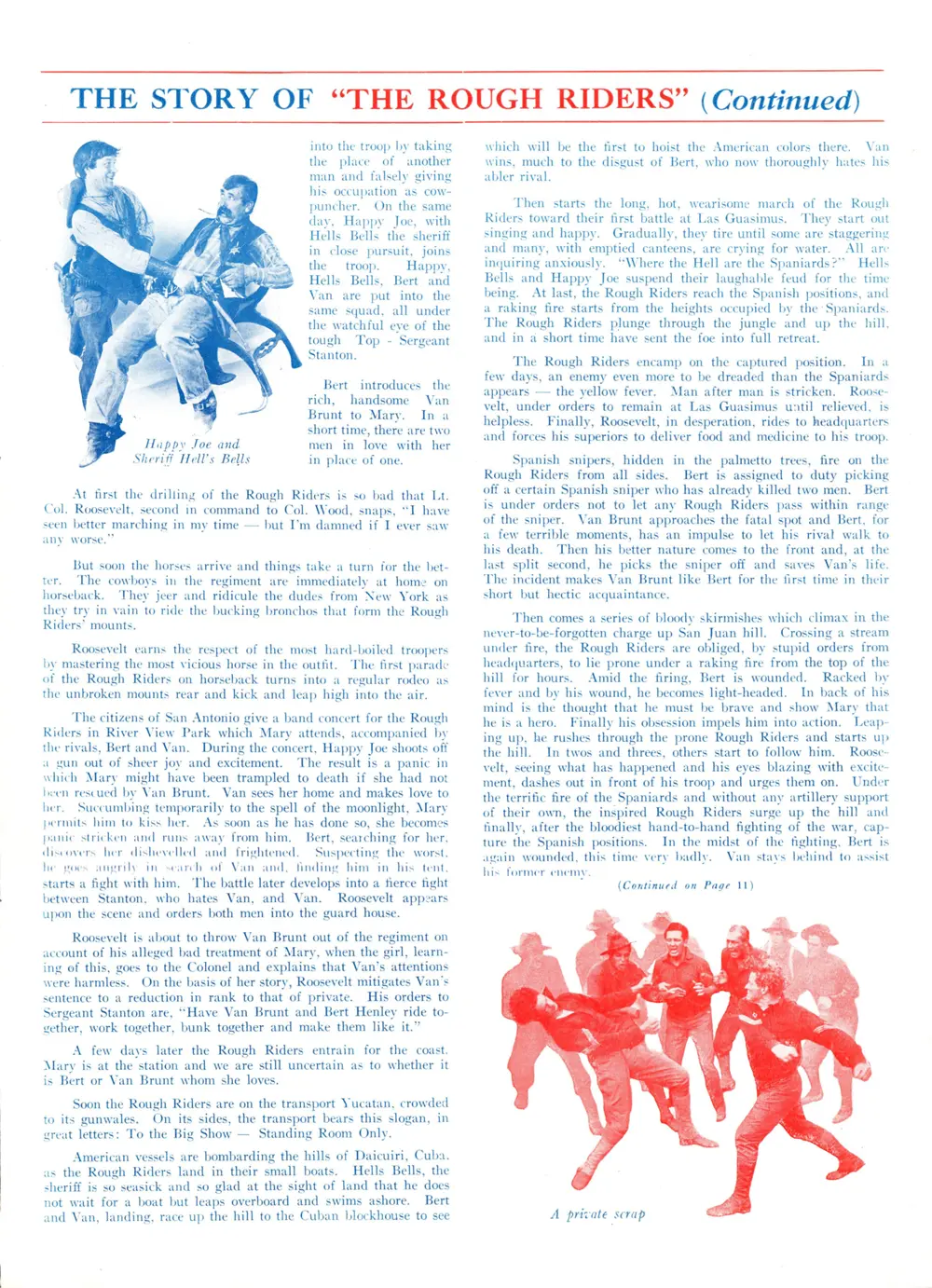
Once the unit reaches Cuba, the film shifts gears, accelerating into a series of action sequences. This sudden change in tempo can be jarring. The narrative prioritizes spectacle over intricate plotting, often presenting events as a series of heroic vignettes rather than a tightly integrated story. Dialogue, conveyed through intertitles, is functional, serving to advance the plot or deliver patriotic pronouncements, but rarely offers genuine insight into character or conflict.
The film's understanding of heroism is straightforward and unexamined. It portrays war as an opportunity for glory and national pride, a perspective that was common in its time but feels simplistic today. There’s little room for the psychological toll of combat or the moral ambiguities of war, elements that would become central to later war films. The writing is direct. It’s effective for what it intends to be: a celebration.
The tone of 'The Rough Riders' is unequivocally patriotic and adventurous, bordering on jingoistic. It’s a film that unreservedly champions American exceptionalism and the valor of its soldiers. The Spanish-American War is presented as a righteous cause, and the Rough Riders as the embodiment of American courage and ingenuity. This celebratory tone is consistent throughout, making no apologies for its nationalistic fervor.
The themes revolve around leadership, camaraderie, and the forging of national identity through shared sacrifice. Roosevelt is depicted as the quintessential leader, inspiring loyalty and fearlessness in his men. The film emphasizes the melting pot aspect of the unit, bringing together men from various social strata and regions to fight for a common cause. This idealization of unity in conflict is a powerful, if somewhat romanticized, message.
One surprising observation is how the film, despite its bombast, manages to convey a genuine sense of the logistical nightmare of war. The scenes of troops struggling with supplies and the harsh Cuban environment, while brief, offer a grounded counterpoint to the more idealized combat sequences. It hints at the messy reality behind the heroic narrative, an unconventional touch for an early war film focused on glory. The sheer scale of the undertaking is what truly impresses.
For those interested in early American cinema and historical epics, 'The Rough Riders' is absolutely worth your time. It offers a unique window into how a pivotal historical event was interpreted and presented to audiences nearly a century ago. The film's technical achievements, while dated, are impressive for its period.
However, if you are looking for a modern, nuanced war drama, this film will likely disappoint. Its pacing is slow, its characters are largely archetypal, and its historical perspective is uncritical. It is a document of its time, not a timeless narrative in the way some other silent films have proven to be. Approach it with an open mind and an appreciation for its historical context.
'The Rough Riders' is a vital piece of cinematic history, a testament to the nascent power of Hollywood to mythologize national figures and events. It works. But it’s flawed. Its ambition is undeniable, particularly in its large-scale battle sequences that would influence countless films to follow, from The Fight to later, more sophisticated war dramas. Mark Hamilton’s portrayal of Teddy Roosevelt is a highlight, capturing the essence of the man that would captivate a nation.
However, its adherence to the conventions of its era – broad characterizations, a celebratory tone devoid of introspection, and a pacing that meanders before suddenly rushing – makes it a challenging watch for modern audiences unaccustomed to silent film aesthetics. It’s a film that requires patience and a historical imagination. It’s not an accessible film for casual viewing. It is a historical document, both of the war it depicts and the industry that created it.
Ultimately, 'The Rough Riders' is a film that deserves to be seen, not necessarily for its timeless entertainment value, but for its historical significance and its brave, if imperfect, attempt to capture a defining moment in American history on the grandest scale possible for its time. It serves as a stark reminder of how far cinema has come, and how some stories, even when told through an antiquated lens, still resonate with a certain kind of power.
IMDb 5.2
1933
Community
Log in to comment.