DbcultAccessing Vault...
6.1/10
Senior Film Conservator
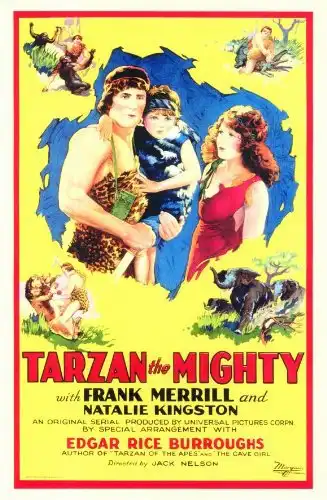
A definitive 6.1/10 rating for a film that redefined the boundaries of cult cinema. Tarzan the Mighty remains a cornerstone of transgressive art.
If you are looking for a definitive, high-drama adaptation of Edgar Rice Burroughs’ work, Tarzan the Mighty is probably not the first place you should look. However, for those interested in the evolution of the action hero, this 1928 silent serial is a fascinating artifact. It is worth watching today primarily for Frank Merrill’s physicality. Unlike later iterations of the character that leaned into a more polished, Hollywood-hunk aesthetic, Merrill was a champion gymnast, and it shows in every frame. He doesn't just move through the trees; he attacks them with a technical precision that feels more like a circus act than a modern stunt sequence.
Who is this for? It’s for the silent film completionist and the pulp history buff. If you enjoy the gritty, somewhat haphazard energy of 1920s adventure films like The Western Wallop, you’ll find something to appreciate here. If you can’t stand the repetitive 'capture-and-escape' rhythm of the old serial format, this will likely be a chore to sit through.
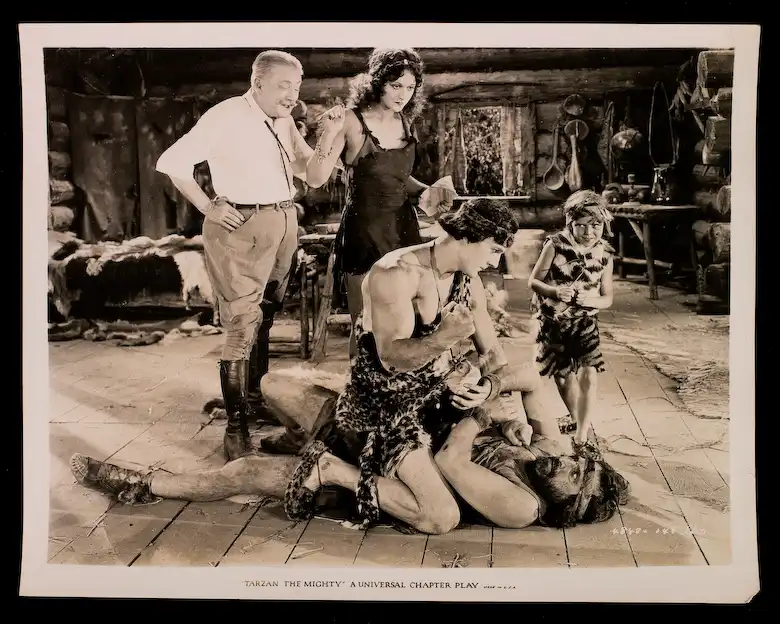
One of the most concrete observations you’ll make while watching Merrill is how he handles the vine-swinging. Before this era, Tarzan was often depicted as a somewhat lumbering figure. Merrill brought an athletic grace that changed the template. There is a specific moment early on where he rescues Bobby (Bobby Nelson) from a rocky outcrop; the way he tenses his shoulders and utilizes a hand-over-hand climbing technique looks genuinely exhausting. It’s not the effortless, wire-assisted gliding we see in modern cinema. You can see the strain in his forearms and the slight wobble in the rope. It feels dangerous because, at the time, it largely was.
Natalie Kingston plays Mary Trevor, and while the script gives her the standard 'damsel' duties, she has a surprisingly sturdy screen presence. She doesn't just faint; she actively tries to navigate the undergrowth in costumes that look entirely impractical for the African coast. The chemistry between her and Merrill is functional, though it often takes a backseat to the arrival of the villains.
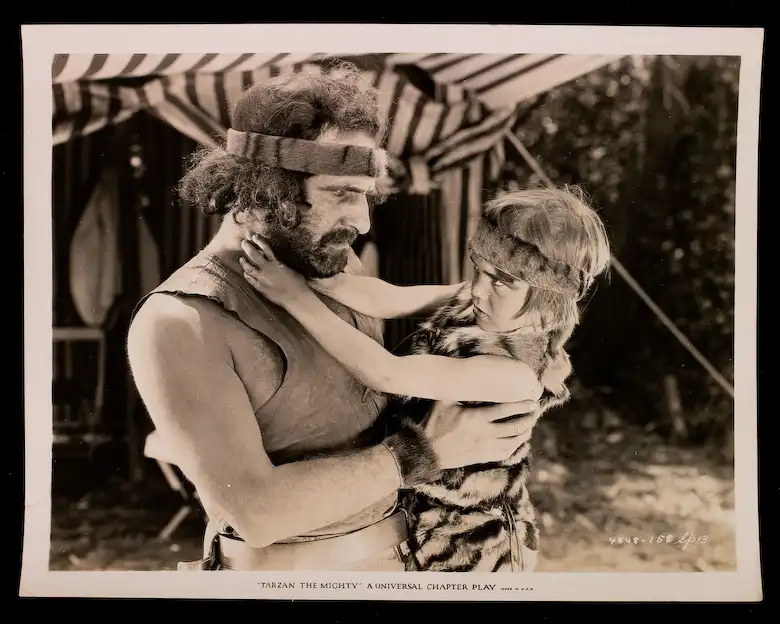
Al Ferguson plays Black John, and he leans heavily into the sneering, silent-movie villain tropes. His performance is all eyebrows and aggressive posturing. The plot involving the Greystoke inheritance feels a bit tacked on—a way to move the action from the jungle to the idea of 'civilization'—but it provides the necessary friction. The scenes where Black John attempts to masquerade as the heir are almost comical in their transparency, yet the film plays them with a straight face.
There is a specific scene in a makeshift camp where Ferguson’s character tries to intimidate Mary while Tarzan watches from the brush. The editing here is surprisingly tight for 1928, cutting between Tarzan’s narrowing eyes and the pirate’s heavy-handed gestures. It builds a genuine sense of tension that many other serials of the era, like The Grip of Evil, sometimes lacked due to flatter staging.
As with many serials, the pacing is the biggest hurdle. Tarzan the Mighty was originally fifteen episodes, and when viewed as a feature-length experience, the repetition becomes glaring. How many times can Tarzan be momentarily distracted while a villain drags Mary toward a cave? The middle chapters drag significantly, with several overlong reaction shots of Jackie the Lion. While Jackie is a magnificent animal, the film leans on him whenever the plot hits a dead end, using cutaways to the lion’s 'growling' face to simulate a danger that isn't always present on screen.
Visually, the film is a mix of impressive location work and very obvious backlot sets. You’ll notice the transition often: one shot features a genuine, sun-drenched rocky terrain, and the next cut shows Tarzan swinging against a backdrop of suspiciously static tropical leaves that look like they were plucked from a hotel lobby. This tonal inconsistency was common for the time, but it’s particularly noticeable here because Merrill’s movements are so grounded and real.
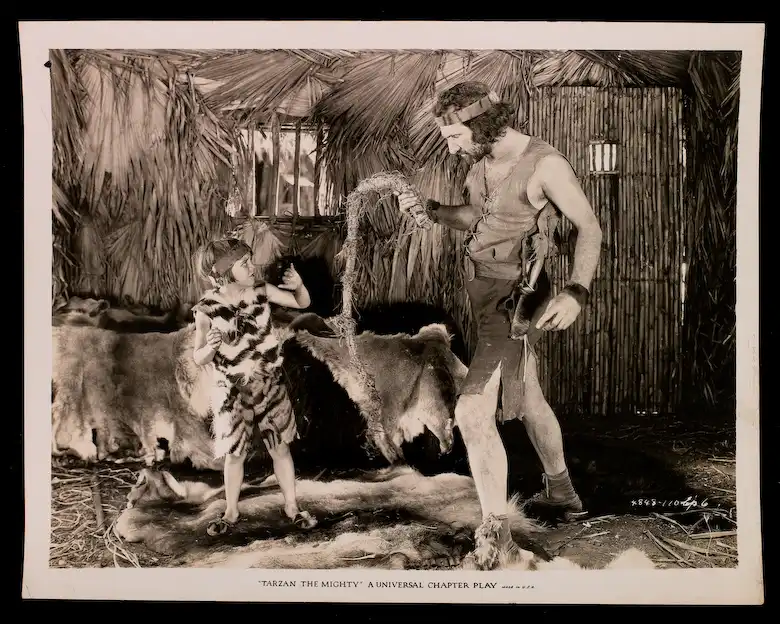
One detail that only someone who has sat through the surviving footage would notice is the strange costume choices for the 'Lord' and his expedition. They arrive in the jungle looking as though they just stepped off a yacht in the Mediterranean, with crisp whites and polished boots that stay remarkably clean despite the supposed hardships of the trek. It creates a visual disconnect that makes Tarzan look even more feral by comparison.
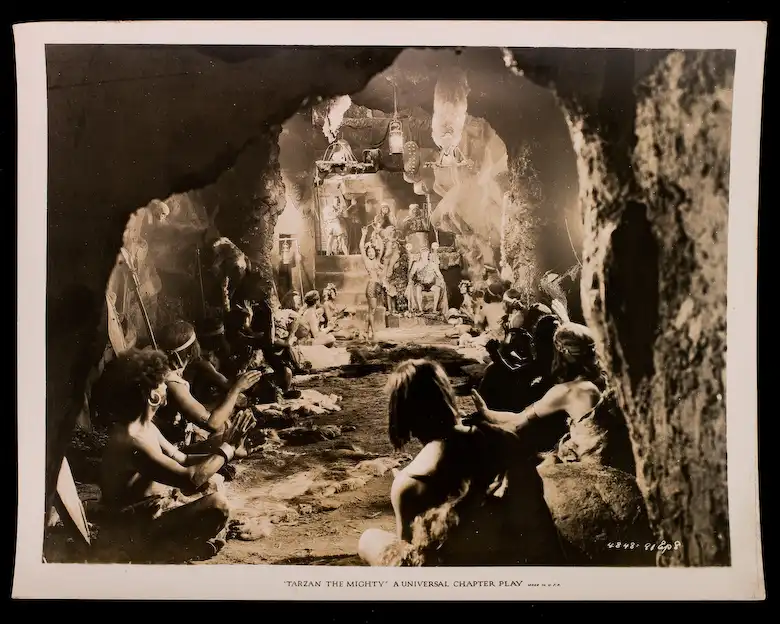
The lighting in the cave sequences is also worth a mention. It’s harsh and directional, likely due to the limitations of the portable lighting rigs of the late 20s. It gives the villain’s lair a high-contrast, almost expressionistic look that feels out of place with the flat, bright exterior shots. It’s an accidental bit of atmosphere that actually works in the film’s favor, making the pirate’s hideout feel genuinely claustrophobic.
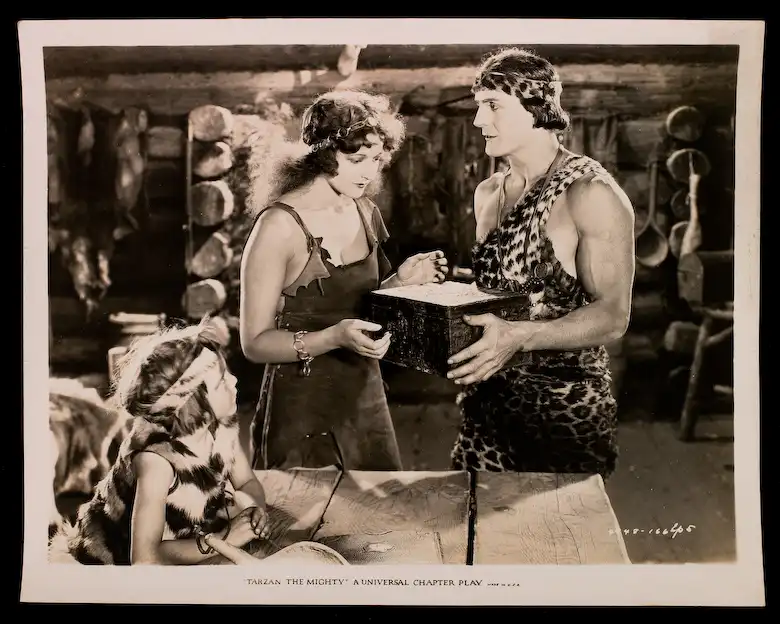
Tarzan the Mighty isn't a masterpiece of narrative storytelling. The dialogue (via title cards) is functional but dry, lacking the wit found in contemporary comedies like The Nervous Wreck. However, as a showcase for Frank Merrill’s incredible physical feats, it remains a significant piece of action cinema history. He paved the way for every athletic Tarzan that followed, and his 'vine-swing' is the gold standard for the silent era.
If you can look past the repetitive pirate subplots and the occasional stiff performance from the supporting cast, there is a raw, muscular energy here that is missing from many modern, CGI-heavy adventures. It’s a document of a time when 'action' meant a man actually jumping from a twenty-foot ledge onto a poorly padded floor. Watch it for the stunts, stay for the lion, and feel free to fast-forward through the inheritance disputes.
"Merrill doesn't just play Tarzan; he performs him with the calculated intensity of an Olympic athlete, making the jungle feel like his personal gymnasium."
Is it a classic? Not quite. But it is a sturdy, entertaining example of how early Hollywood sold spectacle to an audience that was just beginning to discover what a 'superhero' could look like on screen.
IMDb —
1922
Community
Log in to comment.