DbcultAccessing Vault...
6.4/10
Senior Film Conservator
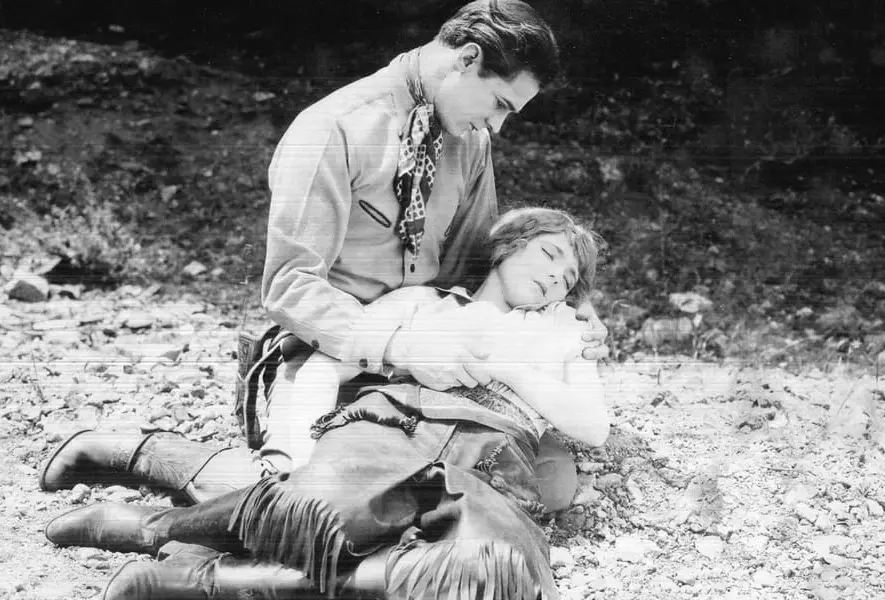
A definitive 6.4/10 rating for a film that redefined the boundaries of cult cinema. Tearin' Loose remains a cornerstone of transgressive art.
In the annals of early cinematic Westerns, where narratives often painted with broad strokes of heroism and villainy, Tearin' Loose (1927) emerges not merely as a relic of a bygone era, but as a surprisingly intricate tapestry woven with threads of deception, mistaken identity, and the relentless pursuit of justice. Directed with a keen eye for dramatic tension by Richard Thorpe, and penned by the collaborative efforts of Thorpe and Sergey Sergeyeff, this silent film offers more than just galloping horses and dusty landscapes; it delves into the very essence of character, challenging perceptions and ultimately affirming the triumph of truth. It's a testament to the power of storytelling that even without spoken dialogue, the emotional currents and moral quandaries of its protagonists resonate with a profound clarity, drawing the audience into a world where a man's word, or the lack thereof, can seal his fate. This is not just a historical curiosity; it is a vibrant narrative, alive with the spirit of the untamed West and the timeless struggles of humanity.
The narrative commences with a premise steeped in both hope and vulnerability. Dad Burns, a patriarch of the sprawling Western plains, finds himself in the twilight of his years, burdened by the immense responsibility of his vast cattle ranch. In a gesture both practical and deeply personal, he reaches out to his nephew, Wally Blake, a man he has never met, extending an invitation to assume the mantle of management. This initial act, born of necessity and familial expectation, sets in motion a chain of events that will irrevocably alter the lives of all involved. Wally, embarking on this journey towards a newfound legacy, is tragically waylaid. Through a cruel twist of fate, he is ensnared in a web of false accusations, culminating in his unjust imprisonment. This unfortunate detour, a stark illustration of the precarious nature of justice in the frontier, leaves the path to the Burns ranch unguarded, an open invitation for opportunism to take root.
Enter Matt Harris, a character etched with the indelible ink of avarice and cunning. Discovering Dad Burns's heartfelt letter intended for Wally, Harris perceives not a plea for assistance, but a golden opportunity for illicit gain. With an audacious impersonation, he seizes the identity of Wally Blake, orchestrating a grand charade that sees him, accompanied by his sister Sally, arrive at the Burns ranch. Sally's presence adds another layer of complexity to Harris's scheme; is she a willing accomplice, or merely an unwitting participant swept up in her brother's Machiavellian machinations? Her subsequent actions and internal conflicts become central to the film's emotional core. Harris's smooth infiltration, a testament to his deceptive prowess, establishes him as the counterfeit heir, effectively usurping Wally's rightful place and setting the stage for a dramatic collision of true and false identities.
The true Wally Blake, having endured the indignity of false imprisonment, eventually finds his way to the ranch. His arrival, however, is not one of triumphant return, but of stark revelation. He discovers Harris in the act of robbing the family safe, a blatant betrayal of Dad Burns's trust and an undeniable confirmation of Harris's nefarious intentions. Yet, the impostor, with an almost diabolical quickness of wit, manages to twist the circumstances, implicating Wally in the very crime he sought to prevent. This turn of events showcases the chilling ease with which truth can be subverted and innocence condemned, especially when pitted against a manipulative mind. Wally's initial efforts to expose the deception are met with suspicion, his past incarceration now serving as convenient 'proof' of his supposed criminal tendencies.
The tension escalates further with a violent interlude involving Dad Burns himself. Attacked by a tramp named Jim, the wily old rancher, despite his age, defends himself with lethal efficacy, bringing an end to his assailant's life. In a cruel stroke of misfortune, this incident, too, is cunningly manipulated by Harris, who seizes the opportunity to further blacken Wally's name, pinning the blame for Jim's death on the innocent nephew. This relentless barrage of false accusations paints a grim picture of Wally's struggle, transforming him into a pariah in the very home he was meant to inherit. The film masterfully builds suspense, placing Wally in an increasingly desperate position, where his every action, however well-intentioned, is misinterpreted and used against him. The audience is left to ponder the fragility of reputation and the arduous journey required to reclaim one's good name in a world quick to judge.
The strength of Tearin' Loose lies not just in its intricate plot, but in the compelling portrayals of its characters, brought to life by a dedicated ensemble. Each actor, through nuanced gestures and expressions, conveys the depth of their respective roles, a crucial feat in the silent film era.
Frank Ellis, in the role of Wally Blake, delivers a performance that transcends the typical stoicism of the Western hero. His Wally is a man of quiet determination, initially bewildered by the injustices hurled his way, but progressively hardened by them. Ellis conveys Wally's inner turmoil and unwavering resolve through subtle shifts in his gaze and posture, embodying the archetypal wronged man who must fight not just for his freedom, but for his very identity. His journey from an eager heir to a hunted fugitive, and finally to a vindicated hero, is a central pillar of the film's emotional architecture.
Vester Pegg, as the nefarious Matt Harris, is the quintessential villain of the piece. Pegg's portrayal is a masterclass in silent film villainy, his expressions shifting from feigned sincerity to outright menace with chilling effectiveness. Harris is not merely a thief; he is a psychological manipulator, leveraging trust and circumstance to weave his web of lies. Pegg's performance ensures that Harris is a truly detestable antagonist, making his eventual downfall all the more satisfying for the audience. The meticulous detail in his portrayal of deceitful charm and underlying cruelty is a highlight, demonstrating the power of non-verbal communication in conveying complex character traits.
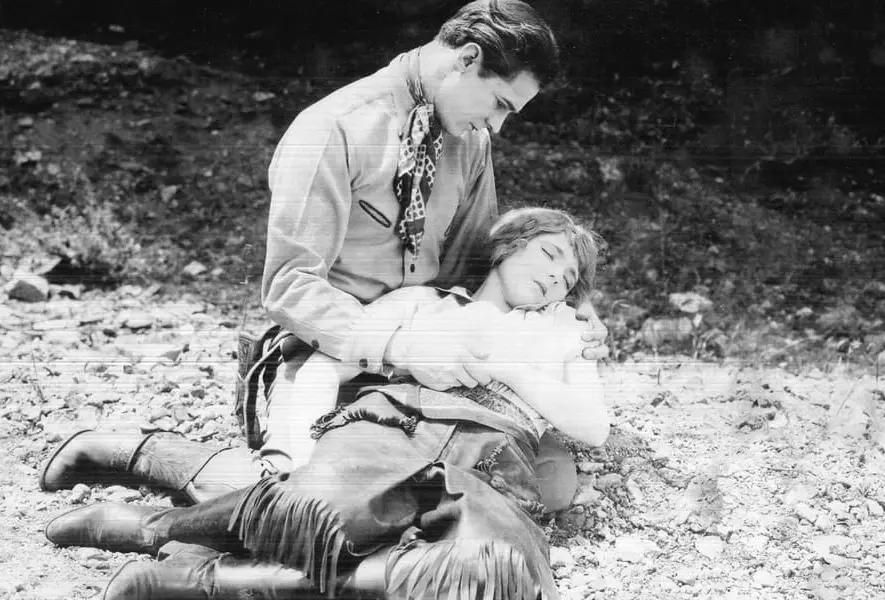
Polly Bailey's Sally is perhaps the most morally complex character. Initially complicit, albeit perhaps unknowingly, in her brother's scheme, Sally's journey is one of gradual awakening and internal conflict. Bailey beautifully captures the evolving realization of Sally's predicament, her growing empathy for Wally, and her eventual moral pivot. Her character serves as a vital bridge between the forces of good and evil, offering a glimmer of hope for redemption and illustrating the nuanced nature of human allegiance. The subtle shifts in her expressions, from initial naivete to dawning horror and finally to conviction, are crucial in selling her transformation to the audience.
Slim Whitaker, as Dad Burns, embodies the wisdom and vulnerability of an aging patriarch. His performance grounds the narrative, making his initial desire for a successor, his subsequent confusion, and his eventual realization of the truth deeply felt. Whitaker portrays a man of integrity, whose trust is betrayed, and whose resilience in the face of adversity, even in his later years, is admirable. The supporting cast, including stalwarts like Alfred Hewston, Jean Arthur, Hal Taliaferro, William Ryno, and Harry Belmour, each contribute to the rich tapestry of the film, adding depth and authenticity to the frontier setting, even in smaller, uncredited roles.
The climax of Tearin' Loose is a masterclass in silent film action and dramatic resolution. The confrontation between Wally and Harris, set against the breathtaking and perilous backdrop of a precipice, is both physically visceral and symbolically profound. It is a battle not merely for survival, but for the very soul of the Burns legacy and Wally's rightful identity. The raw, desperate struggle, devoid of dialogue but rich in visual intensity, culminates in Harris's spectacular and deserved plunge into the abyss below. This dramatic denouement serves as the ultimate act of frontier justice, a visceral cleansing of the deception that had plagued the ranch. The imagery of the impostor falling to his doom is a powerful visual metaphor for the collapse of his carefully constructed web of lies, leaving the stage clear for truth to finally emerge.
With Harris's demise, the clouds of suspicion finally dissipate. Wally is at last able to establish his true identity, a moment of profound vindication after enduring so much calumny. The revelation brings not only the heartfelt affection and respect of his uncle, Dad Burns, but also, in a poignant twist, the love of Sally. Her journey from unwitting accomplice to a woman who sees beyond her brother's villainy to Wally's inherent goodness adds a layer of romantic redemption to the narrative. It’s a resolution that speaks to the power of truth to not only right wrongs but also to forge unexpected bonds, leaving the audience with a sense of justice served and new beginnings blossoming on the rugged frontier.
At its core, Tearin' Loose is a profound exploration of identity. What defines a man? Is it his name, his lineage, or his actions? Wally's struggle to prove who he is, despite bearing the correct name, highlights the fragility of identity when confronted with malicious deception. The film also delves into the stark contrast between appearances and reality. Harris, with his smooth talk and cunning, initially embodies the false facade, while Wally, through his trials, represents the authentic, albeit tarnished, truth. This dichotomy is a powerful thematic current, reminding viewers that true character is revealed not in comfort, but in adversity.
Justice, in its most fundamental sense, is another dominant theme. The film meticulously builds the case for Wally's innocence, making his eventual vindication a deeply satisfying payoff. It speaks to a primal human desire for wrongs to be righted, for the wicked to be punished, and for the virtuous to be rewarded. The setting of the Wild West amplifies this theme, suggesting a time and place where justice was often swift and self-administered, far from the intricacies of legal systems. Loyalty, both familial and personal, is also under scrutiny. Dad Burns's initial trust in his supposed nephew, Sally's conflicted allegiance, and Wally's unwavering commitment to his uncle's legacy all contribute to a rich tapestry of human relationships tested under extreme pressure.
Richard Thorpe, a prolific director of the era, showcases his command of visual storytelling in Tearin' Loose. The pacing, crucial for silent cinema, is expertly managed, building tension gradually before erupting into thrilling action sequences. Thorpe understands how to use the vast Western landscapes not just as a backdrop, but as an integral element of the narrative, reflecting the characters' isolation, their struggles, and the grand scale of their conflict. The cinematography, though limited by the technology of the time, effectively captures the rugged beauty and inherent dangers of the frontier. Close-ups are used judiciously to convey emotion, while wider shots establish the grandeur and often overwhelming nature of the environment.
Sergey Sergeyeff's contribution to the screenplay, alongside Thorpe, ensures a tight and engaging plot. The narrative is economically structured, with each plot point serving to advance the central conflict and escalate the stakes for Wally. The writers skillfully navigate the complexities of mistaken identity and multiple accusations without allowing the plot to become convoluted. Instead, they maintain a clear focus on Wally's plight and Harris's villainy, making the audience's emotional investment in the outcome consistently high. The film's ability to communicate such a detailed and emotionally resonant story without dialogue is a testament to the clarity of its script and the directorial vision.
IMDb —
1925
Community
Log in to comment.