DbcultAccessing Vault...
Cult Review
Senior Film Conservator
The Canine Kineticism of 1923
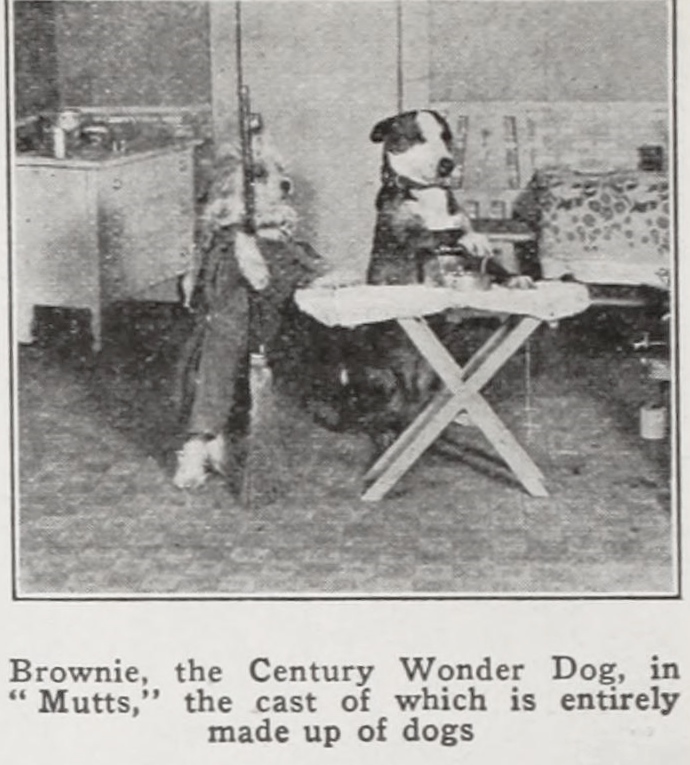
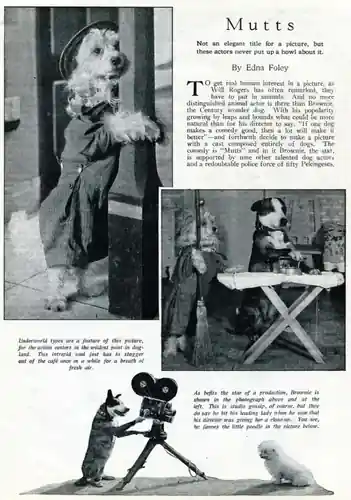
To approach Fred Hibbard’s Mutts (1923) is to step into a time capsule of pure, unadulterated slapstick geometry. While the early 1920s were often dominated by the grandiose historical epics like Defense of Sevastopol or the dense moral tapestries of The Golden Rosary, there existed a parallel universe of short-form comedy that prioritized the visceral over the cerebral. Mutts, starring the legendary Brownie the Dog, is a prime specimen of this tradition. It is a film that doesn't merely present a story; it orchestrates a symphony of chaos where the conductor is a four-legged virtuoso.
The cinematic landscape of 1923 was one of transition. Filmmakers were moving away from the primitive stage-bound compositions of the previous decade and experimenting with more dynamic editing. Hibbard, a seasoned hand in the comedy shorts department, understood that the audience's appetite for 'wonder dogs' was more than a passing fad—it was a desire for a different kind of screen presence. Brownie the Dog provides a performance that is remarkably grounded, lacking the theatrical artifice found in the human leads of The Auction of Virtue. There is a raw, instinctual timing in Brownie’s movements that creates a fascinating friction with the rigid social structures he disrupts on screen.
Slapstick is often dismissed as low-brow, yet the construction of the sequences in Mutts reveals a sophisticated understanding of spatial relationships. Unlike the dreamlike, almost ethereal pacing of The Lotus Eater, Hibbard’s direction is punchy and percussive. Every frame is utilized to maximize the impact of the physical comedy. When Brownie navigates a domestic space, the furniture, the human obstacles, and the props are all part of a larger, invisible machine. This is not the documentary-style observation found in Dziga Vertov’s Kino-pravda no. 3, but a highly curated reality designed for maximum comedic yield.
The film’s narrative—if one can call the loose collection of vignettes a narrative—serves primarily as a scaffolding for Brownie’s athleticism. We see a level of training that borders on the miraculous for the time. In an era before sophisticated animal welfare regulations or digital trickery, the feats performed by Brownie suggest a deep synergy between director and animal. This synergy creates a sense of stakes that is often missing from the more static dramas of the time, such as The Nation's Dream. In Mutts, the danger feels immediate, the falls feel real, and the triumph of the dog over his human counterparts feels earned.
Consider the way Hibbard uses the frame. He frequently employs medium shots that allow Brownie’s full body to be visible, ensuring the audience witnesses the authenticity of the performance. This transparency is a hallmark of the 'Educational Pictures' philosophy—the 'Spice of the Program' as they were called. It contrasts sharply with the heavy use of close-ups and dramatic shadows in The Silent Lie, where the focus is on internal psychological states. In Mutts, the 'psychology' is all on the surface, expressed through a wagging tail or a tilted head, yet it is no less effective in engaging the viewer’s empathy.
To understand the significance of Mutts, one must place it alongside its contemporaries. While 1921 gave us the somber reflections of Rip Van Winkle and the high-stakes reputation-building of Reputation, 1923 was a year that began to lean into the more absurdist elements of the American experience. Brownie the Dog represents the 'everyman'—or 'everydog'—navigating a world that is increasingly complex and industrial. The dog is the only sane actor in a world of frantic humans, a theme that echoes the subtle social critiques found in Please Help Emily.
There is also a fascinating linguistic diversity in the visual storytelling. Hibbard doesn't rely heavily on intertitles. He trusts the visual vernacular. This is a bold move when compared to the dialogue-heavy adaptations like Szulamit. The 'language' of Mutts is universal; it is the language of gravity, momentum, and reaction. It shares a certain DNA with the spectacle of Marvelous Maciste, though on a much more intimate, domestic scale. Where Maciste uses brawn to conquer his enemies, Brownie uses a combination of agility and accidental genius to outmaneuver the chaos around him.
Furthermore, the technical quality of the surviving prints of Mutts reveals a surprisingly sophisticated use of natural light. Hibbard and his cinematographer (often uncredited in these rapid-fire productions) managed to capture a crispness that is often lost in the more 'artistic' soft-focus attempts of films like Det blaa vidunder. There is a blue-collar honesty to the cinematography here; it is functional, bright, and serves the comedy above all else.
Fred Hibbard’s writing and direction in Mutts shouldn't be overlooked as mere 'contract work.' There is a specific rhythm to his work that distinguishes it from the more chaotic, less structured shorts of the late teens. He understands the 'rule of three' and the importance of the 'callback' gag. In many ways, Mutts feels more modern than the melodramatic The Sin That Was His. While the latter is anchored to the moral sensibilities of its time, the comedy of Mutts remains remarkably fresh because it is rooted in the timeless frustration of trying to maintain order in a disordered world.
The performance of Brownie the Dog also raises interesting questions about the nature of screen acting. Can an animal 'act,' or is it merely a series of conditioned responses? In Mutts, the line becomes blurred. Brownie seems to possess a screen persona—a mixture of weary resignation and sudden bursts of joy. This is a far cry from the more robotic animal appearances in earlier films. He has more screen presence than the brooding protagonist of The Night Rider. Brownie’s eyes, his posture, and his interactions with the human cast suggest a level of engagement that is truly cinematic.
In the grand tapestry of silent cinema, Mutts is a small but vibrant thread. It represents the peak of the animal comedy short before the advent of sound changed the mechanics of slapstick forever. Sound would bring dialogue, but it would also slow down the frantic pace that makes Mutts so exhilarating. Watching it today, one is struck by the sheer economy of the filmmaking. Not a second is wasted. Every frame is dedicated to the pursuit of the laugh, the gasp, or the smile. It is a reminder that cinema, at its most basic level, is about the joy of watching something move in ways we didn't think possible.
IMDb —
1926
Community
Log in to comment.