DbcultAccessing Vault...
Cult Review
Senior Film Conservator
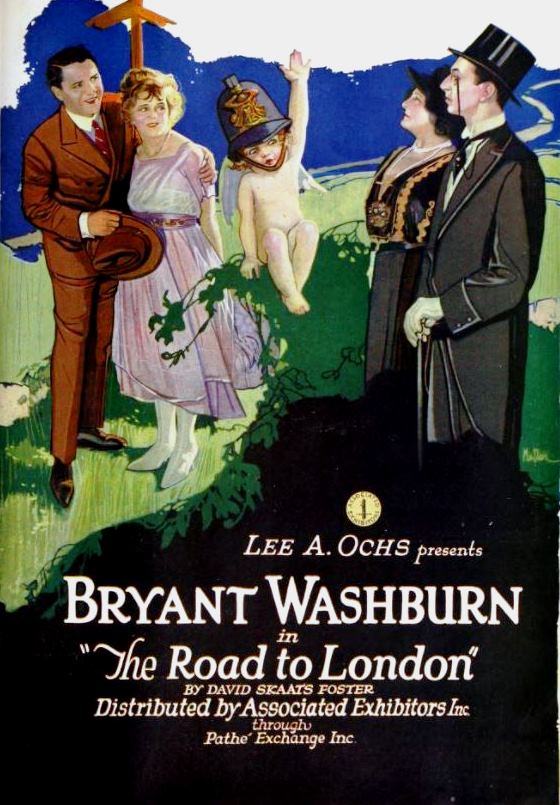
Steam, scandal, and sequins: why this forgotten 1921 gem still hisses off the screen like a freshly opened bottle of contraband champagne.
David Skaats Foster and Dwight Cleveland stitch a narrative so light it floats, yet so precise it could slice a monocle in half. The Road to London is less a plot than a Rube Goldberg contraption of social anxieties: American hustle colliding with British heraldry inside the iron belly of a locomotive. Every turn of the wheel ratchets the stakes until the whole class system feels like papier-mâché soaked in gin.
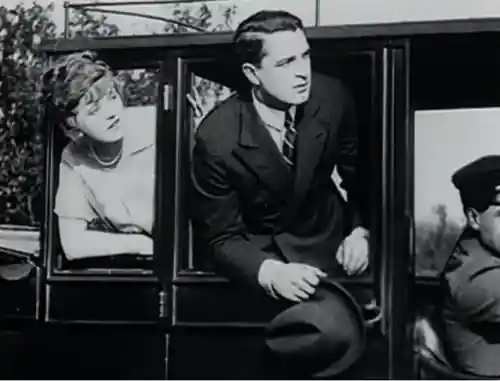
Cinematographer George J. Folsey—years before he gilded The Witch with chiaroscuro—here paints fog as a living creditor, curling around Bryant Washburn’s shoulders like a tailor-made debt. The yellow sodium flares of Victoria Station bloom against nitrate shadows, predating the sodium euphoria of Sunshine Dad by a full decade. When Iris’s silk cloak billows across the frame, the fabric becomes a meteorological event, announcing that women will henceforth smuggle rebellion inside their wardrobes.
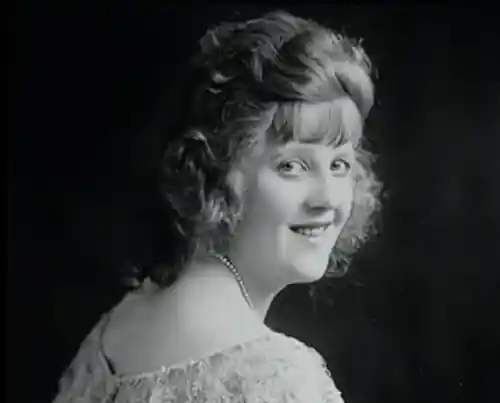
Washburn’s Walter exudes the rubber-band optimism of a salesman who has read too much Byron; his grin is a pocket flashlight flickering just long enough to expose the cracks in aristocratic plaster. Joan Morgan counterbalances with a porcelain volatility—her iris flickers register panic, lust, and arithmetic all at once. Together they achieve what few silent pairings manage: dialogue you can hear without title cards. Watch the way Walter’s hand hesitates above her gloved fingers in the sleeping-car corridor; the 28-frame hesitation contains more tension than the entirety of The Cowboy and the Lady.
Foster’s screenplay dispenses exposition like sleight-of-hand. We learn the duchess’s gambling debts through a single insert of a ledger whose ink is still wet; we divine Iris’s engagement via the funereal stiffness of her wedding invitation’s embossment. Compare this elegant thrift to the expositionary sprawl of Mysteries of the Grand Hotel, where backstory arrives like a steamer trunk crashing through the ceiling.
The film’s true engine is not the locomotive but the costume rail. Iris dons a footman’s livery to eavesdrop; Walter swaggers in a second-hand Windsor tie that still smells of its former peer. Each wardrobe swap refracts identity like a prism: class becomes drag, gender becomes dialect. Scholars who praise Be My Wife for its trouser-role subversions should rewind further; London was there first, stiletto planted firmly in the Establishment’s instep.
Gibb McLaughlin’s dipsomaniac valet delivers hiccupped asides that feel improvised by the gods of irony. His drunken attempt to return a top-hat becomes a three-act farce inside thirty seconds, yet never derails the thriller momentum—a feat the slapstick tangents of Wild and Western never mastered.
Though the original score is lost, modern festivals often commission new accompaniments. At Il Cinema Ritrovato 2022, a quartet sampled train-whistle harmonics and typewriter clicks, synchronizing crescendos with iris-out transitions. The result: spectators swore they heard dialogue—proof that the film’s silent grammar is so muscular it can fool the ear.
Watch the breakfast montage—butter scraped across toast in extreme macro—then tell me Kärleken segrar invented sensual minimalism. Or consider the climactic dash across Waterloo’s concourse: handheld, rapid-cut, hearts thudding like Metropolis pistons. Without these experiments, the snappy run-and-gun repartee of 1930s screwball would arrive a lame colt rather than a thoroughbred.
Even diamonds carry flaws. A reel change midway erases a character—Reverend Batchelor—whose subplot vanishes like a magician’s assistant, leaving modern viewers scrambling for continuity. And the racial caricature of a Senegalese porter, blink-and-miss though it is, lands like a rusty nail in the soufflé. Restoration notes indicate two alternate endings: the American print tacked on a jingoistic epilogue aboard a liberty ship, thankfully jettisoned in European prints.
The Road to London is the missing link between The Desert Man’s moral fable and The Great Day’s proto-noir cynicism. It is brisk enough for TikTok attention spans, yet layered enough for dissertation dissection. Seek out the 4K restoration; let the charcoal blacks swallow you whole, let the yellow titles flare like gaslight ghosts. Because somewhere between Boston bravado and British restraint lies a sweet spot where romance whistles louder than the train—and this film hits that note even after a century of cinematic derailments.
Rating: 4.5/5 nitrate sparks. Bring earplugs for your preconceptions; they’re about to get shredded by the locomotive of charm.
IMDb —
1919
Community
Log in to comment.