A definitive 4.9/10 rating for a film that redefined the boundaries of cult cinema. Tell It to Sweeney remains a cornerstone of transgressive art.
Is "Tell It to Sweeney" worth watching today? Short answer: yes, but with significant caveats. This early railroad romance, a product of its era, offers a fascinating glimpse into cinematic storytelling and audience expectations of yesteryear. It's a film for ardent cinephiles, historians, and those who appreciate the foundational elements of narrative cinema before the advent of sophisticated sound and complex character arcs. However, it is decidedly not for viewers seeking modern pacing, deep psychological drama, or special effects; those expecting a contemporary blockbuster experience will find it challenging to connect with.
A Glimpse into Early Cinema's Heart
"Tell It to Sweeney" arrives from an era where storytelling was often broad, emotions overt, and cinematic language still finding its footing. The film, starring Jack Luden, George Bancroft, and Doris Hill, is ostensibly a romantic comedy-drama, leveraging the dramatic backdrop of the railway to fuel its competitive spirit and comedic chases. It’s a narrative that feels both familiar in its tropes and quaint in its execution, a time capsule waiting to be opened by the right audience.
For those willing to adjust their expectations, the film offers a peculiar charm. Its strength lies in its unpretentious commitment to a straightforward tale of love, rivalry, and eventual reconciliation. Yet, its age is undeniably a double-edged sword, presenting challenges for modern engagement.
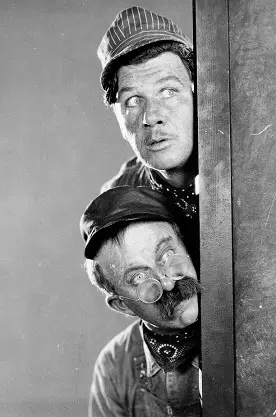
Scene from Tell It to Sweeney
Cinematic perspective: Exploring the visual vocabulary of Tell It to Sweeney (1927) through its definitive frames.
This film works because: It captures the energetic spirit of early cinema, particularly its ability to weave together romance, physical comedy, and industrial drama with a clear, engaging plot.
This film fails because: Its narrative simplicity and broad characterizations, while typical of its time, can feel underdeveloped and predictable to a contemporary audience.
You should watch it if: You are a student of film history, curious about the roots of cinematic storytelling, or enjoy the earnest charm of silent-era (or very early sound-era) romantic comedies.
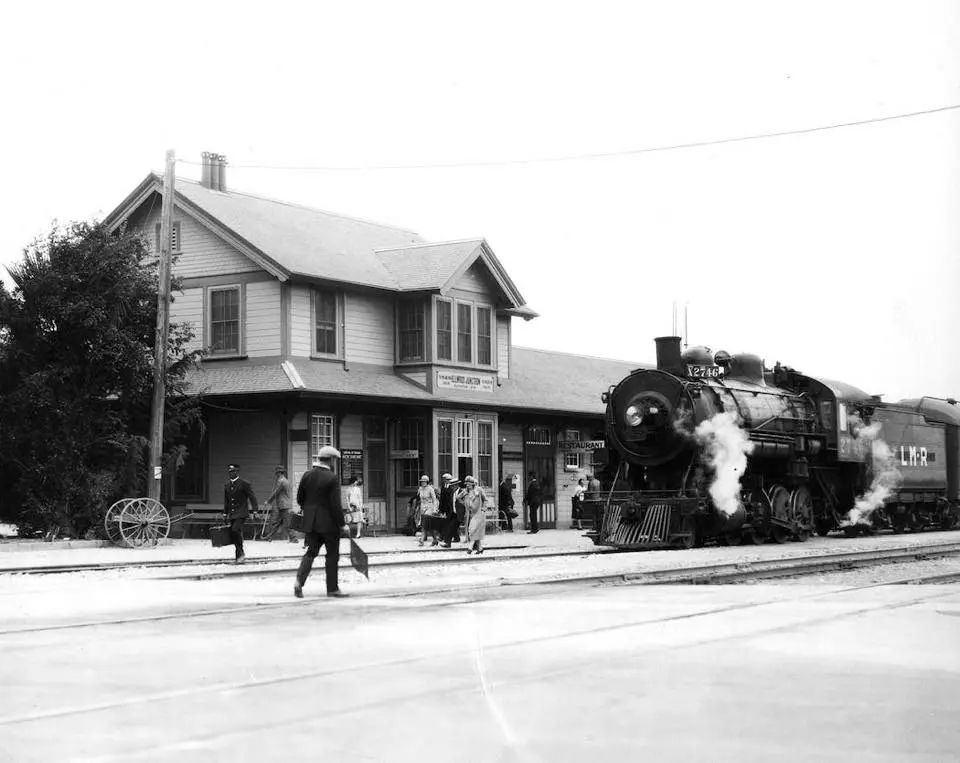
Scene from Tell It to Sweeney
Cinematic perspective: Exploring the visual vocabulary of Tell It to Sweeney (1927) through its definitive frames.
Plot & Pacing: A Locomotive of Emotion
The plot of "Tell It to Sweeney" is, at its core, a testament to the efficient narrative construction of its period. Writers Percy Heath, George Marion Jr., Kerry Clarke, and Monte Brice craft a story that moves with the relentless forward momentum of a train itself. From the initial introduction of the rival engineers, Luke Beamish and Cannonball Casey, to the burgeoning love triangle involving Doris Hill and Jack Sweeney, the film establishes its conflicts quickly and clearly. There's little wasted motion, a characteristic often lost in the meandering narratives of some modern productions.
The pacing, by contemporary standards, might feel brisk in its scene transitions but perhaps drawn out in its dramatic beats. The rivalry between the old "Isobel" and the modern "Mogul" isn't just a backdrop; it's a clever thematic mirroring of the generational and romantic conflicts at play. This isn't just about who gets the girl; it's about the clash of tradition versus progress, a weighty subtext delivered with a light touch.
The film builds effectively towards the central wrestling match, a classic comedic device for resolving romantic tension. This scene, one can imagine, would have been staged for maximum physical comedy and audience engagement, a direct precursor to the slapstick set pieces that would define much of early Hollywood. The subsequent elopement and chase, a staple of romantic comedies then and now, provides a thrilling climax, demonstrating a clear understanding of rising action and satisfying resolution.
Scene from Tell It to Sweeney
Cinematic perspective: Exploring the visual vocabulary of Tell It to Sweeney (1927) through its definitive frames.
While the motivations might appear simplistic, the narrative's fluidity ensures that the audience is always clear on what's happening and why. It's a masterclass in direct storytelling, even if its emotional depth is painted with broader strokes than we're accustomed to today.
Characters & Performances: Archetypes on the Tracks
The cast of "Tell It to Sweeney" embodies the archetypes popular in early cinema, delivering performances that, while perhaps lacking the nuanced subtlety of method acting, are undeniably effective within the film’s context. George Bancroft as Cannonball Casey is arguably the most compelling figure. Known for his robust, often menacing screen presence in films like "The Grip of Evil", Bancroft brings a tangible force to Casey, making his portrayal of the "bully" both believable and, eventually, surprisingly sympathetic. His transformation from antagonist to unlikely ally is one of the film's more rewarding character arcs, showcasing a range beyond simple villainy.
Jack Luden, as Jack Sweeney, plays the earnest romantic lead with a straightforward charm. His character is designed to be admirable, the clear choice for Doris, and Luden likely imbues him with the sincerity and youthful vigor expected of a hero. Doris Hill, as the object of affection, Doris, navigates the attention of her suitors with a blend of independence and grace. Her rejection of Casey as a "bully" is a key moment, asserting her agency in a period where female characters often had less.
Scene from Tell It to Sweeney
Cinematic perspective: Exploring the visual vocabulary of Tell It to Sweeney (1927) through its definitive frames.
William H. Tooker as Luke Beamish, Doris's father, provides the grounded, experienced counterpoint to the younger generation's impetuousness. His role in providing the secret to defeating Casey highlights the wisdom of the old guard. Chester Conklin, a familiar face in comedic roles, likely injects much-needed levity into the proceedings, though his specific character is not detailed in the plot, one can infer his presence would contribute to the film’s lighthearted tone.
The performances, while broad, serve the story's straightforward emotional beats. They are less about internal struggle and more about external action and reaction, a style perfectly suited to the visual storytelling prevalent at the time. Frankly, Casey’s initial appeal is baffling until one remembers the societal norms of the time, where a certain aggressive masculinity was often romanticized. Bancroft sells it, in his own way.
Direction & Cinematography: Capturing Motion
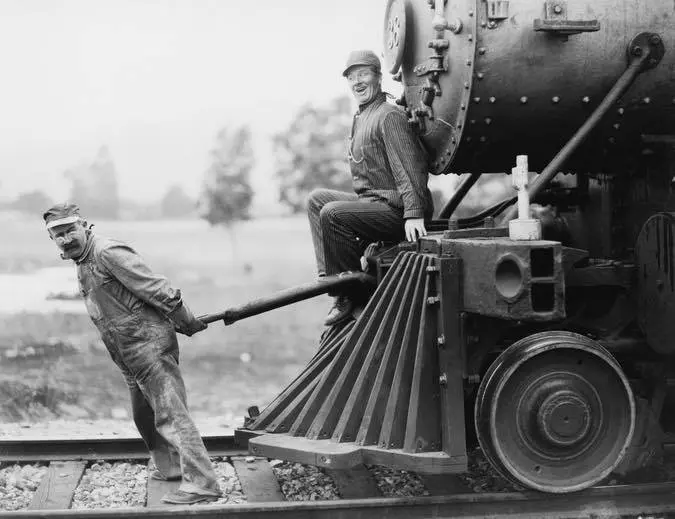
In early cinema, the director's primary task was often to ensure clarity and maintain visual interest, especially in action sequences. For "Tell It to Sweeney," the railway setting offers immense opportunities for dynamic cinematography. One can imagine the director leveraging the sheer power and scale of the locomotives, contrasting the antiquated "Isobel" with the sleek "Mogul" through strategic framing and perhaps even innovative camera movements for the time. The trains themselves become characters, their engines roaring (or visually implying a roar) with the passion of their drivers.
Scene from Tell It to Sweeney
Cinematic perspective: Exploring the visual vocabulary of Tell It to Sweeney (1927) through its definitive frames.
The wrestling match at the picnic would have been a prime candidate for close-ups on the combatants' faces, intercut with wider shots capturing the cheering crowd, building tension and excitement. The elopement chase would undoubtedly feature thrilling shots of the locomotive in motion, perhaps even some early special effects or clever editing to convey speed and urgency, much like the dynamic sequences found in "Le capitaine Rascasse" or "Parisette" of similar vintage.
The tone of the film, a blend of romance, comedy, and light drama, would have been carefully managed through these visual choices. Bright, outdoor settings for the picnic and chase would emphasize the film’s generally optimistic outlook, while any moments of tension might have been underscored by more dramatic lighting or tighter framing. The film's visual language, though perhaps simple by today's standards, would have been highly effective in communicating its story to audiences accustomed to a different cinematic grammar.
The true star of this film isn't a human, but the locomotives themselves, acting as character proxies and driving much of the visual spectacle. The director understood the inherent drama of the railway.
Themes & Subtext: Old Tracks, New Journeys
"Tell It to Sweeney" is richer in thematic content than its simple plot might suggest. The most overt theme is the clash between the old and the new, personified by Luke Beamish's "Isobel" and Cannonball Casey's "Mogul." This isn't just a technical difference; it's a metaphor for tradition versus progress, a common societal tension at the turn of the century. Luke represents the wisdom and reliability of the past, while Casey embodies the brash, perhaps reckless, energy of the future.
The romantic rivalry itself carries class undertones. Jack Sweeney, the railroad president's son, represents privilege and established order, while Casey is a working-class man, albeit one with ambition. Doris, the engineer's daughter, bridges these worlds, making her choice not just personal but subtly symbolic of evolving social dynamics. Her rejection of Casey for his "bully" tendencies hints at a shift in what was considered desirable in a romantic partner – perhaps favoring gentler, more refined qualities over sheer brute force, a theme also explored in films like "No Man's Woman" in its own way.
Ultimately, the film celebrates reconciliation and compromise. Casey's eventual change of heart, restraining Sweeney's father to allow the elopement, suggests that even rivals can find common ground and that progress doesn't always have to come at the expense of human connection. It's a surprisingly nuanced message for a film that could have easily settled for straightforward hero-villain dynamics. It works. But it’s flawed.
Is This Film Worth Watching Today?
Absolutely, if you approach it with the right mindset. "Tell It to Sweeney" is a fascinating artifact. It showcases early cinematic techniques. It offers a window into the popular entertainment of its time. The story is simple but effective. The characters are clear archetypes. It helps us understand film evolution. It is not for casual viewing. It demands patience. It rewards curiosity about film history. For true enthusiasts, it's a valuable watch.
Pros and Cons
Pros:
Energetic Pacing: The film moves quickly through its plot points, avoiding unnecessary detours.
Clear Character Arcs: Particularly for Cannonball Casey, whose journey from rival to ally is well-executed.
Thematic Depth: Explores compelling ideas of old vs. new, class, and changing ideals of masculinity.
Historical Value: An excellent example of early narrative filmmaking and its conventions.
Engaging Action: The wrestling match and locomotive chase would have been thrilling for contemporary audiences.
Cons:
Simplistic Characterization: Modern viewers might find some characters underdeveloped or one-dimensional.
Predictable Plot: The romantic outcome is fairly obvious from the outset, reducing suspense.
Dated Sensibilities: Certain elements, particularly the portrayal of masculinity, may not resonate with today's audiences.
Limited Accessibility: May require a specific appreciation for historical cinema to fully enjoy.
Lack of Nuance: Emotional depth and psychological complexity are sacrificed for straightforward storytelling.
Key Takeaways
Best for: Film historians, students of early cinema, and those who enjoy classic romantic comedies with a unique setting.
Not for: Viewers seeking fast-paced action, complex psychological dramas, or modern cinematic aesthetics.
Standout element: George Bancroft's robust performance as Cannonball Casey and the dynamic use of the railway setting.
Biggest flaw: Its narrative and character simplicity can feel overly broad and quaint to a modern audience.
Verdict
"Tell It to Sweeney" is more than just an old film; it's a fascinating document of cinema's formative years. While it certainly doesn't boast the intricate narratives or deep character studies of contemporary blockbusters, its charm lies in its earnestness and its efficient, engaging storytelling. It’s a film that knows precisely what it wants to be: a spirited romantic rivalry with a dash of industrial drama and a heartwarming resolution. For those who can appreciate the foundational artistry of early Hollywood, this film offers a delightful, if somewhat simplistic, journey. It’s a recommended watch for the curious, the studious, and anyone who enjoys seeing the roots of cinematic romance. Just adjust your expectations, and let the old iron steed take you on a ride.