DbcultAccessing Vault...
Cult Review
Senior Film Conservator
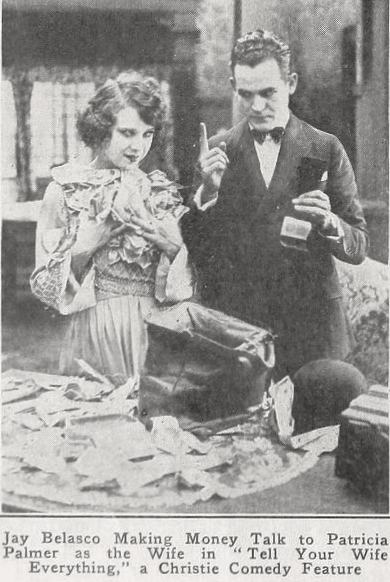
The silent era often serves as a mirror to the subterranean anxieties of the American Dream, and Tell Your Wife Everything stands as a particularly poignant reflection of the pressures inherent in the early 20th-century social ladder. While many films of the period focused on grand adventures or slapstick chaos, this Willis Robards production chooses the claustrophobic intimacy of the living room as its battlefield. It is a film that understands that the most devastating wars are those fought behind closed doors, fueled by the silent artillery of whispered secrets and unpayable bills.
At the heart of this domestic tragedy is Jay, a man whose identity is inextricably linked to his ability to provide. Jay Belasco delivers a performance that transcends the typical gesticulations of the era; he captures the twitchy, nervous energy of a man who knows the ice beneath him is thinning with every breath. He doesn't just lie to his wife; he creates an alternate reality. This theme of financial masquerade is a recurring motif in the cinema of this decade, often seen in works like A Rich Man's Darling, where the lure of luxury masks the rot of reality. However, Robards’ script dives deeper into the specific masculine hubris that equates net worth with personal value.
"The tragedy of Jay is not his lack of funds, but his lack of faith in the strength of his wife's devotion without the gilding of gold."
Patricia Palmer provides the perfect foil as the wife. Her performance is one of gradual awakening. Initially, she is the beneficiary of Jay's supposed largesse, moving through their home with a grace that suggests she is entirely unaware of the looming storm. Unlike the more frantic pacing found in The Daredevil, the tension here is slow-burning. We watch as the small cracks in Jay’s story begin to spiderweb across their daily lives. The film masterfully utilizes the visual language of the era—shadows that seem to lengthen as the debt grows, and close-ups that linger on Jay’s sweating brow as he calculates the cost of his next deception.
Comparisons to Life's a Funny Proposition are inevitable, as both films grapple with the irony of human ambition. Yet, Tell Your Wife Everything feels more grounded, less interested in the cosmic joke and more focused on the quotidian struggle of keeping up appearances. The film suggests that the 'fatal error' mentioned in the plot is a systemic one. In an era where success was the only metric of manhood, Jay’s choice to lie feels less like a personal failing and more like a desperate survival tactic in a society that offers no safety net for the fallen.
The direction by Willis Robards is surprisingly modern in its psychological focus. While the technical limitations of 1919 are present, the emotional resonance is timeless. There is a specific scene involving a dinner party where the contrast between the external celebration and Jay’s internal panic is palpable. It reminds one of the dark undercurrents in Black Friday, where the collapse of fortune leads to a total disintegration of the self. Robards avoids the melodrama of The Return of Helen Redmond, opting instead for a gritty realism that must have been quite jarring for audiences accustomed to more escapist fare.
The Technical Artistry of Deception
Visually, the film utilizes its sets to tell the story of Jay’s deception. The opulent furnishings of their home are shot with a certain harshness, making them feel less like comforts and more like museum pieces that Jay is merely borrowing. This visual metaphor for the 'borrowed life' is a stroke of genius. It echoes the themes of moral decay found in Dope, though the 'drug' here is not a substance, but the intoxicating high of being perceived as wealthy. The cinematography captures the isolation of both characters; even when they are in the same frame, they feel miles apart, separated by the invisible wall of Jay’s secret.
In terms of pacing, the film does not rush to its climax. It allows the audience to sit in the discomfort of Jay’s lies. We see the mundane moments—the checking of the mailbox with trepidation, the forced smiles during breakfast. This attention to detail is what elevates the film above standard silent melodrama. It shares a certain DNA with the social critiques of Prohibition, examining the ways in which societal expectations force individuals into dishonest corners. The narrative arc is a downward spiral, yet it is navigated with a sense of inevitability that makes the final revelation all the more impactful.
A Mirror to Modernity
Why does a film from over a century ago still matter? Because the 'Jay' archetype is more prevalent than ever in our age of curated social media identities. We are all, to some extent, telling our 'wives' (or our followers) that we have all the money, happiness, and success in the world. Tell Your Wife Everything is a stark reminder that the cost of maintaining a facade is often the very thing we are trying to protect: our relationships. The film’s title serves as both a command and a plea for salvation. It suggests that the only way out of the labyrinth of lies is through the painful light of the truth, a theme explored with different stakes in Deliverance.
The supporting cast, while less central, contributes to the atmosphere of a judgmental society. The neighbors and friends are not characters so much as they are the 'audience' for Jay’s performance, their presence heightening his fear of exposure. This external pressure is what drives the plot forward, much like the environmental pressures in Sahara or the logistical nightmare of The Log of the U-35. In Jay’s world, the threat of being 'found out' is as lethal as any torpedo or desert sun.
One cannot discuss this film without acknowledging the writing of Willis Robards. The intertitles are not merely explanatory; they are often philosophical, offering insights into the characters' motivations that the silent medium might otherwise struggle to convey. There is a literary quality to the prose that reminds me of the poetic sensibilities in Evangeline. Robards understands that the silence of the film is its greatest asset, allowing the viewer to fill in the gaps of Jay’s internal monologue with their own anxieties.
Ultimately, the film concludes not with a grand explosion of drama, but with a quiet, somber realization. The resolution is not a 'happily ever after' in the traditional sense, but a 'happily ever after' the truth. It is a messy, complicated ending that feels far more honest than the sanitized conclusions of many of its contemporaries. It lacks the simplistic morality of Pençe, opting instead for a nuanced look at the aftermath of deception. Jay is forgiven, perhaps, but the scars of his mendacity remain, a permanent fixture in the domestic landscape.
In the final analysis, Tell Your Wife Everything is a hidden gem that deserves a place in the pantheon of early psychological dramas. It is a film that refuses to offer easy answers, choosing instead to linger in the uncomfortable spaces of the human heart. Whether you are a fan of silent cinema or simply a student of the human condition, this film offers a wealth of insight—ironically, the only kind of wealth that Jay didn't have to lie about. It is a cinematic experience that is as sobering as a cold morning after a night of profligate dreaming, and as necessary as the truth itself.
IMDb 6.5
1924
Community
Log in to comment.