DbcultAccessing Vault...
3.8/10
Senior Film Conservator
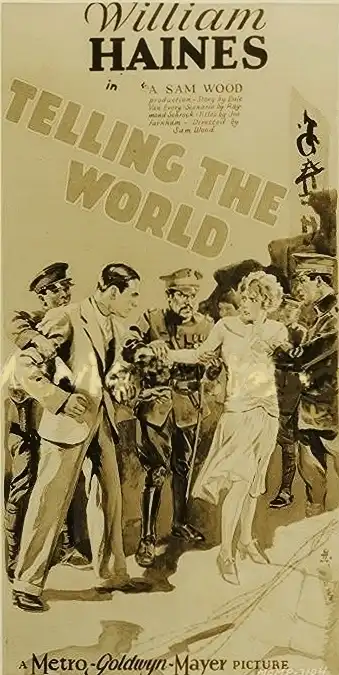
A definitive 3.8/10 rating for a film that redefined the boundaries of cult cinema. Telling the World remains a cornerstone of transgressive art.
If you have a low tolerance for the 'cocky young man' archetype that dominated the late silent era, you should probably skip Telling the World. It is a William Haines vehicle through and through. If you’ve seen him in anything else from this period, you know the drill: he’s fast, he’s arrogant, he’s constantly touching people who don't want to be touched, and he’s usually the smartest person in the room—or at least the loudest. It’s a performance style that feels exhausting today, but there’s a weirdly infectious energy to it if you’re in the right mood.
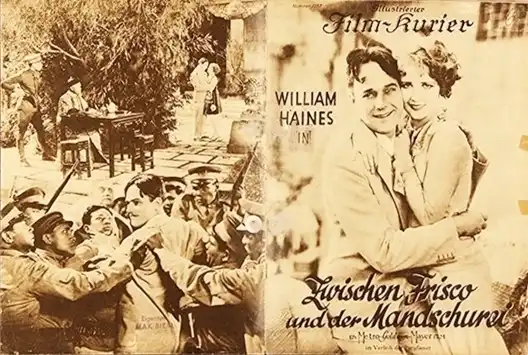
Is it worth watching? For the first thirty minutes, absolutely. It’s a great example of that frantic, clattery newsroom energy that Hollywood did so well before the cameras got bogged down by early sound equipment. But then it goes to China, and things get... strange.
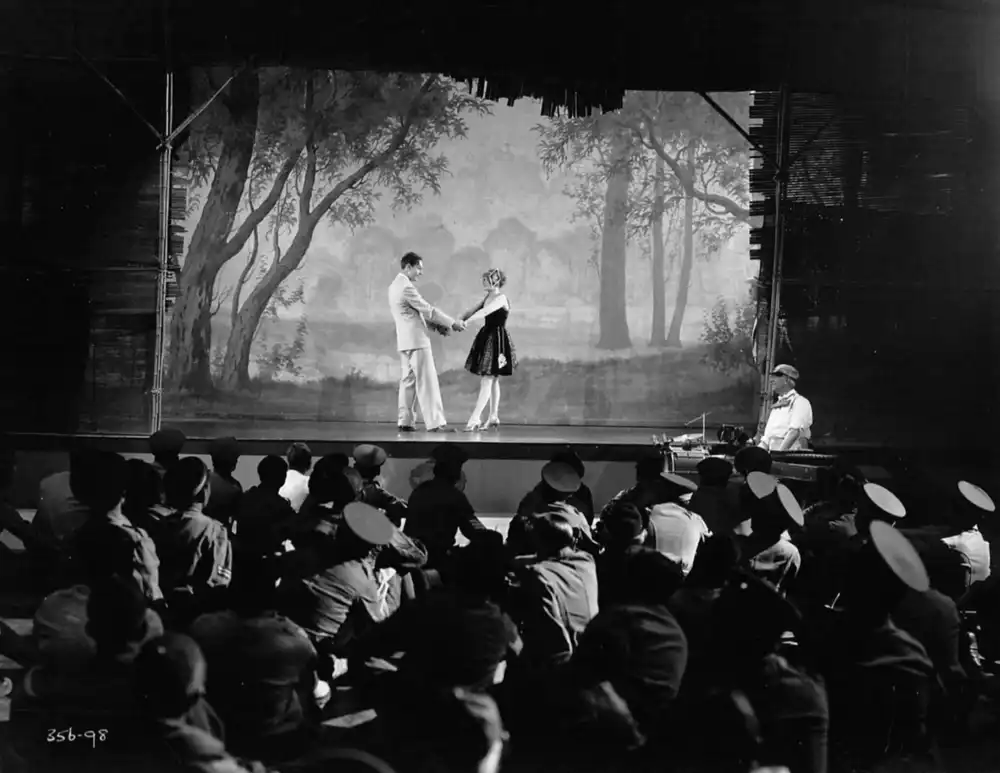
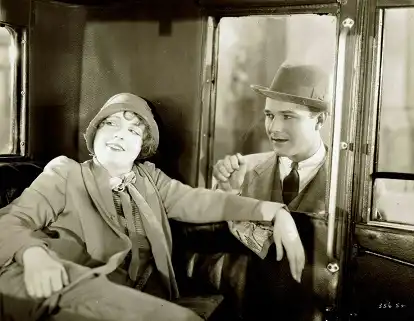
The movie starts with Don Davis (Haines) basically annoying his way into a job. There’s a scene where he’s trying to get a scoop, and the way he moves through the set—knocking things over, leaning over desks—it feels like he’s caffeinated in a way that shouldn't be possible in 1928. He meets Chrystal (Anita Page), who is part of a touring stage troupe, and the chemistry is actually pretty sweet. Page has this very soft, wide-eyed presence that acts as a necessary anchor for Haines’s constant vibrating. When they’re just flirting in the rain or messing around in the office, the movie works.
There’s a specific shot early on that I really liked. The camera follows a telegram as it travels across the country, using these quick, rhythmic cuts of wires and clicking machines. It’s one of those moments where the film feels genuinely modern, capturing the excitement of global communication. It reminded me a bit of the technical playfulness in A Girl in Every Port, where the world feels small and accessible through a lens.
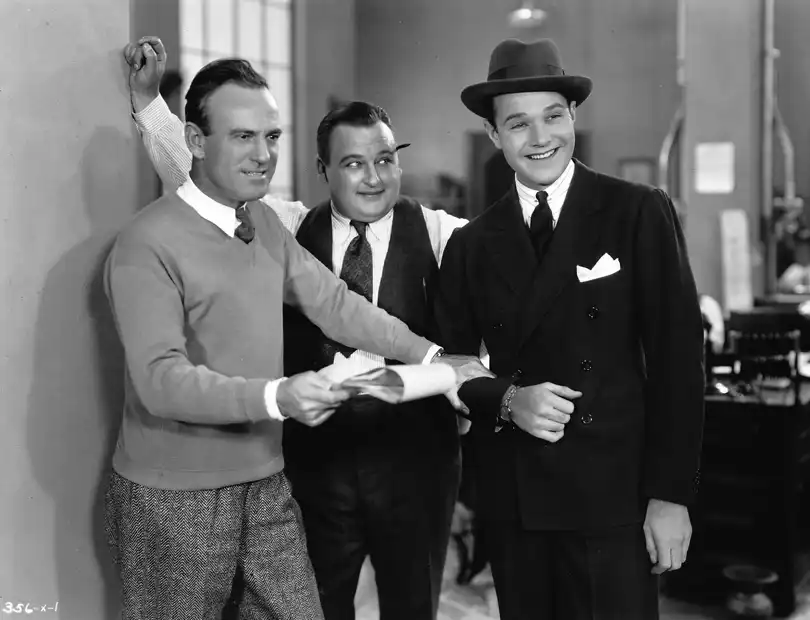
But then the plot kicks in. Chrystal gets framed for a murder—a subplot that feels like it belongs in a completely different movie—and flees to China. Don follows her, not as a romantic gesture at first, but because he’s a reporter and he wants the story. This is where the pacing starts to feel like a car losing its muffler. The transition from 'ha-ha, I’m a funny reporter' to 'I am now in the middle of a civil war' is incredibly jarring. One minute he’s doing bits with a telephone, and the next, people are being lined up against walls.
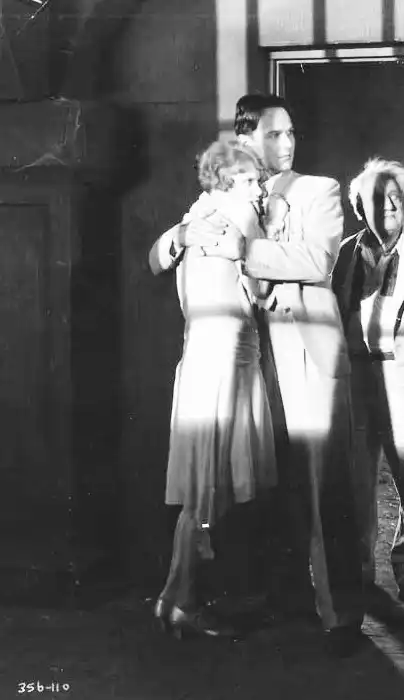
The depiction of China is exactly what you’d expect from a 1920s studio backlot. It’s all shadows, beaded curtains, and extras wearing some very questionable hats. There’s a scene where Chrystal is about to be executed, and the movie suddenly wants us to take it very seriously. The problem is, Haines hasn't really changed his performance. He’s still doing the same 'gee-whiz' facial expressions while trying to stop a firing squad. It makes the stakes feel fake. You never really believe she’s in danger because the movie has spent the last hour telling us everything is a joke.
I noticed a few weird edits in the second half. There’s a moment during the big rescue where a character appears in a doorway, and in the very next frame, they’re halfway across the room. It feels like a few seconds of film were lost or just hacked out to keep the runtime down. It gives the climax a jerky, dreamlike quality that I don’t think was intentional.
Also, Polly Moran shows up as the landlady. She’s great, but she’s barely in it. She has this way of looking at Haines like she wants to hit him with a broom, which is honestly how most of the audience feels by the forty-minute mark. Her reactions are the most relatable thing in the film.
The ending is a bit of a mess. It’s one of those 'happily ever after' moments that feels completely unearned after the amount of trauma the characters just went through. They’re basically stepping over bodies to get to the final kiss. It’s a very MGM ending—polished, bright, and totally disconnected from the fifteen minutes of grim drama that preceded it.
If you’re a fan of silent-era technical flourishes, the newsroom stuff is great. The way they use intertitles to mimic the sound of a typewriter is a nice touch. But as a story, it’s two half-baked ideas shoved together. It’s worth a look for Anita Page’s face and the weirdness of the tonal shift, but don't expect it to stay with you once the lights come up. It’s a movie that’s trying to be everything at once and ends up being a bit of a loud, confusing blur.
IMDb —
1921
Community
Log in to comment.