DbcultAccessing Vault...
7.8/10
Senior Film Conservator
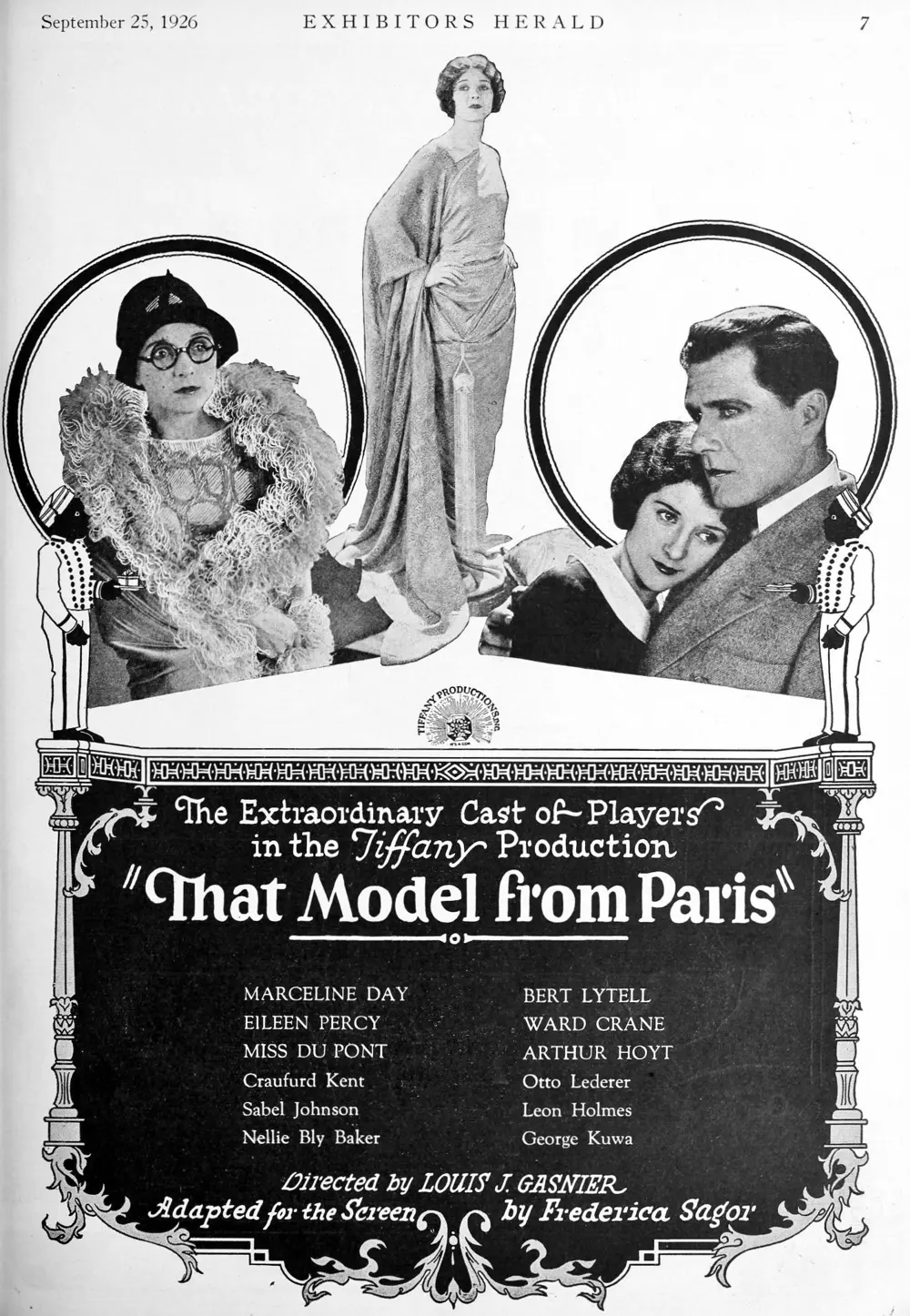
A definitive 7.8/10 rating for a film that redefined the boundaries of cult cinema. That Model from Paris remains a cornerstone of transgressive art.
Is That Model from Paris worth watching today? Short answer: yes, but with a significant asterisk. This 1926 silent film is a charming, if somewhat creaky, relic that offers a delightful glimpse into early Hollywood's comedic sensibilities, making it a treat for silent film enthusiasts and those curious about the genre's formative years. However, it’s decidedly not for viewers seeking modern pacing, complex narratives, or high-fidelity visuals; those expecting a contemporary cinematic experience will likely find its charms elusive and its rhythm challenging.
It’s a film that demands patience and an appreciation for its historical context, rewarding those who approach it with an open mind. If you’re willing to immerse yourself in a bygone era, you'll find a simple, heartfelt story beneath the period trappings.
Early in its runtime, That Model from Paris lays out its cards, and its strengths and weaknesses become clear. It's a film that operates on a familiar, almost comforting, silent-era logic, yet occasionally stumbles over its own simplicity.
This film works because: Its central premise, the ‘ugly duckling’ transformation, is executed with a disarming sincerity by Miss DuPont, whose dual portrayal anchors the narrative with genuine charm and comedic timing.
This film fails because: Its reliance on broad comedic strokes and a somewhat thinly developed supporting cast prevents it from achieving any profound emotional depth or lasting narrative impact beyond its immediate entertainment value.
You should watch it if: You have a fondness for classic silent film tropes, appreciate lighthearted romantic comedies, or are keen to explore the early careers of actors like Miss DuPont and Marceline Day in a foundational Hollywood setting.
At its heart, That Model from Paris is a quintessential Cinderella story, updated for the Jazz Age with a Parisian flair. Frederica Sagor Maas and Gouverneur Morris craft a narrative that, while predictable by modern standards, hums with the energy of its time. Jane, a secretary, embodies the archetype of the overlooked heroine. Her transformation, simply by removing her glasses and hat, is not just a physical one; it’s a symbolic shedding of societal constraints and self-imposed invisibility. It’s a powerful, if simplistic, commentary on how easily perception can be manipulated.
The plot, driven by unsavory characters who exploit Jane's newfound allure, delves into themes of identity and authenticity. Jane is forced into a deceptive masquerade as a French model, a situation that, while initially born of manipulation, quickly becomes a vehicle for self-discovery. The confusion that ensues is the comedic engine of the film, leading to a series of misunderstandings and near-misses that are characteristic of the era’s romantic comedies.
What's perhaps most intriguing about the script is its almost naïve acceptance of the premise. There’s little time spent on the moral ambiguity of Jane's impersonation; instead, the focus remains firmly on the romantic entanglements and the lighthearted chaos. This isn't a film that seeks to challenge its audience with complex ethical dilemmas, but rather to entertain with a straightforward tale of mistaken identity and eventual true love.
One might argue that the film misses an opportunity to explore the deeper psychological impact of such a deception. Jane’s journey from shy secretary to glamorous model feels less like a personal evolution and more like a costume change. Yet, within the confines of silent film storytelling, this simplicity is often a strength, allowing the visual storytelling and performances to carry the emotional weight. The narrative, while not groundbreaking, is effective in setting the stage for the charm that follows.
The success of any silent film hinges largely on the expressive capabilities of its cast, and That Model from Paris is no exception. Miss DuPont, in the dual role of Jane, is undeniably the film’s linchpin. Her portrayal of the mousy secretary is wonderfully understated, characterized by a slight hunch, downcast eyes, and hesitant movements. The moment she sheds her glasses and hat, transforming into the radiant 'model,' is genuinely captivating. It's a testament to her skill that the audience believes in both versions of Jane, not just as different appearances, but as distinct personas.
DuPont's physical comedy, particularly as Jane struggles to maintain her French façade, is often delightful. She conveys apprehension, wit, and budding romance primarily through her eyes and subtle facial shifts. For instance, the scene where she first tries to convincingly 'pose' as a sophisticated model, her expressions oscillating between awkwardness and forced elegance, is a highlight, showcasing her range.
The male leads, George Kuwa, Leon Holmes, and Bert Lytell, provide solid support, embodying the various romantic interests and comedic foils. Lytell, as the primary romantic lead, brings a certain earnestness to his role, even if his character is somewhat generically heroic. His interactions with DuPont are charming, building a believable, if swift, romantic arc. Crauford Kent and Ward Crane, as the more 'unsavory characters,' lean into their villainous roles with appropriate theatricality, providing the necessary conflict without ever feeling truly menacing.
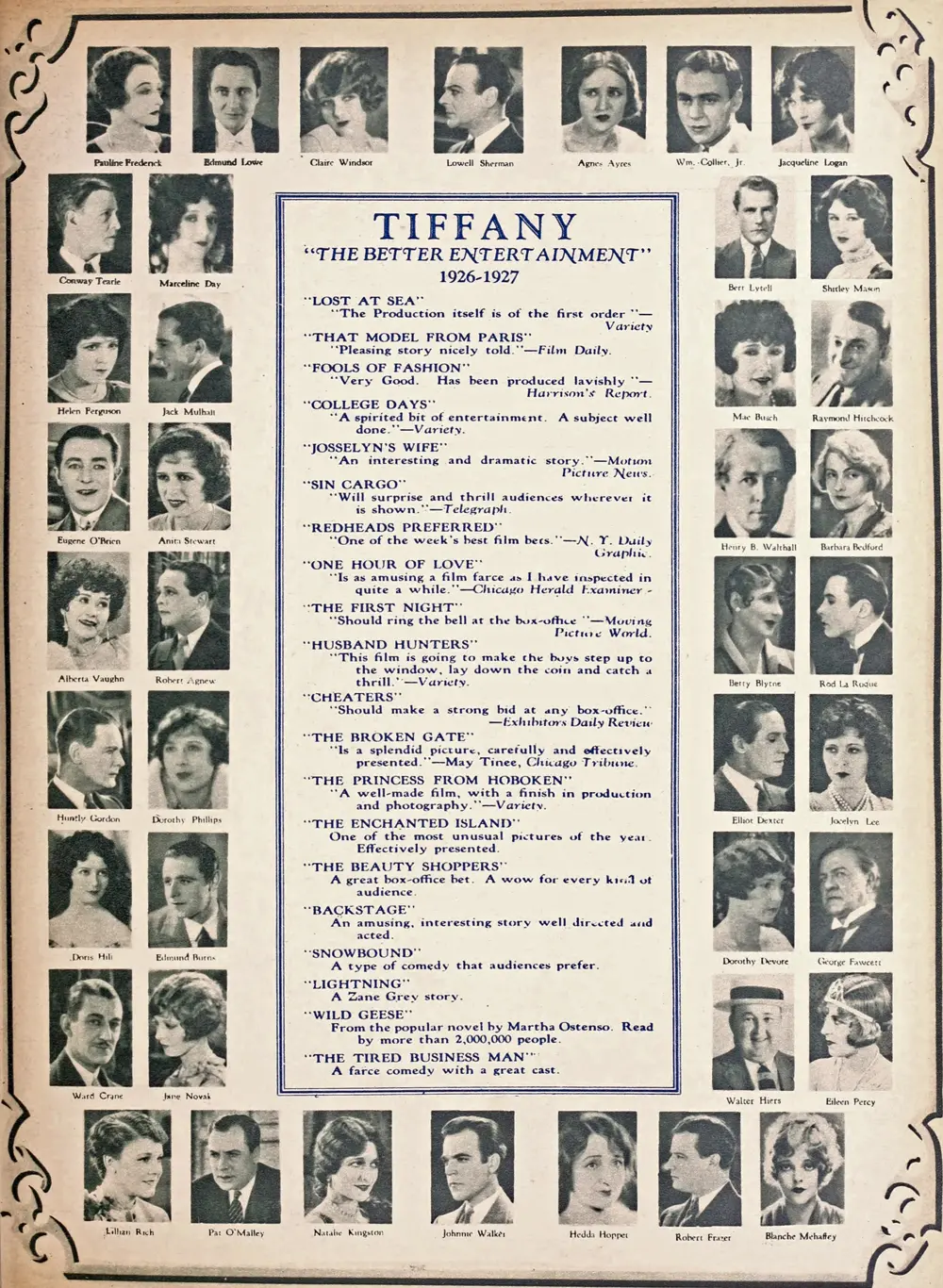
Other notable cast members, such as Sabel Johnson, Otto Lederer, and particularly Marceline Day in a smaller role, contribute to the film’s vibrant tapestry. Day, who would go on to star in classics like The Cameraman, displays her early promise with a vivacious energy that, even in brief appearances, leaves an impression. The ensemble, while not always given deep characterizations, works cohesively to bring the lighthearted story to life. Their performances are a reminder of the unique demands of silent acting, where every gesture and expression must speak volumes.
The visual language of That Model from Paris is firmly rooted in the silent film conventions of the mid-1920s. While the director isn't explicitly credited in the provided context, the film showcases a competent understanding of visual storytelling for the era. The cinematography, while not groundbreaking, is effective. There’s a consistent use of clear, well-lit shots that allow the actors’ expressions and the elaborate set designs to shine.
The film uses close-ups judiciously, primarily to highlight Miss DuPont's transformative moments and to capture the subtle emotional shifts of the characters. Wide shots are employed to establish the Parisian settings, even if these are often studio-bound. The production design, particularly for the 'fashion house' and 'Parisian street' scenes, is quite detailed, creating a believable backdrop for the comedic chaos. The costumes, especially Jane’s initial drab attire contrasting with her later glamorous gowns, are crucial narrative tools, visually reinforcing her character arc.
One particular strength lies in the visual pacing of certain sequences. For instance, the montage-like sequence depicting Jane's initial forays into the world of modeling, with quick cuts between various poses and reactions, effectively conveys the whirlwind nature of her new life. This demonstrates a nascent understanding of how editing could accelerate narrative progression, a technique that would become more refined in later decades.
However, the film sometimes falls into the trap of over-reliance on intertitles to explain plot points or character motivations, rather than letting the visuals do all the work. While this was common for the time, a more confident visual director might have found ways to convey more through action and expression alone. Despite this, the film maintains a consistent aesthetic that is both charmingly period-appropriate and functionally serves its comedic and romantic intentions. It’s a snapshot of how Hollywood was learning to craft compelling narratives through images.
The pacing of That Model from Paris is very much a product of its time. For modern audiences accustomed to rapid-fire editing and constant narrative propulsion, it might feel deliberately slow. The film takes its time to establish characters and situations, allowing scenes to play out with a certain languidness that can be both a strength and a weakness. This unhurried approach allows for a deeper appreciation of the actors' nuanced expressions and the intricate set pieces, but it can also lead to moments where the narrative momentum flags.
There are sequences, particularly in the middle act where the deception is being established and maintained, that feel a touch drawn out. A contemporary editor might have trimmed these moments for greater efficiency. However, this slower rhythm also contributes to the film's overall charm, inviting the viewer to relax into its world rather than being rushed through it. It’s a gentle unfolding, rather than a brisk sprint.
The tone is consistently lighthearted, a blend of romantic comedy and farce. Despite the underlying theme of deception, the film never veers into genuine drama or tension. The stakes always feel relatively low, ensuring that the audience remains comfortable in the knowledge that a happy ending is inevitable. This unwavering optimism is a hallmark of many silent-era comedies and contributes significantly to the film’s enduring appeal. It's designed to provide escapism, a pleasant diversion from the realities of the day.
The comedic elements are broad, relying on physical gags, mistaken identities, and the inherent humor of Jane’s predicament. There’s a delightful innocence to the humor that, while not always laugh-out-loud funny by today's standards, evokes a warm smile. The film navigates its comedic and romantic beats with a steady hand, ensuring a cohesive and enjoyable experience for those attuned to its particular rhythm. It works. But it’s flawed.
Yes, That Model from Paris is worth watching for specific audiences. It offers a charming, if simple, look into silent-era romantic comedies. It showcases the expressive talent of Miss DuPont. It's a valuable piece of film history. However, its slow pacing and dated tropes may deter modern viewers.
You should watch it if you are a silent film aficionado, a student of early cinema, or someone who enjoys lighthearted, character-driven romantic comedies from a bygone era. It's also a good choice for those curious about the origins of the 'makeover' trope in cinema. You should skip it if you prefer fast-paced narratives, complex plots, or high-definition visuals, as its charms are largely tied to its historical context and genre conventions.
That Model from Paris is a delightful, if somewhat unchallenging, journey back to the golden age of silent cinema. It stands as a charming example of the era's romantic comedies, buoyed by a charismatic central performance from Miss DuPont. While its narrative is straightforward and its pacing occasionally meanders, these qualities are also part of its historical appeal. It's a film that asks for a degree of historical empathy from its audience, rewarding those who grant it with a pleasant, heartwarming experience. It’s not a lost masterpiece, nor does it redefine the genre, but it holds its own as a sweet, engaging relic.
My unconventional observation is that the film, inadvertently, serves as a fascinating precursor to the entire beauty industry's obsession with transformation, suggesting that the 'glow-up' narrative has been ingrained in our cultural psyche for nearly a century. This film validates superficiality while simultaneously proving its power to captivate audiences. For a quiet evening in, especially if you're exploring the silent film catalogue, That Model from Paris is a worthwhile, if not essential, watch. It’s undeniably a product of its time, for better and for worse.
IMDb —
1930
Community
Log in to comment.