DbcultAccessing Vault...
7.4/10
Senior Film Conservator
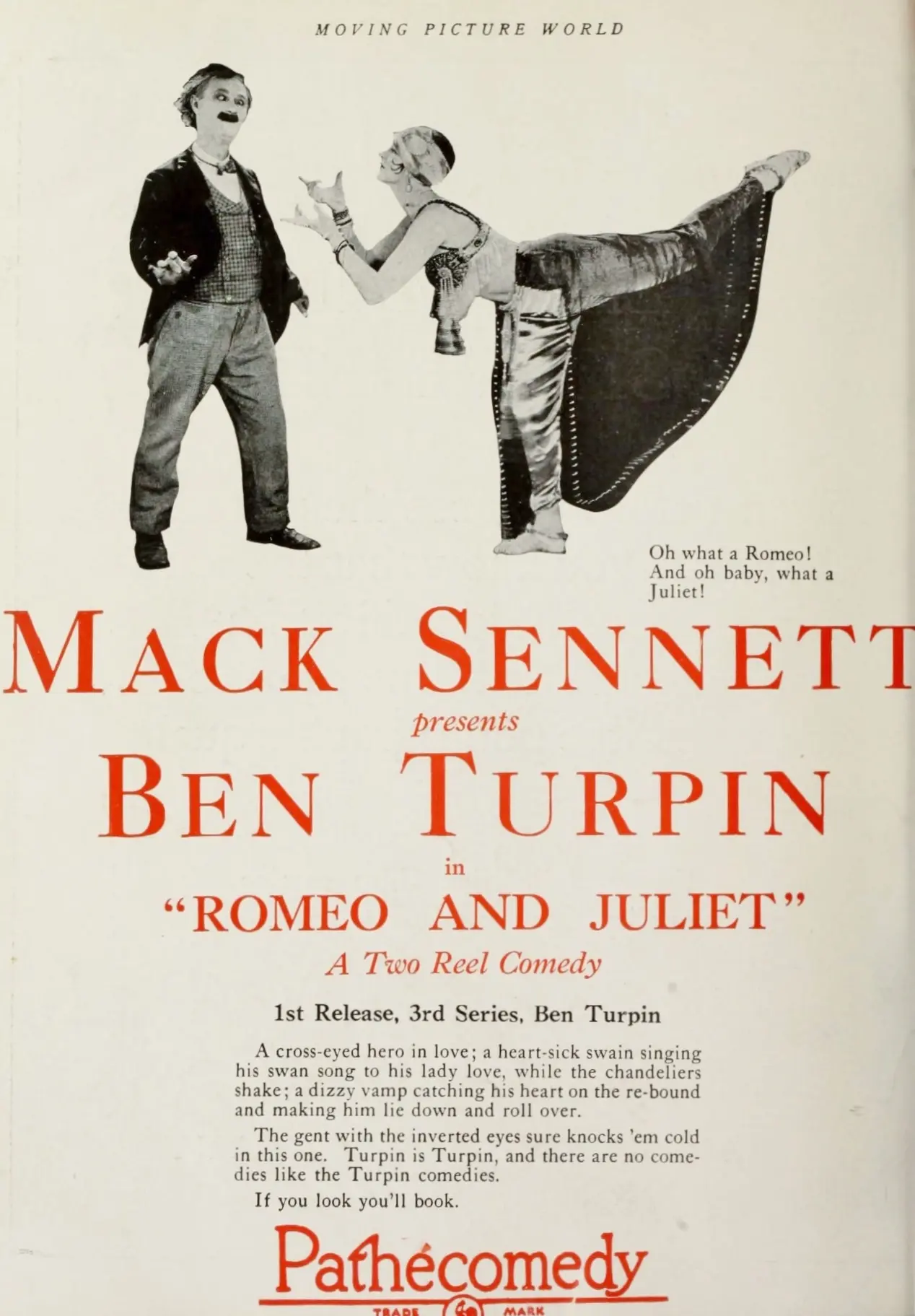
A definitive 7.4/10 rating for a film that redefined the boundaries of cult cinema. Romeo and Juliet remains a cornerstone of transgressive art.
When we reflect upon the early 1920s, we often conjure images of high-concept dramas or the burgeoning sophistication of German Expressionism. However, the 1924 iteration of Romeo and Juliet, directed under the watchful, chaotic eye of the Mack Sennett studio, offers a jarring and delightful counter-narrative. This is not the Shakespeare of the academy; this is the Shakespeare of the sawdust ring. By the time this burlesque hit the silver screen, the industry was already flirting with the 'prestige' picture—films like The Right to Be Happy were attempting to codify literary respectability. Sennett and his troupe, led by the inimitable Ben Turpin, had other plans. They sought to drag the Bard into the mud, and in doing so, they created a piece of populist art that remains a fascinating relic of visual subversion.
The centerpiece of this frantic endeavor is, undeniably, Ben Turpin. To understand Turpin is to understand the power of the physical anomaly in silent comedy. His famous crossed eyes weren't just a gimmick; they were a subversion of the 'leading man' archetype. In 1924, while leading men in films like The Man Life Passed By were leaning into soulful gazes and dramatic pathos, Turpin was using his gaze to dismantle the very concept of romantic focus. When his Romeo looks at Juliet, he is simultaneously looking at the balcony, the audience, and perhaps a stray cat in the alleyway. This visual scattering mirrors the film’s narrative structure—a series of tangential explosions that never quite settle into the expected rhythm of a tragedy.
Turpin’s Romeo is a masterpiece of misplaced confidence. He moves with the swagger of a swashbuckler but the coordination of a newborn giraffe. This dissonance is where the humor lives. Unlike the brooding intensity found in contemporary dramas like Der Eid des Stephan Huller, Turpin’s performance is entirely external. There is no interiority here, only the glorious, messy exterior of a man trying to navigate a world that refuses to stay in focus. It is a performance that demands we laugh at the absurdity of the romantic ideal, a sentiment that was quite radical for its time.
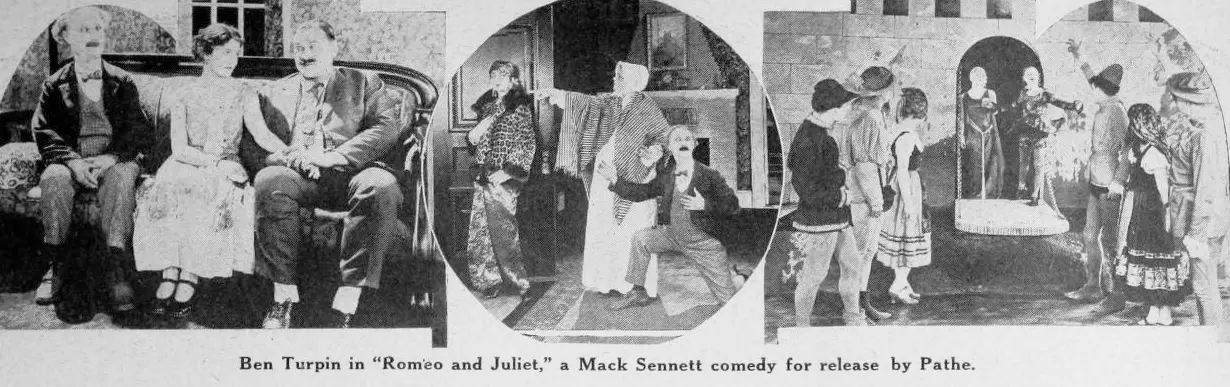
The film benefits immensely from the presence of the Sennett regulars. Billy Bevan, with his signature mustache and impeccable timing, provides a grounding presence—or as much of a 'grounding' presence as one can find in a film where people are routinely launched from windows. Bevan’s comedy often relied on a certain bewildered dignity, a stark contrast to Turpin’s manic energy. This dynamic is essential to the burlesque format; you need a 'straight' world for the clown to destroy. In many ways, the supporting cast acts as the traditional Shakespearian framework, which Turpin then proceeds to demolish with a sledgehammer.
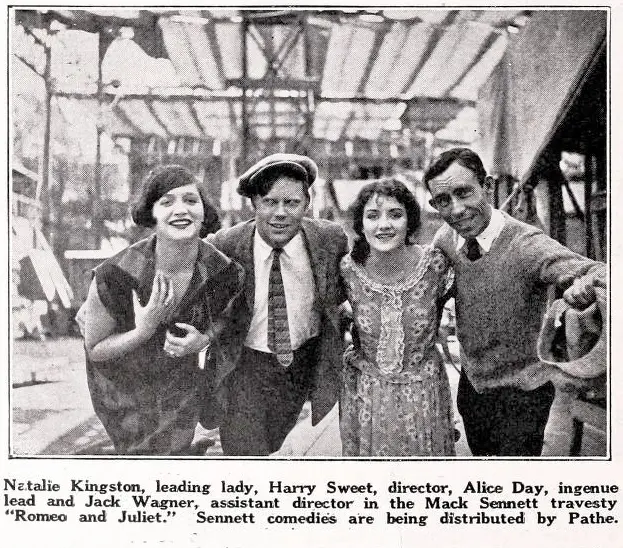
Natalie Kingston and Alice Day bring a different flavor to the proceedings. While the female roles in slapstick were often relegated to being the 'prize' or the 'shrew,' there is a self-awareness in their performances here. They seem to recognize the absurdity of their positions. In a year where films like The Social Code were examining the nuances of societal expectations, Romeo and Juliet simply throws the code out the window. The interactions between the cast members are less about chemistry and more about collision—a choreographical feat that John A. Waldron’s writing facilitates with ruthless efficiency.
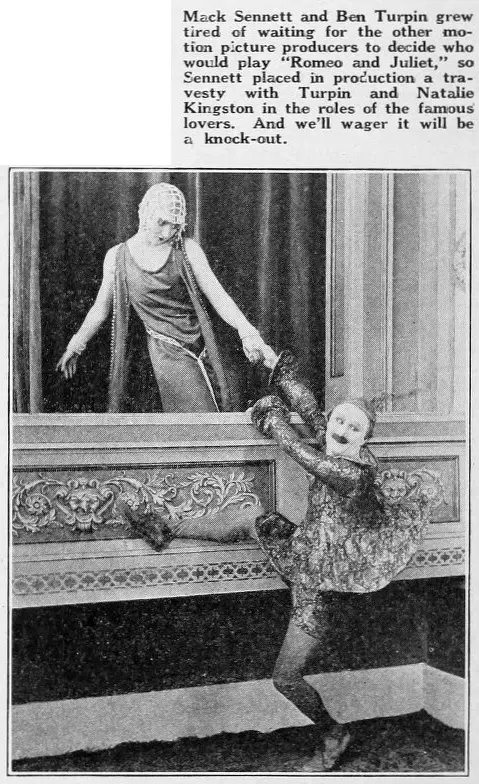
Technically, the film is a masterclass in the 'geometry of comedy.' The balcony scene, traditionally the pinnacle of romantic yearning, is reimagined as a precarious exercise in structural engineering. The use of depth and verticality in the set design allows for a multi-layered comedic experience. While Romeo struggles below, the background is often filled with the incidental movements of characters like Andy Clyde or Vernon Dent, creating a tapestry of idiocy. This density of humor is something that modern comedies often lack. Every inch of the frame is utilized, a technique also seen in the more sophisticated comedies like Some Judge.
The pacing is relentless. In the silent era, the 'burlesque' was a specific genre that required a high gag-per-minute ratio. There is no room for the slow-burn tension of a film like Waifs. Instead, Waldron and the directorial team lean into the 'snappiness' of the edit. The transitions between scenes are punctuated by title cards that mock the flowery language of the original play, providing a linguistic layer to the visual parody. This meta-textual approach—mocking the very medium of the literary adaptation—shows a surprising level of sophistication beneath the surface-level silliness.
To truly appreciate what Romeo and Juliet (1924) achieves, one must look at the landscape of 1923 and 1924 cinema. We were seeing grand, sprawling epics like Die Herrin der Welt 8. Teil which sought to transport audiences to exotic locales with high-stakes drama. In contrast, Sennett’s film is proudly parochial. It doesn't want to take you to Verona; it wants to bring Verona to a backlot in Los Angeles and cover it in soot. There is a democratic spirit in this approach. It suggests that nothing is too sacred to be laughed at—not the Bard, not the history of literature, and certainly not the 'seriousness' of the film industry itself.
Even when compared to lighter fare like Her Temporary Husband or the pastoral charms of Comin' Thro' the Rye, this burlesque stands out for its aggression. It is an aggressive comedy. It attacks the viewer with its absurdity. Where a film like The Lady of the Photograph might use humor to enhance a romantic subplot, Romeo and Juliet uses the 'romance' as a mere skeleton upon which to hang increasingly bizarre physical stunts. It is the cinematic equivalent of a raspberry blown in the face of the cultural elite.
One cannot ignore the cinematography, which, while functional, possesses a certain 'newsreel' grit that adds to the comedy. The flat lighting and wide shots allow the physical comedy to breathe. In more dramatic works of the period, such as The Brute Master or the intense The Burning Question, lighting was used to create mood and shadow. Here, the 'mood' is clarity. You need to see exactly where the ladder is going to fall and exactly how far the protagonist is going to tumble. It is a utilitarian aesthetic that serves the god of the laugh.
The film also plays with the concept of 'theatricality.' By mocking a play, it acknowledges its own artifice. There are moments where the fourth wall feels paper-thin. When Turpin looks into the camera, he isn't just breaking character; he is inviting the audience to join him in the conspiracy of the joke. This is a far cry from the immersive, dreamlike quality of The Dreamer. This film doesn't want you to dream; it wants you to wake up and see the hilarity in the mundane and the prestigious alike.
As we look back at Romeo and Juliet (1924), it is easy to dismiss it as mere fluff. But to do so would be a mistake. This film represents a vital moment in the evolution of American humor. It is the bridge between the vaudeville stage and the sophisticated satires of the later 20th century. It shares a certain DNA with the 'anything for a laugh' mentality of One Wonderful Night, but with a sharper, more parodic edge. It reminds us that the classics are only classic because they can withstand the weight of our derision as much as our praise.
The sheer audacity of casting Ben Turpin as the world’s greatest lover is a stroke of genius that transcends the simple slapstick of its era. It is a commentary on beauty, on the cinematic gaze, and on the ridiculousness of young love. While other films of the time, such as Burning the Candle, were concerned with moral lessons and social uplift, Romeo and Juliet was content to just burn the house down for a laugh. And honestly? Sometimes that is the most profound artistic statement one can make.
In the final analysis, this burlesque is a testament to the enduring power of the Mack Sennett method. It is loud, it is messy, and it is frequently incoherent, but it is also vibrantly alive. In a world of curated 'prestige' and carefully managed star personas, there is something deeply refreshing about a film that is willing to be completely and utterly ridiculous. Ben Turpin’s Romeo might not have the poetry of the original, but he has something far more valuable in the world of 1924: the ability to make us forget our troubles, if only for the duration of a two-reel short. It is a chaotic, cross-eyed masterpiece of the low-brow, and it deserves its place in the annals of comedic history.
IMDb 5.4
1930
Community
Log in to comment.