DbcultAccessing Vault...
Cult Review
Senior Film Conservator
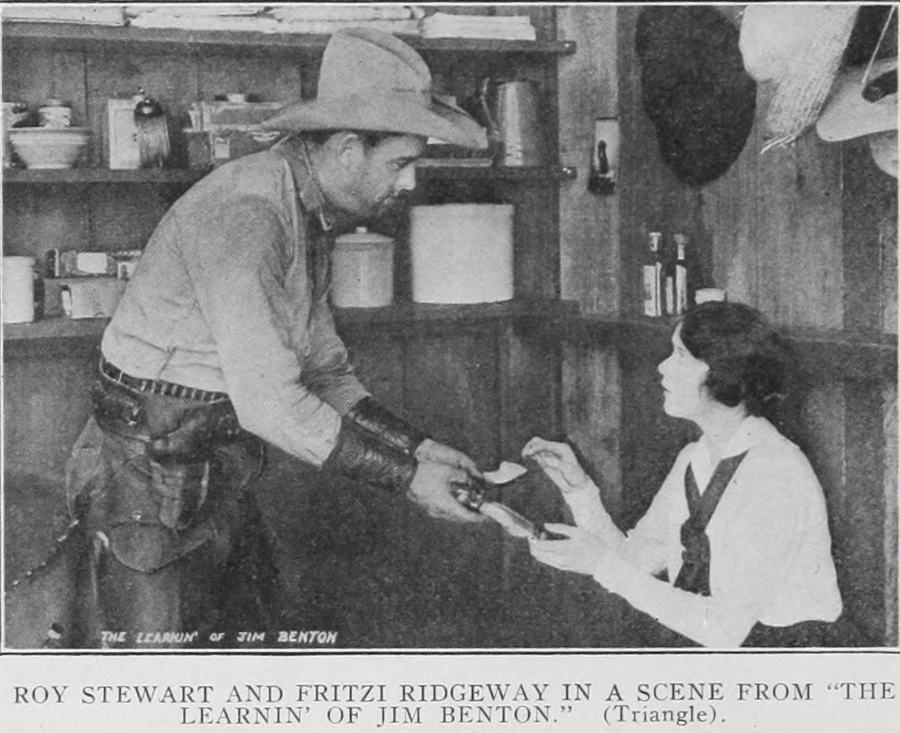
There’s a peculiar magic in silent films, a capacity to distill grand narratives into visceral gestures and stark visual poetry. Among these gems, "The Learnin' of Jim Benton" emerges as a fascinating artifact, a Western that transcends mere genre conventions to explore profound human themes: the pursuit of knowledge, the clash of civilizations, and the often-brutal dance between law and raw survival on the American frontier. Directed by the prolific Alan James, this 1917 production, starring the charismatic Ed Brady as the titular Jim Benton and the captivating Fritzi Ridgeway as Evelyn Hastings, offers more than just a glimpse into early cinema; it provides a resonant commentary on the very essence of progress and personal transformation.
At its heart, the film introduces us to Jim Benton, a man carved from the unforgiving landscape he inhabits. He is a cattle king, a figure of immense power and wealth, whose empire is built not on erudition but on sheer will, shrewd dealings, and an intimate understanding of the land. His hands, though capable of orchestrating vast financial enterprises, have never mastered the delicate art of holding a pen. Benton’s illiteracy isn’t merely a character quirk; it’s a symbolic representation of a frontier ethos that prioritizes practicality and brute force over intellectual refinement. He embodies a certain kind of American Dream – one achieved through relentless labor and resourcefulness, yet inherently incomplete. This narrative choice immediately elevates the film beyond a simple Western adventure, imbuing Benton with a depth that makes his subsequent journey all the more compelling. He is a titan, yes, but a titan with a profound, unspoken vulnerability, a longing for something more. His world, a wild west of open ranges and hard-won battles, mirrors his own untamed spirit, a place where the rule of law often bends to the will of the powerful, and personal grievances can ignite into full-blown wars. It's a setting that, in its own way, echoes the untamed spirit seen in films like The Savage, where characters are defined by their immediate environment and the raw challenges it presents.
The arrival of Evelyn Hastings, portrayed with grace and conviction by Fritzi Ridgeway, acts as the pivotal catalyst in Benton's life. She is not merely a schoolmarm; she is an emissary of civilization, a living embodiment of the transformative power of education and refinement. Her presence on Benton's isolated ranch is, in itself, a bold statement, bringing the quiet dignity of learning into a realm dominated by dust, cattle, and conflict. What makes their dynamic particularly engaging is Benton's unexpected humility. Despite his formidable status, he recognizes his own deficiency and, with a sincerity that belies his rugged exterior, persuades Evelyn to open a school. This isn't just about teaching children; it’s about a man, hardened by life, willingly submitting to the discipline of the alphabet. Benton’s transformation into Evelyn’s most devoted pupil is genuinely touching. It highlights a universal truth: the desire for knowledge knows no age or social standing. Evelyn's influence extends beyond the classroom; she becomes a moral compass, a voice of reason in a world that often operates on instinct and retribution. Her "learnin'" is not just academic; it's a lesson in empathy, restraint, and the higher principles of justice. This civilizing influence, the introduction of intellectual and moral order into a chaotic world, is a theme that resonates through many early American narratives, reflecting a societal push towards progress and refinement.
No Western would be complete without a fundamental conflict, and "The Learnin' of Jim Benton" delivers this with the classic, enduring struggle between cattlemen and sheepmen. This wasn't merely a squabble over land; it was an economic, cultural, and often violent clash of two distinct ways of life. Cattle ranchers, like Benton, saw sheep as destroyers of grazing land, their close cropping methods ruining pastures for generations of cattle. Sheepmen, on the other hand, often represented a new wave of settlers, seeking their own stake in the frontier. The film masterfully leverages this historical tension, escalating it into a direct threat: the sheepmen’s vow to cut off Benton's vital water supply. This isn't just a business dispute; it's an existential threat. Water in the arid West was, and remains, life itself. To deny access to water is to condemn a ranch, its livestock, and its people to ruin. This conflict provides the immediate, high-stakes drama that propels the plot forward, forcing Benton to confront not just his personal shortcomings, but the very real dangers that threaten his livelihood and the community he leads. It’s a struggle for resources that feels as potent and relevant as any modern-day geopolitical dispute, a testament to the timeless nature of human conflict over essential needs. The starkness of this struggle for survival can be seen in other frontier narratives, such as The Indian Wars, where control over land and resources is central to the narrative's tension.
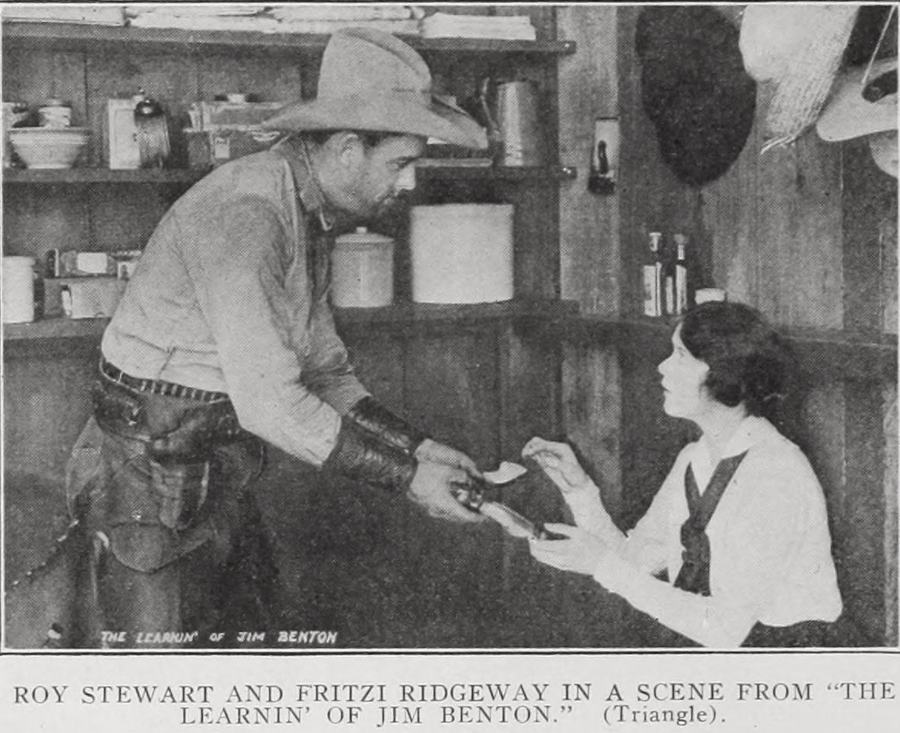
As the tension mounts, Evelyn's influence takes a critical turn. Recognizing the inherent violence of the frontier and Benton's instinctual response to threats, she extracts a solemn promise from him: he will only shoot in self-defense. This vow is a profound test of Benton's transformation. It forces him to grapple with the tenets of his old life – where problems were often solved with a quick draw – and the new moral framework Evelyn has introduced. It's a promise that asks him to internalize a higher law than the law of the gun. The film then meticulously explores the tragic irony of this commitment. Despite Benton's earnest efforts to keep his word, the relentless aggression of the sheepmen leaves him with no recourse. He is forced to kill, not out of malice, but out of an absolute necessity to protect himself and his people. This sequence is a masterclass in silent film storytelling, conveying the anguish of a man caught between a sacred promise and the brutal realities of survival. The killings are not glorified; they are presented as the grim, unavoidable consequences of a world that offers few alternatives. This moral quandary, the conflict between an ethical ideal and the harsh demands of circumstance, is a theme that echoes in many films dealing with justice and human nature, perhaps subtly touching upon the complex internal struggles explored in films like Der Andere, though in a vastly different context.
The aftermath of the violent clashes plunges Benton into the heart of a corrupt legal system. A packed jury, composed entirely of sheepmen, renders a swift and predictable verdict: death. This segment of the film is a powerful indictment of frontier justice, or rather, the lack thereof, when personal biases and economic rivalries supersede the principles of fairness and impartiality. The courtroom, traditionally a sanctuary of law, becomes a stage for vengeance, highlighting how easily the scales of justice can be tipped by prejudice. For Benton, this isn't just a legal battle; it's a betrayal of the very ideals Evelyn has tried to instill in him. He upheld his promise, acted in self-defense, yet is condemned. This injustice serves to underscore the perilous state of affairs on the frontier, where the line between right and wrong is often blurred by the pursuit of power and the desire for retribution. The scene is crafted to evoke a sense of palpable dread and outrage, drawing the audience into Benton's plight. It’s a stark reminder that even with the best intentions, the individual can be crushed by a system designed to serve the interests of the powerful. The theme of manipulated justice is a potent one, explored in various forms across cinematic history, often challenging the audience to consider the true meaning of fairness, much like the broader implications of consequences for actions explored in The Law of Compensation.
With Benton facing execution, the cattlemen, loyal to their leader, prepare for a daring rescue. This is the expected Western climax: a dramatic breakout, a hail of bullets, and a hero saved by his devoted followers. However, "The Learnin' of Jim Benton" subtly subverts this expectation. While the cattlemen's attempt symbolizes brute loyalty and the willingness to fight for what’s right, it is ultimately Evelyn Hastings who truly saves the day. Her intervention is not through violence, but through a combination of intellect, quick thinking, and perhaps a shrewd understanding of human nature. The film doesn't explicitly detail her method, but the implication is clear: her "learnin'" – her intelligence, her ability to navigate complex situations, her moral fortitude – proves to be a more potent weapon than any gun. She orchestrates a resolution, presumably through legal means or strategic persuasion, that frees Benton from his unjust fate. This ending is profoundly satisfying because it champions the very themes the film has painstakingly built: that true strength lies not just in physical prowess, but in wisdom, compassion, and the power of a cultivated mind. It's a powerful statement for its era, suggesting that the future of the frontier, and indeed society, rests not on the shoulders of the fastest gun, but on the enlightened spirit. This triumph of intellect over brute force is a compelling narrative choice, reinforcing the film’s central message about the value of education and the civilizing influence of knowledge.
The success of "The Learnin' of Jim Benton" owes much to its cast and the clear directorial vision of Alan James, who also penned the screenplay. Ed Brady, as Jim Benton, delivers a performance that manages to convey both the raw power of a frontier magnate and the touching vulnerability of a man striving for self-improvement. His gestures, his expressions – the very language of silent film acting – communicate a nuanced character arc, making his transformation believable and empathetic. Fritzi Ridgeway, as Evelyn Hastings, is equally compelling. She projects an aura of quiet strength and intelligence, embodying the moral center of the narrative without ever appearing weak or didactic. Her presence is a calming, yet powerful, force against the backdrop of frontier chaos. Roy Stewart, as one of the supporting players, likely contributes to the rugged authenticity of the cattlemen’s world. Alan James, a prolific writer and director of the era, demonstrates a keen understanding of Western tropes while simultaneously pushing them into more thematic territory. He crafts a story that is both exciting and thought-provoking, balancing action with character development and moral inquiry. The visual storytelling, typical of the silent era, relies on strong compositions, clear character blocking, and intertitles that efficiently convey dialogue and internal thoughts. While perhaps not as experimental as some European contemporaries, James's direction is effective, ensuring the narrative remains engaging and emotionally resonant. The film's pacing, moving from character introduction to escalating conflict to a dramatic resolution, is expertly handled, keeping the audience invested in Benton’s fate and the outcome of the broader cattlemen-sheepmen feud. This ability to craft a compelling narrative within the constraints of silent cinema is a testament to the artistry of filmmakers like James, whose works often laid the groundwork for future cinematic developments in the Western genre, much like the foundational narratives seen in films such as A Man's Law.
Beyond its thrilling plot, "The Learnin' of Jim Benton" resonates with several enduring themes that make it more than just a historical curiosity. Foremost is the transformative power of education. Benton’s journey from illiteracy to enlightenment is a powerful testament to the idea that knowledge can civilize, refine, and ultimately empower an individual, regardless of their background. It argues that true wealth lies not just in material possessions, but in intellectual and moral growth. The film also explores the complex nature of frontier justice. It critiques the raw, often biased, application of law in a nascent society, contrasting it with the higher ideals of fairness and due process. Evelyn’s role in securing Benton’s freedom, not through violence but through intellect, underscores the film’s belief in the superiority of reasoned action over brute force. The cattlemen-sheepmen conflict, while specific to the era, serves as a broader metaphor for societal clashes over resources and differing ways of life, a struggle that remains relevant in various forms even today. This film, therefore, is not merely a period piece; it’s a timeless fable about the evolving American character, the push-pull between the wild and the cultivated, and the fundamental human desire for growth and justice. It leaves us with the profound understanding that the lessons learned in a classroom, or from a compassionate mentor, can be far more impactful and life-saving than any weapon. Its legacy lies in its ability to tell a compelling story that champions the enduring values of personal improvement and the civilizing influence of knowledge, making it a noteworthy contribution to the silent Western canon and a compelling watch for anyone interested in the foundational narratives of American cinema.
IMDb 6.7
1932
Community
Log in to comment.