DbcultAccessing Vault...
6.1/10
Senior Film Conservator
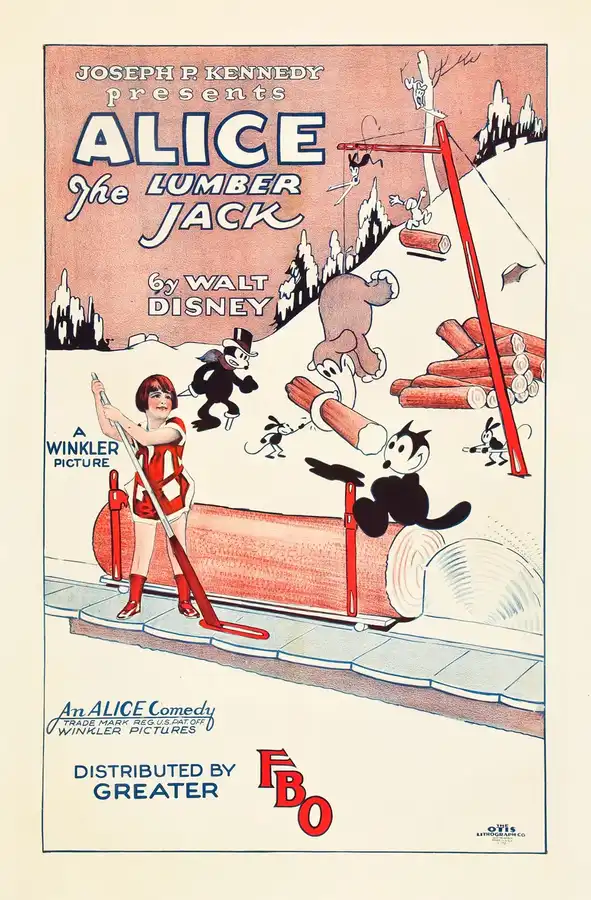
A definitive 6.1/10 rating for a film that redefined the boundaries of cult cinema. Alice the Lumberjack remains a cornerstone of transgressive art.
Is Alice the Lumberjack worth your time today? Short answer: Yes, but strictly as a fascinating archaeological dig into the mind of a young Walt Disney. This isn't a film you watch for emotional resonance or a complex plot; you watch it to see the rough draft of a global empire. It is for the animation enthusiast and the silent film historian, but definitely not for those who require high-definition polish or a narrative that doesn't rely on 1920s tropes.
This film works because it pushes the technical boundaries of the 1920s by placing a real girl in a world of ink with surprising physical confidence. This film fails because the plot is a repetitive cycle of chase-and-rescue that Disney would eventually perfect, but here feels like a rough rehearsal. You should watch it if you want to see the literal DNA of Mickey Mouse hidden within the movements of Julius the Cat.
In 1926, the 'Alice Comedies' were the bread and butter of the Disney Studio. In Alice the Lumberjack, we see Margie Gay taking on the titular role with a certain blue-collar grit that her predecessors lacked. While earlier entries in the series felt more like stage plays, this film moves. The river setting provides a kinetic energy that is often missing from contemporary shorts like Faint Hearts. The log-rolling sequence is the standout. Watching a live-action child attempt to maintain balance on animated logs is a primitive special effect that still carries a certain charm. It isn't seamless. It’s clunky. But that clunkiness is where the soul of the film lives.
Margie Gay's performance is surprisingly physical. Unlike the more theatrical acting found in The Waif, Gay treats the animated world as a tangible threat. When Pete appears, her reaction isn't just a silent film pout; there is a genuine sense of frantic movement. However, the real star is Julius the Cat. It is impossible to watch Julius and not see the shadow of Felix the Cat. Disney was clearly 'borrowing' the aesthetics of the time, but the way Julius interacts with the environment—using his tail as a tool or a weapon—shows a level of creativity that was beginning to outpace the competition. It works. But it’s flawed.
Pete is one of the most enduring figures in the Disney canon, and seeing him here is like looking at a rough sketch before the final painting. He is a predatory, looming presence, much more menacing than the villains in The Bigger Man. His scheme to kidnap Alice is simple, but it serves the purpose of creating a chase. The chase is the heart of the film. In one specific scene, Pete’s movements are synchronized with the flow of the river, creating a rhythmic tension that was quite advanced for 1926.
The character of Pete in this era represents a specific type of cinematic threat: the unmotivated brute. He doesn't want money; he just wants to cause chaos. This lack of motivation makes him a perfect foil for the chaotic physics of the animation. While films like A Debtor to the Law dealt with more grounded conflicts, Alice the Lumberjack revels in the impossible. Pete can be flattened, stretched, and tossed, yet he remains a constant danger. It is a masterclass in early slapstick logic.
If you are looking for a historical perspective on how animation and live-action first met, then yes, this film is essential. It provides a clear look at the technical hurdles Walt Disney and Ub Iwerks were overcoming. It is a short, punchy experience that rewards those who look at the background details. If you are a casual viewer looking for a deep story, you will likely find it repetitive and dated.
The pacing of Alice the Lumberjack is breakneck. There is very little 'down time.' From the moment the logs hit the water, the film is in constant motion. This is a sharp contrast to the slower, more deliberate pacing of A Tale of the Far North. The animation itself, handled largely by Iwerks, is bouncy and fluid. There is a specific moment where Julius uses his tail as a crane to lift Alice out of the water. This kind of visual punning became the hallmark of the Disney style.
However, we must address the 'inkwell' problem. The integration of the live-action Alice into the animated world is hit-or-miss. Sometimes she seems to float above the background rather than stand on it. Compared to the more sophisticated compositing we would see just a few years later, it looks like a school project. But there is an honesty in that failure. You can see the hand of the artist in every frame. It’s not polished, but it’s alive.
Pros:
The film is a vital piece of history. Margie Gay is a charming lead who handles the physical comedy well. The animation of Julius is a precursor to the rubber-hose style that would define the 1930s. It’s short enough that it doesn’t overstay its welcome.
Cons:
The print quality of available versions is often poor. The plot is virtually non-existent. Some of the gags feel like direct copies of Pat Sullivan’s Felix the Cat shorts, lacking original identity.
When placed alongside other films of the period, such as Off the Trolley or Sawdust, Alice the Lumberjack stands out for its ambition. While many shorts were content to stay in the nursery or the city street, Disney took his characters to the river. This move toward 'adventure' settings would eventually lead to the sweeping landscapes of his feature films. It is a small step, but a significant one.
Is it as emotionally resonant as Just a Woman? No. But it isn't trying to be. It is a product of a studio trying to find its voice. The 'Alice' shorts were a laboratory. In this specific lab, they were testing how to make an audience care about a drawing and a human girl at the same time. They succeeded more often than they failed.
Alice the Lumberjack is a messy, energetic, and vital piece of silent cinema. It isn't a masterpiece, and anyone calling it one is blinded by nostalgia. It is, however, a fascinating look at the 'primitive' era of Disney. The film is a reminder that even the biggest giants started with simple ink and a girl on a log. Watch it for the history, stay for the cat, and forgive the technical limitations. It’s a seven-minute window into 1926 that still manages to crack a smile. It’s not perfect. It’s just the beginning.
IMDb —
1936
Community
Log in to comment.