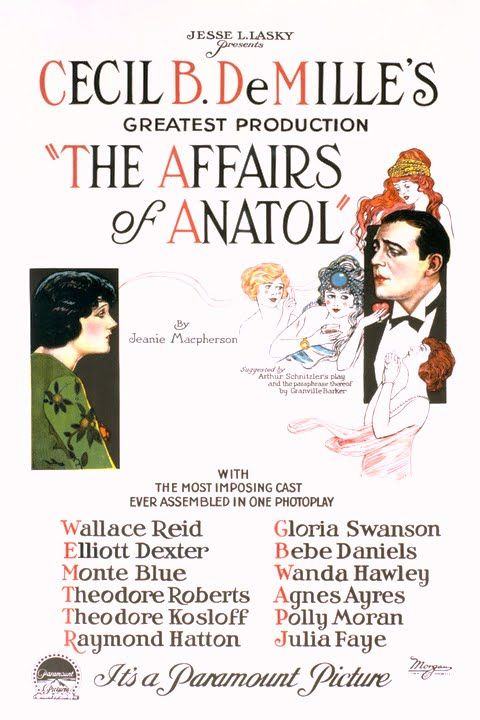
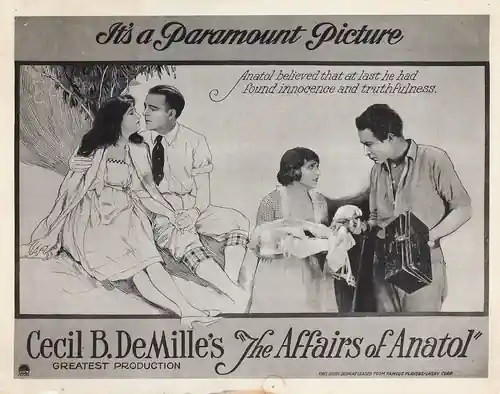
The first time I saw The Affairs of Anatol, I was wedged into a folding chair at a repurposed Brooklyn warehouse, 16 mm acetate crackling through a carbon-arc projector while some neo-Gatsby trust-fund kid spilled absinthe on my shoes. Ninety seconds in, Gloria Swanson’s tiara flashed and every conversation evaporated; the room held its breath for 117 minutes. That is the occult voltage of this 1921 phantom—an artifact that should feel moth-eaten yet remains electrically alive, pulsing with champagne headaches and moral vertigo.
Set your watch back to a Manhattan where chandeliers drip like iced diamonds and the Volstead Act is a joke whispered behind gloved hands. Anatol Spencer, played by the astonishingly underrated Wallace Reid, owns the night: opera cloaks, onyx walking sticks, a cigarette case engraved with tonight’s paramour. His marriage to the luminous but restless Vivian—Bebe Daniels channeling every ounce of post-war ennui—has calcified into a chummy détente. For Anatol, monogamy is a starter home: charming, but you tear it down when the view improves.

A Mirage Named Emilie
Cue Emilie, the friend of his youth, now a bargain-bin Zuleika Dobson swaddled in chiffon and opportunism. Anatol installs her in a velvet-lined flat where the wallpaper seems to exhale perfume and menace in equal doses. DeMille, never a director to let a boudoir breathe without a metaphor, frames Emilie’s bed beneath a stained-glass window depicting a siren dragging sailors into teal surf. Within three reels she’s two-timing our hero with a polo player whose moustache wax alone deserves an end-credit.
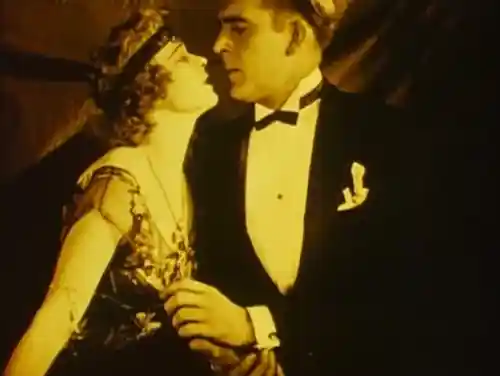
The shock isn’t her infidelity—it’s how DeMille rubs our noses in the gaudy mechanics of male fantasy. Anatol wants a blank canvas; Emilie demands her own paintbox. Their rupture detonates inside a tango café where the camera pirouettes between brassy horns and a chorus girl kicking like a metronome on amphetamines. When Anatol storms out, the saxophone sustains a blue note that feels like a cigarette burn on the soul.
The Annie Interlude
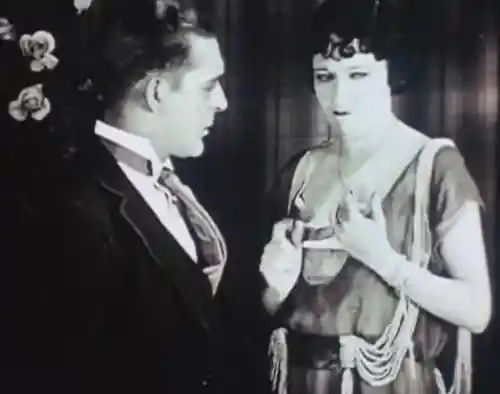
Reeling, Anatol collides with Annie, a waif whose mascara has surrendered to gravity. She’s the proto-Manic Pixie, clutching a suicide note that reads like a Dorothy Parker rough draft. Their courtship unwinds against lunar tides on Coney Island: ferris-wheel lights strobe across her cheekbones, cotton candy dissolves on her tongue like promises. Anatol plays savior; Annie plays along until she rifles his wallet and disappears into the sodium mist, leaving only a paper carnival ticket flapping like a wounded gull.
It’s a sequence so modern it could slide into a 2023 A24 release without a hiccup. DeMille cross-cuts between the thief counting bills and Anatol smashing a champagne flute, the shards mirroring his fractured self-image. You half expect a synth-pop needle-drop.
Swanson’s Triumphant Coda
Enter Gloria Swanson, billed third but detonating like a magnesium flare. She saunters into frame as the “mystery woman” at a rooftop soiree, swathed in silver lamé that behaves like liquid moonlight. Her role is nominally minor—an ex-lover who delivers the film’s moral coup de grâce—but she seizes possession of every molecule of celluloid. When she purrs, “You collect hearts like cufflinks, darling,” the line ricochets off the Art Deco skyline and lodges in Anatol’s ribcage.
Swanson’s cadence—half sigh, half stiletto—turns the picture on its axis. Suddenly we realize the film was never about a man’s quest for better romance; it’s a stealth matriarchal uprising. Every woman he tries to slot into a narrative rewrites the script and exits stage left, leaving him holding blank pages.

Visual Alchemy
Technically, the film is a time-capsule masterclass. Mitchell Leisen’s costumes oscillate between Ottoman excess and proto-Flapper sleekness. The tinting strategy alone deserves a dissertation: amber for cocktail ennui, viridian for back-alley trysts, blood-orange for the final masquerade ball where Anatol wanders maskless while everyone else hides in plain sight. Cinematographer Karl Struss uses mirrors like trapdoors—characters fracture into kaleidoscopic selves, hinting that identity in Jazz-Age Manhattan is a burlesque of surfaces.
Sound of Silence
The new 4K restoration drapes a symphonic score by Timothy Brock over the action like molten caramel. Syncopated xylophones echo the flicker of neon signs; a solo violin mourns during Annie’s beachside disappearance. Even in absolute silence, the film hisses with libidinal static—proof that narrative tension can vibrate without Dolby surround.
Comparative Vertigo
Stack it against Old Wives for New and you’ll spot DeMille’s obsession with consumption—food, fabric, flesh. Pair it with Lolita for a century-spanning diptych of predatory self-delusion. Or cue Dodging a Million to witness how 1921 already understood that women’s economic survival often relied on outwitting the male gaze at its own rigged carnival games.
Final Spin of the Roulette Wheel
By the time the end card flickers—Anatol trudging homeward through snow that looks suspiciously like ash—the cumulative effect is a hangover that predates your grandparents. The film doesn’t moralize; it atomizes. You exit dazed, contemplating the wreckage of a man who mistook people for plot devices, and you realize the joke is on eternity: we still swipe, ghost, curate, repeat.
The Affairs of Anatol is a champagne bottle left uncorked in a speakeasy—pressure builds, bubbles rise, and when the cork finally pops, the spray hits everyone in the room, regardless of century.
If you fancy yourself a cinephile, carve out 117 minutes. If you fancy yourself human, carve out the after-hours to sit alone in the dark and listen to the echoes of your own appetites. This film will not behave; it will seduce, humiliate, and ultimately liberate you—exactly like the best affairs always do.