DbcultAccessing Vault...
5.8/10
Senior Film Conservator
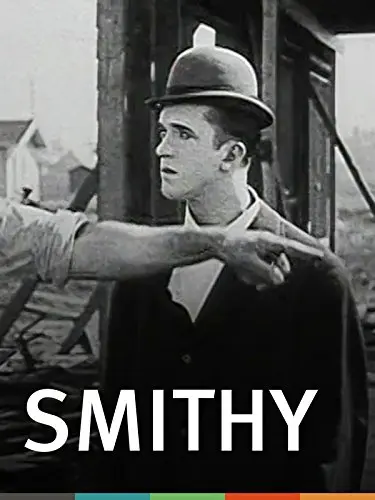
A definitive 5.8/10 rating for a film that redefined the boundaries of cult cinema. Smithy remains a cornerstone of transgressive art.
There’s a certain magic to silent cinema, a universal language woven from exaggerated gesture, kinetic energy, and the sheer audacity of physical comedy. Among the titans of this era, Stan Laurel, even before his iconic partnership with Oliver Hardy, was a force of nature, a master of the bewildered innocent whose best intentions invariably paved a road to uproarious disaster. His 1924 vehicle, Smithy, stands as a testament to this early, formative period of his genius, a riotous romp through the world of blue-collar labor that transforms the mundane act of house-building into an epic struggle against the forces of gravity and common sense.
The film opens with an absurd premise, instantly establishing its comedic tone: our protagonist, Smithy, finds himself unceremoniously discharged from the 372nd infantry. The reason? A rather peculiar “bean shortage.” This whimsical detail, seemingly insignificant, immediately sets the stage for a world where logic is a fleeting concept, and the rules of engagement are dictated by the whims of fate and an almost surreal bureaucracy. Smithy, a man now adrift in a civilian landscape, is compelled to seek gainful employment, a task that, for someone of his particular disposition, is fraught with peril for all involved.
His journey leads him to a bustling construction site, a vibrant tableau of industry where the skeletal framework of a new house is steadily rising. It’s here that Smithy, with an eagerness that far outstrips his practical aptitude, attempts to integrate himself into the rhythm of manual labor. What ensues is a masterclass in escalating chaos. Smithy’s efforts to assist, whether it’s hammering a nail or hoisting a beam, inevitably result in a cascade of mishaps. Tools go astray, planks tumble, and his fellow workers, initially tolerant, soon find themselves exasperated, then outright infuriated, by the well-meaning but utterly destructive force that is Smithy. One might draw parallels to the escalating, almost balletic chaos seen in Buster Keaton's Cops, where a single misstep snowballs into city-wide pandemonium, though Smithy's destruction is more localized and innocently derived.
The comedic brilliance of Smithy lies not just in the physical gags, but in Laurel's portrayal of a character utterly convinced of his own competence, even as the world crumbles around him. His wide-eyed innocence, his earnest attempts to rectify his mistakes only to exacerbate them, are the hallmarks of his early comedic persona. He’s not malicious; he’s simply a walking, talking embodiment of Murphy’s Law. The construction site, with its inherent dangers and need for precision, becomes the perfect canvas for his brand of accidental anarchy.
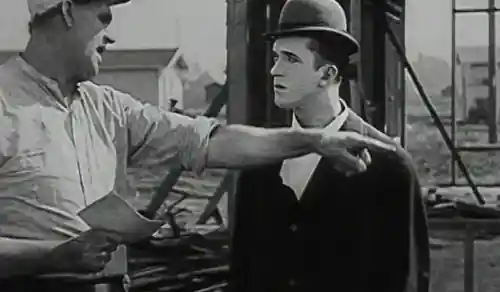
The narrative takes a pivotal turn with an administrative oversight that serves as the engine for the film’s climax. The owner of the construction company, a man of authority and presumed order, departs for a week, leaving instructions for the house's completion. A letter is penned, intended for a 'Mr. Smith,' detailing the tasks to be undertaken. However, through a delightful contrivance of fate, this crucial missive is misdirected, landing squarely in the hands of our beloved, bumbling Smithy. The irony is palpable: the very man who has been a bane to the project is now, by official decree, entrusted with its final stages.
What follows is a testament to Smithy’s singular, albeit unconventional, genius. Left to his own devices, he single-handedly, and against all odds, manages to bring the house to a state of completion. This sequence is particularly rich in visual humor, as we witness Smithy’s unorthodox methods—a flurry of activity that, while undeniably effective in its outcome, defies every known principle of architecture and engineering. He works with an almost manic energy, driven by a newfound sense of responsibility, the chaotic energy he previously exerted now channeled, however precariously, towards a constructive goal. The audience, privy to the absurdity, is left to marvel at the sheer improbability of his success.
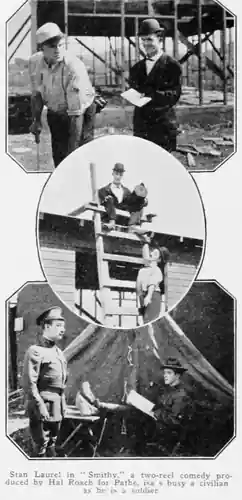
Upon the owner’s return, the scene is set for a moment of triumph. The house stands, seemingly complete, a monument to Smithy’s unexpected diligence. The owner, oblivious to the calamitous journey that led to this point, commends Smithy, showering him with praise for his astonishing efficiency. It’s a moment of pure, unadulterated irony, a brief glimmer of recognition for a man whose contributions have been, until now, met with groans and exasperated sighs. This fleeting commendation, however, is merely the calm before the inevitable storm, a comedic tension building towards a guaranteed structural failure.
The film reaches its hilarious, destructive crescendo when the final, crucial support beam is removed. With a groan and a shudder, Smithy’s architectural marvel, a house built on a foundation of good intentions and questionable engineering, begins its spectacular, rapid descent into a pile of rubble. The meticulously constructed façade crumbles, revealing the inherent instability and sheer comedic fragility of his masterpiece. It's a classic example of the 'pay-off' in slapstick comedy, where the slow build-up of absurdity culminates in a swift, devastating, and utterly hilarious collapse. This kind of physical destruction, often with an underlying message about the fragility of order, is a recurring motif in silent comedies, echoing the grand, elaborate stunts seen in films like Harold Lloyd’s work, albeit with a more intimate, character-driven focus here.
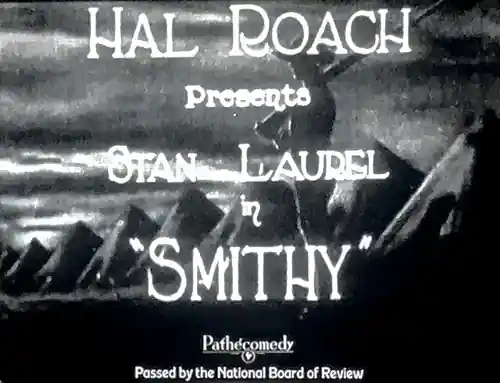
The cast, a vibrant ensemble of silent era talent, contributes significantly to the film’s charm. Stan Laurel, of course, is the undeniable center, his rubbery face and expressive body language conveying a thousand words without a single spoken one. His ability to elicit both sympathy and laughter is unparalleled. Alongside him, actors like Charlie Hall, Jack Ackroyd, and Ena Gregory provide excellent comedic foils, reacting to Smithy’s antics with a range of expressions from bewilderment to outright fury. George Rowe, William Gillespie, and Fred Karno Jr. (whose father was a renowned British impresario and a significant influence on Laurel and Chaplin) further flesh out the chaotic world of the construction site. The ensemble’s synchronized reactions to Smithy’s blunders are crucial to the comedic timing, creating a rhythm of escalating frustration that the audience can keenly feel.
The screenplay, penned by H.M. Walker, demonstrates a shrewd understanding of comedic structure and character. Walker, a prolific writer of the era, crafts a narrative that is simple yet effective, allowing ample room for visual gags and physical comedy to flourish. The plot, while straightforward, is rich in comedic potential, building momentum from the initial absurdity of the bean shortage to the ultimate, inevitable collapse of Smithy’s house. It’s a testament to the power of a well-conceived premise, executed with precision and a flair for the ridiculous.
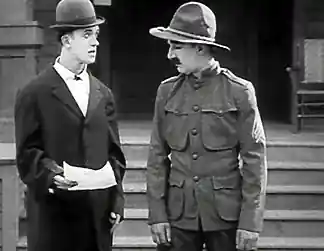
One might compare the thematic undercurrents of Smithy to other films of the period that explored themes of societal integration or the individual against the machine. While not as overtly dramatic as, say, The Faithful Heart, or as intensely focused on personal struggle as The Quitter, Smithy still grapples, albeit comically, with a man trying to find his place and prove his worth in a world that doesn’t quite understand him. His attempts at construction, though disastrous, are driven by a genuine desire to contribute, making his ultimate 'failure' all the more endearing.
The sheer inventiveness of the gags in Smithy is remarkable. From the precarious balancing acts to the unexpected collapses, each comedic beat is carefully orchestrated. There’s a particular joy in watching the domino effect of Smithy’s actions, where one innocent movement triggers a chain reaction of destruction. This kind of cause-and-effect humor is a cornerstone of silent comedy, and Laurel, even in his solo features, was already perfecting the art of the extended gag, stretching a simple premise to its logical, and most hilarious, extreme. The film’s pacing is brisk, a necessary quality for silent comedies to maintain audience engagement without the benefit of dialogue. The intertitles are used sparingly but effectively, providing crucial plot points or punchlines without bogging down the visual flow.
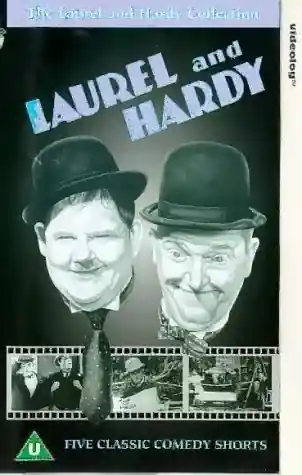
Looking at the broader context of silent film, Smithy offers a fascinating glimpse into the evolution of comedic storytelling. It predates Laurel and Hardy's official partnership by a few years, showcasing Laurel’s independent comedic voice. While some might argue that his true genius only blossomed with Hardy, films like Smithy prove that he was already a fully formed comedic talent, capable of carrying a feature with his unique brand of understated exasperation and accidental mayhem. It shares a spirit with other lighthearted romps of the era, perhaps even the charming innocence found in films like Love and Doughnuts, though Smithy's scale of chaos is certainly more pronounced.
The visual language of Smithy is also worth noting. The film makes excellent use of its single, central location—the construction site. This confined space becomes a microcosm of chaos, allowing for repeated gags and character interactions. The various levels of the house under construction provide opportunities for vertical humor, with characters falling, climbing, and narrowly avoiding disaster from above and below. The camera work, while typical of the era, is effective in capturing the action, ensuring that every pratfall and every bewildered expression is clearly visible to the audience. The blocking of the actors, a crucial element in silent physical comedy, is expertly handled, allowing for clear sightlines and maximum comedic impact.
In conclusion, Smithy is far more than just a historical curiosity; it’s a vibrant, laugh-out-loud silent comedy that exemplifies the early brilliance of Stan Laurel. From the whimsical absurdity of its opening premise to the spectacular, inevitable collapse of its climax, the film is a masterclass in physical humor and character-driven comedy. It’s a testament to the enduring appeal of a well-meaning fool, whose earnest endeavors invariably lead to the most delightful of disasters. For anyone with an appreciation for the foundational artistry of silent film, or simply a good, hearty laugh, Smithy remains an essential viewing experience, a joyous reminder that sometimes, the greatest achievements in cinema are built on the most precarious of foundations, only to come crashing down in a glorious, unforgettable heap of comedic genius. It stands as a vibrant precursor to the more refined, but equally hilarious, antics Laurel would later share with Hardy, solidifying his place as a comedic pioneer whose influence continues to resonate through the annals of cinematic history.

IMDb —
1925
Community
Log in to comment.