DbcultAccessing Vault...
Cult Review
Senior Film Conservator
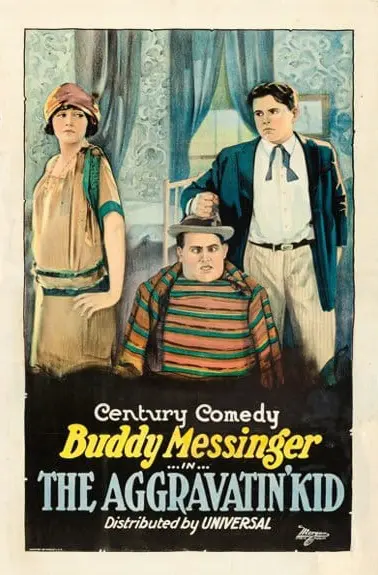
Is 'The Aggravatin' Kid' a film you should seek out in an era saturated with cinematic marvels? Short answer: yes, but with significant caveats. This 1917 silent slapstick is less a polished narrative and more a vibrant, chaotic artifact, offering a fascinating, if sometimes bewildering, window into the raw energy of early comedic filmmaking. It’s a film for the cinephile, the historian, and anyone with a deep appreciation for the foundational absurdities of the silent screen, but it is unequivocally not for those seeking modern pacing, sophisticated humor, or intricate character development.
For those accustomed to the measured rhythms and psychological depth of contemporary cinema, 'The Aggravatin' Kid' will likely feel like an alien experience. Its humor is broad, its plot often nonsensical, and its technical execution rudimentary by today’s standards. However, its historical significance and unadulterated commitment to physical comedy make it a compelling watch for the right audience.
This film works because of its unapologetic embrace of pure, unbridled slapstick chaos, delivering a relentless barrage of physical gags that, for their time, must have been utterly exhilarating. It fails because its narrative coherence is tenuous at best, often feeling like a string of escalating incidents rather than a cohesive story, which can be challenging for modern viewers to connect with. You should watch it if you are a student of film history, a fan of silent-era comedy, or someone curious about the origins of screen humor, prepared to appreciate its primitive charm and historical context rather than its narrative polish.
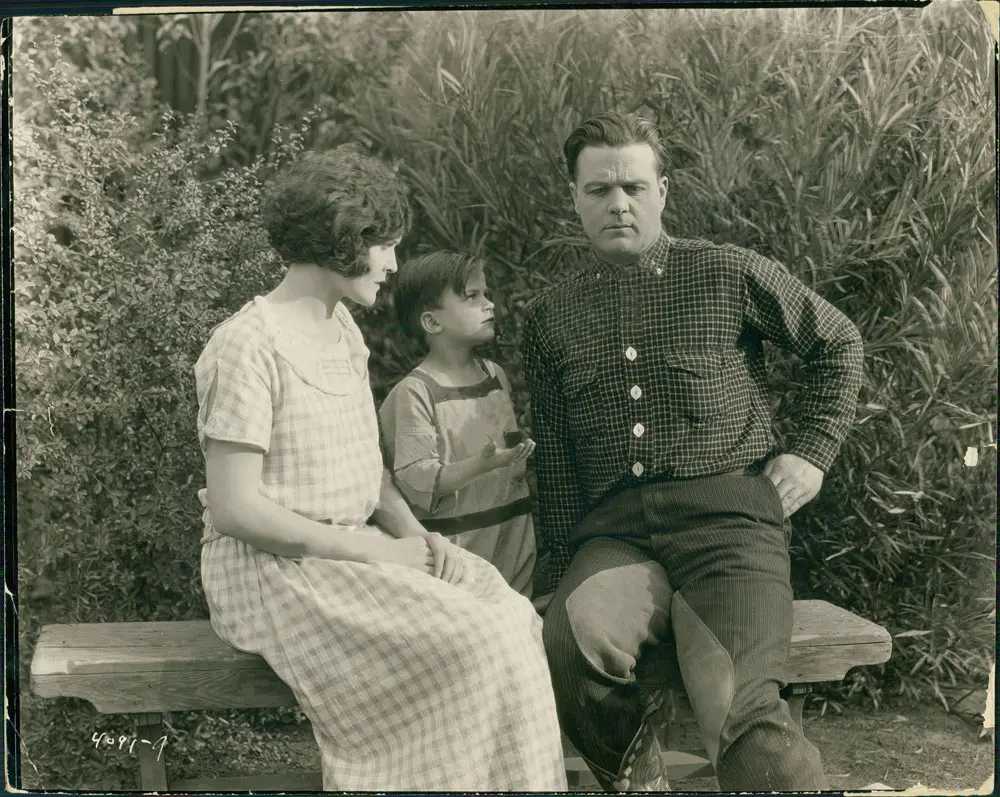
Edward Ludwig’s 'The Aggravatin' Kid' is a title that perfectly encapsulates its central premise and enduring spirit. At its core, the film is a masterclass in domestic disruption, orchestrated by the titular character, Buddy Messinger. His performance is less an act and more a force of nature, a pint-sized agent of anarchy whose sole purpose seems to be the unraveling of any semblance of order, particularly his sister's pursuit of marital bliss. The inciting incident – her marriage threatening his financial lifeline – is a wonderfully cynical kick-off, grounding the ensuing madness in a relatable, if exaggerated, motivation.
The film doesn't waste time on subtleties. From the opening frames, Buddy is launching projectiles at his sister, Lillian Worth, with a gleeful abandon that is both shocking and, in the context of silent slapstick, utterly captivating. The repeated ladder gag, where her hapless suitor (Hilliard Karr) is continually knocked off his precarious perch five stories up, is a testament to the era's dedication to escalating visual absurdity. It’s a moment that, while repetitive, manages to maintain a certain farcical charm through sheer commitment. The sequence isn't just a gag; it’s a foundational piece of silent comedy engineering, establishing a pattern of peril and rescue that defines much of the film.
The narrative, such as it is, then veers into an almost surreal car chase. Buddy, having somehow commandeered the suitor's vehicle, drives off with the poor man still dangling from the ladder. The sister's dramatic leap from a window to join her beau mid-chase is a moment of such audacious physical comedy that it transcends mere believability and enters the realm of pure cinematic spectacle. It’s a sequence that could easily feel dated, yet it possesses an inherent, unpolished magnetism that speaks to the raw inventiveness of early filmmakers. This kind of audacious, logic-defying stunt work is a hallmark of the era, reminiscent of the daredevil antics seen in other early films like The Amazons, though with a distinctly comedic twist.
The impromptu wedding, facilitated by a conveniently stalled car outside a parsonage, feels less like a plot development and more like a necessary punctuation mark in the relentless chaos. It’s a moment of respite, albeit a brief one, before Buddy resurfaces in their luggage on their Florida honeymoon. This recurring nuisance highlights the film's central theme: Buddy is not just an 'aggravatin' kid,' he is an inescapable force, a comedic specter that haunts every attempt at normalcy. His presence injects a continuous strain of tension and potential disaster into the newlyweds' lives, demonstrating a surprising thematic consistency for a film so dedicated to the episodic.
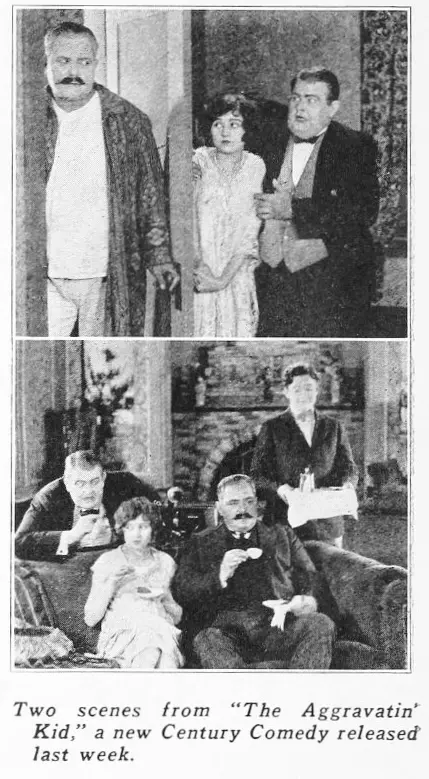
The final act, involving an elaborate charade to secure an inheritance, is perhaps the most structurally ambitious. The husband's disguise as a butler, the 'ritzy quarters,' and the constant fear of exposure create a different kind of comedic tension – that of mistaken identity and social deception. This segment, while still punctuated by Buddy's disruptive presence, feels a slight shift from pure physical slapstick to a more situational comedy, hinting at the evolving forms of humor even within the silent era. The climax, with the sister screaming from a closet just as the check is signed, is a perfect encapsulation of the film’s blend of frantic energy and opportune absurdity.
The performances in 'The Aggravatin' Kid' are a fascinating study in silent-era acting conventions. Dialogue was non-existent, so actors relied heavily on exaggerated facial expressions, broad gestures, and physical comedy to convey emotions and drive the narrative. Lillian Worth, as the long-suffering sister, embodies a specific archetype of early cinema: the beleaguered heroine. Her expressions range from frantic desperation to exasperated resignation, a constant cycle of hope and despair as Buddy repeatedly thwarts her happiness. Worth’s performance is a masterclass in silent screen emoting, her wide eyes and dramatic gestures painting a vivid picture of a woman pushed to her absolute limit.
Buddy Messinger, as the titular 'Aggravatin' Kid,' is the undeniable star, even if his character is a terror. His energy is boundless, his mischief relentless. Messinger doesn’t just act; he embodies pure, unadulterated impishness. The way he bounces vases off his sister’s head, the mischievous glint in his eye as he drives off with the suitor dangling – these are not subtle moments, but they are incredibly effective. His performance is a testament to the power of physical presence in silent film, a kinetic force that propels the entire narrative forward. It’s a performance that, while lacking the nuanced depth of later dramatic roles, holds its own as a foundational piece of comedic characterization.
Hilliard Karr, as the hapless sweetie, provides the perfect foil. His character is defined by his physical bulk and his enduring clumsiness, making him an ideal target for Buddy’s antics and the film’s elaborate gags. Karr’s repeated falls from the ladder are not just visual jokes; they are a demonstration of his character’s inherent vulnerability and his unwavering, if somewhat dim-witted, devotion. His bumbling attempts at heroism, contrasted with Buddy’s agile malice, create a comedic dynamic that is both simple and highly effective. The ensemble works in concert, each actor playing their part with a commitment to the broad strokes of silent comedy.
Edward Ludwig's direction in 'The Aggravatin' Kid' is characterized by its raw energy and an almost breathless pace, a hallmark of many early silent comedies aiming to keep audiences engaged with constant motion. The film moves with a frantic urgency, rarely lingering on any single shot for too long, which contributes to its chaotic, almost dreamlike quality. Cinematography in 1917 was still in its nascent stages, and Ludwig employs a straightforward, functional approach, focusing on clear sightlines for the physical comedy rather than elaborate camera movements or artistic compositions. The camera is often static, allowing the actors and the unfolding mayhem to fill the frame.
The editing is similarly direct, cutting between actions to maintain momentum. There's a deliberate lack of sophistication in the cuts, which paradoxically adds to the film's charm. It feels immediate, unpolished, and intensely focused on the gag. Consider the repeated ladder sequence: Ludwig doesn't try to make each fall unique; instead, he relies on the sheer repetition and the visual absurdity of the situation to elicit laughs. This directness, while potentially monotonous for modern eyes, was a common and effective technique in early cinema, aiming for broad, immediate audience reactions.
Pacing is perhaps the most striking directorial choice. 'The Aggravatin' Kid' is relentless. There's little downtime, little opportunity for characters or audiences to catch their breath. The progression from vase-throwing to ladder falls, to car chases, to the elaborate inheritance scheme, is a continuous escalation of comedic scenarios. This rapid-fire delivery of gags is reminiscent of the fast-paced, often chaotic style of Keystone Kops shorts, which were immensely popular at the time. Ludwig clearly understood the appeal of sustained, high-energy slapstick, ensuring that boredom was never an option, even if narrative depth was sacrificed.
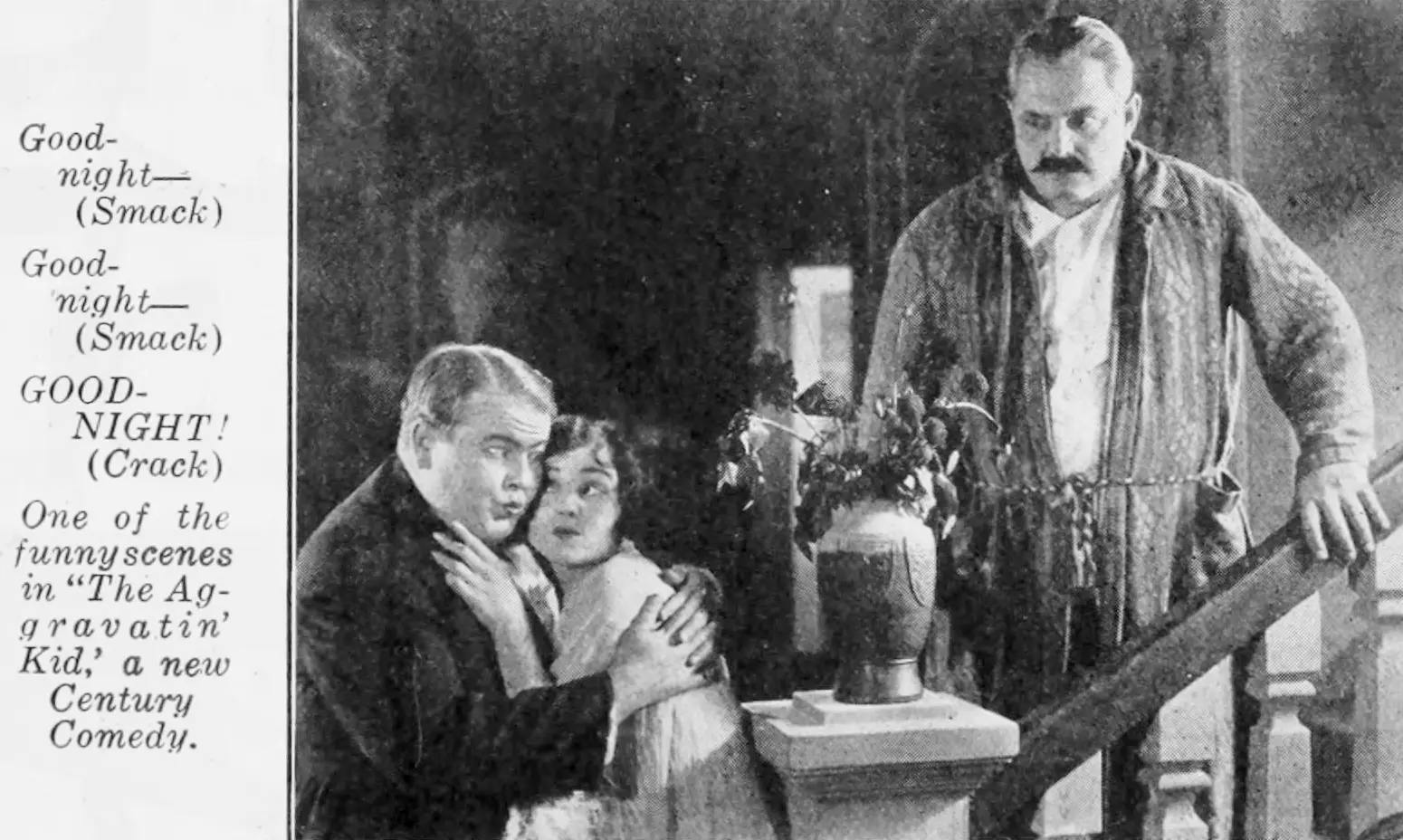
While 'The Aggravatin' Kid' primarily functions as a vehicle for slapstick comedy, a discerning eye can uncover subtle thematic undercurrents that give it a surprising, albeit unintentional, layer of depth. At its core, the film is a commentary on the desperate pursuit of financial security and stability in a world where individual whims (like Buddy's) can upend everything. The sister’s determination to marry is explicitly linked to cutting off Buddy’s support, highlighting the economic realities and anxieties of the era. Marriage, for her, is not just about love, but about establishing a stable household free from parasitic dependents.
Buddy himself, though a caricature of childhood mischief, can be viewed as a symbol of unchecked self-interest and the disruptive force of youth against established order. His actions, though comedic, have tangible consequences, forcing his sister and her husband into increasingly desperate and farcical situations. The film inadvertently becomes a study in early 20th-century property damage and the lengths people will go to maintain appearances, especially when a significant inheritance is on the line. The entire Florida subplot, with its butler disguise and 'ritzy quarters,' speaks to the performative aspects of social climbing and the pressure to project an image of success.
Furthermore, the film touches on themes of resilience and adaptability. Despite the constant onslaught of Buddy’s 'aggravation,' the sister and her husband continually find ways to push through, whether it’s surviving a five-story fall or concocting an elaborate charade for an uncle. Their journey, though comedic, reflects a certain human tenacity in the face of overwhelming odds. It's a testament to the idea that sometimes, sheer persistence (and a bit of luck, like a conveniently stalled car) can lead to an unexpected happy ending. These deeper readings, while not overtly presented, add a surprising resonance to what might otherwise be dismissed as simple, unadulterated silliness, much like the unexpected nuances one might find in a film like The Cloven Tongue, which also uses a seemingly straightforward plot to explore deeper societal issues.
Yes, 'The Aggravatin' Kid' is worth watching today, but only for specific audiences. It offers invaluable insight into the origins of screen comedy and the primitive yet powerful appeal of physical humor. Its historical value as an early silent film is undeniable.
This film is best for film historians, students of silent cinema, and enthusiasts of early slapstick. It provides a raw, unfiltered look at how filmmakers in 1917 crafted entertainment without dialogue or advanced technology. It is not for viewers seeking modern comedic sensibilities, complex narratives, or high production values.
Its chaotic energy and relentless gags can be a refreshing change of pace from contemporary cinema. However, its dated humor and lack of narrative sophistication may test the patience of a casual viewer. Approach it as a historical artifact, and you'll find its charm.
Edward Ludwig's 'The Aggravatin' Kid' is a glorious, chaotic mess. It’s a film that demands a specific kind of viewing, not as a polished narrative achievement, but as a vibrant, if unrefined, historical document of early screen comedy. Its humor is broad, its plot often nonsensical, and its technical execution rudimentary by today’s standards. Yet, within its frantic energy lies a fascinating glimpse into the foundations of an art form still finding its voice.
For those willing to adjust their expectations and embrace the raw, unadulterated spirit of 1917, 'The Aggravatin' Kid' offers genuine rewards. It's a testament to the sheer ingenuity and physical daring of early filmmakers and performers, proving that even a century later, a well-executed (if completely illogical) gag can still elicit a smile. It works. But it’s flawed. Its true value lies not in its ability to entertain modern audiences universally, but in its capacity to transport us back to a nascent cinematic era, revealing the audacious spirit that paved the way for everything that followed. It’s not a film you’ll love for its story, but you might just adore it for its sheer, uncompromising commitment to mayhem.
IMDb —
1936
Community
Log in to comment.