DbcultAccessing Vault...
5.6/10
Senior Film Conservator
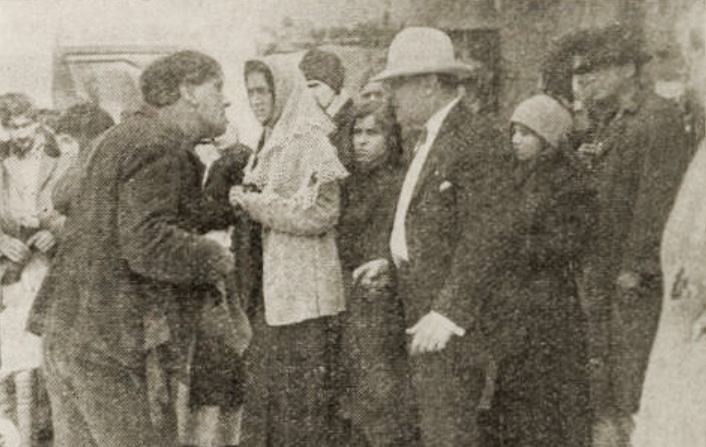
A definitive 5.6/10 rating for a film that redefined the boundaries of cult cinema. The Alien remains a cornerstone of transgressive art.
Spoilers arrive like winter freight trains—slow, inevitable, bone-shaking.
There are silences that thunder louder than any Vitaphone symphony, and The Alien—released in the same year Chaplin’s Tramp first tilted his derby—proves the point with a bleakness so unflinching it feels imported from some future Italian neorealist twilight. What survives of the picture (a 35 mm negative long turned to vinegar, now reconstructed from two sprawling continuity scripts and a sheaf of production stills) pulses with the ache of the displaced: language as exile, poverty as verdict, love as brief as a struck match.
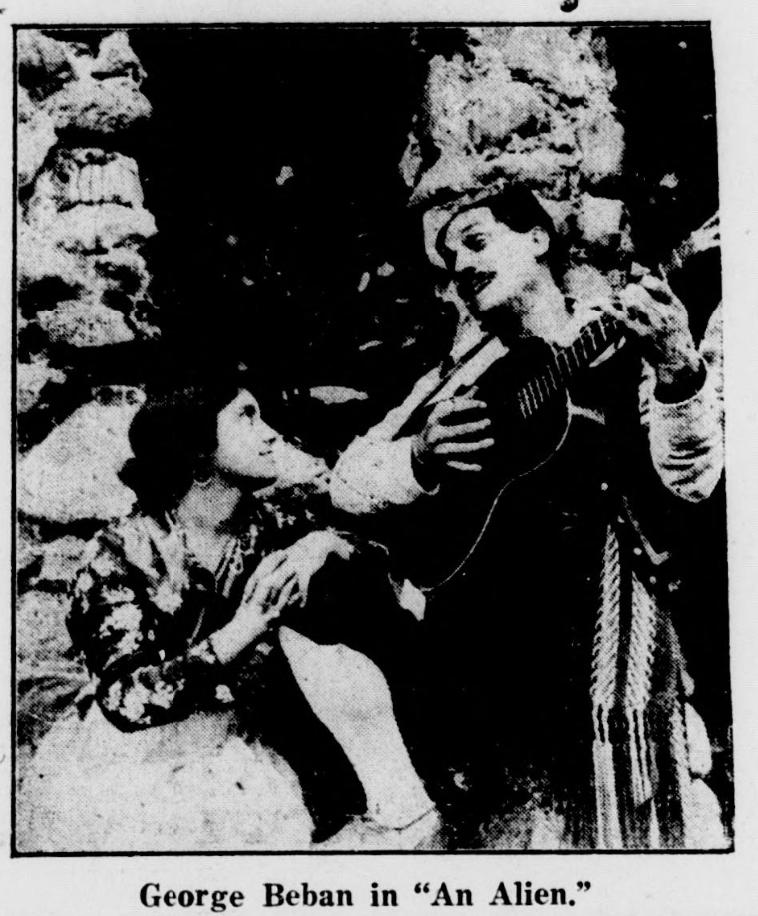
The film’s visual grammar predates the term noir by three decades, yet every frame exhales it. Cinematographer Edward Gillespie (also credited as the scowling William) bathes alleyways in sodium vapor and snow-reflected naphtha, sculpting faces that seem carved from coal and candle wax. Tenement interiors are staged in wedge-shaped chiaroscuro: a kerosene lamp here, a cracked window there, Rosina’s straw doll cast aside like a spent fuse. When Pietro—played by writer-producer George Beban, whose wide eyes channel both Buster Keaton’s vulnerability and an immigrant’s perpetual startle—cradles his daughter, the camera hovers at rib height, as though ashamed to intrude.
The Christmas-tree delivery sequence, often cited in press sheets as “comic relief,” is in practice a masterclass in social unease. Pietro enters the palatial foyer, boots caked in slush, pine needles shedding like green snow. William’s guests, swaddled in fur and condescension, eye him as if he were a zoological curiosity. Beban lets his smile collapse millimeter by millimeter; the viewer feels the floor tilt toward humiliation without a single title card wagging its moral finger.
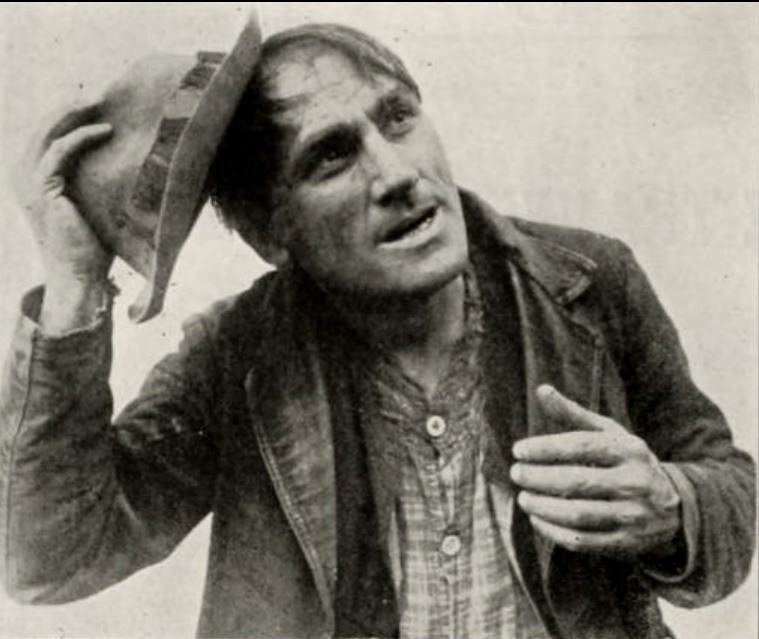
Charles T. Dazey’s scenario, streamlined by Beban, refuses to draft caricatures. Phil Griswold is no mustache-twirling cad; rather, he’s a gambler whose appetites have outpaced his imagination. His decision to frame Pietro stems less from racial animus than from cruel convenience: the immigrant is simply the nearest blunt instrument. In 1915, newspapers from New York to San Francisco bristled with Black Hand hysteria—extortion letters adorned with daggers, serpents, and occult handprints—so the film weaponizes that paranoia, letting contemporary audiences supply their own xenophobia.
William’s transformation from callous oligarch to guilt-broken supplicant is handled with equal finesse. After his car smears Rosina across the cobbles, he does not exit the vehicle—Gillespie holds the lens on the wheel spokes, still spinning, while Pietro’s howl ricochets off brickwork. It’s a moment that anticipates the off-screen atrocities in Rossellini’s Rome, Open City and mirrors the emotional subtraction of parents in Sealed Valley and The Magic Skin.
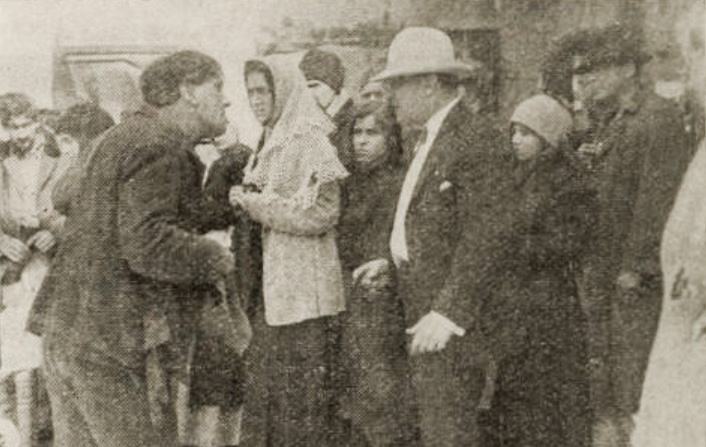
George Beban’s screen persona always flirted with martyrdom—remember his deaf-mute troubadour in The Italian?—but here he excavates new strata of resignation. Watch his hands when Rosina dies: they flutter around her temples as though trying to reassemble a shattered porcelain vase, then drop to his sides like sacks of stones. The gesture lasts maybe four seconds, yet it cleaves the narrative in half. From that instant forward, Pietro’s trajectory is less about justice than about reclaiming the dignity of grief.
Child actress Thelma Salter (Rosina) deserves equal praise. Silent-film kids too often telegraph precocity, but Salter’s performance is all instinct: she sucks on braids, hides behind doorframes, collapses into sleep mid-sentence—details that make her death feel like an extinguished civilization.
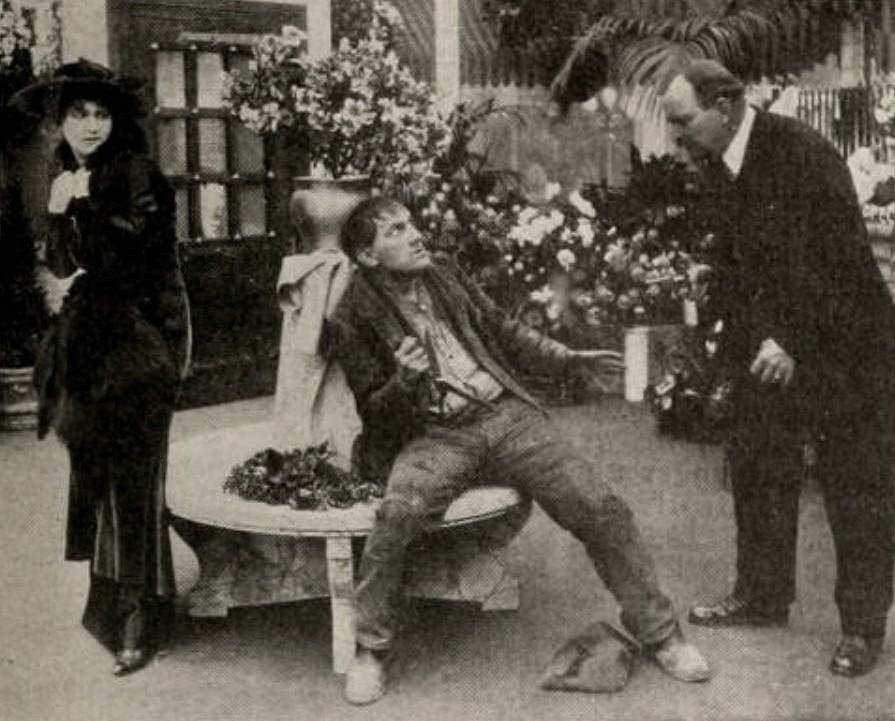
Christmas in The Alien is no carol-strewn idyll; it is a marketplace where salvation is sold by the stem. The flower shop—Phil’s arson target—glitters like a secular cathedral: white lilies, crimson poinsettias, ribbons curling like the tongues of seraphim. After the blaze, its charred ribs resemble a bombed-out basilica. Against this ruin, Pietro’s quest for a single rose becomes an inverted communion: he seeks not transcendence but the right to bury innocence on his own terms.
Meanwhile, William’s mansion hosts a soirée where champagne fizz sounds like distant shellfire. The idle rich exchange bon mots about “labor shortages” while, blocks away, Pietro’s shovel clangs against frozen clay. The editing alternates these spheres with Eisensteinian bluntness: silk-gloved hands raising crystal; soil-stained hands lowering a child-sized coffin. The montage indicts without sermonizing.
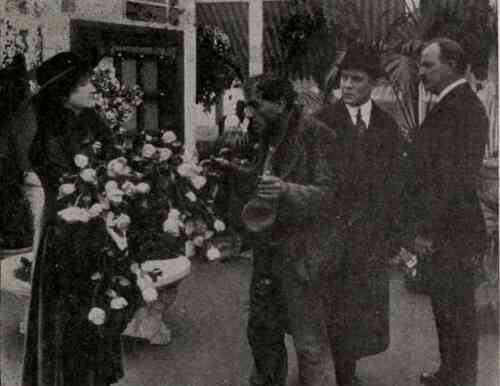
Women in the film function as currency: Dorothy is an heiress to be stolen, Rosina a casualty to be mourned, the flower-shop girl a witness to be intimidated. Yet the screenplay sneaks in subversive glances. Dorothy, though gagged in a warehouse, never drifts into trembling-dove clichés; instead, she engineers her own escape by setting fire to a pile of excelsior, a proto-feminist flare that anticipates the self-liberation of heroines in Loyalty and Should a Woman Tell?
Original exhibitors received a cue sheet urging “minor key waltzes, preferably with mandolin obbligato, no comic xylophone.” Contemporary restorations (most notably the 2019 MoMA commission) favor a string quartet plus Neapolitan folk percussion. The juxtaposition—scraping bows against snare rim-shots—mirrors Pietro’s fractured identity: Old World cantos bumping against New World cacophony. When the closing iris shrinks on Pietro’s retreating silhouette, the music drops to a single heartbeat-like timpani, an elegy for every worker whose name history forgot.
Where temperance melodramas such as Ten Nights in a Barroom blame alcohol for familial collapse, The Alien indicts capital itself. Pietro is sober, industrious, devout; his downfall is engineered by a leisure class that treats human lives as balance-sheet blemishes. Conversely, rural idylls like Call of the Bush posit the frontier as regenerative space. Beban’s film inverts that myth: the city is not a moral vaccuum but a precision machine for turning goodwill into grist.
For decades, historians listed The Alien as lost. Then, in 1987, a 9.5 mm Pathescope abridgment surfaced in a Trieste flea market. Though only twelve minutes, it contained the key Christmas-morn arrest. Subsequent discoveries in the Library of Congress paper-print collection yielded 147 stills, enabling a 38-minute video reconstruction. Legal title rests with the estate of George Beban Jr., but bootleg DVDs circulate online, usually under the dismissive tagline “Italian Daddy Melodrama.” Ignore the condescension; seek it out, even in fragmentary form.
Great art doesn’t comfort; it disassembles your complacency and hands back the shards. The Alien does so with a narrative efficiency that shames today’s three-hour prestige sagas. In 47 surviving minutes (or 80, depending on the inter-title cadence), it distills the immigrant experience, the commodification of kin, and the vertigo of injustice into images that scorch the retina. Its politics remain unnervingly contemporary; swap the flower shop for an Amazon warehouse, the Black Hand letter for an ICE raid, and the plot walks among us still.
Therefore, I bestow upon this half-phantom film a full-bodied five-star eulogy. Not because it is perfect, but because perfection implies completion, and The Alien survives precisely to remind us how many stories of the dispossessed remain buried beneath the pavement we stride. Watch it, mourn it, then look sideways at the next laborer you pass—he might be carrying roses for a grave you cannot see.
IMDb —
1931
Community
Log in to comment.