DbcultAccessing Vault...
Cult Review
Senior Film Conservator
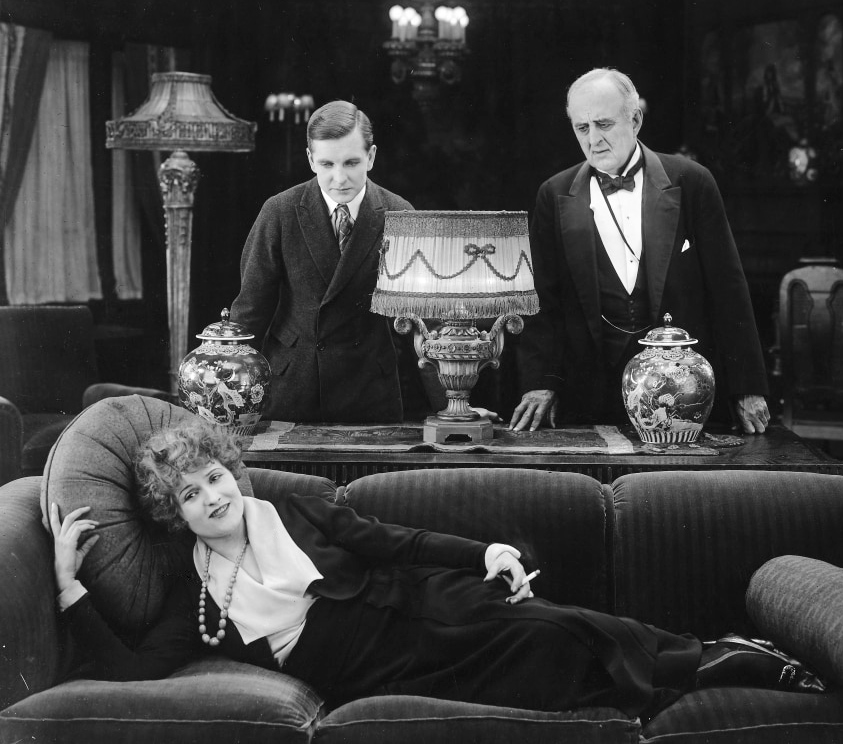
In an era where Hollywood often fixated on grandiose spectacles, His Bonded Wife (1925) chooses intimacy over bombast, crafting a tale of quiet emotional upheaval set against the glittering backdrop of early 20th-century urban life. Directed with a deft touch by a team of uncredited craftsmen, the film’s strength lies in its ability to evoke pathos through understatement, a quality that feels both radical and strangely modern.
At its heart is Doris Morse, portrayed with luminous vulnerability by Emmy Wehlen, whose wide, expressive eyes convey volumes without uttering a word. Her character’s flight from the gilded cage of her father’s fortune—played by William Frederic with a blend of patriarchal authority and paternal tenderness—into the anonymity of a Macy’s department store counter girl, is a masterstroke of narrative irony. The contrast between her silk-gowned existence and the modest uniform of a retail clerk is not merely visual but symbolic, a silent commentary on the performative nature of identity.

John Terry’s Philip Hazard, the earnest young man who becomes her reluctant love interest, embodies the working-class idealism of the period. His growing unease as he navigates the chasm between his self-sufficient dignity and Doris’s hidden opulence is rendered with aching subtlety. The pivotal scene where he stumbles upon her true identity—a moment laden with both betrayal and liberation—is staged with a Hitchcockian tension that feels surprisingly ahead of its time. Here, the score swells not with melodrama but with the weight of unspoken consequences.
The film’s most audacious choice is its refusal to resolve the central conflict through conventional romantic tropes. Instead, the marriage between Doris and Philip becomes a microcosm of American capitalist anxieties, where love is tested not by external villains but by the characters’ own internalized values. The inclusion of a father figure who manipulates circumstances to ‘gift’ his daughter a sumptuous yet anonymous dowry (a twist that nods to The Auction of Virtue) adds a layer of moral ambiguity that elevates the narrative beyond mere social comedy.
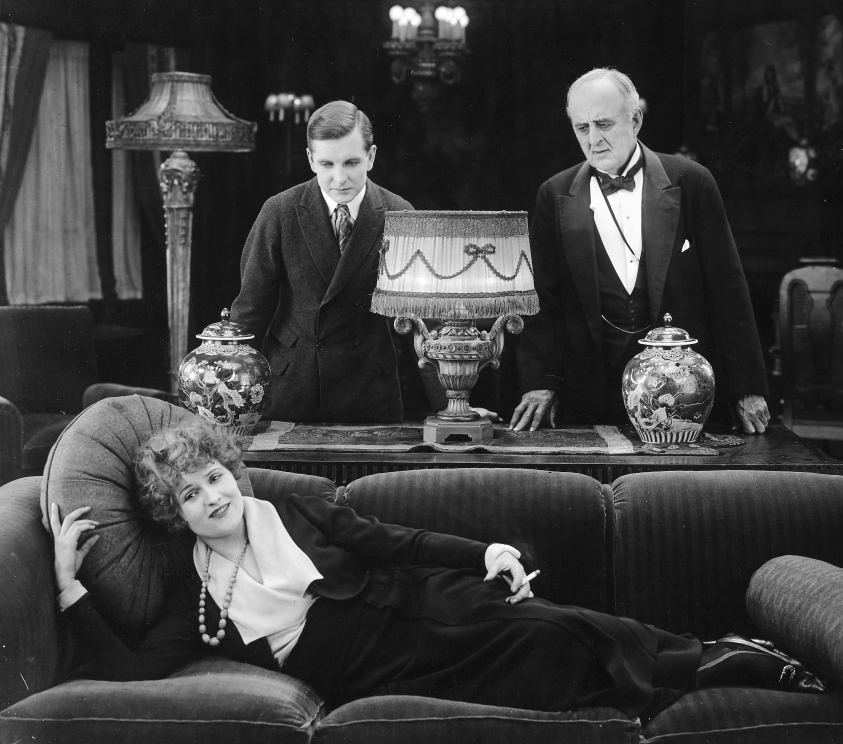
Technically, the film is a marvel of silent cinema craftsmanship. The use of shadow and light in the climactic theft scene—where Philip, driven by wounded pride, attempts to reclaim his dignity by stealing the bonds hidden in Doris’s home—is nothing short of masterful. The camera lingers on Doris’s face as the gunshot rings out, her expression a mosaic of guilt, realization, and catharsis. This moment, unadorned by intertitles, speaks volumes about the limitations and strengths of the medium.
Comparisons to other works of the era are inevitable. Like My Wife, the Movie Star, His Bonded Wife explores the fragility of relationships strained by financial disparity. Yet it distinguishes itself by avoiding the overt farce of its contemporaries, opting instead for a more introspective tone. The influence of June Mathis and the Zellner siblings’ collaborative writing is evident in the script’s psychological depth, particularly in Doris’s arc from self-preservation to self-sacrifice.

The supporting cast, though less heralded, deserves mention. Warda Howard’s portrayal of the sharp-eyed maid and Frank Currier’s gruff yet tender neighbor offer moments of levity and warmth that balance the heavier themes. These characters, often relegated to background roles in lesser films, are given dimension here, their interactions with Doris and Philip enriching the social tapestry.
What ultimately lingers is the film’s quiet critique of materialism. Doris’s initial indulgence in lavish furnishings and staff—a silent film’s equivalent of a modern binge-buying spree—serves as a metaphor for the emptiness of wealth without genuine connection. The resolution, where she agrees to live solely on Philip’s income, is not framed as a loss of status but as a rediscovery of simplicity. This thematic resonance, while perhaps didactic by today’s standards, feels refreshingly earnest in an age where romantic comedies often prioritize plot twists over emotional truth.
In the broader context of film history, His Bonded Wife occupies a peculiar niche. It lacks the overt spectacle of De mystiske z-stråler’s sci-fi grandeur or the operatic tragedy of Tigre Reale, yet it compensates with a humanism that feels remarkably contemporary. The film’s pacing, deliberate and measured, invites viewers to linger in the silences between its characters, finding meaning in glances and hesitations.
If there is a flaw, it lies in the occasional overreliance on intertitles to convey internal conflict, a choice that momentarily disrupts the flow. However, these moments are brief and do little to detract from the film’s overall impact. For modern audiences, the absence of spoken dialogue becomes an asset, allowing the visual storytelling to take center stage in a way that feels both respectful and revelatory.
In conclusion, His Bonded Wife is a testament to the enduring power of silent cinema to explore complex human emotions without the crutch of dialogue. It is a film that rewards patience, offering layers of meaning with each viewing. For those seeking a narrative that intertwines personal growth with societal critique, this early 20th-century gem remains a compelling and unexpectedly resonant experience.
IMDb 6.2
1923
Community
Log in to comment.