DbcultAccessing Vault...
Cult Review
Senior Film Conservator
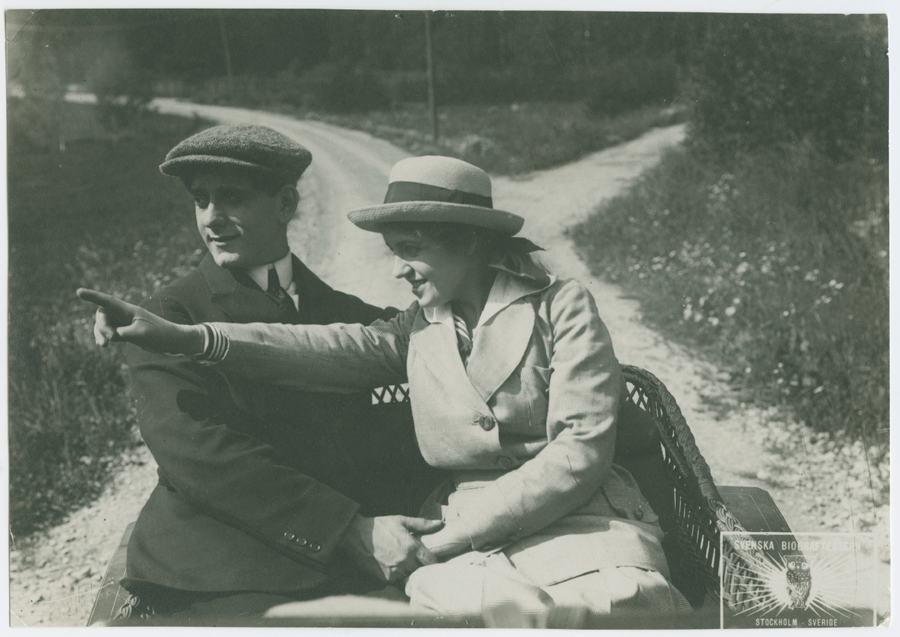
There are films that merely tell a story, and then there are those that etch themselves into the very fabric of one’s consciousness, resonating long after the final frame flickers into darkness. Harriet Bloch’s masterwork, Ålderdom och dårskap (Age and Folly), belongs unequivocally to the latter category. This cinematic gem, despite its vintage, pulsates with a raw, unflinching examination of human nature, particularly the perilous precipice where ambition, desire, and the encroaching shadows of mortality converge. It’s a narrative that eschews easy answers, instead opting for a nuanced, often devastating, portrayal of how one man’s late-life delusion can unravel an entire world.
At the heart of this poignant drama stands Baron Alarik Stjärnfeldt, brought to life with an astonishing blend of gravitas and pathetic vulnerability by August Warberg. Stjärnfeldt is introduced as an industrial titan, a man whose life has been defined by acumen, control, and an unyielding will. He commands respect, his very presence exuding an aura of unassailable authority. Yet, as the narrative progresses, we witness the insidious erosion of this formidable façade. Warberg’s performance is a masterclass in subtle degradation, depicting a man not merely falling from grace, but actively dismantling his own pedestal, piece by agonizing piece. His dårskap, or folly, isn't a sudden, cataclysmic event, but rather a slow, creeping poison that warps his judgment and blinds him to the repercussions of his actions. He is a testament to the idea that even the most grounded individuals can be swept away by an unexpected tide of emotion, particularly when that emotion masquerades as a second chance at youth and passion. This descent into an almost childlike infatuation with Clara Lundgren is both fascinating and horrifying to behold, a stark reminder that the human heart, regardless of age, remains a volatile and unpredictable instrument. One might draw parallels to the societal critique found in The Way of the World, where reputation and social standing are similarly fragile constructs, easily shattered by personal indiscretion.
Edith Erastoff’s portrayal of Clara Lundgren is equally compelling, though her character operates from a different moral compass. Clara is not inherently malicious, but rather a creature of her time and circumstance, driven by a desire for security and the finer things in life. She sees in Baron Stjärnfeldt not a true love, but a means to an end, a gateway to a life of comfort and luxury that her own station denies her. Erastoff imbues Clara with a captivating blend of charm and calculated pragmatism, making her neither a pure villain nor an innocent victim. Her allure is undeniable, her youthful vivacity a stark contrast to the Baron’s advancing years, making his infatuation tragically understandable. Yet, there’s a coldness beneath the surface, a transactional nature to her affections that ultimately seals the Baron’s fate. The film subtly critiques the societal pressures that could lead a woman like Clara to make such choices, echoing themes of economic necessity and moral compromise seen in other contemporary dramas like Life's Shop Window, where women often found themselves navigating a precarious balance between desire and survival.
Greta Almroth, as Agnes Stjärnfeldt, the Baron’s long-suffering wife, delivers a performance of quiet, devastating power. Agnes is the embodiment of traditional wifely devotion, her life inextricably linked to her husband’s. Her heartbreak isn’t expressed through histrionics, but through a profound sense of betrayal and a dignity that refuses to crumble even as her world implodes. Almroth’s nuanced expressions, the subtle tremor in her hands, the profound sadness in her eyes, speak volumes more than any dialogue could. She represents the collateral damage of the Baron’s folly, a woman whose steadfast love is callously discarded for a fleeting illusion. Her plight underscores the film’s critique of societal expectations placed upon women in that era, where their identity was often subsumed by their husband’s status, and their suffering often went unacknowledged. The tragic nobility of Agnes resonates deeply, providing the film with its most potent emotional core.
No tragedy is complete without its orchestrators and its innocent bystanders. John Ekman’s Erik Dahlberg is a chillingly effective antagonist. He is not a man of grand gestures, but a calculating financier, a predator who scents weakness and moves in for the kill with dispassionate efficiency. Ekman’s portrayal is subtle yet sinister, embodying the cold, hard reality of financial ruin that often accompanies moral decay. His presence highlights the mercenary undercurrents of the narrative, showing how personal failings can be exploited for material gain. Conversely, Semmy Friedmann’s Karl, the earnest young architect, represents the untainted future, a world of potential and honest endeavor that is threatened and ultimately tainted by the Baron’s destructive path. Karl’s helplessness in the face of such overwhelming folly underscores the far-reaching consequences of Stjärnfeldt’s actions, demonstrating how the sins of the patriarch ripple outwards, affecting the innocent. This interplay of manipulation and innocence lends a palpable tension to the film, reminiscent of the intricate moral dilemmas explored in Thou Shalt Not Covet.
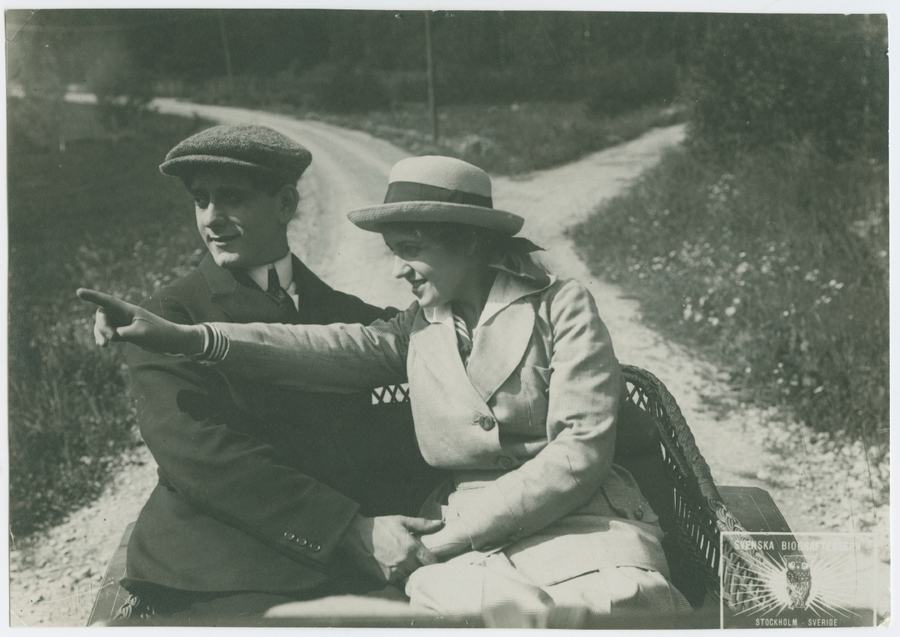
Harriet Bloch’s screenplay for Ålderdom och dårskap is nothing short of brilliant. Her narrative structure is meticulously crafted, building tension incrementally, allowing the audience to witness the Baron’s gradual descent rather than presenting it as a sudden fall. Bloch’s strength lies in her ability to imbue each character with distinct motivations and complexities, avoiding simplistic black-and-white morality. She understands the nuances of human desire, the allure of forbidden fruit, and the devastating cost of self-deception. The dialogue, though sparse in this era of silent film, is impactful, with much of the storytelling conveyed through visual cues and the expressive performances of the cast. Bloch’s vision is one that transcends its specific time and place, offering timeless observations on ambition, love, betrayal, and the often-painful lessons of life. Her writing style, even without spoken words, manages to convey a rich inner world for each character, a feat that speaks volumes about her profound understanding of the human condition.
Visually, the film is a testament to the burgeoning artistry of early cinema. The cinematography, while perhaps lacking the elaborate flourishes of later eras, is remarkably effective in establishing mood and character. The use of light and shadow, particularly in scenes depicting Stjärnfeldt’s growing isolation or Clara’s manipulative charm, is masterful. Interiors are often opulent, reflecting the Baron’s wealth, only to gradually become backdrops for his increasing despair. Outdoor scenes, particularly those hinting at the natural world’s indifference to human drama, provide stark contrast. The editing maintains a steady, deliberate pace, allowing the psychological weight of the narrative to fully settle upon the viewer. There’s an undeniable elegance to the framing, a classical sensibility that grounds the dramatic excesses in a sense of realism. The film’s aesthetic contributes significantly to its melancholic tone, enhancing the feeling of inevitable tragedy. It's a style that, while distinct, shares a certain narrative clarity and visual intention with other strong silent dramas of the period, like Der Zug des Herzens, which also relied heavily on visual storytelling to convey complex emotional states.
What makes Ålderdom och dårskap truly timeless is its unflinching exploration of themes that remain profoundly relevant today. The notion of age and its accompanying vulnerabilities, the seductive power of an illusion, the corrosive nature of unchecked desire, and the devastating impact of personal choices on those closest to us – these are universal truths. The film serves as a potent cautionary tale, reminding us that wisdom does not always accompany age, and that even the most accomplished individuals can succumb to their baser instincts. The societal critique embedded within the narrative, concerning reputation, class, and the double standards applied to men and women, also holds a mirror to contemporary issues. It’s a powerful testament to the enduring power of classic cinema to speak across generations, offering insights into the human condition that transcend technological advancements or shifting cultural landscapes. The film, in its quiet intensity, makes a profound statement about the fragility of happiness and the heavy price of self-delusion.
While not as widely known as some of its international contemporaries, Ålderdom och dårskap deserves a prominent place in the pantheon of early Swedish cinema. It showcases the formidable talents of its cast and crew, particularly the visionary storytelling of Harriet Bloch. The performances, especially from Warberg, Erastoff, and Almroth, are remarkably nuanced and emotionally resonant, demonstrating that the art of screen acting was already reaching sophisticated heights even in the silent era. For those interested in the psychological dramas that laid the groundwork for later cinematic achievements, this film is an essential watch. It offers not just a glimpse into the past, but a profound reflection on the timeless struggles of the human spirit. Its themes are as resonant as those found in more widely recognized works like Hamlet, albeit on a more personal scale, exploring the internal and external conflicts that define our existence. The film’s ability to evoke such deep empathy and critical introspection solidifies its status as a significant cultural artifact, a silent scream against the folly of man, echoing through the decades.
Ultimately, Ålderdom och dårskap is more than just a historical curiosity; it is a vibrant, living piece of art that compels viewers to confront uncomfortable truths about ambition, desire, and the often-unseen costs of our choices. Its narrative precision, coupled with unforgettable performances, ensures its lasting impact. It is a film that challenges, provokes, and ultimately, enriches the viewer's understanding of the intricate, often tragic, dance between age and folly.
IMDb 6.4
1931
Community
Log in to comment.