DbcultAccessing Vault...
Cult Review
Senior Film Conservator
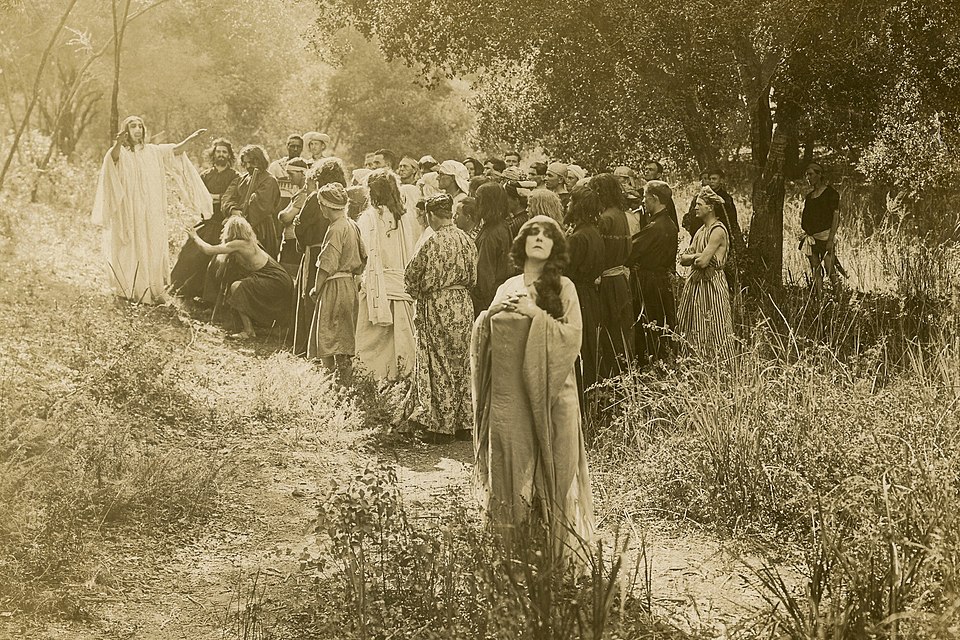
Most cinephiles can recite the trembling rosebuds of La Salome or the iron-clad intrigue of Fantômas: In the Shadow of the Guillotine, yet Maria Magdalena slumbers in the catacombs of Weimar celluloid like a sealed reliquary. Shot in the bruised twilight of WWI, the production reeked of shortage: requisitioned copper wiring, rationed kerosene for lamps, actors fasting for authenticity. What seeps through is a sulphurous incense of desperation—every frame seems to ask whether redemption can sprout in scorched soil.
Asta Giller’s visage oscillates between predator and penitent without the safety net of dialogue; the camera drinks her asymmetrical smile as though it were a chalice sloshing with tannin-rich wine. Compare that to Leopoldine Konstantin’s Virgin: glacial, hands folded like cathedral buttresses, she embodies ecclesiastical certainty while Giller exudes the tremulous entropy of doubt. Their scenes together feel like a diptych—two conceptions of womanhood soldered by the same hot iron of expectation.
Friedrich Hebbel, long dead by 1918, authored the original 19th-century play; the adapters gut his verbose speeches yet retain the marrow: a Magdalene who refuses caricature. She is neither temple harlot nor plaster saint, but rather a thinker who weaponizes erudition smuggled from back-alley tetradrachms and Greek scrolls. When she spars with Judas over the economics of messianic rebellion, the subtitles flicker like sparks from a flint—brief, incendiary, dangerous.
Director-cinematographer duo Hans Rahn and Willy Goldberger paint Judea in expressionist slashes: cobalt night skies slashed by sodium-yellow starlight, market stalls daubed with bruised purples reminiscent of bruised figs. Interiors rely on single tungsten sources that carve cheekbones out of darkness, prefiguring the later chiaroscuro obsessions of Murnau and Lang. The camera rarely moves; instead, it stares, accuses, forgives.
Modern audiences conditioned to Dolby thunder might smirk at the prospect of a mute biblical epic. Yet silence here becomes theological: the absence of voice mirrors the hollow echo inside the sepulchre. When the final intertitle reads He is not here—why do you seek the living among the dead?
the lack of musical accompaniment lands like a slap. You hear your own pulse, and that is enough.
Amid the suffrage ferment of late-Imperial Germany, a film centred on a woman interrogating patriarchal dogma felt like lit dynamite. Contemporary journals labeled it blasphemous hocus-pocus, while underground pamphlets praised its magdalenian liberation theology
. The censors trimmed several close-ups of Giller’s bare shoulders, yet the ideological shoulders remained unashamedly naked.
Erich Kaiser-Titz’s Judas exudes sybaritic ennui; he toys with a pouch of coins as though each silver disk were a portable mirror reflecting his own moral vacuum. Karl Zistig’s Peter, by contrast, lumbers with bovine sincerity, all calloused fisherman hands and sunburnt neck—a Galilean everyman trapped between loyalty and terror. Their clash during the anointing scene—oil versus silver, devotion versus betrayal—rivals the psychological duels in The Lady of Lyons; or, Love and Pride.
Hebbel weaponizes a simple prop: an alabaster vessel whose fragility mocks institutionalised hardness. The jar passes from hand to hand—merchant, maiden, magdalene—until its final resting place is the empty tomb. It becomes a talisman of impermanence, a cinematic shorthand for you cannot containerise miracle
.
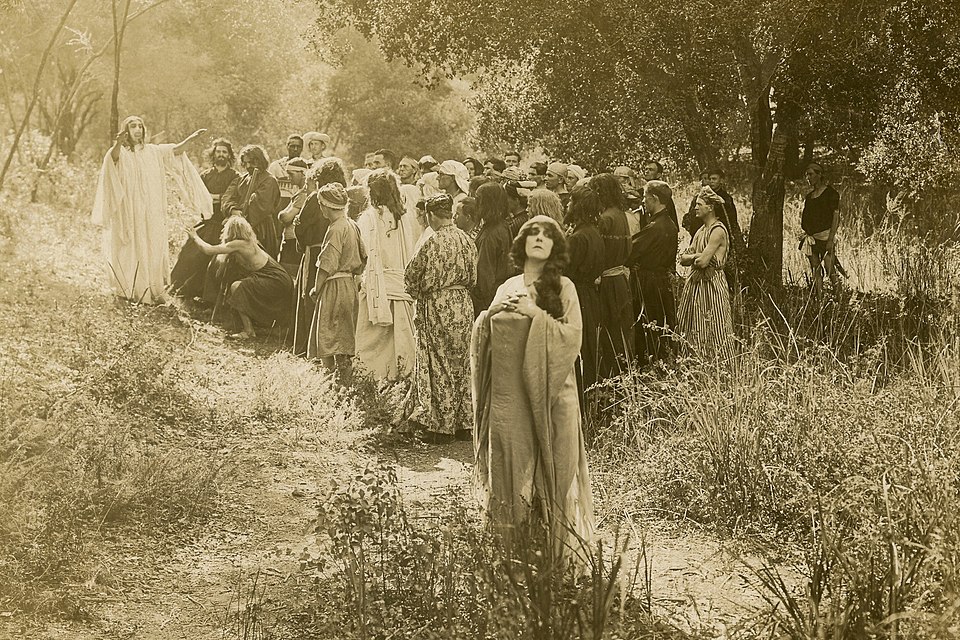
Cutters in 1918 favoured in-camera fades; here they splice in jump-cuts that feel almost Godardian. When Maria, freshly expelled from a client’s banquet, vomits in an alley, the editor slams a single-frame flash of the crucifixion painting she glimpsed earlier. The subliminal jolt predates Eisenstein’s montage theories by a hair’s breadth.
Unlike the crowd-pleasing antics of Chicot the Jester or the Dickensian comforts of David Copperfield, Maria Magdalena never secured international distribution. Nitrate reels languished in a Leipzig warehouse until Allied bombs ignited the building; only a battered export print surfaced in a Viennese monastery in 1972. Restorers stitched missing scenes with stills, producing a 94-minute fragment that nonetheless radiates unnerving completeness.
By refusing to show the resurrected Christ onscreen, the film sidelines male miracle and foregrounds female witness. In doing so, it anticipates the 20th-century surge of feminist biblical scholarship. One could map a straight line from Giller’s haunted gaze to the 1960s Death of God
theologians who proclaimed that absence can itself be salvific.
Post-war Weimar cast Giller aside for fresher faces; she died in 1943 during an Allied air raid on Frankfurt, her obituary a paltry six lines. Yet her Magdalene lingers like myrrh: heady, resinous, impossible to bottle. Film historians rank her performance alongside Asta Nielsen’s Bryggerens Datter turn, though Giller’s work is rawer, less balletic, more blood.
Rahn’s team hand-tinted certain sequences: Magdalene’s robe bleeds crimson (#C2410C) whenever desire wrestles conscience, while resurrection rumours shimmer in sulphuric yellow (#EAB308). The sea-blue (#0E7490) appears only once—on the hem of an enigmatic child who guides Maria toward the tomb, hinting at preternatural knowledge.
Cecil B. DeMille screened a bootleg dupe before helming his 1927 King of Kings; he pilfered the tinted alabaster motif and the silhouetted crucifixion scene. Yet where DeMille lathers on spectacle, Rahn opts for austere confrontation, proving that restraint can bruise deeper than pageantry.
Queue up a dark room, a 2K scan if you can locate it, and a minimalist score—Arvo Pärt or Hildegard von Bingen. Let the flicker knit your breath to the characters’; you will emerge smelling of ancient olives and modern doubt.
Maria Magdalena is not a relic; it is a hand grenade with the pin half-pulled. In 94 brittle minutes it interrogates faith, gender, and the economics of miracle, all while anticipating formal tricks that critics would later ascribe to modernist giants. Seek it, treasure it, and let its silence preach louder than any sermon.
IMDb —
1922
Community
Log in to comment.