DbcultAccessing Vault...
Cult Review
Senior Film Conservator
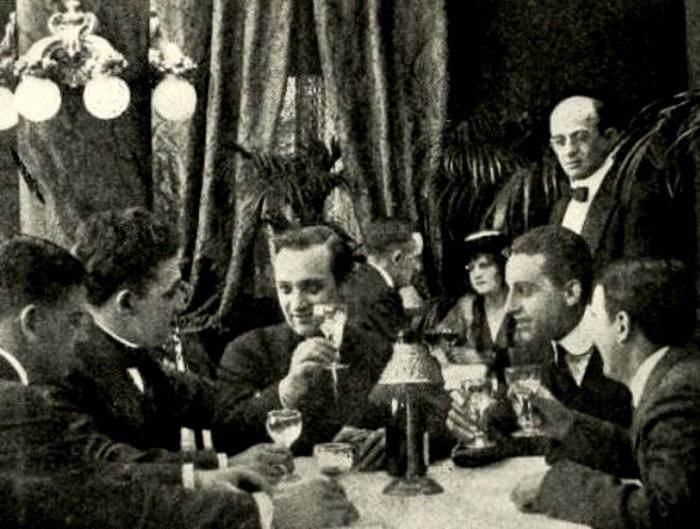
The Root of Evil is a film that lingers in the throat like a bitter pill. It wears its 1930s origins with the weight of a leaded corset, its narrative taut with the tension of a society on the brink of moral collapse. Patricia Jordan (a quietly searing performance by unknown actress Carol Holloway) is not merely a character; she is a cipher through which we witness the mechanized cruelty of economic determinism. Her love for Leonard Craig is not romantic in the conventional sense—it is a yearning for autonomy in a world that has already assigned her a role as collateral.
From the film’s opening scenes, director William H. Turner establishes a visual grammar of imbalance. The judge’s estate looms like a Gothic cathedral of privilege, its manicured gardens a grotesque parody of natural order. Patricia’s family home, by contrast, is a skeletal structure of worn furniture and flickering gas lamps. This spatial choreography—opulence versus squalor—is not incidental; it is a narrative device that foreshadows the film’s central thesis: that survival in a capitalist society requires complicity in its own injustices.
The judge’s proposal to Patricia is the moment where the film transitions from melodrama to moral inquiry. Is this transactional marriage a betrayal of her ethics or a pragmatic salvation? In 1930s Hollywood, such a question would have been answered with a tidy resolution—honor restored, villains punished. But The Root of Evil refuses to offer such comfort. The judge’s wealth is not a force for benevolence but a tool of control. His "support" for Patricia is measured in IOUs and conditional favors, a microcosm of the broader societal contract that binds the poor to the powerful.
Cyril’s debt crisis functions as the film’s engine of chaos. His spiraling into Martin’s clutches is not a personal failure but a systemic inevitability. The film’s portrayal of Martin, the moneylender, is particularly chilling. Played with a reptilian subtlety by Edward Peil Sr., he is not a villain with a motive but a force of nature, exploiting the same vulnerabilities that capitalism itself creates. His interest in Hazel, the gardener’s daughter, is less a romantic subplot and more an indictment of how poverty reduces human connection to a transactional calculus.
Leonard Craig’s return introduces a narrative pivot that is both hopeful and ironic. His role as the "white knight" is subverted from the outset—his aid to Patricia comes not from altruism but from a desire to expose the rot festering in the judge’s household. The scene where he confronts Welsh, the gardener, is a masterclass in tension. Turner frames the confrontation in tight close-ups, the camera lingering on Leonard’s clenched jaw and Welsh’s bloodshot eyes. The dialogue is sparse, yet the subtext is volcanic: here are two men whose lives intersect only in the shadow of Patricia’s ruin.
The film’s climax—Welsh’s murder and Cyril’s wrongful imprisonment—is where it transcends its genre tropes. Instead of a straightforward redemption arc, the narrative fractures into a web of moral ambiguity. The note Patricia sends to Leonard, intercepted and manipulated by Welsh, becomes a symbol of how truth is distorted by power. The judge’s final declaration of belief in his wife is not a victory but a tragic concession. He recognizes Patricia’s integrity, yet his acceptance is conditional on the erasure of the evidence that would have condemned him. This is the film’s most unsettling revelation: that institutions can only tolerate virtue when it aligns with their own interests.
Visually, the film employs chiaroscuro lighting not for aesthetic flair but to mirror its themes. Patricia’s scenes are drenched in shadows, her face half-illuminated as if caught between two worlds. The judge’s estate is bathed in golden light, but these moments are hollow, the warmth of wealth that cannot warm the soul. In contrast, the scenes in the working-class districts are lit with a cold, harsh clarity—there is no ambiguity in the bleakness of their existence.
Comparisons to Only a Factory Girl are inevitable, given both films’ focus on women navigating class hierarchies. Yet where Only a Factory Girl leans into romantic idealism, The Root of Evil is unflinching in its realism. The film’s most striking parallel, however, is with The Lure, particularly in its exploration of bodies as sites of manipulation. Hazel’s fainting spell at the end is not a dramatic flourish but a physical manifestation of the psychological toll of being a pawn in others’ games.
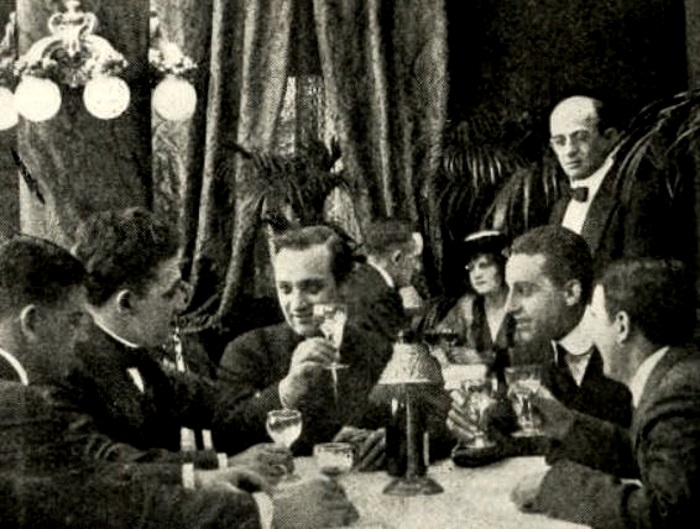
What elevates The Root of Evil from a standard pre-Code drama is its structural audacity. The film’s third act refuses to tidy up its loose ends. Cyril’s exoneration is not framed as a triumph but as a minor correction in a system designed to fail the marginalized. Leonard’s realization that he loves Hazel—a woman he initially sees as a child—is handled with aching subtlety. Their final embrace, as she faints in his arms, is a tableau of suspended resolution, the film’s truest reflection of how love and duty often stand in conflict.
The film’s weakest moments lie in its pacing. The middle act, where Patricia’s stock speculation spirals out of control, is narratively inert compared to the film’s more incisive character studies. Yet even here, the script uses the financial chaos to critique the American Dream’s fragility. The stock market is not a metaphor for greed but for the illusion of control—a game where the house always wins.
In the end, The Root of Evil is a film that demands to be rewatched, its layers of meaning peeling away with each viewing. It is a rare pre-Code production that dares to interrogate the very systems it depicts. While it lacks the stylistic experimentation of The Great Diamond Robbery, its moral clarity outshines many of its contemporaries. For modern audiences, the film’s most resonant theme is its warning against believing in the goodness of institutions when those institutions are built on exclusion.
Turner’s direction is not without its flaws—certain performances (notably Justina Huff as Patricia’s mother) descend into melodramatic overacting—but these missteps are minor in the context of the film’s broader achievements. The score, though largely forgotten, deserves mention for its eerie use of leitmotifs that anticipate key plot points. The recurring motif of a ticking clock, for instance, underscores the inescapable nature of time in the film’s world: time as both a commodity and a weapon.
For film scholars, The Root of Evil offers a fascinating case study in how pre-Code Hollywood navigated the tension between censorship and social commentary. The film’s explicit portrayal of debt as a form of slavery—Martin’s IOUs are literal chains—would have been impossible under the Hays Code. Yet Turner and the writers manage to smuggle their critique through allegory, using the judge’s house as a microcosm of capitalist hegemony.
Ultimately, the film’s legacy lies in its refusal to offer solutions. Cyril’s freedom, Hazel’s fainting spell, Leonard’s unspoken love—all these moments are unresolved, leaving the audience with the same disquieting questions the film poses: Can integrity exist in a system that rewards complicity? Is escape possible without erasure? These are not just questions for 1930s America but for any society grappling with the paradox of progress.
For those seeking a deeper dive, comparing The Root of Evil to Samhällets Dom (The Community’s Judgment) reveals how Scandinavian cinema approached similar themes with a more fatalistic tone. Conversely, the film’s exploration of familial obligation echoes Arrah-Na-Pogue, though with a distinctly American socioeconomic lens.
Technically, the film holds up surprisingly well. The transitions between locations are seamless, and the use of negative space in framing—particularly in scenes where characters are isolated within vast rooms—creates a visual language of entrapment. The color palette, though limited by the era’s black-and-white cinematography, uses lighting to create a sense of emotional temperature: warm tones during moments of false hope, cold blues during confrontations.
In conclusion, The Root of Evil is a film that refuses to be categorized. It is not a thriller in the mold of Trompe-la-Mort, nor a pure melodrama like Only a Factory Girl, but a hybrid that interrogates the very genres it inhabits. Its power lies in its ability to make the audience uncomfortable, to sit with the knowledge that Patricia’s choices—however morally fraught—are the only ones available to her. This is not a film about heroes and villains. It is a film about the slow, inevitable erosion of the human spirit by the systems we are forced to navigate.

IMDb 6.3
1936
Community
Log in to comment.