DbcultAccessing Vault...
Cult Review
Senior Film Conservator
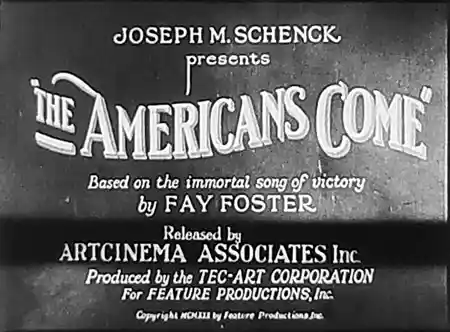
Is The Americans Come worth digging up? Absolutely, if you're into those early flickers of cinema, the ones before everything got so… loud. It’s a quiet watch, a real peek into a different time for film lovers who enjoy the history. But if you need car chases or complex plots to stay awake, then yeah, you’ll probably want to skip this one. 😴
The story, what there is of it, feels like a simple parable. It’s about a small town, maybe somewhere in Europe, and the arrival of these 'Americans'. Not as invaders, not really, but as something different. Something new that shakes up the quiet, established ways. Less about big events, more about the ripple effect, you know?
You can tell right away that Alfred T. Mannon, the writer, had a pretty clear idea, even if it feels a little rough around the edges today. The pacing is… deliberate. Like, really deliberate. There’s a scene where a character just walks across a room, and it feels like a whole minute. No cuts, just a slow, steady shuffle. You don't see that much anymore, do you?
Otto Matieson, he’s got this intense stare. Every time the camera's on him, you just know he’s feeling something big. His face tells a whole story even when the title cards are just giving us a sentence or two. It’s **pure melodrama**, which, honestly, is part of the charm of these old films. He makes you believe his worries, even if they seem a bit trivial now, compared to like, modern anxieties.
Then there's Arthur Lang. He’s got a different energy, a bit more… contained. There’s this one moment, it's not even a big deal, where he just picks up a newspaper. But the way he folds it, so precisely, almost *too* carefully? It felt like he was trying to convey a whole internal monologue about order and disruption, all through a simple action. Small things like that, they stick with you. 👀
The visual storytelling is pretty straightforward. Most shots are fixed, like you’re watching a play from a good seat. No fancy camera moves, which means you pay attention to the little gestures. Sometimes, though, the actors feel a bit lost in the frame, like the director just put them there and said, "Go on, do your thing." It’s **unpolished**, but in a charming way.
I found myself thinking about how much film language has changed. The silences here, they’re not empty. They’re filled with the projectionist’s music, sure, but also with this expectation. The audience back then, they were patient. They waited for the meaning to unfold. It’s a different kind of watching, really. Kind of meditative, even.
There's a scene, early on, where the 'Americans' first appear. They’re not doing anything spectacular, just walking into the town square. But the townspeople’s reactions — a mix of curiosity, suspicion, and a little bit of awe — it’s all played so **broadly**. One woman covers her mouth like she's seen a ghost, while a man squints like they're some kind of mirage. It's a nice little touch.
It's not a movie that tries to be clever. It just *is*. It presents a situation, shows how people react, and then it ends. No big twists, no shocking revelations. Just a slice of life, or at least, what felt like a slice of life through the lens of early cinema. You get a real sense of the era it was made in, the kind of stories that resonated then. It's not trying to be The Actress, with its focus on inner turmoil, it’s more outward.
If you're looking for a quiet afternoon with something truly different, something that makes you appreciate how far movies have come (and sometimes, what they've lost), then The Americans Come is a good pick. Don't expect to be blown away, but you might just find yourself gently charmed. Maybe even a little thoughtful. 🧐
IMDb —
1929
Community
Log in to comment.