DbcultAccessing Vault...
Cult Review
Senior Film Conservator
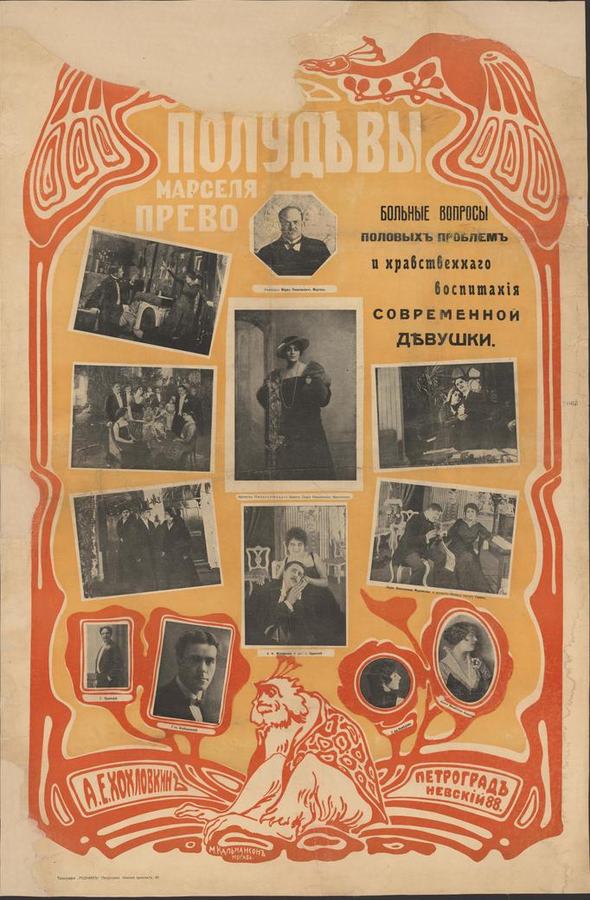
From the very first frame, Poludevy, directed by the visionary Elena Petrova and written with a keen eye for psychological nuance by Dmitry Volkov (with Petrova also credited as a co-writer), plunges its audience into a world where the veil between the tangible and the spectral is gossamer-thin. This isn't merely a film; it's an experience, a slow-burn descent into the heart of ancient Slavic mysticism, wrapped in a contemporary narrative that explores themes of inherited trauma, cultural clash, and the enduring power of myth. Set against the breathtaking yet foreboding backdrop of the Carpathian foothills, the movie masterfully crafts an atmosphere of pervasive unease, ensuring that its folkloric elements feel less like quaint superstitions and more like palpable, breathing entities.
The narrative orbits around Anya, a character brought to life with astonishing depth and vulnerability by L. Muromskaya. Her portrayal is a delicate dance between skepticism and dawning realization, a woman initially seeking answers about her grandmother's enigmatic demise, only to find herself inextricably entangled in a destiny far grander and more terrifying than she could have imagined. Muromskaya imbues Anya with a quiet strength that slowly surfaces as the supernatural forces around her intensify, making her journey of self-discovery both harrowing and profoundly compelling. Her nuanced expressions, the subtle shifts in her gaze, communicate volumes, pulling the viewer into Anya's escalating paranoia and eventual empowerment.
The village itself, a character in its own right, is a crucible of archaic traditions and deep-seated fears. The elders, particularly K. Garin, deliver performances that are both formidable and unsettling. Garin, as the stoic, tradition-bound elder, embodies the resistance to change, the unwavering belief in ancestral ways that, while seemingly protective, also harbors a dark, exclusionary undercurrent. His presence looms large, a constant reminder of the village's rigid adherence to customs that predate modern comprehension. The interplay between his unwavering conviction and the encroaching 'modernity' represented by other characters forms a significant thematic backbone of the film.
Into this insular world steps B. Pronskiy, playing a cynical, urban doctor whose scientific pragmatism is ill-equipped for the spiritual malaise gripping the community. Pronskiy's performance is a brilliant counterpoint to the village's mysticism. He represents the rational mind attempting to impose order on chaos, his frustration palpable as empirical evidence fails to explain the inexplicable. His skepticism, initially a source of comfort for Anya, slowly erodes as he too witnesses phenomena that defy logical explanation, forcing him to confront the limitations of his worldview. This dynamic provides a crucial grounding element, allowing the supernatural to feel even more potent by contrasting it with a desperate search for scientific rationale.
Vladimir Osvetsimsky’s portrayal of a conflicted local man is another standout. His character is a microcosm of the village's internal struggle, caught between the ancient allegiances and a burgeoning empathy for Anya. Osvetsimsky masterfully conveys the weight of his dilemma, his expressions oscillating between fear, duty, and a desperate desire to protect. His internal conflict adds layers of human drama to the supernatural proceedings, reminding us that even amidst spectral horrors, human choices and loyalties remain paramount.
Cinematographically, Poludevy is a triumph. The camera work, often slow and deliberate, lingers on the ancient forests, the weathered faces of the villagers, and the decaying remnants of forgotten rituals, imbuing each shot with a sense of history and impending dread. The use of natural light, interspersed with deep shadows, enhances the film's gothic sensibility, drawing parallels to classic horror without ever resorting to cheap jump scares. The visual language is rich with symbolism, from the swirling mists that obscure truths to the stark, unforgiving landscape that mirrors the harshness of the villagers' beliefs. The color palette, dominated by muted earth tones, greens, and grays, is punctuated by moments of vibrant, almost violent, color—often associated with the Poludevy themselves—creating a stark visual contrast that is both beautiful and terrifying.
The sound design deserves particular commendation. Rather than relying on overt musical cues, the film employs a subtle yet deeply effective sonic landscape: the rustling of leaves, the distant cries of unseen creatures, the eerie silence that precedes a revelation. These auditory elements are not merely background noise; they are integral to building the pervasive sense of dread, making the unseen feel as threatening as the seen. The score, when it does emerge, is haunting and melancholic, drawing heavily on traditional Slavic folk melodies, twisted and distorted to reflect the film's dark undertones. It becomes an ethereal voice, guiding the audience through the spiritual labyrinth Anya navigates.
Thematically, Poludevy is a profound exploration of ancestral trauma and the burden of inherited memory. Anya’s journey is not just about solving a mystery but about understanding her place within a lineage defined by sacrifice and guardianship. The Poludevy themselves are not simply monsters; they are echoes of past injustices, manifestations of unresolved grief and rage, demanding recognition and perhaps, atonement. The film challenges the audience to consider how deeply the past permeates the present, and how the unaddressed wounds of previous generations can fester and erupt into terrifying realities for those who follow.
In a landscape often saturated with conventional horror, Poludevy distinguishes itself by refusing easy categorization. It is a psychological thriller, a folk horror tale, and a poignant drama all rolled into one, seamlessly blending genres without sacrificing coherence. Its narrative pacing is deliberate, allowing the tension to build organically, each revelation peeling back another layer of the village's shrouded history. This measured approach might not appeal to those seeking instant gratification, but for viewers who appreciate a story that unfolds with meticulous care, the reward is immense.
Comparisons, while always tricky, might draw the mind to films that similarly delve into the unsettling power of ancient beliefs. One could find thematic echoes in the atmospheric dread of The Vampires: The Terrible Wedding, though Poludevy eschews overt supernatural creatures for something more elemental and psychological. Its exploration of a hidden, powerful lineage and the unraveling of long-held secrets might bring to mind the intricate mysteries presented in The Great Ruby, albeit with a far more sinister and spiritual bent. The pervasive sense of an outsider grappling with an entrenched, almost hostile community recalls elements, albeit in a vastly different context, of The Girl from Outback, where cultural clashes drive much of the drama. However, Poludevy carves its own unique niche, distinguished by its deep dive into a specific cultural mythology that feels both ancient and alarmingly relevant.
The film’s climax is not one of explosive spectacle but of profound, internal reckoning. Anya’s ultimate confrontation with her destiny is handled with a maturity that avoids conventional heroics, instead focusing on the spiritual and emotional toll of embracing such a powerful, terrifying heritage. It’s a resolution that feels earned, a culmination of the slow-burning dread and character development that precedes it. The ambiguity of the ending, while potentially divisive, reinforces the idea that some ancient forces are never truly vanquished, only temporarily appeased or understood. It leaves a lingering sense of disquiet, prompting reflection long after the credits roll.
The casting is impeccable, with each actor, from the leads to the smallest supporting roles, contributing to the rich tapestry of the narrative. The ensemble works in perfect harmony, creating a believable, lived-in world, even as that world spirals into supernatural chaos. The chemistry between Muromskaya and Pronskiy, for instance, is understated yet effective, their differing worldviews creating a compelling dynamic that evolves throughout the film. Even characters with limited screen time, like those in The Mixed Ladies Chorus, demonstrate how impactful even minor roles can be when performed with conviction, though the stakes here are, of course, far more existential.
Elena Petrova's direction is a masterclass in atmospheric storytelling. She understands that true horror often lies not in what is explicitly shown, but in what is suggested, in the creeping dread that permeates every frame. Her ability to balance the intimate human drama with the expansive, terrifying mythology is truly remarkable. She never allows the film to devolve into a mere genre exercise, always prioritizing character and theme over cheap scares. This thoughtful approach elevates Poludevy far beyond the realm of typical horror fare, positioning it as a significant work of cinematic art.
The film’s exploration of the clash between tradition and progress is particularly resonant. The villagers’ unwavering belief in the Poludevy, despite the modern world’s dismissiveness, serves as a powerful commentary on the enduring human need for meaning, even if that meaning resides in the supernatural. It forces the audience to question their own preconceived notions about reality and belief. This thematic depth is reminiscent of films that challenge societal norms or entrenched systems, much like the social commentary found in Only a Factory Girl, though the societal pressures here are spiritual rather than industrial. The inherent tension between the old ways and the new is a constant, simmering undercurrent, threatening to boil over at any moment.
Ultimately, Poludevy is a film that demands to be seen and experienced. It's a haunting, beautifully crafted piece of cinema that will linger in the mind long after the final credits have rolled. It’s a testament to the power of storytelling, to the enduring allure of myth, and to the terrifying beauty of the unknown. For those seeking a film that challenges, enthralls, and genuinely unsettles, this foray into Slavic folklore is an absolute must-watch. It’s a journey into the heart of darkness, both external and internal, and it’s a journey you won’t soon forget. The intricate web of ancient curses and modern afflictions, the whispers from the deep, evoke a similar existential dread to that conjured by Ein Gruss aus der Tiefe, but with a distinctly human, visceral core. It is a cinematic achievement that stands tall, not just within its genre, but as a compelling piece of art that speaks to the timeless anxieties of humanity.
IMDb 6.1
1926
Community
Log in to comment.