DbcultAccessing Vault...
Cult Review
Senior Film Conservator

The opening tableau of The Baby situates the protagonist—a lanky, wide‑eyed farmhand—amidst the amber‑lit fields of an unnamed countryside. His departure is not merely geographic; it is an exodus from a life shackled by agrarian monotony toward the promise of metropolitan anonymity. The cinematography, employing static wide shots intercut with kinetic close‑ups, underscores his internal disquiet, a visual echo of the restless spirit that fuels countless migration narratives.
When the young man intervenes to halt a runaway horse—a scene choreographed with kinetic vigor and comic timing—the reward he receives becomes a narrative fulcrum. The thousand dollars, modest by contemporary standards yet monumental for a laborer, operates as a symbolic currency, negotiating power between disparate social strata. This moment reverberates with the same economic tension that fuels the plot of Brother Against Brother, where monetary stakes dictate familial loyalty.
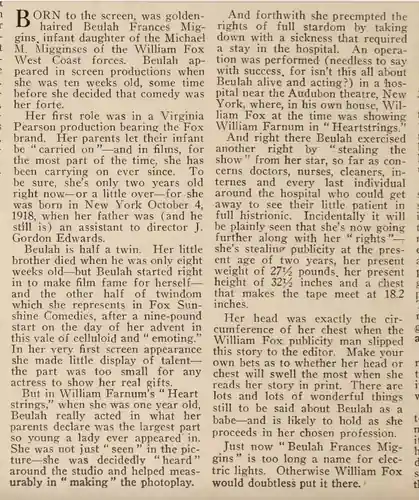
The film’s secondary axis introduces a father—weathered, stoic, and bereft of land—who, together with his eight offspring, embodies the archetype of the displaced American family. The eldest daughter, portrayed with a steely resolve by Beulah Miggins, orchestrates a marriage of convenience, leveraging the farmer’s newfound wealth to secure a domicile for her kin. This pragmatic union, devoid of romantic pretense, foregrounds themes of survival, agency, and the commodification of matrimony, resonating with the transactional nuptials depicted in Going Straight.
The decision to inhabit a houseboat transforms the narrative space into a liminal arena—neither fully terrestrial nor wholly aquatic. The vessel, cramped yet buoyant, becomes a crucible where class tensions, familial hierarchies, and individual identities are tested. Its creaking timbers echo the fragile cohesion of the newly formed family, while the surrounding river serves as a metaphorical current, pulling characters toward unforeseen destinies.
Enter the antagonist—a shadowy figure whose motivations remain tantalizingly opaque. By severing the houseboat’s moorings, he initiates a harrowing drift, thrusting the occupants into a visceral confrontation with nature’s caprice. The ensuing sequence, rendered in stark chiaroscuro, juxtaposes the darkness of the night sky with the phosphorescent glint of the river, amplifying tension. This act of sabotage mirrors the sabotage motifs present in The Road Demon, where a single malevolent act destabilizes an entire community.
Amidst the chaos, a newborn—referred to only as "the baby"—is swept toward the unforgiving water. The camera lingers on the infant’s helpless visage, evoking a visceral dread that propels the audience into a collective gasp. The protagonist’s decisive plunge into the river to retrieve the child crystallizes his evolution from itinerant drifter to protector, a transformation that resonates with the heroic redemption arcs in The Trufflers.
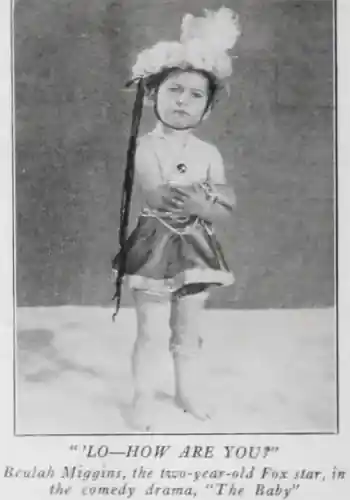
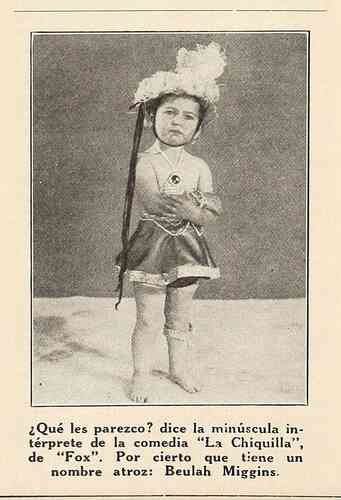
Ernie Adams delivers a nuanced portrayal of the farmer, oscillating between naive optimism and emergent stoicism. His physical comedy—particularly in the horse‑chasing scene—exhibits a kinetic brilliance that belies the film’s otherwise sober tone. Tom Kennedy, as the dispossessed patriarch, exudes a gravitas that anchors the ensemble, while Beulah Miggins infuses her eldest daughter with a razor‑sharp pragmatism rarely afforded to women in silent-era narratives.
Director Gus Pixley orchestrates a rhythm that alternates between rapid, slap‑stick interludes and languid, contemplative tableaux. The editing, though constrained by the era’s technological limits, demonstrates a keen sense of pacing; the transition from the bustling city streets to the serene riverine setting is handled with a fluidity that underscores the film’s thematic dichotomies.
At its core, The Baby interrogates the elasticity of familial bonds when subjected to economic duress. The marriage of convenience, while historically rooted in pragmatic survival, is reframed here as a catalyst for communal reconstruction. This narrative choice anticipates later cinematic explorations of forced unions, such as those in Rebecca the Jewess, where financial necessity eclipses romantic inclination.
Moreover, the film’s depiction of displacement—both geographic and socioeconomic—mirrors the post‑World War I migratory waves that reshaped American urban landscapes. The protagonist’s journey from rural obscurity to urban anonymity, and subsequently to a liminal existence aboard a houseboat, encapsulates the era’s ambivalence toward progress: a simultaneous yearning for stability and a fear of losing one’s roots.
Water, in this silent drama, functions as a multifaceted symbol. It represents both peril and purification; the houseboat’s drift signifies the destabilization of the family’s fragile equilibrium, while the river’s eventual calm after the rescue scene suggests a rebirth. This duality aligns with the symbolic use of water in Homunculus, 1. Teil, where aqueous motifs underscore metamorphosis.
The film’s visual palette, constrained to monochrome, employs stark contrasts to evoke emotional texture. Pixley’s use of deep focus during the houseboat scenes allows multiple planes of action to coexist, granting the audience simultaneous access to the protagonist’s heroic rescue and the panicked reactions of the surrounding family members.
Lighting design is particularly noteworthy: the nocturnal river sequence utilizes low-key illumination, casting elongated shadows that amplify suspense. The occasional intercut of a flickering lantern against the dark water creates a visual rhythm reminiscent of the chiaroscuro techniques employed in Tiger Land.
Given its 60‑minute runtime, the film demonstrates a disciplined economy of storytelling. Each intertitle is succinct, delivering essential exposition without interrupting visual momentum. The pacing accelerates during the climactic rescue, employing rapid cuts that heighten urgency, then decelerates in the denouement, allowing the audience to savor the restored familial harmony.
While The Baby may not enjoy the widespread recognition of contemporaneous epics, its exploration of forced matrimony, economic desperation, and the transformative power of altruism renders it a prescient artifact. Modern viewers attuned to themes of gig‑economy precarity and the fluidity of family structures can find resonance in the film’s portrayal of adaptive survival strategies.
Scholars have begun to reevaluate the film’s place within the silent era canon, noting its subtle subversion of gender expectations—most prominently through the eldest daughter’s agency—and its nuanced critique of capitalist opportunism. Such readings align the work with the social realism evident in The Rattlesnake, wherein personal ambition collides with communal responsibility.
Fortunately, a restored print of The Baby survives within the Library of Congress archives, having undergone digital remastering in 2022. The restored version, now available on select streaming platforms, presents the original intertitles alongside a newly commissioned musical score that accentuates the film’s emotional beats without overwhelming its visual integrity.
For cinephiles seeking a comparative study, the film’s thematic concerns echo those in Bjørnetæmmeren, where a solitary protagonist negotiates societal expectations through unconventional alliances.
The Baby stands as a testament to the silent era’s capacity for layered storytelling, blending comedic set‑pieces with poignant social commentary. Its characters, though archetypal, are imbued with sufficient depth to transcend the constraints of their time, offering contemporary audiences a window into the complexities of early twentieth‑century American life. The film’s deft balance of humor, pathos, and visual inventiveness secures its place as a hidden gem worthy of scholarly attention and enthusiastic viewing.
IMDb 7
1931
Community
Log in to comment.