DbcultAccessing Vault...
Cult Review
Senior Film Conservator
A cathedral of contradictions: why this forgotten curio still snorts smoke
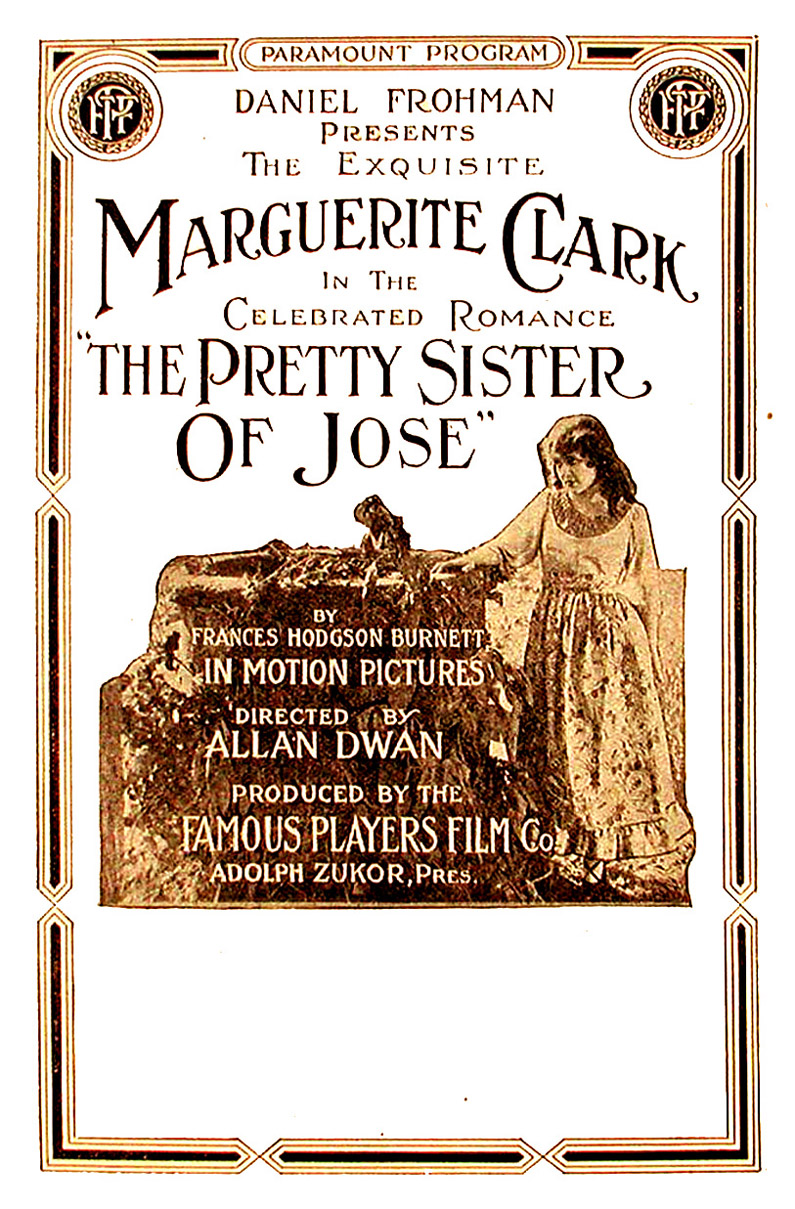
Allan Dwan’s The Pretty Sister of Jose arrives like a hand-tinted postcard fished from a bonfire: edges singed, pigments flaking, yet the image—of pride skewered by passion—retains a pulse so insistent you half expect the screen to exhale. Shot in 1915, released into a world busy re-arranging empires, the film slipped through the cracks of canon, yet its emotional tessellations feel eerily modern: performative femininity, toxic celebrity, trauma as heirloom.
Frances Hodgson Burnett’s source novella always swaggered between nursery and nightmare; Dwan, fresh off threading pathos through Little Lord Fauntleroy, drags that tonal seesaw into the bullring, letting sunlight sear what candlelight once merely kissed.
From the first iris-in, the camera ogles Pepita’s world like a smitten poet who also keeps a knife behind his back. Adobe walls sweat history; geraniums bleed onto flagstones; the tonal palette—sepia, hand-daubed turquoise, arterial red—announces that beauty and violence here share the same cotillion. Intertitles, florid even by Victorian standards, read like pressed flowers dipped in absinthe: “She vowed that no man should call her heart his homestead.” Yet the verbosity never stalls the momentum; instead, it curls around the images like Baroque ivy, half decoration, half garrote.
The matador as rock-star: fame’s first-aid kit for fragile masculinity
Sebastiano, essayed by Rupert Julian with matinee-idle swagger, pre-dates every tabloid bad-boy archetype. His veronica in the arena is filmed in long, unbroken takes—rare for 1915—so that the cape’s arc becomes a planet’s orbit and the bull, a force of astronomical reckoning. Dwan cross-cuts to Pepita’s balcony: her fan snaps shut like a guillotine. In that click, the film posits desire as duel, conquest as two-way blood sport.
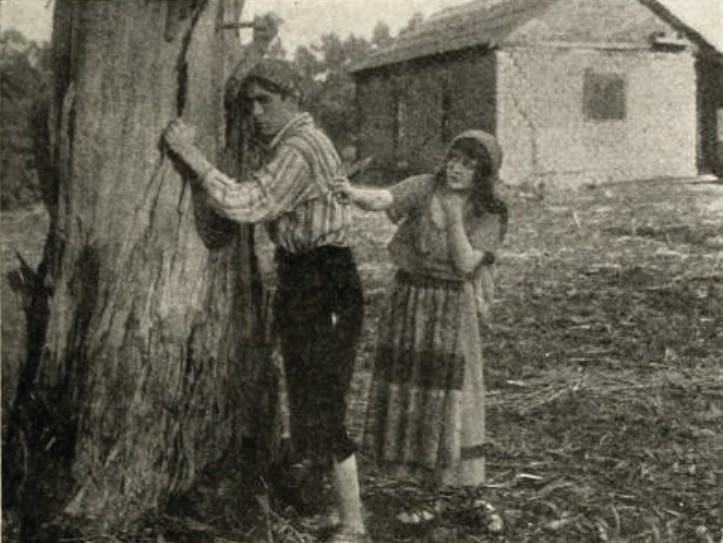
When Sebastiano later lounges in a Madrid café swirling brandy the color of bull’s blood, the camera tilts slightly, as though moral equilibrium has sloshed. The moment anticipates the toxic charisma of later seducers—think Valmont, think Martin Eden’s self-mythologizing drift—yet the film refuses to grant him unalloyed villainy. His ache for Pepita’s approbation feels real because the camera lingers on the tremor in his glove when she commands him to lace her boot; machismo, once punctured, leaks loneliness.
Pepita’s vow: feminism or fortress?
Marguerite Clark, 4-foot-10 powerhouse, plays Pepita with mercurial voltage. Watch her in the sequence where she forces Sebastiano to act as footman: she reclines like a sultan yet her eyes scan for exits, proof that bravado can be a panic room. The performance toggles between coquette and commander, suggesting that the only autonomy afforded women in this milieu is the power to refuse—an intoxicating but ultimately corrosive weapon.
Contemporary viewers might crave a more overt liberation arc, yet the film’s claustrophobic social fabric feels historically honest. Pepita’s hatred of men stems not from ideology but from intimate carnage: a mother’s suicide as public theatre, an uncle’s retributive dagger painting the walls. Her resistance is less feminist manifesto than medieval oath, sealed in scar tissue. In that, she shares DNA with the heroines of East Lynne or The Great Divide, women whose agency spikes precisely because the circumference of choice is so brutally small.
Dwan complicates the trope by allowing Pepita contempt to curdle into obsession; her jealousy upon Sebastiano’s engagement is shot in chiaroscuro—half her face devoured by shadow—hinting that refusal can metastasize into the very possessiveness she abhorred.
Jose: the brother as mirror and escape hatch
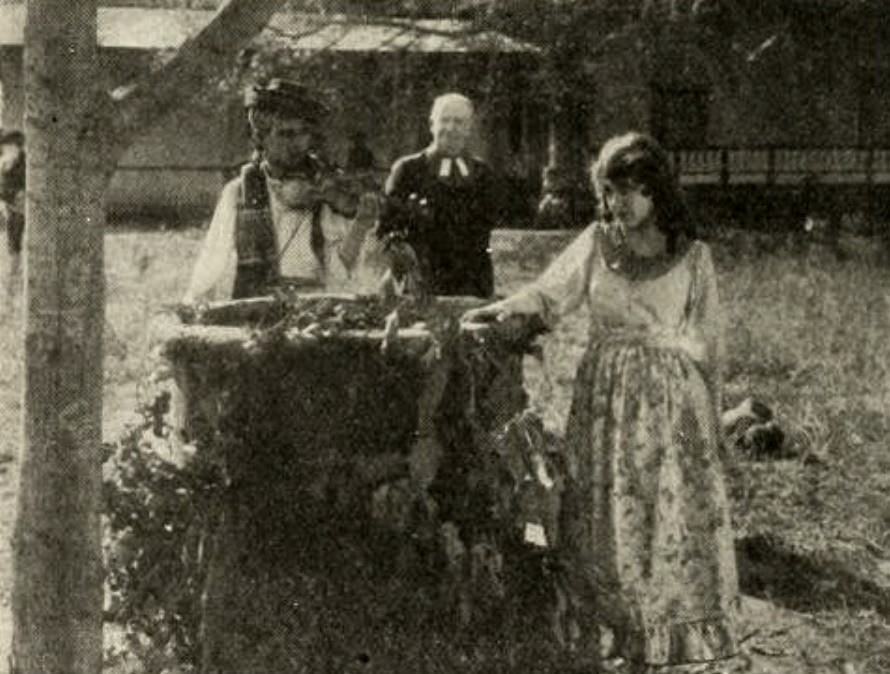
Jack Pickford’s Jose radiates Puckish charm; he somersaults through frames like a boy who has pocketed the moon. Yet beneath the skylarking lurks survivor’s guilt—he, after all, fled the ancestral theatre of grief while Pepita remained center-stage. Their reunion in Madrid, scored by unseen guitars, brims with unspoken recrimination: she ruffles his hair with the same hand that earlier gripped a dagger-shaped crucifix. Sibling dynamics here flirt with incestuous thickness—note the shot where Pepita drapes herself across Jose’s lap, both oblivious to the courting couples around—but the film stops just short of codifying the taboo, preferring to let ambiguity steam like a kettle.
Jose’s function as moral counterweight crystallizes when he confronts Sebastiano in the arena’s infirmary. Pickford’s voice (via intertitle) cracks: “You have bled for her; now let her bleed for you.” The line could scan as mere melodrama, yet in context it reframes the entire narrative: love as reciprocal lancet, pride as clotting agent.
Sarita’s death: collateral damage in the gender wars
Teddy Sampson’s Sarita appears briefly—fluttering fan, moon-eyes for Sebastiano—then exits via a death so passive it feels like a watercolor left in rain. Her demise serves as narrative hinge rather than character arc, a convention the film inherits from Victorian stage. Yet Dwan’s camera records her final moments with unsettling reverence: a close-up of her pallid hand releasing a pressed gardenia, petals scattering across tiles like unmailed letters. The image indicts the society that trains women to aspire to nothing beyond being chosen, then punishes them for the aspiration.
Bullfight as apocalypse: choreography of catharsis
The climactic corrida unfolds in a barrage of angles—overhead rigs, ground-level wheels, POV shots from the bull’s blurred perspective—that prefigure Eisensteinian montage. Note how Dwan inserts a triple-exposure: Sebastiano’s face, Pepita’s fan, the mother’s dagger, all swirling like nebulae. The effect is hallucinatory, as though trauma itself has entered the arena to duel.

When the horn pierces flesh, the film cuts to black for four beats—an eternity in 1915 grammar—then erupts in a riot of superimpositions: the bull’s eye, Pepita’s open mouth, the cathedral spire tilting. Critics often cite the Defense of Sevastopol or Perils of Pauline for kinetic editing, yet Dwan’s synthesis of spectacle and psychology here feels proto-modern, a silent scream that vibrates the ribcage.
The resurrection beats—Sebastiano’s eyes snapping open at the precise syllable of Pepita’s confession—tilt the film into hagiographic turf, but the preceding carnage grants the miracle a visceral price tag.
Visual lexicon: color, shadow, gesture
Surviving prints, though incomplete, reveal tinting strategies that encode emotion: citrine for Madrid frivolity, cobalt for nocturnal despair, rose for the fleeting blush of reciprocity. The absence of blue during Sarita’s death underscores her unfulfilled romanticism; when Pepita finally confesses love, a sudden aquamarine flood baptizes the frame, suggesting that vulnerability, not conquest, baptizes the soul.
Shadow work anticipates German Expressionism: Pepita’s first solitary walk post-mother’s funeral is lit by a single overhead lantern that carves her silhouette into a dagger-shaped slit across the wall. The visual pun—woman as weapon, woman wounded—compresses theme into geometry.
Performances: micro and macro acting
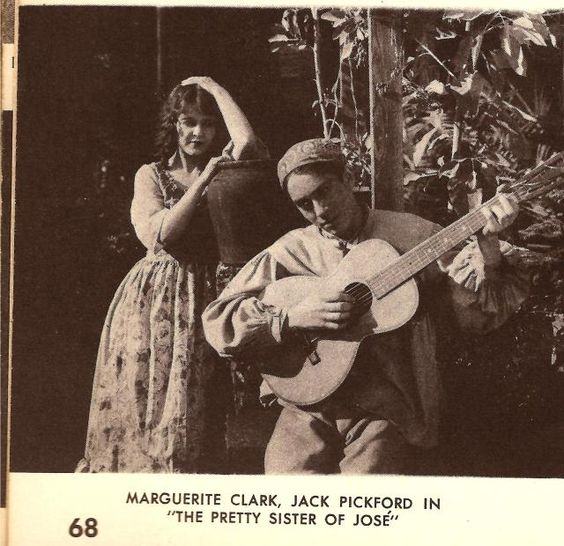
In medium shots, Clark relies on eyebrows—lift for scorn, knit for bewilderment, flatten for the fatal surrender—creating a Morse code of feeling. In close-ups, she stills every muscle except the tear duct; the resulting quiver feels seismic. Julian matches her with kinetic contrast: his shoulders narrate confidence while fingertips tremble, betraying that matadors, too, flirt with mortality every time they swagger.
Pickford, often dismissed as Mary’s little brother, reveals timing as precise as Buster Keaton’s: witness the beat where Jose learns of Sarita’s death—his smile collapses mid-joke, the unfinished laugh hanging like a cracked bell. In that flicker, the film achieves the rare silent-era feat of making grief audible.
Sound of silence: music then, music now
Original exhibition notes suggest a live accompaniment of Spanish folk motifs segueing into Wagnerian crescendo for the bullring. Modern restorations (MoMA, 2019) commissioned a score by Anaïs Azul, blending flamenco palmas with minimalist strings; the juxtaposition—handclap against sustained drone—mirrors the film’s collision of rustic passion and existential dread.
Comparative DNA: cousins across the canon
Place Pretty Sister beside As You Like It and you’ll find Rosalind’s gender-play prefigured in Pepita’s emasculation of Sebastiano. Stack it against The Golden Chance and note how both films weaponize marriage as social transaction, though Dwan’s ending opts for miraculous reconciliation where DeMille’s opts for punitive tragedy.
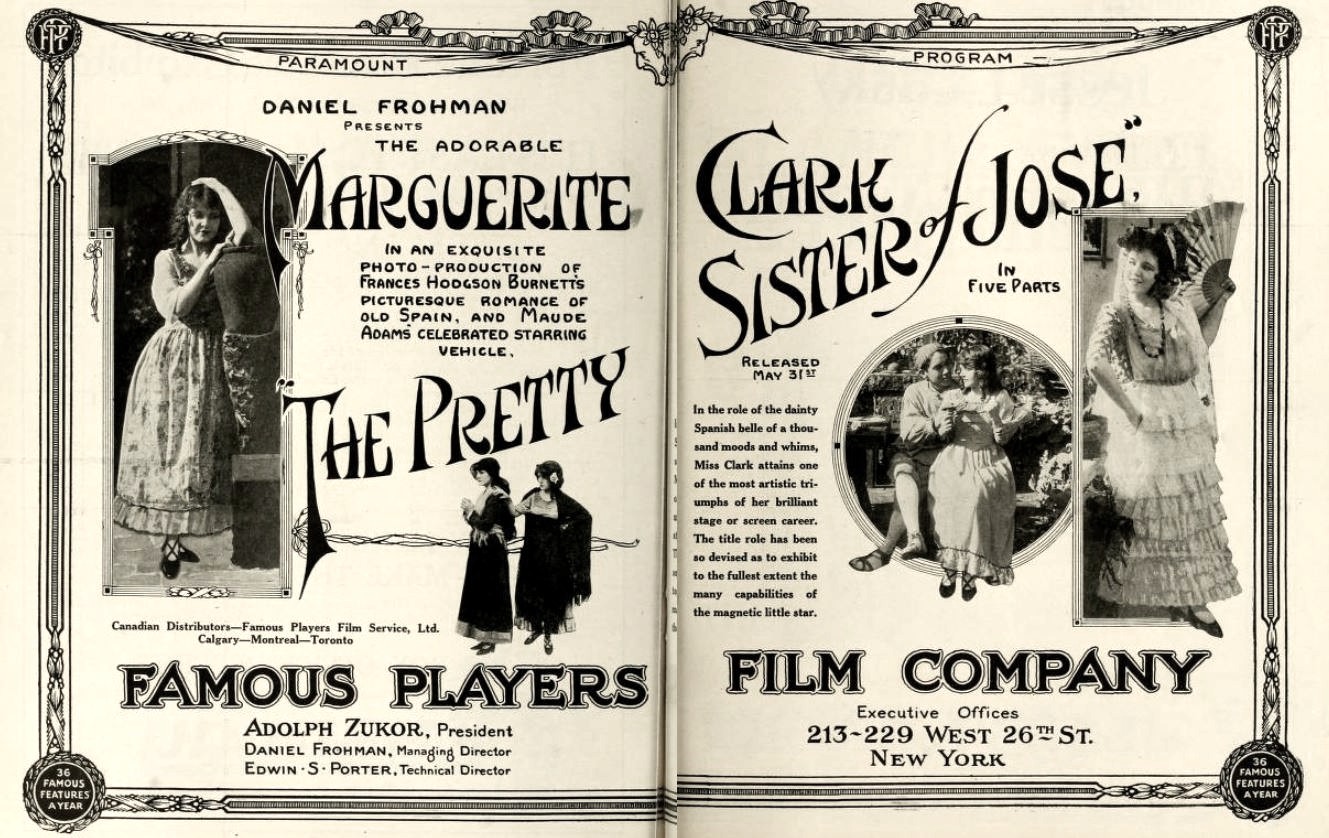
Curiously, the bullfight-as-love-duel anticipates the climax of Moora Neya, where a spear-throw becomes proposal. Such echoes suggest that early cinema recycled catharsis templates, yet Dwan’s gendered power inversion feels forward-leaning.
Restoration status: ghosts waiting for a body
Only fragments survive: two of five reels, preserved at 18 fps, some scenes decomposing into what archivists term vinegar soup. Yet even in tatters, the film exerts magnetism; the missing passages invite imaginative grafting, a participatory nostalgia akin to reading half-burned letters.
Fans of Rablélek’s fragmented poetry or Oliver Twist’s recovered scenes will recognize the ache. A 4K hypothetical reconstruction—interpoling stills, synopses, AI-assisted frame blending—could resurrect the narrative spine without saccharine over-painting.
Final thrust: why seek this relic?
Because it stages the war between pride and vulnerability as bullfight, because its palette still bleeds through century-old emulsion, because Marguerite Clark’s eyes hold the same dare modern lovers fling at one another across crowded rooms: “Try to possess me, and I’ll possess you back.” In 2024, when dating apps monetize rejection and influencers weaponize detachment, Pepita’s arc feels prophetic: autonomy coveted yet corrosive when weaponized, love longed for yet lethal when labeled weakness.
Watch what remains; imagine what doesn’t. Let the flicker remind you that every generation thinks it invented the dagger of desire, yet the wound—and the wonder—was always ancient, always new.
IMDb 7.4
1934
Community
Log in to comment.