DbcultAccessing Vault...
Cult Review
Senior Film Conservator
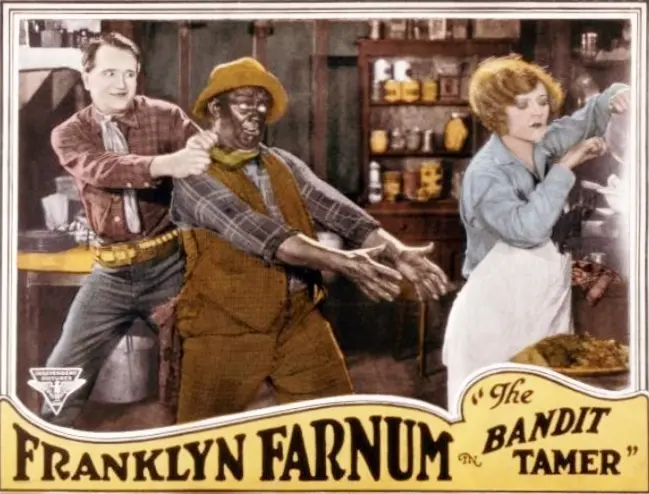
Is The Bandit Tamer worth watching today? Short answer: Yes, but with significant caveats. This early silent Western is less a compelling narrative for a broad modern audience and more a fascinating, albeit often rudimentary, peek into the nascent stages of cinematic storytelling. It’s a film best suited for dedicated film historians, silent film enthusiasts, and those with a keen interest in the evolution of genre, particularly the Western. Conversely, if you seek high-octane action, complex character development, or polished production values, this film is decidedly not for you.
This film works because it offers an invaluable historical document, showcasing the foundational elements of Western tropes and early screen acting in a remarkably unadulterated form.
This film fails because its narrative simplicity and dated comedic beats often struggle to connect with contemporary sensibilities, feeling more like an academic exercise than engaging entertainment.
You should watch it if you appreciate cinema as an evolving art form, enjoy dissecting the origins of genre conventions, or simply want to experience the charm of early silent-era filmmaking without modern expectations.
Released at a time when cinema was still finding its voice, The Bandit Tamer, directed by James Ormont, represents a crucial, if often overlooked, piece of film history. It hails from an era dominated by shorts, where narrative efficiency and broad strokes were paramount. These films weren't just entertainment; they were experiments in a new medium, a canvas on which the very grammar of visual storytelling was being invented.
The Western genre, in particular, was a fertile ground for these experiments. Its inherent drama, clear-cut morality, and iconic imagery lent themselves perfectly to the limitations and strengths of silent film. The vast landscapes, the horseback chases, the good-versus-evil archetypes – all translated effectively even without synchronized sound.
What makes The Bandit Tamer particularly intriguing is its focus on the 'taming' aspect rather than pure action. This suggests a subtle thematic depth, an early exploration of redemption and the power of influence, even within a comedic or dramatic short. It’s a blueprint for countless stories that would follow, demonstrating how character interaction could drive a plot even more than spectacle.
The film’s charm today lies precisely in its unpolished nature. It lacks the self-awareness of later blockbusters, offering a raw, unfiltered glimpse into how filmmakers conceived of narrative and character when every shot, every intertitle, was a fresh discovery. It’s a reminder that even the simplest stories can carry significant weight when they tap into universal human experiences.
The core premise of The Bandit Tamer is elegantly straightforward: a bandit, likely a rough-and-tumble character, finds himself subjected to the civilizing efforts of another. While details are sparse, one can infer a dynamic built on contrast – the wildness of the outlaw pitted against the perhaps gentle, perhaps cunning, resolve of the tamer.
The film, as was common for the era, likely leans heavily on visual cues and physical comedy or melodrama to convey the bandit's transformation. We see the bandit, played by Max Asher, perhaps initially resistant, his scowls and aggressive postures slowly giving way to confusion, then grudging acceptance, and finally, perhaps, genuine reform. The tamer, who could be Rosa Gore in a strong, unconventional role, or even Franklyn Farnum, would employ methods ranging from domestic chores to moral lessons, or even subtle psychological manipulation.
This narrative arc, even in its brevity, touches upon themes of societal integration and the potential for rehabilitation. It questions whether inherent nature can be altered by external influence, a timeless debate. The 'taming' isn't just about curbing criminal behavior; it's about instilling a new set of values, a new way of being. This makes the film more than just a simple chase or a heroic showdown; it’s a character study in miniature.
The simplicity of the plot allows for a clear focus on cause and effect, a fundamental principle of storytelling. Each action by the tamer presumably elicits a visible reaction from the bandit, building towards a climactic moment of decision or a humorous resolution. It's a testament to writer James Ormont's ability to distill a complex idea into an accessible, engaging format for a nascent medium.
In the silent era, acting was a language of exaggerated gestures, facial contortions, and physical comedy. Performers like Max Asher, known for his comedic work, would have brought a robust physicality to the role of the bandit. Imagine broad scowls, dramatic leaps, and perhaps a comical struggle against societal norms, all conveyed with an energy that needed to fill the silence.
Asher's portrayal would likely have been less about nuanced internal struggle and more about externalized emotion. His transformation, if played for comedy, would involve a gradual softening of these exaggerated mannerisms – a dropped jaw of surprise, a hesitant smile, or a clumsy attempt at polite behavior. This requires immense skill in physical performance, a kind of stage acting adapted for the camera.
Rosa Gore, Marguerite Clayton, and Franklyn Farnum would have contributed to this tableau with their own distinct styles. Gore, often cast in strong female roles, might have played the titular tamer with a mix of stern resolve and unexpected charm, her expressions conveying determination without a single word. Clayton, with her dramatic presence, could have provided a more serious counterpoint, while Farnum might have offered a sense of authority or a bewildered bystander.
The ensemble, including Dan Crimmins and Buck Black, would have filled out the world, reacting to the central conflict with expressions and body language that reinforced the narrative's tone. Their collective performances are fascinating not just for their individual merits but as a window into the evolving craft of screen acting, where the absence of dialogue demanded a heightened visual eloquence. It’s a style that, while alien to modern viewers, was utterly compelling to audiences of the time, and still holds a peculiar fascination for those willing to engage with its unique conventions.
James Ormont, as director, faced the challenge of translating a story into moving images with very limited technical resources. Cinematography in this period was often functional rather than artistic, prioritizing clarity and visibility. We can expect mostly static shots, medium close-ups to capture facial expressions, and wide shots to establish the Western setting.
Ormont's direction would have focused on clear blocking and staging. Actors would move within the frame to convey action and reaction, rather than relying on rapid cuts or complex camera movements. The lighting would likely be natural, perhaps supplemented by basic artificial lights, creating a raw, almost documentary-like feel that ironically gives these films a timeless authenticity today.
The use of intertitles, written by James Ormont, would be crucial. These text cards served as dialogue, narration, and exposition, guiding the audience through the plot points and character motivations. Ormont's skill as a writer would be evident in the conciseness and effectiveness of these titles, ensuring they advanced the story without disrupting the visual flow too much.
One might observe how Ormont uses the vastness of the Western landscape, even in simple shots, to emphasize the bandit's isolation or the scale of the challenge for the tamer. A shot of a lone figure on horseback against a wide horizon, for instance, would speak volumes without dialogue. This economy of visual storytelling is a hallmark of early cinema, and Ormont's approach in The Bandit Tamer would have been a foundational lesson in cinematic grammar.
Silent shorts, by their very nature, were often briskly paced. Without the need for dialogue scenes to unfold, the narrative could move quickly from one plot point to the next, driven by action and visual cues. The Bandit Tamer would likely follow this pattern, delivering its story with an efficiency that might surprise modern viewers accustomed to longer runtimes.
The tone would largely be dictated by the specific approach to the 'taming' plot. If it’s a comedy, expect lighthearted moments, slapstick, and humorous reactions from the bandit. If it leans more towards drama, the tone might be earnest, focusing on the moral stakes of the bandit's reform. Given Max Asher's background, a comedic leaning seems probable, but even then, there would be an underlying sincerity to the narrative's resolution.
The absence of recorded sound meant that live musical accompaniment was integral to establishing and maintaining the film's tone. While we can't experience the original score, the film's visual rhythm and the actors' performances were designed to work in concert with a pianist or orchestra, guiding the audience's emotional response. This symbiotic relationship between screen and sound was a defining characteristic of the era.
The editing, while rudimentary by today's standards, would have played a crucial role in pacing. Cuts would be used to transition between scenes, emphasize reactions, or accelerate action sequences. Ormont’s choices in this regard would shape the audience’s engagement, ensuring that even a simple story felt dynamic and complete within its short runtime. It’s a testament to the early understanding of montage and its power.
Is The Bandit Tamer worth your time in the current cinematic landscape? Yes, for a select audience.
It serves as an essential historical artifact. It reveals the foundational elements of the Western genre. It showcases early screen acting techniques.
However, it lacks the polish and narrative complexity of contemporary films. It requires patience and an appreciation for film history. It is not for casual viewers seeking modern entertainment.
Watch it if you are a film student, a silent film enthusiast, or someone curious about cinema's origins. Skip it if you prefer modern blockbusters, fast pacing, or complex plots.
The Bandit Tamer is not a film designed for mass appeal in the 21st century, and judging it by modern metrics would be a disservice. It's a time capsule, a raw, unpolished gem that speaks volumes about the birth of cinema. What truly surprises about The Bandit Tamer isn't its narrative, but the sheer confidence with which early filmmakers tackled genre, even with such limited tools, setting templates that endure to this day. Its value isn't found in its ability to thrill or surprise a contemporary audience, but in its profound historical resonance.
For those willing to approach it with an open mind and an appreciation for the evolution of the moving image, James Ormont's The Bandit Tamer offers a fascinating, often charming, glimpse into the foundational elements of storytelling on screen. It’s a film that, while rudimentary, holds an undeniable significance in the grand tapestry of cinematic history. While often dismissed as mere precursors, films like The Bandit Tamer are arguably more crucial to understanding cinematic language than many celebrated 'masterpieces' of later eras, as they reveal the bare bones of storytelling. It works. But it’s flawed. Yet, its flaws are as instructive as its strengths, making it a valuable, if niche, viewing experience.
IMDb 6.2
1934
Community
Log in to comment.