DbcultAccessing Vault...
Cult Review
Senior Film Conservator
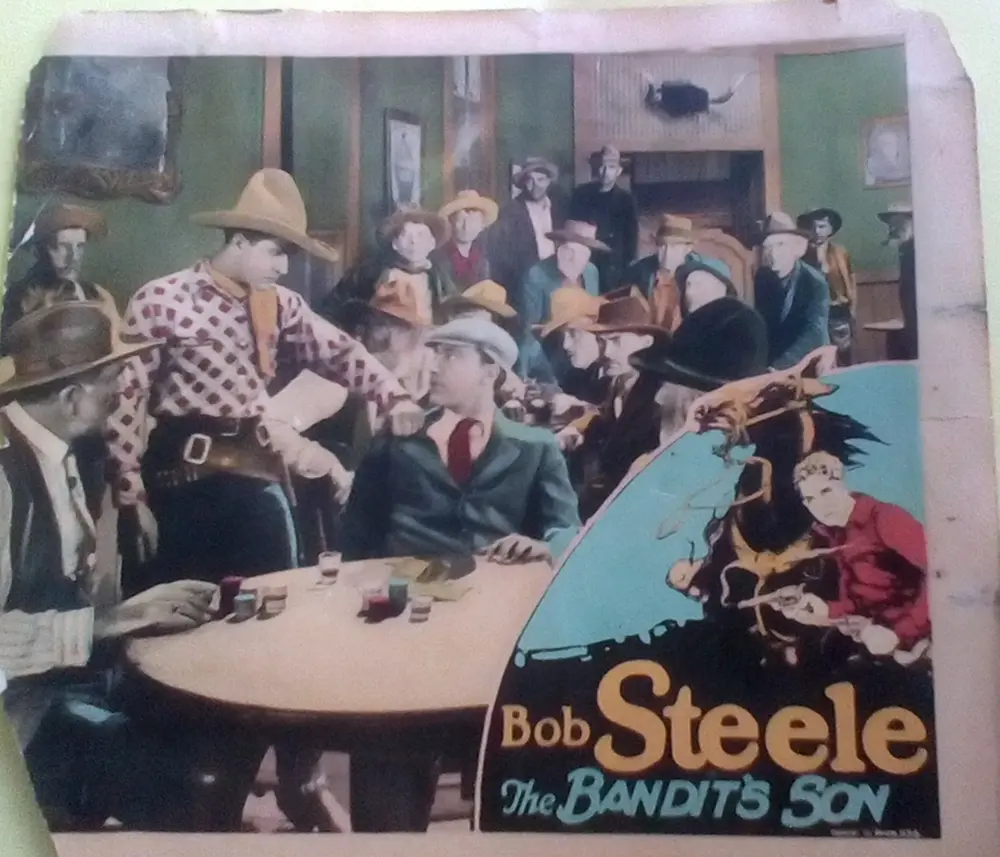
Is The Bandit's Son a lost treasure of the silent era or just another assembly-line Western? Short answer: It is a vital piece of genre history that survives on the raw, kinetic energy of Bob Steele, even if the plot feels like it was written in a fever dream of clichés. This film is for the dedicated cinephile who values physical performance over complex plotting; it is decidedly not for those who require modern pacing or nuanced moral ambiguity.
This film works because Bob Steele’s natural athleticism transforms standard chase sequences into a masterclass of silent-era stunt work. This film fails because the secondary characters, particularly the antagonists, lack the psychological depth found in contemporary films like The City. You should watch it if you want to witness the exact moment a B-movie icon was forged in the fires of low-budget efficiency.
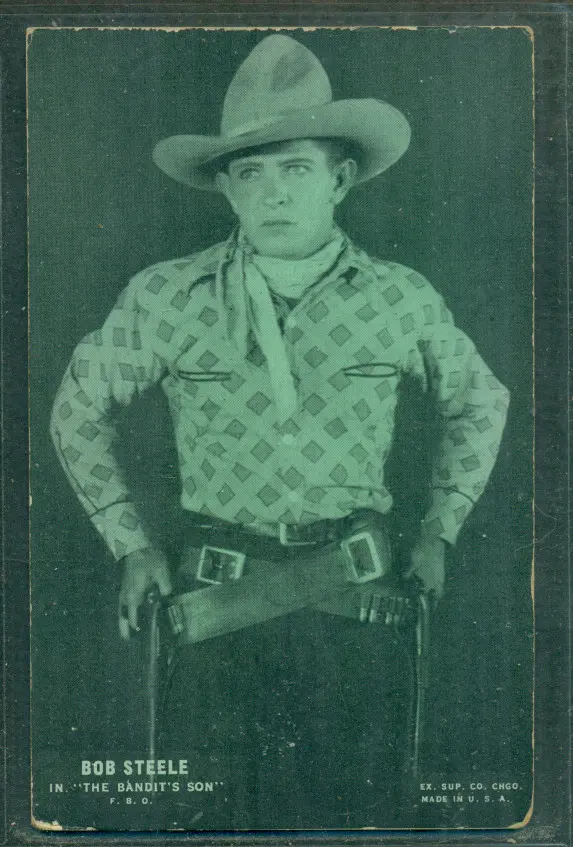
At its core, The Bandit's Son grapples with a theme that was already well-worn by 1927: the sins of the father. However, Bob Steele brings a specific, twitchy intensity to the role that elevates it above the standard fare. While many silent Western stars relied on stoicism, Steele uses his entire body to convey the frustration of a man judged by a name he didn't choose. It’s a performance that feels surprisingly modern in its physicality.
Take, for instance, the sequence where Steele’s character first enters the town. The camera lingers on the suspicious glances of the townsfolk, and Steele responds not with a scowl, but with a defensive, almost feline posture. This isn't just acting; it's a physical manifestation of social alienation. It reminds me of the psychological weight seen in Souls Enchained, though translated into the language of the frontier.
The script by Frank Howard Clark doesn't reinvent the wheel. It doesn't have to. The utilitarian nature of the storytelling is its greatest strength and its most glaring weakness. It moves from point A to point B with the relentless logic of a freight train. There is no room for subplots that don't serve the central conflict, making it a lean, if somewhat predictable, experience.
Produced by FBO (Film Booking Offices of America), The Bandit's Son carries the hallmarks of a studio that knew how to squeeze every cent out of a budget. The cinematography is functional, capturing the vastness of the landscape without the poetic flourishes you might find in a John Ford production. Yet, there is a grit here that is missing from more polished films of the era like The Awakening.
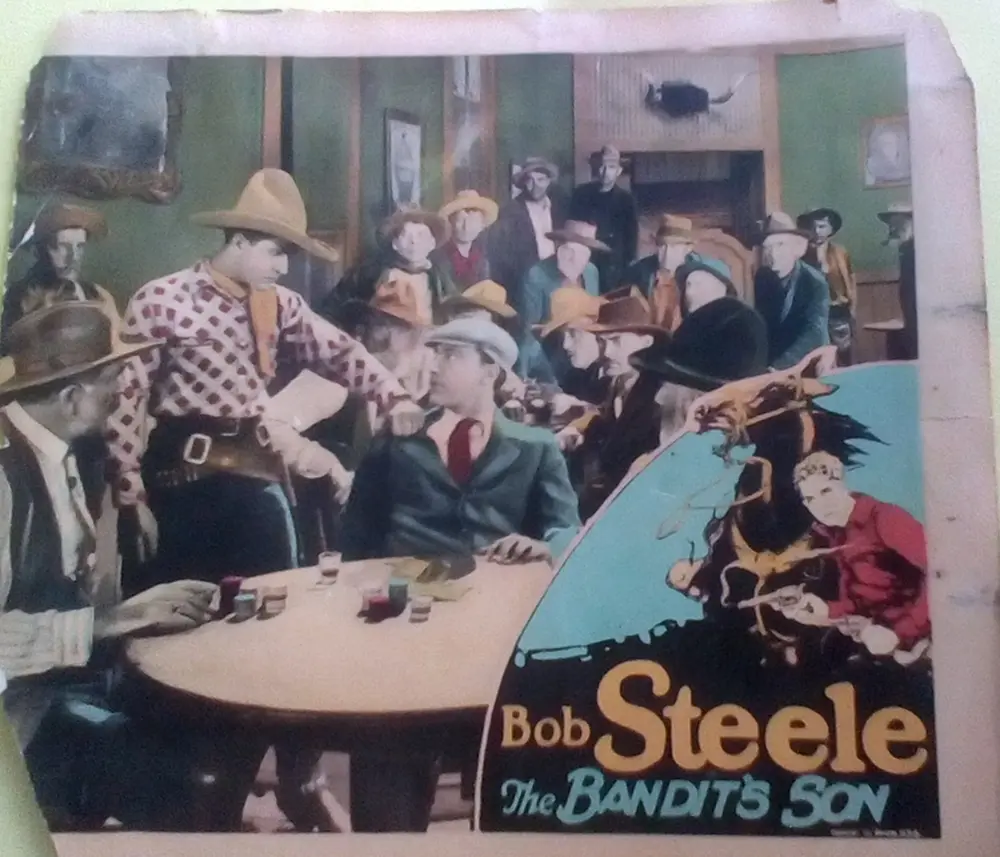
The lighting in the interior saloon scenes is particularly effective. Using high-contrast shadows, the director creates a sense of claustrophobia that contrasts sharply with the wide-open exteriors. This visual dichotomy mirrors the protagonist's internal struggle: the freedom of the trail versus the suffocating judgment of society. It’s a simple visual metaphor, but it works. It’s effective. But it’s flawed.
One cannot discuss this film without mentioning the editing. Silent Westerns lived and died by their rhythm. Here, the cuts are sharp, almost aggressive during the climactic chase. It lacks the experimental flair of Nuit de carnaval, but it understands the fundamental grammar of the action genre. The film doesn't waste your time, which is a mercy many modern directors have forgotten.
Does a 1927 silent Western have anything to say to a 21st-century audience? If you are looking for a deep philosophical treatise, look elsewhere. If you are looking for the roots of the American action hero, then yes, it is essential. The Bandit's Son acts as a bridge between the Victorian morality of early silent film and the more rugged, individualistic Westerns that would dominate the 1930s and 40s.
The performance of Anne Sheridan (not to be confused with the later 'Oomph Girl') provides a necessary, if somewhat underwritten, emotional anchor. Her chemistry with Steele is palpable, providing a glimpse of a softer world that the protagonist is fighting to join. It’s a standard romantic subplot, but it’s handled with more grace than the slapstick elements found in The Lion and the Souse.
Pros:
- Bob Steele’s magnetic and highly physical performance.
- Brisk pacing that avoids the 'silent film sag' in the middle act.
- Authentic location shooting that captures the harsh beauty of the West.
- A clear, uncomplicated moral arc that is satisfying in its simplicity.
Cons:
- Predictable plot beats that offer few surprises for genre veterans.
- Limited character development for the supporting cast.
- The musical scores available on modern transfers can be hit-or-miss.
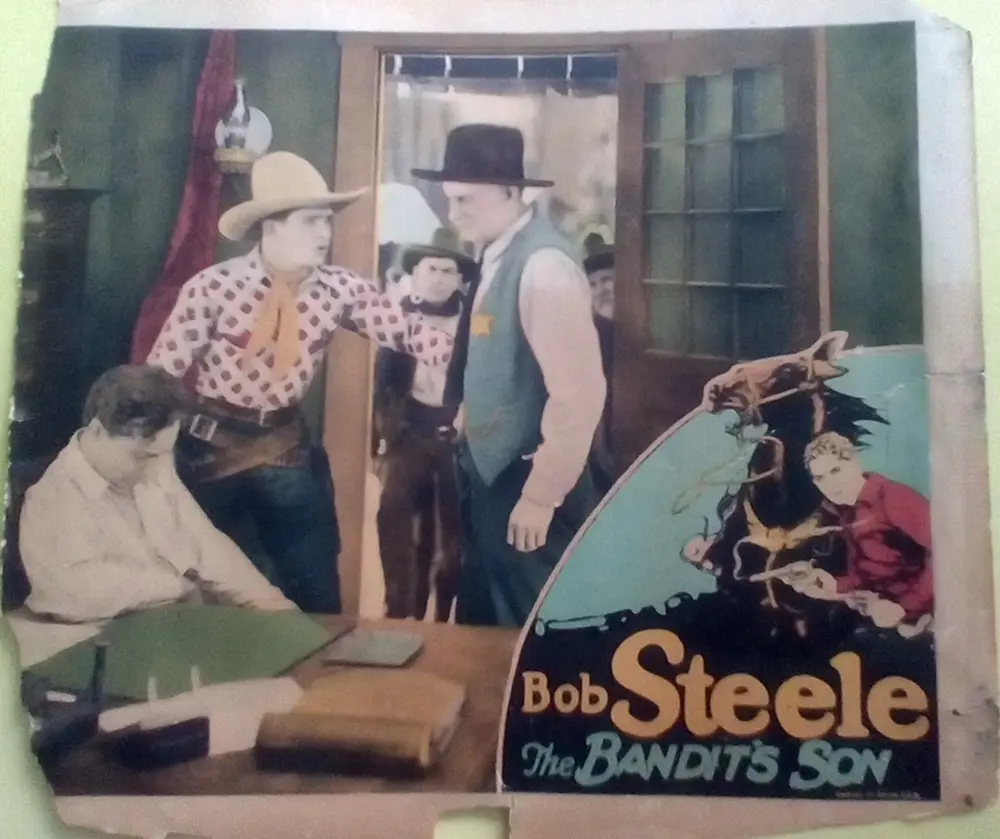
I will go on record saying that Bob Steele, in this era, was a more compelling physical actor than John Wayne was in his early 'Poverty Row' years. While Wayne eventually found his gravitas, Steele possessed a kinetic fluidity from the start. In The Bandit's Son, he moves like a dancer who happens to know how to throw a punch. This isn't just 'cowboy acting'; it's an early form of action choreography that would eventually influence the likes of Yakima Canutt.
However, the film suffers from a lack of ambition. It is content to be a 'B' picture. While films like Wild Primrose or Chickie attempted to push the boundaries of social commentary, The Bandit's Son is happy to stay in its lane. This isn't necessarily a bad thing, but it prevents the film from reaching the heights of the true silent masterpieces. It’s a tool, not a monument.
One surprising element is the film's treatment of the 'outlaw's son' trope as a form of prejudice. There is a scene where the protagonist is denied work not because of his skills, but because of his bloodline. In 1927, this was a subtle nod to the eugenics movement and the 'bad blood' theories prevalent at the time. The film rejects this, arguing that character is forged through action, not inherited through DNA. It’s a small, progressive spark in an otherwise traditional narrative.
Compared to the heavy-handed moralizing of The Grip of Evil, The Bandit's Son feels almost libertarian. It demands that a man be judged by his own hands. It’s a quintessentially American theme, delivered with a punch rather than a sermon.
The Bandit's Son is a lean, mean, and functional Western. It doesn't have the emotional depth of Desert Driven, but it makes up for it with sheer momentum. Bob Steele is the reason to watch, and his performance here explains exactly why he became a staple of the Saturday afternoon matinee for decades. It is a work of professional craftsmanship that achieves exactly what it sets out to do: entertain without apology. It isn't art with a capital A, but it is cinema in its purest, most visceral form. If you can handle the silence, the reward is a front-row seat to the birth of a legend.
IMDb 7.7
1921
Community
Log in to comment.