DbcultAccessing Vault...
Cult Review
Senior Film Conservator
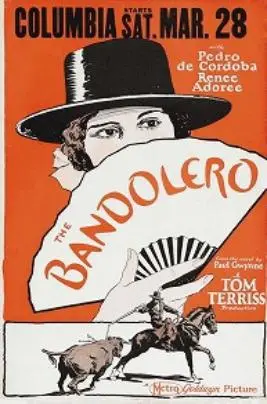
To witness The Bandolero is to step into a bygone era where the screen did not merely reflect reality but amplified it into a grand, shimmering mythos. Directed by Tom Terriss, a filmmaker whose penchant for the exotic was previously established in works like A Prisoner in the Harem, this 1924 silent opus is a visceral exploration of the Iberian spirit. It is a film that breathes through its atmosphere—the dust of the Spanish plains, the heavy scent of incense and blood, and the oppressive weight of an ancient code of honor. Unlike the more domestic moralities found in contemporary pieces like The Little Church Around the Corner, Terriss’s vision here is sprawling, rugged, and unapologetically melodramatic.
At the heart of the film lies a performance of staggering intensity by Pedro de Cordoba. As Dorando, he portrays a man whose moral compass is not broken but recalibrated by grief. When he transitions from a disciplined army officer to the titular outlaw, the transformation is not merely a change of costume but a fundamental shift in his ontological state. The cinematography captures this descent with a chiaroscuro sensitivity that reminds one of the darker passages in Trompe-la-Mort. The abduction of the Marques’s son is handled not as a simple crime, but as a ritualistic reclamation of the life that was stolen from him.
The narrative structure utilizes the 'stolen child' trope—a favorite of the era, also seen in varying degrees in The Princess of Patches or the more sentimental Wanted: A Baby—but here it is stripped of its saccharine potential. Instead, Ramon’s upbringing among the bandits is a study in the malleability of identity. Is he the son of a nobleman or the disciple of a thief? This tension provides the film with its most potent psychological torque.
One cannot discuss The Bandolero without genuflecting before the screen presence of Renée Adorée. As Petra, she provides the emotional anchor that prevents the film from drifting into mere spectacle. Her performance is a masterclass in the silent era’s gestural vocabulary; every tilt of the head and flicker of the eye conveys a yearning that transcends the intertitles. Her chemistry with the adult Ramon (played with a brooding, athletic vigor by José de Rueda) is palpable, creating a romance that feels both fated and forbidden. It lacks the playful levity of Playmates or the urban cynicism of Taxi Please, opting instead for a gravity that borders on the religious.
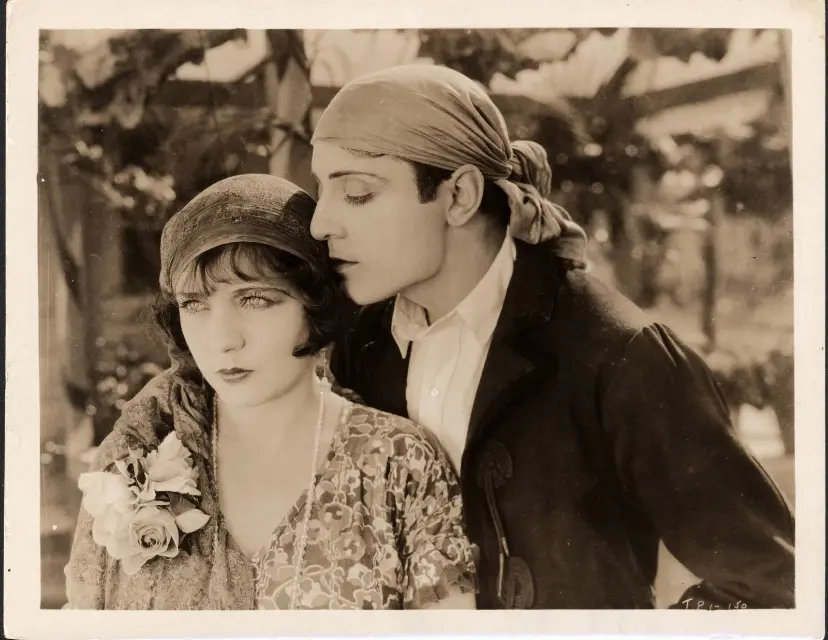
The conflict that arises when the Bandolero forbids their union is the film's pivotal moment of irony. The man who sought to destroy the Marques by stealing his son now risks destroying his own daughter’s happiness to maintain that very same wall of hatred. It is a sophisticated narrative knot that elevates the film above the standard 'adventure' fare of the mid-twenties.
The transition of the setting from the limestone caves to the bullring marks the film's stylistic climax. Bullfighting in The Bandolero is not merely local color; it is a crucible. Ramon’s decision to become a matador is a subconscious attempt to reclaim a nobility he does not know he possesses. The sequences in the ring are filmed with a kinetic energy that must have been revolutionary for 1924. There is a raw, documentary-like quality to the footage that contrasts sharply with the staged theatricality of the earlier scenes. This juxtaposition highlights the reality of the danger Ramon faces, especially when the narrative introduces the 'spurned woman'—a character whose vengeful machinations mirror the Bandolero’s own, albeit on a more intimate, venomous scale.
This subplot of jealousy adds a layer of 'noir' before the term existed. It reminds us that while the men fight over honor and legacy, the women in this world are often the architects of their downfall or their salvation. The vicious young bull becomes a literalization of the uncontrolled rage that has fueled the entire plot. It is a magnificent, terrifying sequence that rivals the scale of the National Red Cross Pageant in its ambition, though focused through a much narrower, more lethal lens.
No discussion of the film’s efficacy would be complete without acknowledging Gustav von Seyffertitz. As the Marques de Bazan, he embodies a specific type of aristocratic rot. He is the catalyst for the entire tragedy, yet he carries himself with a chilling, unrepentant dignity. He represents the old world—the world of titles and cold stone walls—that the Bandolero has rejected. Comparing his performance here to the social dynamics in Le nabab or the rigid hierarchies of His House in Order, one sees how Terriss uses the villain to critique the very foundations of Spanish class structure.
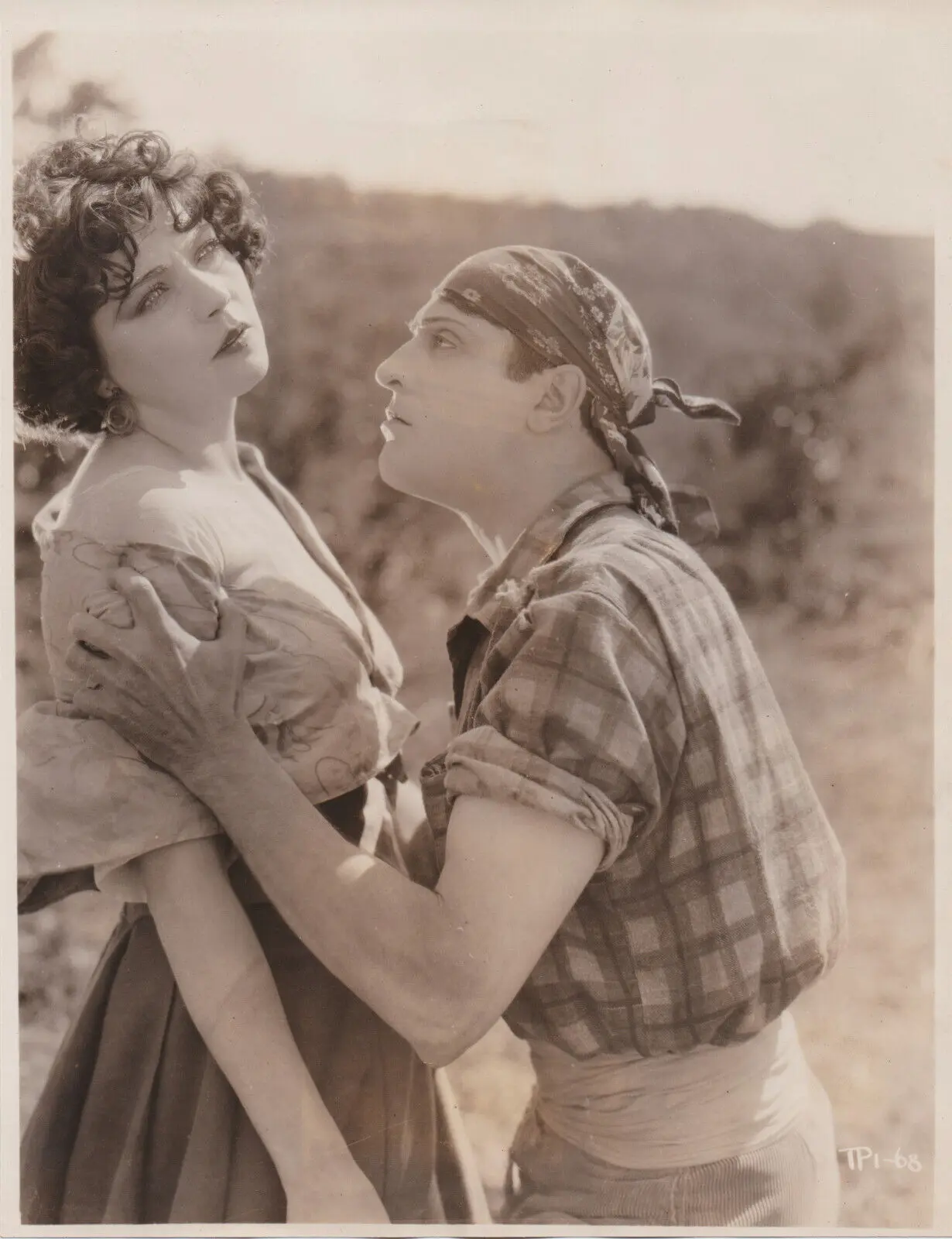
The supporting cast, including Dorothy Rush and Marie Valray, populate this world with a texture that makes the setting feel lived-in. Even the minor roles, such as the bandits who raise Ramon, are performed with a lack of caricature that is refreshing. They aren't the buffoons of An Overall Hero; they are desperate men bound by a different kind of law.
Technically, The Bandolero is a triumph of location and lighting. The way the sun-drenched exteriors bleed into the ink-black shadows of the interiors creates a visual rhythm that mirrors the story’s oscillation between hope and despair. The use of depth in the frame—often placing Petra in the foreground while the bandits plot in the distance—creates a sense of constant surveillance and entrapment. This visual strategy is far more sophisticated than the flat, stage-like presentations of Miss Peasant or Youthful Cheaters.
The film also experiments with pacing. While many silents of the era maintained a steady, theatrical beat, Terriss allows for moments of quietude—lingering on a landscape or a character’s contemplative face—before thrusting the viewer back into the chaos of the bullring or the violence of a raid. This ebb and flow gives the movie a symphonic quality, reminiscent of the atmospheric depth found in Miyama no otome. The editing, particularly during the bullfight, is sharp and rhythmic, using cross-cutting to heighten the suspense as the spurned woman watches her trap spring shut.
Ultimately, The Bandolero is a film about the impossibility of escape. Every character is trying to flee something—a past crime, a social standing, a broken heart—only to find themselves circling back to the point of their original wounding. It is a narrative of return. Ramon returns to his father’s world through the bullring; Dorando returns to his humanity through his love for his daughter; the Marques returns to his sins through the reappearance of his son. It possesses the thematic weight of The Door Between, but with a much more expansive, cinematic canvas.
In the pantheon of 1920s cinema, this film stands as a testament to the power of the visual medium to communicate complex emotional truths without a single spoken word. It is a grand, sweeping, and occasionally brutal experience that demands to be seen by anyone interested in the evolution of filmic storytelling. Terriss crafted more than just a story of Spanish outlaws; he crafted a meditation on the cyclical nature of violence and the fragile hope of redemption. It remains a haunting, beautiful artifact of a time when cinema was discovering its own soul.

IMDb 7.1
1927
Community
Log in to comment.