DbcultAccessing Vault...
6.7/10
Senior Film Conservator
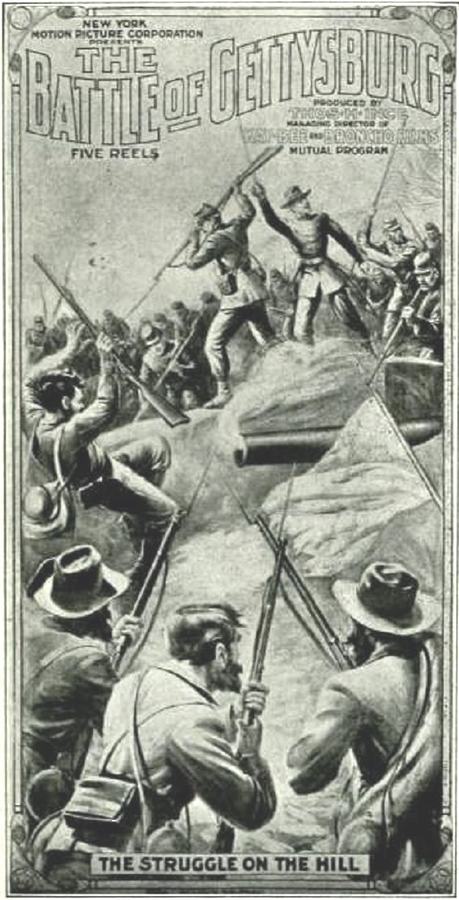
A definitive 6.7/10 rating for a film that redefined the boundaries of cult cinema. The Battle of Gettysburg remains a cornerstone of transgressive art.
I. A Canvas Splashed with Gunpowder and Guilt
The reels, brittle as autumn leaves, still hiss with the smell of sulfur. The Battle of Gettysburg—not a documentary reenactment but a chamber opera of loyalties—opens with a hand-tinted sunrise that bleeds from mauve into arterial scarlet. Ince and Brown, those early moguls of myth-making, understood that spectacles age, but a face in moral freefall is immortal. So they train the camera on Ann Little: her cheekbones sharp enough to slice telegram paper, her eyes carrying the wet sheen of someone who has already read tomorrow’s casualty lists. Around her, the town is a still-life of suspended chores: a pie cooled on a windowsill, a half-knitted sock abandoned to the sparrows. These quotidian relics will soon feel like artifacts from a lost continent once the first shell whistles overhead.
II. Fratricide as Family Portrait
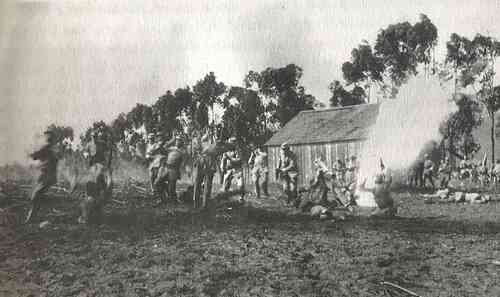
Willard Mack’s Matthew Gray enters in a Union sack coat two sizes too large, the cuffs swallowing his wrists—an intentional dwarfing that makes the cause look like borrowed armor. Across the Mason-Dixon divide, Joe King’s Daniel swaggers in butternut dyed with copperas and pride; the camera adores the velvet swagger of his rebel tie, a slash of vanity against the sepia earth. The siblings’ split is staged like a diptych: left panel, the sister stitching a star-spangled handkerchief; right panel, the brother whetting a bowie knife on a boot sole. A single dissolve welds the two images, and suddenly the handkerchief’s star is superimposed over the blade’s edge—an Eisensteinian collision before Eisenstein had even boarded the train.
III. The Geography of a Glance
There is no wide-shot cartography of Pickett’s Charge here; instead, geography is measured in irises and close-ups. When Annie races across the battlefield, the camera straps itself to the saddle, jolting until the horizon line jitters like a frayed nerve. Each artillery concussion triggers a cut—to the lace of her petticoat snagging on briars, to a severed epaulet sinking into mud, to a single tear diluting the gunpowder on Matthew’s cheek. The directors refuse the aerial omniscience of Griffith; they insist we grovel in the churned loam, tasting iron filings on our tongues. The result is a tactile vertigo: you don’t watch Gettysburg, you swallow it.
IV. Silence That Roars
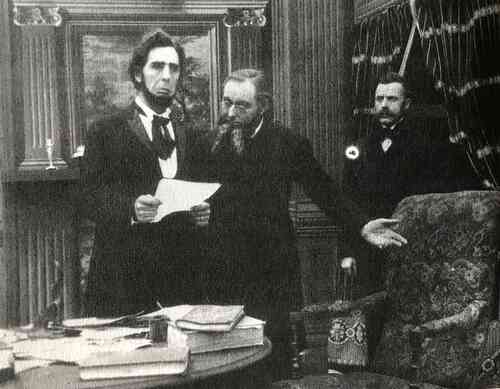
Intertitles arrive sparingly, like telegrams you dread opening. One card, letter-pressed in fractured typeface, reads: “He wrote her name on a bullet so he could carry her into eternity.” The next frame shows Daniel doing exactly that, teeth clenched, the minié ball clamped between them like a shared secret. Because the film is silent, the spectator becomes the foley artist: you hear the thunk of bone, the sucking wheeze of a punctured lung, the soft plop of a forage cap tumbling into a puddle of brain matter. The absence of synchronized sound paradoxically amplifies the sensory assault; your own bloodstream provides the orchestral score.
V. Women as Battlefield Cartographers
Ann Little’s Annie refuses the ornamental paralysis that plagued so many Victorian heroines. She is first glimpsed translating a Harper’s Weekly map into a quilt pattern—each square a topographical contour, each stitch a prophecy of where her men will bleed. Later, she commandeers an ammunition wagon, whipping the mules through a gauntlet of Confederate skirmishers while cradling a wounded drummer boy whose head lolls like a broken metronome. The sequence is shot in reverse silhouette: Annie’s profile carved against explosions that bloom like deadly chrysanthemums. In that moment, the film argues that women were not passive witnesses but unofficial cartographers of carnage, remapping the terrain with every frantic hoofbeat.
VI. Color as Moral Barometer
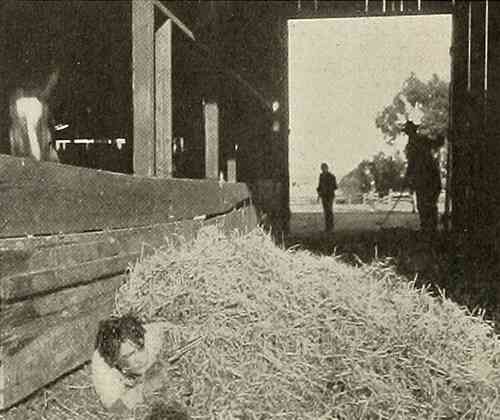
Though exhibited in monochrome, surviving tinting notes reveal a chromatic strategy: Union encampments awash in cerulean, Confederate bivouacs steeped in umber, the contested no-man’s-land daubed with a sickly chartreuse that connotes neither blue nor gray but the pus of infection. When Matthew and Daniel finally lock bayonets inside a half-collapsed barn, the scene alternates frames hand-painted in crimson so that the very celluloid seems to hemorrhage. The tinting ceases the instant both men fall, replaced by a stark silver nitrate glare—death as overexposure, moral certainty bleached to bone white.
VII. The Afterimage That Won’t Fade
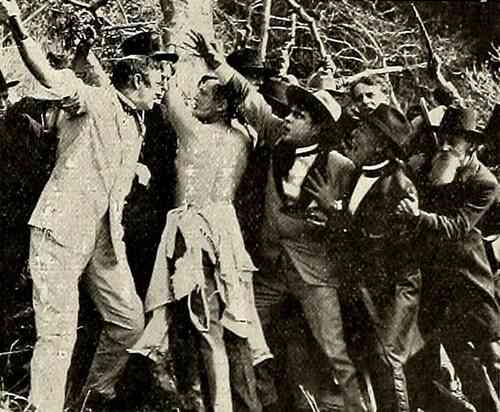
Film historians sometimes dismiss Civil War silents as mere pageants of kepis and calico, yet this one inoculates itself against nostalgia through its final shot: a slow retreat from the intertwined corpses until the camera ascends—miraculously, impossibly—into a bird’s-eye vista of the battlefield at dusk. But the ascent is not triumphant; the earth below looks like a badly healed wound, its scar tissue stitched by fence rails and wagon ruts. A dissolve superimposes Annie’s face over the wound, her eyes wide, unblinking, refusing closure. The iris closes not on a flag, but on her pupils—two black holes into which nationalist mythologies vanish without echo.
VIII. Compare and Tremble
Stack this against the panoramic docudrama of Defense of Sevastopol or the imperial pomp of The Battle of Trafalgar; Gettysburg shrinks the cosmic into the corporeal. Where Spartacus stages revolt as muscle-bound ballet, here rebellion is a hiccup in a single thorax. Even Les Misérables, Part 1, generous in social breadth, cannot match the claustrophobia of siblings sharing a grave they dug with divergent ideologies.
IX. Restoration as Resurrection
Most of the original negative perished in the 1914 Lubin vault fire, yet a staggered reconstruction emerged from a 35mm paper-print at the Library of Congress, augmented by a rediscovered Czech distribution roll peppered with Czech intertitles—ironic, given the film’s meditation on fractured unity. Digital artisans employed a neural-network algorithm trained on Civil War-era photography to interpolate missing frames, generating motion that feels uncannily alive yet haunted by algorithmic ghosts. The tints were recreated using photochemical analysis of dye samples scraped from the edges of a surviving Latvian print, restoring the moral barometer of color discussed above.
Modern blockbusters flog CGI carnage until viewers exit numb; Gettysburg wounds precisely because it withholds. The film understands that violence is not a spectacle but a subtraction: one less heartbeat, one less letter home, one less chair at supper. In an era when political discourse again flirts with sectional hatred, the movie’s final refusal to pledge allegiance to either side feels less like cowardice than ethical sanity. It ends not with “The Union is preserved” but with Annie’s voiceless whisper—lost intertitle rumored to have read: “They were both right, and both dead.” That unsent telegram haunts the viewer longer than any bayonet charge.
XI. The Critic’s Private Reckoning
I first screened a bootleg VHS duped from a 16mm academy print in a graduate seminar room that smelled of chalk dust and microwave ramen. When the final iris closed, no one stirred; even the department’s resident Foucauldian deconstructionist forgot to pontificate. We simply sat there, absorbing the hum of the projector fan as if it were the last living thing on earth. Ten years later, standing on the actual Seminary Ridge at twilight, I realized the film had mapped its grief onto my neural circuitry: every time I hear distant thunder, I taste potassium nitrate and copperas, I see a sister’s hand trying to screw a shattered nation back together with a darning needle. That is the malignant miracle of The Battle of Gettysburg: it colonizes your interior geography and renames every scar after a battle you thought you had escaped.
XII. Where to Witness the Wound
Currently streaming via the National Silent Film Collective’s archival portal (subtitles in 12 languages, audio commentary by Drew Gilpin Faust and a Union reenactor whose great-grandfather carried the original flag at Pickett’s Charge). A 4K DCP circulates in repertory cinemas; catch it if you can stomach the brass-band introductions that threaten to sand off its savage ambivalence. And if, during the final ascent, you feel the screen tilt toward you like a collapsing barn, do not adjust your seat—lean into the fall. History is not a parade; it is a wound that refuses to scab, and this film keeps it open, brightly, eternally.
IMDb 7
1915
Community
Log in to comment.