DbcultAccessing Vault...
Cult Review
Senior Film Conservator
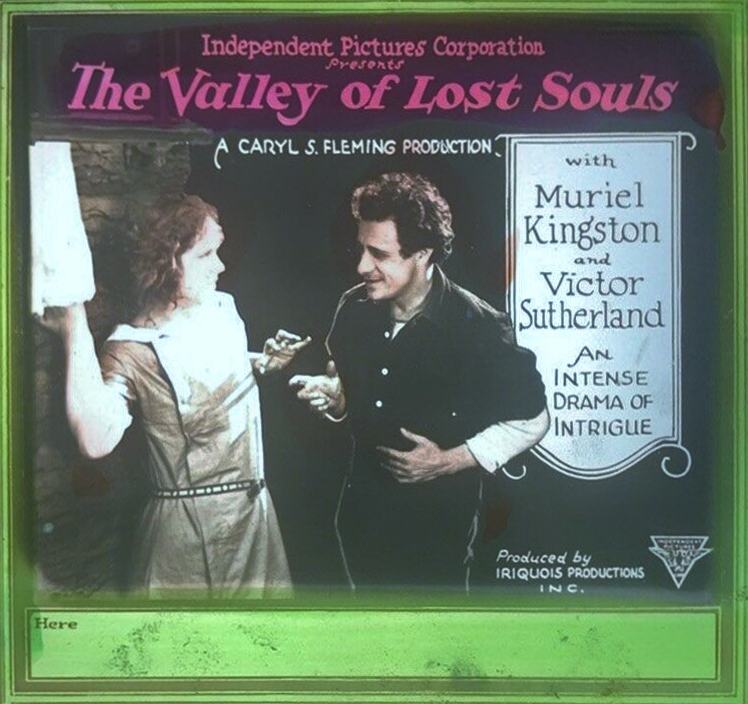
In the cinematic tapestry of the early 1920s, few landscapes offered as much raw, untamed potential as the Canadian North. The Valley of Lost Souls, directed with a keen eye for the claustrophobia of wide-open spaces, stands as a seminal work that bridges the gap between the traditional Western and the burgeoning psychological thriller. While contemporary audiences might be tempted to view the 'ghost killings' of Lachine, Quebec, through a supernatural lens, the film’s brilliance lies in its grounded, almost gritty deconstruction of human malevolence. It is a film that breathes the cold air of the St. Lawrence, wrapping its viewers in a shroud of mist and mystery that feels remarkably modern in its execution.
The narrative structure, penned by J. Seton Drummond and George DuBois Proctor, eschews the linear simplicity of its peers. Instead, it invites the audience into a precarious dance of irony. We are introduced to Sergeant MacKenzie, played with a rugged, understated stoicism by Stanley Walpole. MacKenzie is the quintessential avatar of the law, yet he is rendered vulnerable by his own integrity. When he accepts the guidance of Jacques, portrayed with a serpentine, simmering intensity by Edward Roseman, the dramatic irony becomes almost unbearable. Unlike the more overt villainy seen in The Brand of Satan, Roseman’s Jacques is a wolf in sheep's clothing, a man whose intimate knowledge of the terrain makes him the ultimate predator.
This dynamic transforms the vast wilderness of Quebec into a psychological pressure cooker. The 'ghost' killings are not merely plot devices; they are the manifestations of Jacques's sociopathy, a way to terrorize a community that he feels has marginalized him. The cinematography captures the stark contrast between the pristine snow and the dark, jagged rocks of the valley, mirroring the internal conflict of a man who has lost his moral compass. The film’s pacing is deliberate, allowing the tension to settle in the viewer's bones like the damp chill of a Lachine winter.
Anne Hamilton delivers a performance of surprising depth as Julie Lebeau. In an era where female characters were often relegated to the periphery, Julie is the fulcrum upon which the entire tragedy turns. Her rejection of Jacques is not merely a romantic slight; it is a declaration of independence that shatters Jacques's fragile ego. When she falls for MacKenzie, it isn't just a plot convenience—it’s a collision of worlds. The sergeant represents the order and stability she craves, while Jacques represents the chaotic, untamed impulses of the frontier. This romantic triangle is far more sophisticated than the melodrama found in Friend Husband, as it is rooted in a visceral sense of place and survival.
The chemistry between Walpole and Hamilton provides the film’s emotional core, making the subsequent stakes feel personal rather than procedural. When Jacques decides to dynamite the hut where MacKenzie has taken shelter, it isn't just an attempt at murder; it is an attempt to erase the very concept of the law from his domain. The explosion, a triumph of early practical effects, serves as the film’s grand crescendo, a violent rupture in the silence of the valley that signals the end of pretense.
The directorial choices in The Valley of Lost Souls demonstrate a sophisticated understanding of visual storytelling. The use of shadow during the 'ghost' sequences evokes a sense of dread that rivals the atmospheric tension in The Teeth of the Tiger. By keeping the killer's methods obscured for the first act, the filmmakers tap into a primal fear of the unknown. The valley itself becomes a character—a labyrinthine purgatory where the 'lost souls' are those who have wandered too far from the light of civilization.
The supporting cast, including Luis Alberni and Victor Sutherland, flesh out the world of the trading post, providing a sense of community that stands in stark contrast to the isolation of the heights. These secondary characters ground the film, reminding us what is at stake: the safety of a burgeoning society against the encroaching darkness of the wild. The film’s climax, a brutal fistfight that leaves MacKenzie unconscious, eschews the polished choreography of modern action in favor of something more desperate and primal. It is a struggle for breath, for life, and for the soul of the North.
When placed alongside contemporary works like Moral Courage, this film stands out for its refusal to provide easy answers. MacKenzie is a hero, yes, but he is a battered one. The resolution, while satisfying, leaves a lingering sense of the cost of justice. The 'ghosts' may have been exorcised, but the scars on the landscape—and on Julie and MacKenzie—remain. This nuance is what elevates the film above standard genre fare like The Little School Ma'am or the lighter tone of Kiss Me Quick.
Even compared to the high-stakes drama of For Those We Love, there is a ruggedness here that is uniquely Canadian. The film captures a specific moment in time when the frontier was closing, and the old ways of vengeance were being supplanted by the iron hand of the law. The final pursuit, where MacKenzie and his aide track Jacques back to the trading post, is a masterclass in tension, utilizing the geography of the location to enhance the sense of an inevitable reckoning.
Ultimately, The Valley of Lost Souls is a study of the human heart under extreme conditions. Jacques’s descent into madness is a cautionary tale about the corrosive power of rejection and isolation. In many ways, his character arc is more complex than the villains in The Selfish Woman or His Turning Point. He is not merely evil; he is a man who has allowed the harshness of his environment to mirror the harshness of his soul. The dynamite blast is the perfect metaphor for his internal state: a sudden, violent release of long-simmering pressure.
The film’s conclusion, which sees Jacques brought to justice not through a lucky break but through the relentless persistence of MacKenzie, reinforces the theme of the law as an unstoppable force. It lacks the whimsical nature of Sleeping Beauty (1922) or the domestic simplicity of 'Twas Ever Thus. Instead, it offers a grit that prefigures the noir movement of the 1940s. The 'Valley' may be a place of lost souls, but through the actions of MacKenzie and the resilience of Julie, it becomes a place of redemption and re-birth.
In the grand scheme of early cinema, The Valley of Lost Souls deserves a place of honor. It is a film that understands the power of silence, the weight of a uniform, and the terrifying beauty of a winter night in Quebec. It is a visceral, haunting, and deeply human story that remains as chilling today as it was upon its initial release. For those seeking a film that combines the ruggedness of Squatter's Rights with the psychological depth of Az utolsó éjszaka, this is an essential viewing experience. It reminds us that while the wilderness can be conquered, the darkness within the human heart requires a much more difficult kind of vigilance.
As the final frames fade, one is left with the image of the wide, snowy expanse—a blank slate upon which the characters have written their destinies. The Valley of Lost Souls is not just a location; it is a state of mind, and this film captures it with an haunting, indelible brilliance that echoes long after the lights come up. It is a testament to the power of storytelling to transform a simple tale of crime and punishment into a profound meditation on the nature of civilization itself.
IMDb —
1918
Community
Log in to comment.