DbcultAccessing Vault...
6.3/10
Senior Film Conservator
A definitive 6.3/10 rating for a film that redefined the boundaries of cult cinema. The Battle of the Sexes remains a cornerstone of transgressive art.
If you crack open the coffin-lid of late-silent cinema expecting cobwebs, The Battle of the Sexes lunges like a gin-addled revenant, all teeth and tuba-glissandos. What survives—35 minutes of nitrate, flecked like a leopard—reveals Daniel Carson Goodman’s Manhattan as a fever dream of mercury reflections and predatory flappers. The film’s heartbeat is a tango in a penthouse overlooking Central Park, where Rudolph Valentino’s Frank Andrews swaps his usual sheik swagger for the hunched guilt of a man discovering that testosterone is a mutable currency.
Gone are the flowing robes and cigarette-holder mystique; Valentino slicks back his hair like a Wall-Street Icarus, his side-part so sharp it could slice ticker-tape. Every time Vida (Fay Tincher) leans against a doorjamb, lighting two cigarettes at once, the camera nuzzles Valentino’s profile just long enough to register the bead of sweat that admits complicity. It’s a master-class in micro-expression: the jaw muscle fluttering when he pockets his wedding band, the way his pupils dilate as Tincher’s silk-clad knee slides across a leopard-pelt ottoman. This is not Latin seduction—it’s seduction as shareholder meeting, a hostile takeover of the soul.
Tincher, unjustly relegated to comedy shorts in most histories, here weaponizes her angular elegance. She enters framed against a Lalique lampshade, its dragonfly wings echoing the predatory curve of her clavicle. When she purrs lines like “A man is only as faithful as his options,” intertitles crackle like downed powerlines. Goodman refuses to caricature her; Vida isn’t evil for sport—she’s a gig-economy Circe, monetizing desire because the Stock Exchange won’t yet admit women. The moral ledger is messier for it, and the film vibrates with a proto-feminist sting.
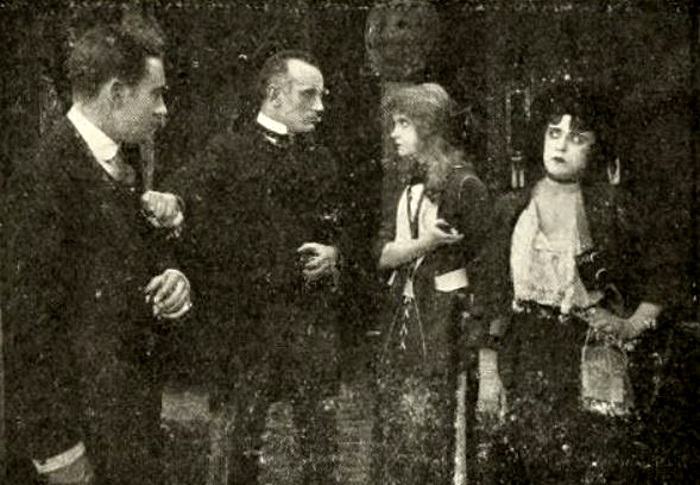
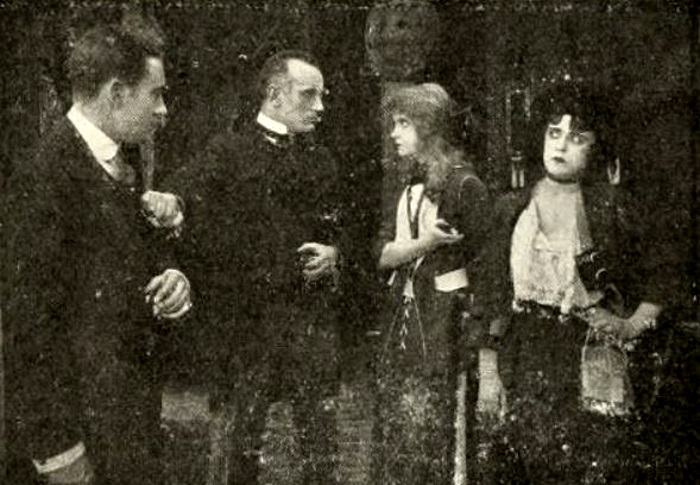
Goodman’s casting coup is Lillian Gish as daughter Jane, usually the paragon of waifish resilience. Here she weaponizes that fragility: her revolver trembles like a tuning fork, yet her gaze could etch glass. In the confrontation scene, Bressler’s camera tracks from her pearl earring—quivering like a dewdrop—to Vida’s lacquered grin, then lands on Valentino’s Oedipal horror. The intertitle’s rhetorical ricochet (“My father, what are you doing here?”) is silent cinema’s ur-mic-drop, a line that scalds because it weaponizes etiquette against tyranny.
Bressler’s chiaroscuro would make Caligari cower. He paints New York as cubist noir: elevated trains vomit sparks onto rain-slick asphalt; neon drugstore signs bleed into puddles like fresh plasma. The Andrews’ apartment—white enamel and mahogany—becomes a suffocating diorama; every objet d’art is a rebuke. Meanwhile Vida’s loft is all vertiginous angles, curtains billowing like sails on a schooner bound for moral bankruptcy. When Jane ascends the staircase to the vamp’s lair, shadows stripe her face like prison bars, presaging the film’s carceral view of patriarchy itself.
Though silent, the film pulses with jazz-age syncopation. Original cue sheets call for W.C. Handy’s “St. Louis Blues” beneath the seduction scenes, its twelve-bar ache suggesting erotic fatigue. During Jane’s gun-point standoff, exhibitors were instructed to drop into a single tolling church bell—an aural void that swallows the audience whole. Restored screenings today often commission new scores; I’ve heard a downtown trio replace strings with prepared piano and muted cornet, turning each flirtation into a slow-burn funeral march.
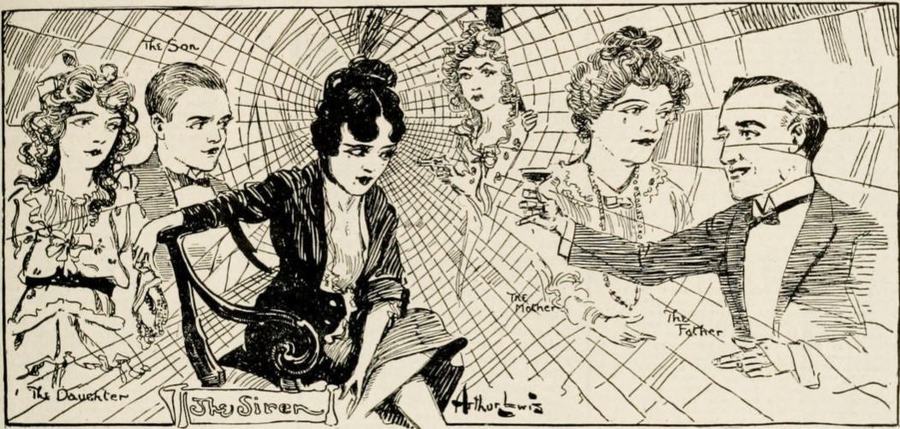
Modern viewers may smirk at the reformation arc—wayward husband absolved by a single epiphany. But Goodman sneaks in subversive footnotes: Vida’s final sneer implies Frank’s recidivism; Margaret’s tear-blotched close-up lingers four beats too long for comfort. The film’s thesis isn’t male redemption but intergenerational transmission of trauma: Jane inherits her mother’s stoicism plus her father’s thirst for rebellion, forging a hybrid moral armor. In 1928, that’s as radical as Dorothy Arzner’s later gender-bending critiques.
Place Battle beside Oliver Twist’s orphan peril or Tess’s agrarian tragedy and you see urban modernity gnawing at Victorian certitudes. Swap the cobblestones for Manhattan skyscraper steel and the moral infection remains: appetite versus duty. Unlike Griffith’s sanctimonious parables, Goodman refuses resurrection via Ku Klux Klan cavalry or angelic children; salvation here is dialectical, earned through shame rather than deus ex machina.
Rumors persist that Valentino himself torched an uncut print after a scathing trade review; more likely it decomposed in the Hudson’s sulfurous damp. Only a 16mm abridgement surfaced in a Buenos Aires attic in 1988, spliced with Spanish intertitles that read like Lorca on ether. Even truncated, the film rewrites Valentino’s legacy: not just a celluloid lover but an actor willing to excavate masculine frailty—an ancestor to Brando’s Stanley Kowalski.
If cinephilia is archaeology, The Battle of the Sexes is a buried urn still dripping with Prohibition gin. It won’t eclipse Fantômas’s surreal grand guignol or Pompeii’s cataclysmic spectacle, yet its intimate detonation lingers like smoke in a jazz cellar. Seek the 4K restoration that occasionally tours cinematheques—watch for the lavender tint of the nightclub reel, the way Valentino’s pupils bloom like black dahlias when Tincher leans in for the kiss that smells of forbidden gin and clove cigarettes. Walk home afterward; every Manhattan alley will echo with phantom saxophones and the rustle of silk stockings slipping down a vamp’s calf.
Verdict: 9/10—A missing link between Victorian melodrama and noir cynicism, soaked in gin, starlight, and the metallic tang of guilt.
IMDb —
1920
Community
Log in to comment.