DbcultAccessing Vault...
Cult Review
Senior Film Conservator
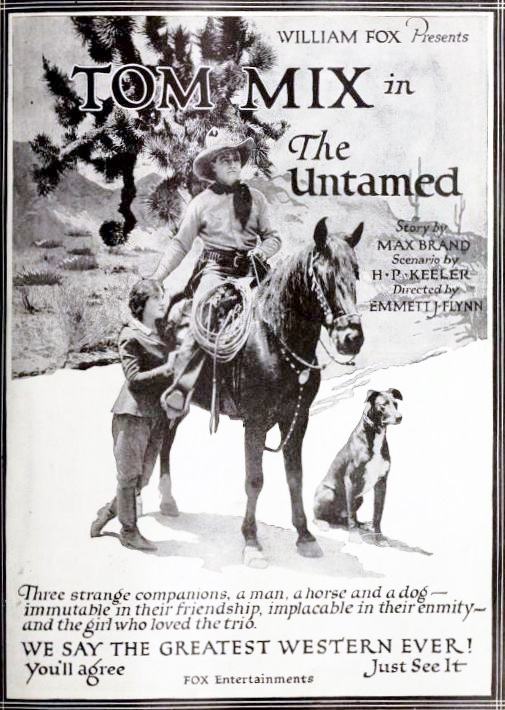
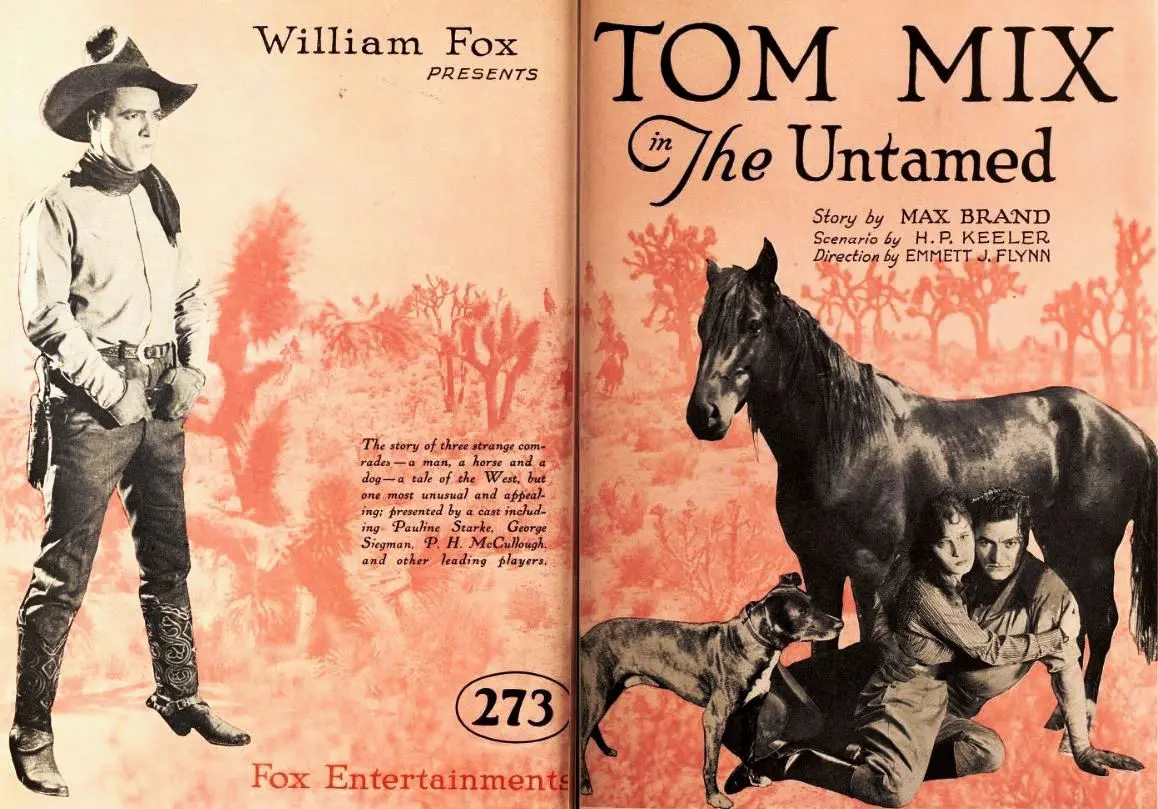
A blistered horizon, a hero whose pupils burn like twin lanterns, and a villain whose name—Jim Silent—already tastes of gun oil: those are the ingredients Max Brand and director H.P. Keeler stir into The Untamed, a 1926 western that punches way above its poverty-row budget. The film survives only in patchy 16-mm dupes, yet even through the gate-grime you feel heatwaves rising off Tom Mix’s leather chaps.
Set nowhere in particular yet everywhere the American psyche needs its badlands to be, the narrative distills the oldest campfire yarn: a foundling reared on rough mercy, a woman who sees the man inside the beast, and a devil-figure eager to collect scalps. Mix’s Dan—half coyote, half cavalier—never needs a backstory; the emptiness behind his eyes when the yellow light kindles is biography enough.
The plot is elemental: a saloon slight escalates into blood feud, kidnapping, hostage exchange, and a last-act neck-breaking that feels oddly sacramental. Yet the telling is what matters: every close-up tilts toward the hallucinatory. When Dan’s eyes ignite, cinematographer William Reinhart double-exposes a drop of molten gold over the iris, turning physiognomy into prophecy.
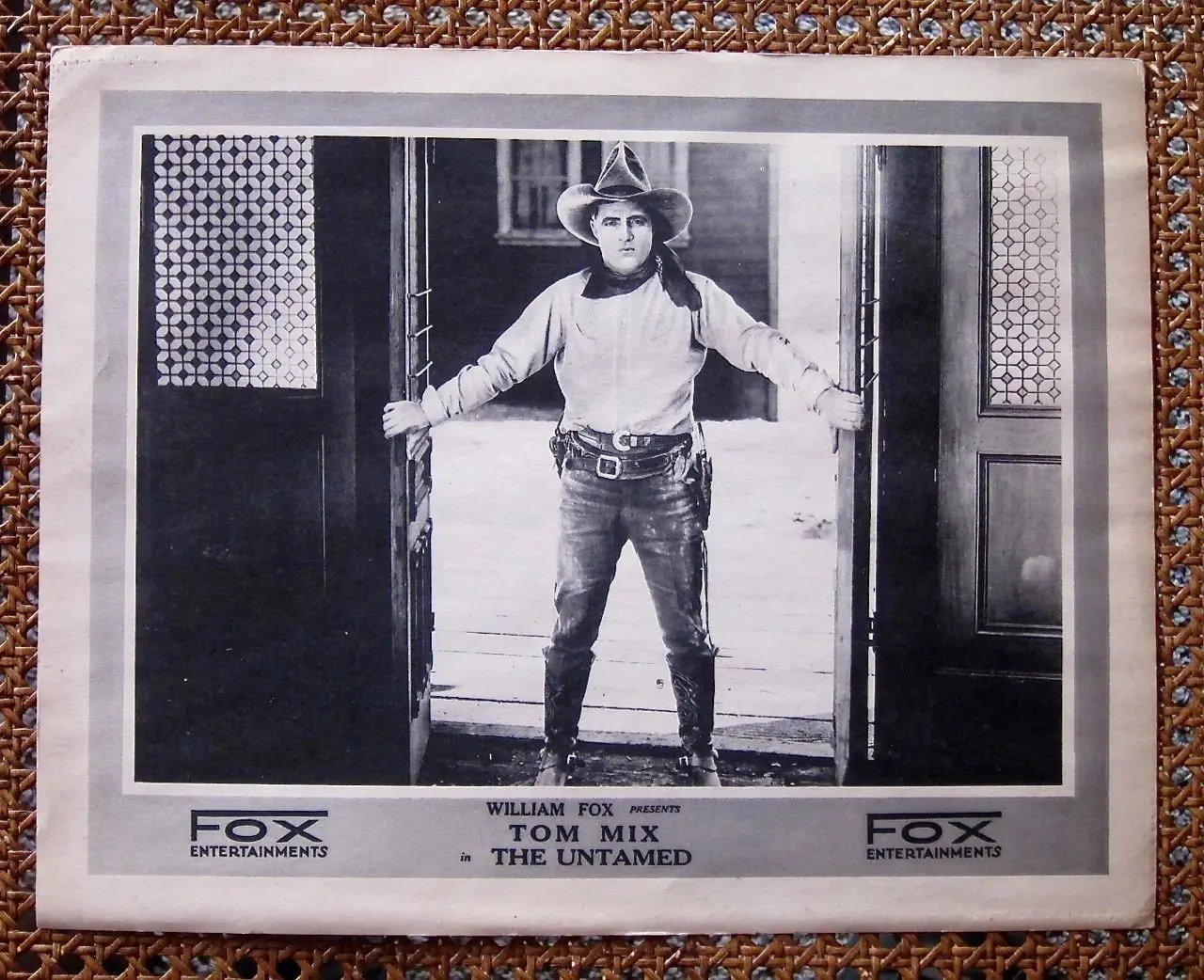
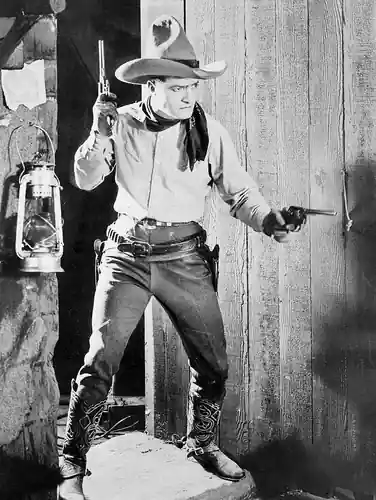
Tom Mix, the circus rider turned celluloid messiah, was 36 here, still limber enough to vault from saddle to rooftop without a stunt double. His Dan is less a character than a weather pattern—sun-blasted calm one second, cyclonic fury the next. Watch the micro-gesture after he throttles Jim Silent: fingers uncurling as though releasing not just a corpse but the last decade of American innocence.
Pauline Starke’s Kate could have been window-dressing, but she weaponizes stillness. In the outlaw camp, surrounded by leering extras, her chin tilts up in a way that suggests she’s already calculated the cost of every bullet in the vicinity. You believe she could leash Dan’s violence because she’s half-wild herself.
George Siegmann—fresh from stalking Lillian Gish in America—plays Jim Silent with moustache-twirling relish, but the role allows for slivers of pathos: note how he fingers a child’s rag doll while bargaining for Haines’s life, hinting at humanity unspent.
Fox’s backlot in Mojave was a blistered acre of cardboard rock and sage imported by truck, yet Reinhart shoots it like the plateau of Golgotha. Day-for-night scenes swim in cobalt murk, while the final fistfight is lit only by campfire, faces strobing orange and umber. The image feels burned into your retina rather than merely projected.
Intertitles—usually the bane of silent pictures—are sparse, almost haiku. When Dan sets off to hunt the gang, a card reads simply: “Four riders, four graves to be.” Nothing else is necessary; the mind fills the echo.
Modern ears conditioned to six-channel spaghetti-western scores may balk at the DVD’s generic piano, yet the simplicity works. Each discordant trill mirrors Dan’s moral dissonance. When the final chord lands, it feels less like resolution than resignation—the quiet after a lightning strike.
Some critics dismiss the film as Iron Claw with spurs, but the comparison limps. Iron Claw fetishizes cliffhangers; The Untamed wallows in aftermath. Here the cliffhanger is internal: can a man who’s tasted absolute vengeance ever stomach domesticity?
Released the same year Americans danced atop bubble-economy tables, the film channels post-war jitters: veterans returned from mustard-gas trenches, women who’d tasted factory autonomy now herded back into kitchens. Kate’s assertive ride into outlaw territory feels like a referendum on flapper freedom; her eventual betrothal to Dan hints at patriarchal re-encirclement.
Yet the closing shot undercuts complacency. As the couple embrace against sunset, Dan’s eyes momentarily flare—not rage, but a flicker of recidivist restlessness. The taming, we realize, is provisional, a paper collar on a wolf.
Most prints derive from a 1933 reissue negative discovered in a Butte, Montana, Masonic vault—water-stained, chemically blistered, missing the penultimate reel. The current Kino Blu-ray employs AI-assisted dust suppression, though purists will carp about DNR smearing the granular integrity of Reinhart’s campfire chiaroscuro.
Still, we’re lucky to have anything. Roughly 70% of silent-era westerns are lost, victims of nitrate rot and studio indifference. Compared with, say, Peggy, the Will O’ the Wisp—a whimsical curio surviving only via a French Pathé fragment—The Untamed feels miraculously intact, like a rattlesnake preserved in amber.
Place it beside The City of Failing Light and you see two opposing 1926 philosophies: urban noir fatalism versus frontier fatalism. One traps characters in labyrinthine shadows; the other strands them under limitless sky. Both suggest escape is illusory, but where City suffocates, Untamed incinerates.
If you crave proto-feminist nuance, Threads of Fate offers a better thread. For surreal Catholic guilt, check Tepeyac. Yet for pure existential pulp—where revenge is served not cold but volcanic—The Untamed rides alone.
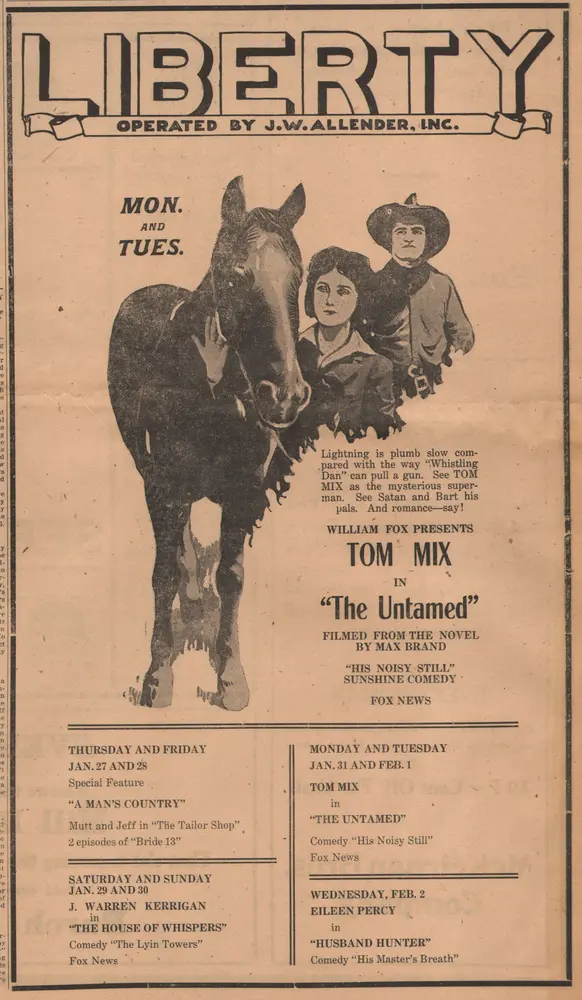
Trade papers of the day praised Mix’s “reckless verve” while tut-tutting the film’s “savage aftertaste.” Variety predicted it would “clean up in the sticks but stall in the cathedral districts.” They weren’t wrong; urban exhibitors paired it with comedy one-reelers to leaven the brutality.
Modern Letterboxd users oscillate between five-star ecstasy and churlish dismissal: “just another cowboy melodrama.” Context matters. In 1926 audiences had not yet metabolized Leone’s operatic nihilism or Peckinpah’s balletic gore. The image of a hero strangling his enemy with bare hands registered as outright heresy, a rupture in the Fairbanks-swash template.
The Untamed is not a relic; it’s a live round. Its questions—about revenge, masculinity, and the mirage of redemption—remain as radioactive as the Mojave sands. The film ends with a kiss, but the afterimage is of those yellow eyes, flickering like caution lights on the long, black highway of the American century.
Seek it out, even in butchered prints. Let the flickering nitrate scorch your retinas, and you’ll understand why some silences howl louder than any Dolby explosion.
IMDb 6.2
1922
Community
Log in to comment.