DbcultAccessing Vault...
5.4/10
Senior Film Conservator
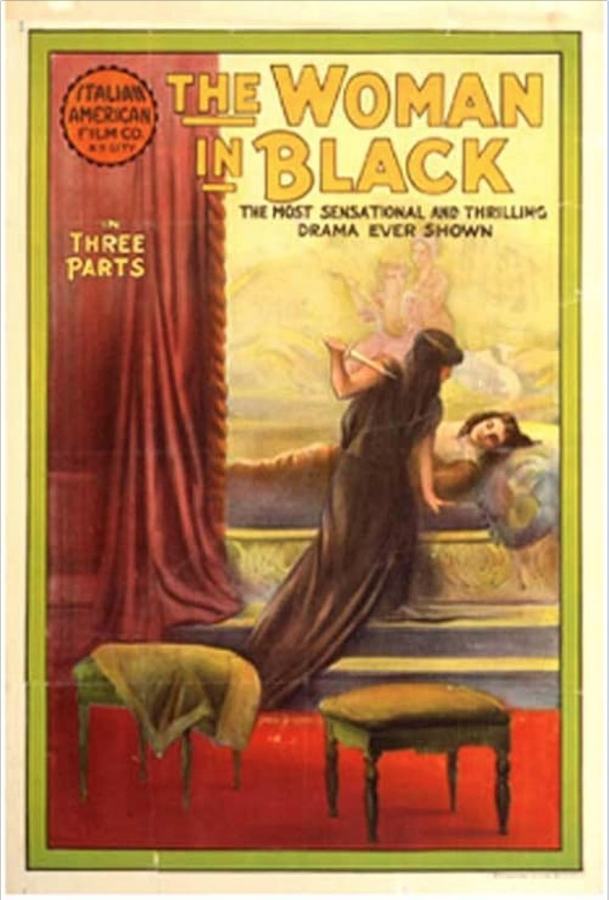
A definitive 5.4/10 rating for a film that redefined the boundaries of cult cinema. The Woman in Black remains a cornerstone of transgressive art.
A forgotten gem of the silent era resurfaces when we revisit The Woman in Black, a 1914 melodrama that intertwines personal betrayal with the machinations of early American politics. Directed by a yet‑to‑be‑celebrated hand, the film assembles a cast that includes the stoic Jack Drumier, the hauntingly expressive Marie Newton, and the charismatic Lionel Barrymore, whose presence foreshadows his later stature in Hollywood.
The narrative commences amid the itinerant world of a gypsy caravan, where the luminous Mary (Marie Newton) captures the eye of the morally bankrupt Robert Crane (Alan Hale). Crane’s seduction is less a tender romance than a predatory transaction, a theme that resonates with contemporary analyses of gendered power dynamics. When Mary is cast aside, the film does not simply depict her as a victim; instead, it thrusts her into an active role of agency, aligning her with her mother Zenda (Mrs. Lawrence Marston), the eponymous Woman in Black, whose spectral moniker belies a fierce determination for retribution.
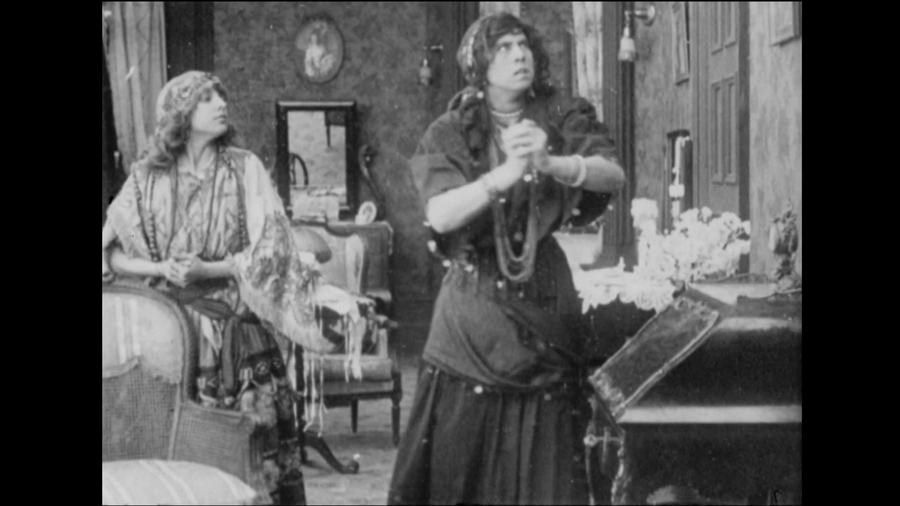
Parallel to Mary’s personal vendetta, the film sketches a broader tableau of political intrigue. Crane, a man of dubious morals, blackmails the influential Everett patriarch (Jack Drumier) into forcing his daughter Stella (Millicent Evans) into marriage. This maneuver is designed to cement Crane’s social ascent, even as he battles Frank Mansfield (Hector V. Sarno) for a coveted congressional seat. The political subplot is reminiscent of the machinations in The Black Chancellor, where ambition collides with personal loyalty.
Frank’s eventual electoral victory offers a glimmer of hope, yet Stella remains ensnared in a forced union. The tension escalates to a crescendo on the wedding day, when Crane, with theatrical flourish, lifts the veil of his new bride. The audience gasps as the veil reveals Mary, the very embodiment of his past sins. This moment, bathed in stark chiaroscuro, functions as the film’s visual metaphor for truth unmasking deception—a technique that predates the more sophisticated reveal in D.W. Griffith’s later works.
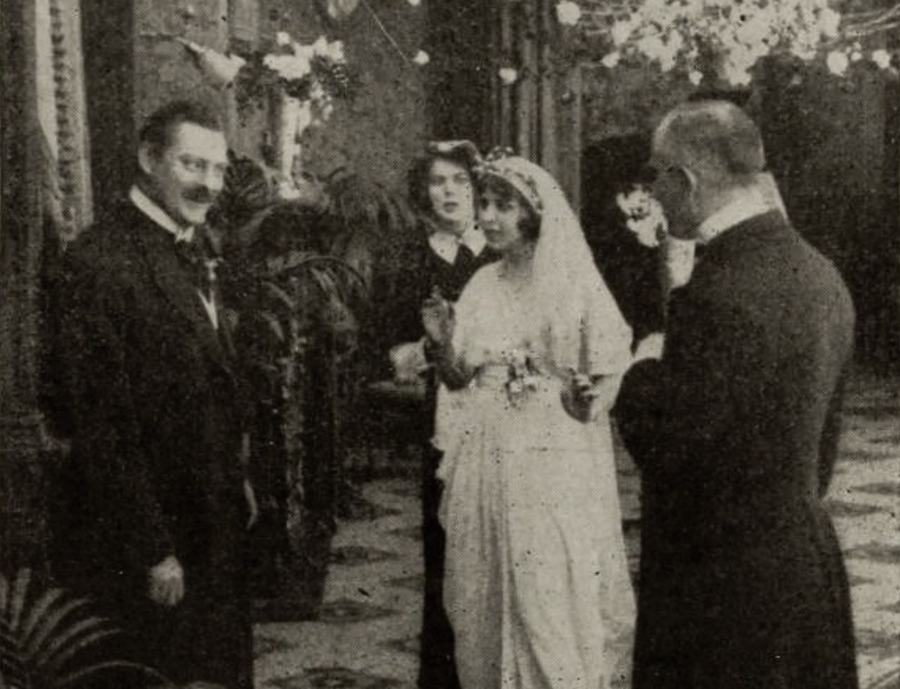
The denouement is swift and cathartic: Crane’s machinations crumble, Stella is freed to marry Frank, and Zenda’s thirst for vengeance is sated. The final tableau, with the triumphant couple bathed in a wash of soft light, juxtaposes the earlier darkness, suggesting that justice, though delayed, ultimately prevails.
Marie Newton’s portrayal of Mary is a study in restrained intensity. She conveys the character’s inner turmoil through nuanced facial expressions, a skill honed in the silent medium where dialogue is absent. Her eyes, often narrowed in a lingering stare, communicate both the sting of betrayal and the simmering resolve for vengeance. Lionel Barrymore, though in a supporting role, injects a gravitas that hints at his future as a leading man; his measured gestures and deep-set gaze add layers to Crane’s duplicitous nature.
The direction, while adhering to the conventions of early melodrama—intertitles, exaggerated gestures, and static camera—exhibits moments of visual innovation. The veil‑lifting scene employs a close‑up that isolates the characters from the surrounding set, intensifying the emotional impact. Moreover, the use of shadow to silhouette Zenda’s figure as she watches the ceremony from a distance evokes a haunting presence that aligns with the film’s title.
The cinematographer’s choice of high‑contrast lighting underscores the thematic dichotomy between darkness and illumination. The palette, though limited to monochrome, is accentuated in modern reproductions by selective tinting—deep orange hues for scenes of passion and betrayal, and cool sea‑blue tones for moments of political discourse—mirroring the film’s emotional beats. These color cues, reminiscent of the tinting employed in The Corbett‑Fitzsimmons Fight, provide contemporary viewers with an additional layer of interpretive richness.
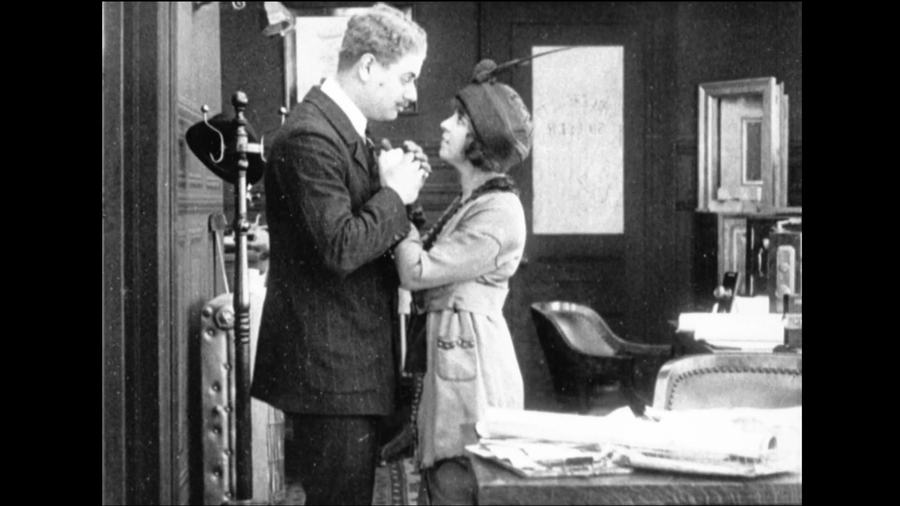
The set design, though modest, utilizes period‑accurate props that ground the narrative in its early‑1900s milieu. The courtroom where Frank’s victory is announced features ornate woodwork, while the gypsy camp is rendered with an earthy authenticity that honors the cultural backdrop of Mary’s origins.
At its core, *The Woman in Black* grapples with the intersection of gender, ethnicity, and power. Mary’s exile from the gypsy community reflects historical marginalization, while Zenda’s moniker evokes the archetype of the vengeful widow, a motif prevalent in Victorian literature. The film also interrogates the corrupting influence of political ambition, a subject that resonates with the Progressive Era’s reformist spirit.
The narrative’s resolution—where justice is served through personal retribution rather than institutional reform—mirrors the moralistic endings common in contemporaneous works such as Les Misérables. However, the film’s willingness to place a gypsy woman at the center of the revenge plot distinguishes it from many of its peers, granting agency to a traditionally silenced demographic.
When juxtaposed with The Woman in Black (the 2012 adaptation of Susan Hill’s novel), the 1914 version appears less haunted by supernatural specters and more concerned with human agency. Both films, however, share a fascination with the titular color’s symbolic weight—black as a veil for hidden truths.
In terms of narrative structure, the film aligns with the melodramatic formulas seen in The Queen’s Jewel, where love, betrayal, and political intrigue interlace. Yet, its emphasis on a female-driven vengeance sets it apart, foreshadowing later feminist narratives.
Though largely eclipsed by later silent masterpieces, *The Woman in Black* remains a valuable artifact for scholars of early American cinema. Its preservation status is precarious; only fragments survive in the Library of Congress, making each viewing an act of archival rescue. Contemporary critics have begun to reassess the film’s merits, noting its progressive portrayal of a non‑white female protagonist seeking agency within a patriarchal framework.
The film’s influence can be traced in the narrative arcs of later works such as Les Misérables, Part 2: Fantine, where personal sacrifice intersects with societal oppression. Moreover, its visual language anticipates the chiaroscuro techniques employed by German Expressionist directors in the 1920s.
*The Woman in Black* is a compelling study of revenge, love, and the corrupting allure of power. Its narrative economy—delivering a complete story within a concise runtime—demonstrates the potency of silent storytelling. While the film’s pacing may feel measured to modern audiences, its thematic resonance and visual flair reward patient viewers.
For aficionados of early cinema, the film offers a rare glimpse into the social anxieties of its era, packaged within a melodramatic framework that still manages to surprise. The performances, especially Newton’s haunting portrayal of Mary, elevate the material beyond its modest production values. In the grand tapestry of silent film history, *The Woman in Black* occupies a niche that is both historically significant and emotionally resonant—a testament to the enduring power of cinema to give voice to the voiceless.
IMDb 5.4
1936
Community
Log in to comment.