DbcultAccessing Vault...
Cult Review
Senior Film Conservator
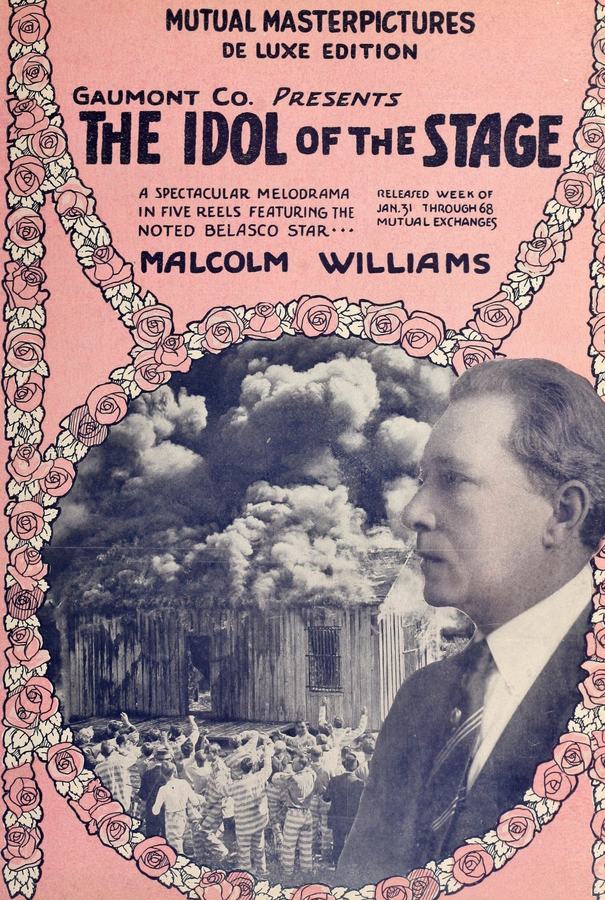
In the annals of early cinema, few narratives unfurl with the intricate, almost operatic tragedy and eventual, hard-won redemption of 'The Idol of the Stage' (1915). This cinematic marvel plunges us headfirst into the tumultuous life of Philip Van Kortland, a man whose very existence is a defiant rejection of his patrician heritage. Descended from the venerable Knickerbocker lineage, Philip’s father, the Elder Van Kortland, views his son’s chosen profession—the stage—with an almost visceral disdain, deeming it an ignoble pursuit beneath their esteemed social standing. Yet, Philip, under the nom de plume Edwin Hargrave, has not merely adopted the stage; he has conquered it, ascending to the zenith of Broadway stardom. This initial chasm between father and son, born of clashing ideals and entrenched societal expectations, serves as the crucible for the ensuing saga, a potent reminder that the pursuit of personal passion can often come at the steep cost of familial approbation. The film immediately establishes this tension, painting a vivid portrait of a young man torn between duty and an undeniable calling, a conflict that resonates deeply even today.
The Elder Van Kortland, blinded by his antiquated notions of propriety, attempts to steer Philip back to a more acceptable path, urging him to abandon his theatrical career and marry the daughter of an old family friend. Philip, however, a man of profound conviction and an artist's soul, staunchly refuses this arranged union, not only because it demands the renunciation of his life’s work but also because he refuses to bind himself to a woman whose name he doesn't even know, much less one he has never met. This act of independence propels him on a western tour, a journey that unwittingly orchestrates a fateful encounter. In a serendipitous twist of destiny, Philip meets and falls irrevocably in love with Doris Morton in a western city, blissfully unaware that she is the very same woman his father had hoped he would marry. The dramatic irony is palpable, a cruel jest of fate that underscores the film’s central theme of misunderstanding and the often-circuitous path of human connection. Doris’s father, mirroring the Elder Van Kortland's prejudice, expresses a chilling preference for seeing his daughter dead rather than married to an actor, unaware that Hargrave and Van Kortland are one and the same. This double layer of familial disapproval intensifies the lovers' plight, forcing them into a desperate, clandestine union. Their elopement and subsequent marriage are acts of pure defiance, a testament to a love that dares to challenge entrenched societal norms and parental decrees.
The newlywed couple’s journey to Chicago, where Philip is booked for a lengthy engagement, marks the beginning of their precipitous descent into a maelstrom of misfortune. Doris falls gravely ill, her condition demanding long and arduous nursing. Philip, with the unwavering devotion of a true lover, watches over her tirelessly, his own health gradually eroding under the twin strains of his demanding stage work and sleepless nights by her bedside. The toll is immense, both physically and emotionally. In a tragically misguided attempt to rebuild his shattered constitution, Philip succumbs to the insidious allure of narcotic drugs, a descent into addiction that will cast a long, dark shadow over his life. This segment of the film is a poignant exploration of vulnerability, depicting how even the noblest intentions can pave the way for catastrophic personal ruin. It's a stark portrayal of the era's nascent understanding of addiction, often treated as a moral failing rather than a disease. Leaving Doris in the care of a nurse, Philip continues his tour, his mind now clouded by the drug, his once-bright future dimming with each passing day. The financial burden of Doris's prolonged illness forces him to accept a position as leading man of a southern stock company, a desperate measure to secure the funds necessary for her recovery. This decision, born of love and desperation, inadvertently sets the stage for further complications, as Marion, the impressionable daughter of the company’s manager, falls deeply in love with him, entirely unaware of his marital status and his hidden struggles. The layers of deceit, both intentional and circumstantial, begin to thicken, leading Philip further down a path fraught with peril.
The narrative takes a darker turn when Philip, his senses dulled and judgment impaired by the drug, stumbles into a Chinese Opium den, disguised as an innocuous curio shop. Marion, driven by her burgeoning affection and perhaps a nascent suspicion, follows him into this illicit underworld. In a desperate bid to allay her suspicions, Philip feigns interest in a bracelet, which he then presents to her. However, the flimsy veneer of his deception quickly shatters when Marion discovers him smoking in a back room, the acrid scent of opium hanging heavy in the air. Her initial shock gives way to a misguided attempt to rescue him, a gesture that further complicates an already precarious situation. In a moment of naive coquetry, she slips her diamond ring onto his finger, declaring it an exchange for the bracelet, a symbolic gesture loaded with unintended consequences. Yet, the insidious allure of the forbidden proves too strong for Marion. Her curiosity, despite Philip’s feeble objections, overcomes her, and she tries opium smoking herself. Philip, his own senses deadened by the drug’s potent embrace, remains oblivious to the profound effect it has on her until the harsh light of the next morning reveals Marion in a nearby bunk, a stark testament to their shared transgression. The gravity of the situation, the shattering of innocence, and the irreparable damage to reputations are instantly apparent. Realizing the catastrophic implications, Hargrave, demonstrating a flicker of his former moral compass, immediately resigns from the company, but not before ensuring Marion's safe, discreet departure from the den. This harrowing incident, a direct consequence of his addiction, irrevocably alters the course of his life and that of those around him, particularly Marion, whose love is about to curdle into bitter resentment.
The revelation of Philip's true identity and marital status ignites a furious transformation in Marion. Discovering his resignation note, which explicitly states Hargrave's need to rejoin his wife in Chicago, her misplaced love curdles into a venomous hate. This emotional pivot drives her to a vengeful act that seals Philip’s fate: she has him arrested for stealing her diamond ring. The irony is excruciating; the ring, given to him in a moment of misguided affection, now becomes the instrument of his downfall. Mentally irresponsible and utterly debilitated by his entrenched drug habit, Philip is incapable of mounting a proper defense. His judgment, clouded by addiction, leads him to weakly plead guilty. He does this not out of genuine culpability for theft, but out of a perverse sense of protection for Marion, whom he still perceives as having been kind to him, wishing to shield her from the social opprobrium that would inevitably follow if her visit to the opium den were exposed. This act of self-sacrifice, however misguided and tragically misconstrued, sends him to a convicts' camp, a brutal testament to the destructive power of drugs and the unforgiving nature of a society quick to condemn. His imprisonment is a dark abyss, a place where his once-illustrious career and once-bright future are systematically stripped away, leaving behind a hollow shell of the man he once was. The film here offers a stark commentary on the justice system's failings when confronted with mental and physical incapacitation due to addiction, a theme that resonates with other social dramas of the era like St. Elmo, which often explored moral decay and societal judgment.
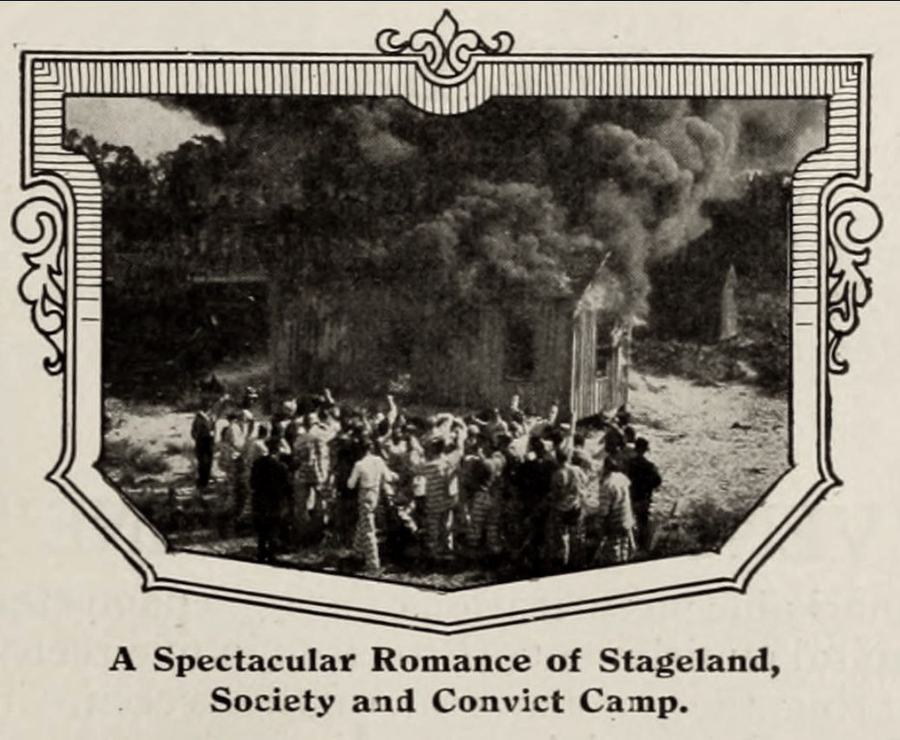
In the grim confines of the convicts' camp, Doris, still deeply in love and unaware of the true circumstances of his conviction, visits Philip, her presence a beacon of hope in his desolate existence. However, her unwavering devotion inadvertently attracts the predatory gaze of Clark Porter, a "Trusty" with a sinister agenda. Porter, consumed by a possessive infatuation with Doris, cunningly exploits Philip's vulnerability. He secretly supplies Philip with morphine, feigning compassion while twisting the truth: he tells Philip that freedom awaits him as soon as he is cured of his craving for narcotics. This cruel manipulation is a calculated move to keep Philip dependent and incapacitated, clearing the path for Porter's own designs on Doris. Through an insidious trick, Porter orchestrates the publication of an account of Doris's visits in a blackmailing society paper, craftily making it appear as though she is coming to see him. The resulting scandal is devastating. Doris is subsequently refused admittance to the camp, her reputation irrevocably sullied by the malicious fabrication. Porter, believing his scheme successful, anticipates winning her affections once his own short term expires. Doris, her story disbelieved and her spirit broken by the public scorn, disappears without a trace, choosing to vanish rather than endure further humiliation. Her heartbreaking decision to leave no forwarding address, to sever all ties, is compounded by the profound secret she carries: she is pregnant with Philip's child. When their baby son is born, she chooses not to communicate with her husband or her family, a silent testament to her despair and the belief that she has been utterly abandoned and disgraced. Philip, receiving distorted news of the society paper’s story, tragically concludes that his wife has deserted him, another layer of misunderstanding and heartbreak cementing the chasm between them. This tragic misunderstanding, fueled by malicious gossip and a lack of direct communication, tragically mirrors the themes of lost love and societal judgment seen in films such as The Sins of the Mothers, where reputations are easily shattered.
Upon his release from prison, a broken but resolute Philip forsakes the stage, the very profession that had once defined him, and endeavors to build a new life in business. Years pass, marked by quiet determination and the lingering ache of perceived abandonment. He eventually establishes himself in a city, a twist of fate placing him in the very locale where Doris is raising their son, now old enough to contribute to her meager support by selling newspapers. The threads of their separated lives, though unseen, are drawing inexorably closer. A pivotal moment arrives on the night of a benefit performance of 'Ingomar,' a classical play. The lead actor falls ill, creating an unforeseen vacancy. The Elder Van Kortland, who has been visiting his son, perhaps sensing an opportunity for reconciliation or simply acknowledging Philip's undeniable talent, suggests that Philip step into the role. Despite the short notice, Philip agrees, a ghost of his former self reclaiming the stage. Doris, drawn by an inexplicable pull, is in the audience that night. Philip, having already been drawn to the charming little newsboy—unbeknownst to him, his own son—had given the lad tickets, thus orchestrating Doris's presence at the performance. The recognition is instantaneous, a jolt of emotion for Doris as she watches her husband, the 'Idol of the Stage,' once again command the spotlight. The scene is imbued with a profound sense of destiny, a slow-burn reunion orchestrated by fate and the innocence of a child. This return to the stage, after years of self-imposed exile, symbolizes not just Philip’s professional resurrection but also the first glimmer of personal hope, a potential return to his true self.
The long, arduous journey towards truth and reconciliation culminates in a dramatic confrontation on the way home from the theater. Doris, her heart still reeling from the unexpected sight of Philip, is recognized by Clark Porter, now a pathetic tramp, a shadow of his former manipulative self. He follows her, his depraved intentions resurfacing as he forces his attentions upon her. The little newsboy, witnessing his mother's distress, instinctively rushes to seek help, appealing to the two men who had shown him kindness: Philip and the Elder Van Kortland. They rush to aid the boy's mother, their heroic intervention leading to an unforeseen and overwhelming surprise – the woman they are protecting is none other than Doris. The shock is palpable, a moment of profound revelation. Philip, his protective instincts ignited, confronts Porter, forcing a confession from the desperate tramp. The truth, ugly and painful, finally spills forth: Porter admits to his malicious scheme, revealing Doris's absolute innocence and the calculated deceit that had separated them for so long. The veil of misunderstanding, painstakingly woven over years of silence and lies, is finally torn asunder. The two are reconciled, their embrace a powerful testament to enduring love and the triumph of truth. In a final, deeply moving gesture, Philip’s father, witnessing the immense suffering and the profound love that has endured, is finally softened. His long-held prejudices melt away, and he even agrees, without protest, that his grandson may follow the stage as a profession, a symbolic acceptance that closes the circle of conflict and ushers in an era of familial harmony. This ending, while perhaps a touch melodramatic by modern standards, provides a deeply satisfying emotional catharsis, affirming the power of forgiveness and the enduring strength of family bonds. It echoes the spirit of redemption found in other period dramas, where societal judgment is ultimately overcome by personal truth and love.
‘The Idol of the Stage’ stands as a remarkable artifact of early cinema, a film that, despite its silent nature, speaks volumes through its powerful narrative and compelling character arcs. Malcolm Williams delivers a nuanced performance as Philip, conveying the character’s initial pride, his agonizing descent into addiction, and his eventual, weary redemption without uttering a single word. His physical portrayal of a man ravaged by narcotics, then reawakened by love and purpose, must have been particularly impactful for contemporary audiences. Lucile Taft, as Doris Morton, embodies strength and resilience, her quiet suffering and unwavering maternal devotion serving as the emotional anchor of the story. The film’s exploration of addiction, though perhaps lacking the clinical depth of modern portrayals, is nevertheless unflinching for its time, highlighting its destructive impact not just on the individual but on entire families and relationships. The societal prejudice against actors, a theme that might seem quaint today, was a very real concern in the early 20th century, adding another layer of conflict to Philip's journey. The film cleverly uses the stage itself, particularly the 'Ingomar' performance, as a narrative device for recognition and reunion, a full-circle moment that underscores Philip’s identity and destiny. Comparisons can be drawn to other films of the era that tackled moral dilemmas and societal pressures; for instance, the theme of a man falling from grace due to personal failings or external pressures is reminiscent of the moral quandaries explored in The Spender. Moreover, the tragic separation and eventual reunion of a family, often involving a child as the catalyst, finds echoes in sentimental dramas like The Little Girl That He Forgot. The film’s resolution, where familial pride finally yields to love and understanding, offers a timeless message about the importance of empathy and the transformative power of forgiveness. It’s a compelling piece of cinematic history, deserving of renewed attention for its dramatic scope and emotional depth, reminding us that the human condition, with all its complexities, has always been the most captivating subject for storytelling.
The aesthetic choices within ‘The Idol of the Stage’ likely played a significant role in conveying its emotional intensity. The use of dramatic lighting, expressive gestures, and intertitles would have been crucial in communicating the psychological torment of Philip’s addiction, the quiet despair of Doris’s abandonment, and the eventual joy of their reunion. One can imagine the stark contrasts employed to depict the opulent world of Broadway juxtaposed with the shadowy depths of the opium den, or the grim reality of the convicts’ camp. The performances, especially from Malcolm Williams and Lucile Taft, would have relied heavily on subtle facial expressions and body language to convey the intricate emotional landscape of their characters’ journey. The film’s narrative structure, with its numerous twists and turns, keeps the audience engaged, constantly shifting their sympathies and expectations. It’s a testament to the storytelling prowess of the era that such a complex plot could be effectively conveyed without spoken dialogue. The enduring appeal of such narratives lies in their universal themes: the struggle for identity, the destructive nature of addiction, the resilience of love, and the ultimate triumph of truth. In its depiction of an individual’s battle against personal demons and societal judgment, ‘The Idol of the Stage’ offers a compelling glimpse into the moral and social anxieties of its time, while simultaneously delivering a timeless story of human fallibility and redemption. It serves as a reminder that even in the face of overwhelming adversity, hope, and the possibility of a second chance, can always prevail, much like the enduring spirit of classic cinema itself. The final scene, with the Elder Van Kortland's acceptance of his grandson's theatrical aspirations, provides a deeply satisfying sense of closure, symbolizing not just personal reconciliation but also a broader acceptance of changing societal values, a true triumph of heart over antiquated pride. This nuanced portrayal of evolving family dynamics and societal norms positions 'The Idol of the Stage' as more than just a melodrama; it is a significant cultural document.
The intricate web of misunderstandings and malicious actions that plague Philip and Doris throughout the film serves as a powerful cautionary tale about the fragility of reputation and the devastating consequences of miscommunication. Clark Porter’s villainy, in particular, highlights the ease with which a person’s good name can be sullied by gossip and deliberate falsehoods, a theme acutely relevant in an era where public perception often dictated social standing. Doris’s solitary struggle to raise her son, believing herself abandoned and disgraced, is particularly heart-wrenching, showcasing the profound strength and resilience of a woman scorned by society but driven by maternal love. Her eventual presence at the 'Ingomar' performance, brought about by the innocent actions of her son, feels less like mere coincidence and more like a destined intervention, a subtle nod to the narrative’s romantic underpinnings. The film’s ability to weave such complex emotional threads into a coherent and compelling narrative, despite the limitations of silent film, is truly commendable. The journey of Philip Van Kortland, from Broadway star to convicted prisoner, from drug addict to reformed businessman, and finally back to the stage and his reunited family, is a testament to the human capacity for change and the enduring power of redemption. It invites audiences to reflect on the societal stigmas of the past, the destructive nature of secrets, and the profound relief that comes with truth. The film’s ending, while providing a clear resolution, also hints at the enduring scars of their ordeal, suggesting that while wounds may heal, their marks remain, adding a layer of realism to an otherwise dramatic tale. The ultimate message is one of hope, that even after years of suffering and separation, love, truth, and forgiveness can indeed rebuild shattered lives and mend broken families, making 'The Idol of the Stage' a compelling and emotionally resonant work that transcends its historical context.
IMDb —
1919
Community
Log in to comment.