DbcultAccessing Vault...
Cult Review
Senior Film Conservator
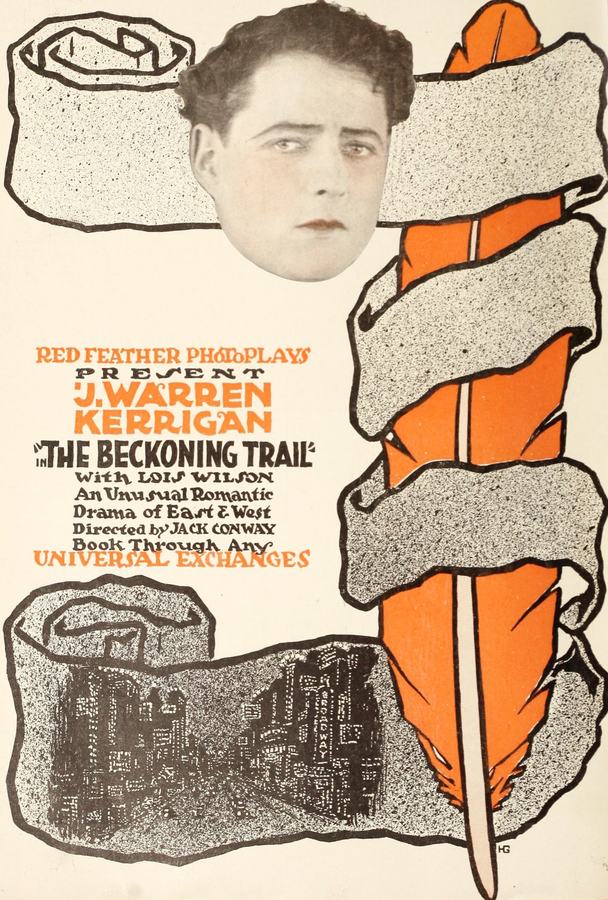
Stepping into the world of The Beckoning Trail is akin to unearthing a forgotten treasure from the cinematic archives, a silent testament to an era when storytelling relied purely on visual poetry and the raw, unvarnished emotion of its performers. This 1915 feature, penned by the insightful F. McGrew Willis, offers far more than a simple narrative; it presents a compelling examination of transformation, the clash of disparate worlds, and the enduring power of human connection amidst the rugged individualism of the American West. It’s a rich tapestry woven with threads of urban decadence, frontier hardship, and the unexpected blossoming of romance, proving that even over a century later, its core themes resonate with a surprising immediacy.
Our protagonist, Carter Richmond, is initially introduced as the quintessential New York playboy, a character archetype so familiar to the early 20th-century audience. He embodies the superficiality and transient pleasures of inherited wealth, living a life of unbridled indulgence where consequence is a foreign concept. His family fortune, a seemingly inexhaustible wellspring, is, through his relentless profligacy, drained with an alarming swiftness. This rapid descent from the pinnacle of societal privilege to the precipice of destitution is a stark and effective narrative device, immediately establishing the stakes and setting the stage for a profound character arc. Carter's initial arrogance and lack of foresight are palpable, painted with broad strokes that define his initial, unlikable persona. He is a man accustomed to having his whims catered to, utterly unprepared for the harsh realities that await him.
The only remnant of his once-grand inheritance is an abandoned mine in California, a seemingly worthless asset in a landscape that must have felt like another planet to his metropolitan sensibilities. His journey westward isn't one of adventurous spirit, but of reluctant necessity, a desperate gamble to salvage any vestige of his former life. This geographical shift from the manicured boulevards of New York to the sun-baked, dust-choked trails of the Golden State is more than just a change of scenery; it's a symbolic migration from moral decay to the potential for redemption. The film subtly critiques the excesses of urban life while simultaneously romanticizing the rugged purity of the frontier, a common trope in many narratives of the era, reminiscent perhaps of the societal commentary found in works like The Melting Pot, albeit with a focus on individual transformation rather than broader cultural assimilation.
Upon reaching the desolate mine, Carter's expectations of an empty, easily disposable property are shattered by the presence of Big Him Helton and his daughter, Mary. These two figures are not merely occupants; they are the living embodiment of the frontier spirit, eking out an existence through sheer grit and determination. Helton, a seasoned miner, represents the old guard, a man whose life is inextricably linked to the land and its unforgiving bounty. Mary, portrayed with captivating sincerity by Lois Wilson, is the heart of their makeshift home, a young woman tempered by hardship but possessing an inherent strength and innocence. Their status as "squatters" immediately positions them as vulnerable, yet resilient, a common theme in Westerns that often pits the self-sufficient individual against the encroaching forces of ownership and exploitation. One cannot help but draw parallels to the struggles portrayed in films like The Squatter's Son, which similarly explores themes of land rights and the inherent challenges faced by those living on the fringes of established society.
Their precarious existence is further complicated by the menacing figure of Placer Murray, a neighboring miner consumed by greed and a relentless desire to seize their claim. Murray functions as the archetypal villain, a force of malevolence that underscores the harsh realities of frontier justice and the constant threat of exploitation. His persistent efforts to dislodge Helton and Mary create a palpable sense of tension throughout the narrative, painting a vivid picture of the lawless, cutthroat environment that often characterized the mining territories. This external threat not only provides conflict but also serves to highlight the vulnerability of Mary and Helton, intensifying the dramatic stakes and making Carter’s eventual role as a protector all the more significant.
The pivotal moment that irrevocably alters the course of Carter’s journey, and indeed, his very being, occurs when Mary, mistaking him for one of Murray’s nefarious henchmen, accidentally shoots him. This incident is a masterful stroke of narrative irony. The wealthy city dweller, who has never faced a true physical threat, is brought low by the very people he has unwittingly trespassed upon. The immediate aftermath of the shooting is fraught with panic and regret, particularly on Mary’s part. Lois Wilson conveys Mary’s distress with a poignant authenticity, her silent expressions speaking volumes about her remorse and innate compassion. This act of violence, rather than severing ties, ironically binds them together.
As Mary diligently nurses Carter back to health, a forced intimacy develops between them. This period of convalescence becomes a crucible for their evolving relationship, stripping away their preconceived notions and allowing their true characters to emerge. Carter, divested of his fine clothes and urban affectations, is forced to confront his vulnerability and rely on the kindness of strangers – strangers he initially viewed as mere obstacles. Mary, on the other hand, sees beyond the injured man’s initial haughtiness, recognizing a deeper, perhaps dormant, goodness within him. Ray Hanford, as Carter, effectively portrays this gradual thawing, his initial bewilderment slowly giving way to appreciation and then affection. The contrast between their worlds, once a chasm, begins to narrow, bridged by shared experience and mutual care. This intimate period of recovery, where physical healing mirrors emotional growth, is a classic romantic trope, but rendered here with a freshness that feels genuinely earned.
The blossoming romance between Carter and Mary is depicted with a delicate touch, characteristic of silent era filmmaking where subtle gestures and lingering glances conveyed the deepest emotions. It’s not an instantaneous combustion but a slow, tender burn, fueled by shared vulnerability and the stark beauty of their surroundings. Carter, once a superficial playboy, finds himself genuinely captivated by Mary’s resilience, her unpretentious charm, and her deep connection to the land. Mary, in turn, is drawn to Carter’s intelligence and the latent kindness that emerges as he sheds his city-bred cynicism. Their love story is fundamentally one of redemption for Carter, as he discovers values far more profound than monetary wealth, and one of awakening for Mary, as she encounters a world beyond the confines of the mining camp. The film suggests that true affection transcends social strata and geographical divides, a powerful message for its time.
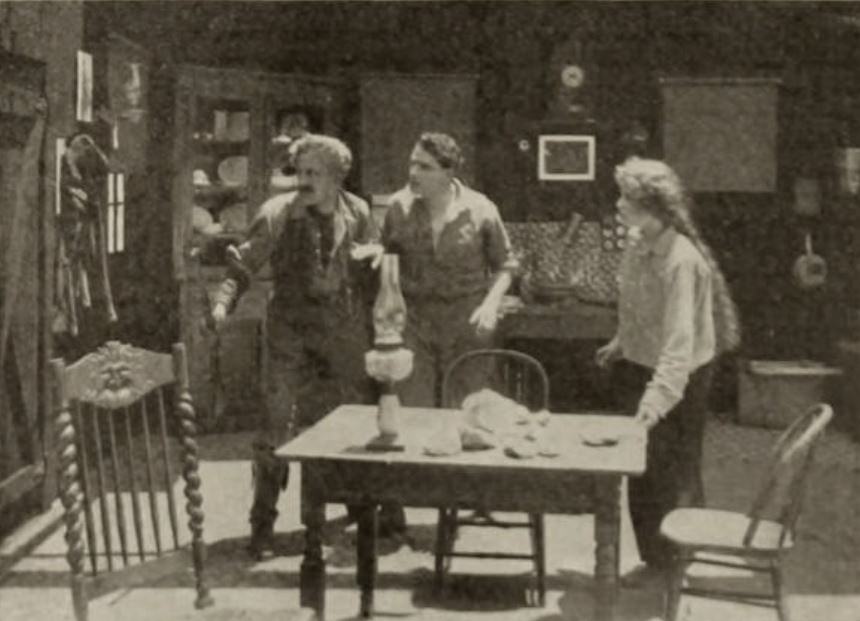
However, the path to true love is rarely smooth, especially in the rugged world of the Western. The plot description's tantalizing phrase, "Complications ensue," hints at the inevitable obstacles that threaten to derail their burgeoning relationship. One can easily imagine Placer Murray intensifying his predatory efforts, perhaps attempting to exploit Carter's weakened state or Mary's newfound emotional vulnerability. The harsh environment itself could present challenges – natural disasters, dwindling resources, or the ever-present threat of lawlessness. Furthermore, the inherent class differences between Carter and Mary, though seemingly overcome by their shared experience, could resurface as a societal 'complication' if their romance were to extend beyond the isolated mine. These external pressures serve to test the strength of their bond, forcing them to confront not only Murray's villainy but also the deeper implications of their commitment to one another. The narrative cleverly uses these external forces to deepen the internal character development, propelling both Carter and Mary towards a more mature understanding of love and sacrifice.
Beyond the captivating romance, The Beckoning Trail delves into several resonant themes. At its core is the theme of redemption. Carter Richmond’s journey is a classic arc from moral dissipation to moral rectitude, facilitated by hardship and the transformative power of love. He sheds his frivolous past and embraces a life of purpose and genuine connection, a narrative trajectory that speaks to the enduring human desire for second chances. This transformation is not merely superficial; it is a profound internal shift, making his character's evolution genuinely compelling. His story echoes the moral awakening seen in various literary and cinematic works, where characters are forced to confront their shortcomings and rebuild their lives on a foundation of integrity.
The film also subtly explores class struggle and the stark contrast between inherited wealth and earned sustenance. Carter's initial disdain for the 'squatters' gives way to respect and affection, breaking down the artificial barriers of social status. This theme is particularly relevant in the early 20th century, a period marked by significant social and economic upheaval. The Heltons, though poor, possess a dignity and self-reliance that Carter initially lacks, highlighting the film's implicit critique of idle aristocracy. This juxtaposition of worlds, the 'civilized' East versus the 'wild' West, is a fertile ground for exploring societal values and personal growth, much like the cultural clashes depicted in Bjørnetæmmeren, albeit in a different cultural context.
Furthermore, the film contributes to the rich tapestry of the frontier myth. It romanticizes the West as a place of both immense challenge and boundless opportunity, a crucible where character is forged and true love can flourish. The rugged landscape is not just a backdrop; it is an active participant in the narrative, shaping the lives and destinies of its inhabitants. The struggle for land, the constant threat of violence, and the necessity of self-reliance are all hallmarks of the Western genre, and The Beckoning Trail embraces these elements with conviction. It’s a testament to the enduring appeal of stories set against the backdrop of an untamed wilderness, where the rules of polite society often give way to a more primal, yet often more honest, code of conduct.
In the silent era, the burden of conveying emotion, character, and plot rested almost entirely on the shoulders of the actors. Their facial expressions, body language, and gestures had to be exaggerated enough to be understood without being overly theatrical, a delicate balance that required immense skill. Lois Wilson, as Mary, delivers a performance that is both tender and fierce. Her portrayal captures the resilience of a young woman raised in harsh conditions, alongside a vulnerability that makes her blossoming romance with Carter utterly believable. Her eyes, in particular, convey a depth of feeling that transcends the lack of dialogue, making her character the emotional anchor of the film. Her ability to project innocence, fear, and burgeoning love is a testament to her talent and the unique demands of silent acting.
Ray Hanford, as Carter Richmond, faces the challenge of portraying a character who undergoes significant transformation. He skillfully navigates Carter's initial arrogance, his shock and pain after the shooting, and his gradual softening into a man capable of genuine affection and selflessness. The subtle shifts in his demeanor, from sneering disdain to earnest concern, are crucial to the audience's acceptance of his redemption arc. The supporting cast, including Maude George, Harry Carter, J. Warren Kerrigan, and Harry Griffith, contribute to the rich tapestry of frontier life, each bringing their characters to life with the expressive techniques demanded by the medium. The director (whose name isn't provided but whose vision is clear) utilizes the landscape effectively, making the vast California setting an integral character in itself, echoing the visual storytelling found in other early American films like California Scrap Book, which celebrated the state's natural beauty.
The narrative crafted by F. McGrew Willis is a testament to the storytelling prowess of the era. Willis masterfully intertwines distinct character arcs with a compelling plot, ensuring that the external conflicts serve to deepen the internal journeys of the protagonists. The pacing, though perhaps slower by modern standards, allows for a meticulous development of character and relationship, a luxury often forgone in contemporary cinema. The choice to initiate the romance through an accidental shooting is particularly ingenious, creating an immediate, high-stakes catalyst for intimacy that bypasses conventional courtship and forces two disparate individuals into a shared, vulnerable space. This kind of dramatic tension and character-driven plotting is a hallmark of strong screenwriting, evident even in the nascent stages of film as an art form.
While The Beckoning Trail might not possess the grand scale or revolutionary techniques of some of its more celebrated contemporaries like Homunculus, 1. Teil, or the social commentary depth of Charity, its enduring charm lies in its honest portrayal of human nature and its unwavering belief in the power of love and redemption. It stands as a solid example of early American narrative cinema, showcasing the genre conventions that would define the Western for decades to come, while also offering a poignant romantic drama. The film's ability to elicit genuine emotion and investment from the audience, despite the limitations of its medium, speaks volumes about its timeless appeal. It's a reminder that even in an era without synchronized sound or sophisticated visual effects, compelling stories, well-told, can captivate and resonate deeply with viewers. Its legacy is perhaps not in revolutionizing cinema, but in perfecting a beloved formula, proving that a strong story, well-acted, is always in style.
Ultimately, The Beckoning Trail is more than just a historical curiosity; it is a vibrant piece of cinematic art that continues to speak to universal human experiences. It reminds us that appearances can be deceiving, that true character is often forged in adversity, and that love can blossom in the most unlikely of circumstances. For fans of silent cinema, Westerns, or simply well-crafted stories of transformation and romance, this film offers a rewarding viewing experience. It invites us to slow down, to appreciate the nuances of visual storytelling, and to immerse ourselves in a world where the beckoning trail promises not just adventure, but also the profound discovery of self and connection. It’s a compelling argument for the preservation and re-evaluation of these early films, which often hold surprisingly modern insights within their antique frames, enriching our understanding of cinematic history and the enduring power of narrative.
IMDb —
1915
Community
Log in to comment.