DbcultAccessing Vault...
Cult Review
Senior Film Conservator
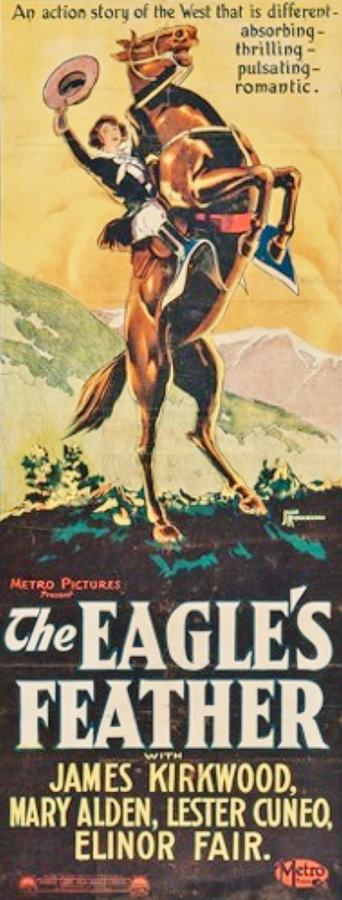
he year 1923 stood as a pivotal meridian for the silent screen, a moment when the primitive tropes of early nickelodeons were being discarded in favor of a more nuanced, psychologically dense form of storytelling. Within this transformative landscape, The Eagle's Feather emerges not merely as another dusty relic of the frontier genre, but as a searing exploration of matriarchal power and the devastating consequences of emotional projection. Directed with a keen eye for the interplay between the vastness of the landscape and the claustrophobia of the human heart, the film offers a stage for Mary Alden to deliver a performance of staggering complexity.
At the center of this narrative crucible is Delia Jamieson, a character who subverts the typical damsel-in-distress archetypes often found in contemporary works like Wild and Woolly. Delia is a woman defined by her labor and her land, a hardened ranch owner whose authority is absolute. When James Kirkwood’s John Trent enters her orbit, he represents more than just a capable foreman; he is a disruption to the sterile, controlled environment she has cultivated. The tension is palpable from their first encounter, a silent exchange of glances that suggests a subterranean shift in the ranch's social hierarchy.
The antagonist, Jeff Carey, portrayed with a sneering, serpentine grace by Crauford Kent, serves as the catalyst for the film's descent into melodrama. Carey’s jealousy is not merely romantic; it is existential. He sees in Trent a reflection of everything he lacks—integrity, strength, and the quiet magnetism that draws the attention of Elinor Fair’s Martha. The plot point involving stolen gold is a classic MacGuffin, reminiscent of the high-stakes treasure hunts in Treasure Island, but here it serves a more insidious purpose. It is a tool for character assassination, a way to dismantle Trent’s reputation within the very walls where he sought sanctuary.
The dramatic pivot of The Eagle's Feather hinges on a profound linguistic and emotional failure. In a sequence that showcases the unique power of silent cinema to convey internal states, Trent attempts to confess his love for Martha to Delia. Through a series of misinterpreted gestures and the unfortunate timing of Delia’s own burgeoning loneliness, she assumes the confession is meant for her. This is not the whimsical confusion of a romantic comedy; it is a tragic collision of two disparate realities. Delia’s face, captured in a stark, high-contrast close-up, transitions from a mask of stoicism to a radiant, terrifying hope, only to later crumble into a vitriolic despair.
This scene highlights the scriptwriting prowess of Katharine Newlin Burt and Winifred Dunn. They avoid the easy path of simple villainy, instead grounding Delia’s subsequent cruelty in a recognizable human pain. When she discovers the truth—that she is merely the aunt of the beloved, not the beloved herself—her reaction is atavistic. The order to whip Trent is a visceral manifestation of her internal agony. Unlike the more straightforward heroics of The Heart of the North, this film lingers in the gray areas of morality, where the protagonist and the victim are often the same person.
Visually, the film utilizes the rugged topography of the ranch to mirror the internal states of its characters. The wide, sweeping shots of the cattle range suggest a freedom that the characters, bound by their own neuroses and social expectations, cannot achieve. The interior scenes, by contrast, are often bathed in a chiaroscuro light that emphasizes the isolation of Delia’s position. The cinematography does not shy away from the harshness of the environment, grounding the melodrama in a gritty, tactile reality that separates it from the more polished, urban dramas like The Dub.
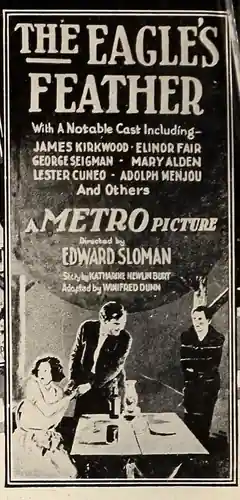
The climax of the film—the lashing of Trent—is a difficult watch even by modern standards. It represents the absolute nadir of Delia’s character arc. However, it is also the catalyst for her redemption. The realization of her own monstrousness leads to a moment of profound clarity. The sacrifice she makes at the end is not a grand, cinematic gesture of martyrdom but a quiet, agonizing step back from the precipice. She chooses the happiness of Martha and Trent over her own pride, a resolution that feels earned rather than forced. It echoes the themes of redemptive suffering found in Florence Nightingale, albeit in a far more primal, western context.
Mary Alden’s performance is the undeniable anchor of the production. Known for her ability to portray maternal figures with a hidden edge, she brings a fierce, almost predatory intensity to Delia. James Kirkwood, as Trent, provides the necessary counterweight; his performance is one of understated masculinity, a man who endures the vicissitudes of fortune with a quiet dignity. The supporting cast, including Rosemary Theby and James Wang, flesh out the world of the ranch, creating a sense of a living, breathing community that exists beyond the immediate concerns of the protagonists.
In comparing The Eagle's Feather to other films of the era, such as The Song and the Sergeant, one notices a distinct lack of sentimentality. There is a hardness to this film, a refusal to offer easy answers to the problems it poses. The jealousy of Jeff Carey is never fully resolved; it is simply overcome by the sheer weight of Delia’s final choice. The film understands that in the wild, survival is not just physical—it is emotional. The "eagle's feather" of the title serves as a poignant metaphor for this precarious existence: a symbol of grace and height that is nonetheless susceptible to the winds of change and the gravity of human failing.
The pacing of the film is remarkably modern. It avoids the episodic nature of many silent westerns, opting instead for a tight, character-driven narrative that builds momentum through a series of escalating tensions. The intertitles are used sparingly, allowing the visual storytelling to carry the emotional weight of the scenes. This reliance on the image over the word creates a more immersive experience, forcing the audience to engage with the characters on a visceral level. It is a far cry from the more didactic approach of films like It May Be Your Daughter, which often prioritized their message over their medium.
Ultimately, The Eagle's Feather stands as a testament to the sophistication of early American cinema. It is a film that explores the dark corners of the human psyche with a boldness that remains impressive a century later. It challenges the viewer to empathize with a protagonist who commits an act of profound cruelty, and in doing so, it achieves a level of dramatic truth that transcends its generic trappings. It is a story of love, yes, but more importantly, it is a story of the painful, necessary process of letting go. For anyone interested in the evolution of the western or the history of cinematic melodrama, this is an essential, if haunting, piece of work.
This critique reflects the intricate tapestry of silent film history, where every frame was a battle between shadow and light, and every performance was a silent scream for understanding.
IMDb 6.5
1928
Community
Log in to comment.