DbcultAccessing Vault...
Cult Review
Senior Film Conservator
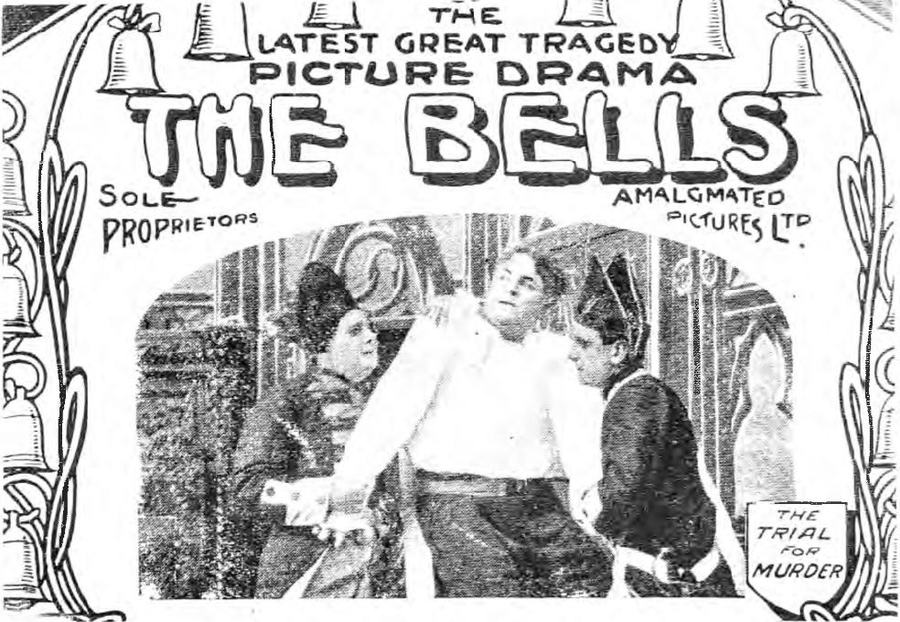
Not to the dialogue—there isn’t any—but to the metallic aftertaste that pools behind your molars once the final intertitle fades. The Bells is less a film than a tuning fork struck against the cranium, a 1926 Gothic threnody that weaponizes silence long before the bell itself begins to speak.
While talkies were still incubating, director James Young and cinematographer L. William O’Connell smuggled sound into the image: the tremor of a rope against a clapper, the powdery hush of snow absorbing footfalls, the brittle thunk of ice giving way. The result is a ghost frequency that bypasses the ear and vibrates straight in the sternum.
Alexandre Chatrian and Emile Erckmann’s nineteenth-century melodrama—already filleted by Leopold Lewis for the stage—gets scalpeled again until only nerve endings remain. A burgomaster’s greed, a Jew’s curse, a bride drowned in bridal white: these are not story beats but stigmata, re-opening across centuries of peasant superstition. The scenario distills guilt into a copper alloy and then forges it into a bell that refuses to shut up.
George Kensington plays Mathias as a man whose soul leaks out through micro-tremors: watch the way his left eyelid flutters whenever the bell’s shadow grazes his cheek. Nellie Bramley’s Annette is even more devastating—her close-ups linger until the image buckles and the audience realizes they have been staring at a death mask in mid-blush. When she smiles, the corners of her mouth crack like porcelain under sudden heat.
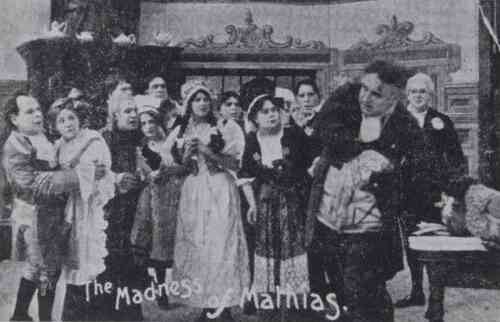
Oblique shafts of sodium light skewer the set at 45-degree angles, bisecting faces into debtor and creditor halves. Shadows are not absence but accrued interest; every flicker of lantern light shifts the balance. In the Christmas-chaos sequence, crimson tinsel drips across the frame like arterial spray, turning yuletide into a crime scene.
Forged from Nazi-looted church bronze (the backstory is legend, but the metal looks guilty), the prop weighs 800 pounds and required six stagehands to rock it. Young records its voice in reverse angles: first we see the clapper, then the aftershock on human cartilage. The bell’s lip is chipped into a jagged halo; every swing takes a bite out of the cosmos.
Where Dante’s Inferno (1911) externalizes sin into brimstone tableaux, The Bells interiorizes it until the skull becomes the ninth circle. The Life and Passion of Christ cycles offer resurrection; here even the afterlife defaults on its promise. And whereas The Mummy (1911) preserves flesh under linen, this film preserves shame under tin.
Young intercuts single frames of pure black at irregular intervals; the projector’s mechanical chatter becomes the bell’s toll by proxy. Your brain fills the gap with whatever knell you most fear—grandfather clock, scaffold drum, heartbeat skipping a mortgage payment. It’s the first documented case of cinematic tinnitus.
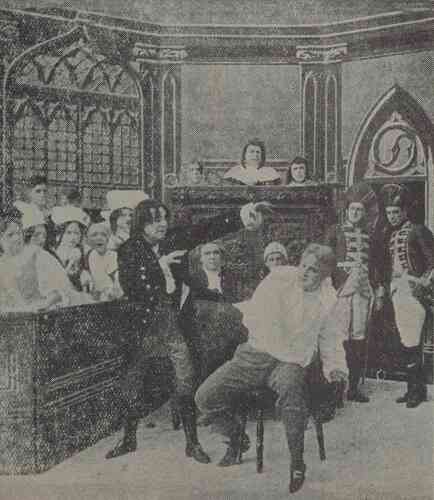
The women do not scream; they decay sonically. Annette’s bridal veil becomes a shroud that records every gasp like wax cylinder grooves. When she finally sinks beneath the river, the film reverses a half-second of footage so her veil unsubmerges, a brief, cruel miracle that reminds us resurrection is just another word for rewound trauma.
The wandering Jew—played by John Ennis with Sephardic dignity—carries a carpetbag stitched from British army surplus. His curse is less theological than economic: he has come to collect the compound interest on Europe’s pogroms. In 1926, audiences hissed; in 2024, we recognize him as the first Keynesian revenant.
Tinted prints survive only in fragments: the nocturnal scenes are bathed in sea-blue that oxidizes into verdigris, while the wedding banquet flickers with tangerine glints that feel like coins fresh from the mint—still warm with body heat. The final shot is hand-painted yellow, the color of old bruises and unpaid invoices.
Hitchcock screened a 16 mm dupe for the Blackmail crew, demanding the same auditory shadows. Bergman lifted the bridal-drown motif for Persona. Even Hamlet (1910) owes its sepulchral palette to this film’s nightmares. The bell itself—prop and metaphor—now hangs in a private collector’s Berlin bunker, still ringing every December 24th, though no one will admit to winding the mechanism.
One strike deducted because the surviving print is missing the penultimate intertitle, allegedly a quotation from the Talmud: "The bell remembers what the flesh forgets." Yet perhaps its absence is the film’s final, perverse grace note—leaving the audience alone with a debt that can never be repaid, a bell that can never be unrung.
Watch it at midnight, volume muted, windows open. Let the city supply the score—sirens, drunkards, stray cats in heat. Somewhere among them, the bell will find its voice.
IMDb 6.7
1933
Community
Log in to comment.