DbcultAccessing Vault...
Cult Review
Senior Film Conservator
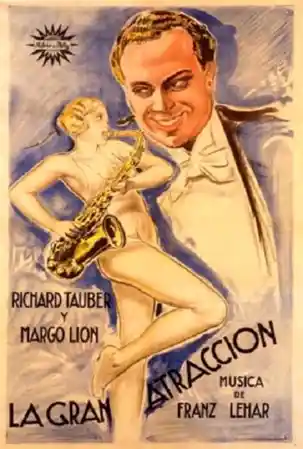
Is The Big Attraction worth finding today? Hmm. If you've got a soft spot for really old-school musical numbers, like, really old-school, and don't mind a story that feels a bit creaky around the edges, then maybe. Folks who dig into early sound films, especially those with a European flair, will probably find something to smile at here. But if you're looking for modern pacing or anything remotely resembling current storytelling, you'll probably bounce off this one hard. 🤷♀️ It’s a specific taste, for sure.
The premise is simple enough: Riccardo, played by the amazing tenor Richard Tauber, leads this traveling show. Think big numbers, lots of dancers. Kitty (Maria Elsner) sees him, hears him sing, and decides she needs to be part of that. His refusal? That's just a speed bump.
Her popping into the middle of a number at the Winter Garten is such a classic move. The way the audience just loves it, even though she's totally uninvited? That’s pure movie magic logic. You gotta just go with it. ✨ You can almost feel the movie trying to convince you this moment matters, and you know what? It mostly does.
Tauber’s voice, wow. It's the real draw here. When he sings, it's pretty clear why Kitty is so smitten. The camera doesn't always know what to do with him, sometimes just sort of *points* at him for a long, long time. But the voice itself? That's a powerhouse. Just incredible.
Maria Elsner as Kitty, she's got a certain charm. A bit impish, a bit determined. You can see her trying to navigate Riccardo’s standoffishness. She's not a shrinking violet, which is nice.
There's this whole subplot about Riccardo's secret. It’s not a huge mystery, really. But it hangs over things. It makes him seem a bit distant, which sometimes just reads as... uninterested. Like, come on, Riccardo, let loose a little! The film gets noticeably better once he stops taking himself so seriously.
Some of the musical numbers, they really feel like stage performances captured on film. Not always in a good way. Like watching a play from the back row. Other times, though, you get a glimpse of why these acts were so popular. The sheer scale of some of the dance routines is actually pretty impressive for the era.
There's a scene where Kitty is just *waiting* for Riccardo, and the camera just holds on her face. It goes on a beat too long, and you start to wonder if the director forgot to say "cut." But then it almost works, making you feel her impatience.
The supporting cast, especially Oskar Sima as the slightly exasperated manager, adds some needed comic relief. He's always bustling, always worrying. A nice counterpoint to Riccardo's brooding.
The sound quality, being from 1931, is what it is. Sometimes a bit muffled, sometimes surprisingly clear. It’s part of the experience. You adjust. You can hear the stage creak a little sometimes.
This isn't a film that tries to be deep. It’s a showcase for Tauber's singing and a simple romance. The drama is kept pretty light, even with the "secret." No profound explorations here.
I liked how they showed the troupe traveling. It's not a big focus, but those little glimpses of trains or different theaters add to the feel of a touring act. It’s a nice touch, grounding it a little. Almost a travelogue in places.
The ending, it wraps things up tidily. Maybe a bit too tidy. You kind of expect a little more dramatic fireworks, but it’s a gentle resolution. Like a soft curtain falling. A bit anticlimactic, but sweet.
Overall, it’s a peek into a different time of entertainment. Not a masterpiece, not a forgotten gem, but something to chew on if you’re curious about early musicals. You just have to meet it where it is. If you enjoy Pay Day for its historical charm, you might find something similar here.
IMDb —
1924
Community
Log in to comment.