DbcultAccessing Vault...
Cult Review
Senior Film Conservator
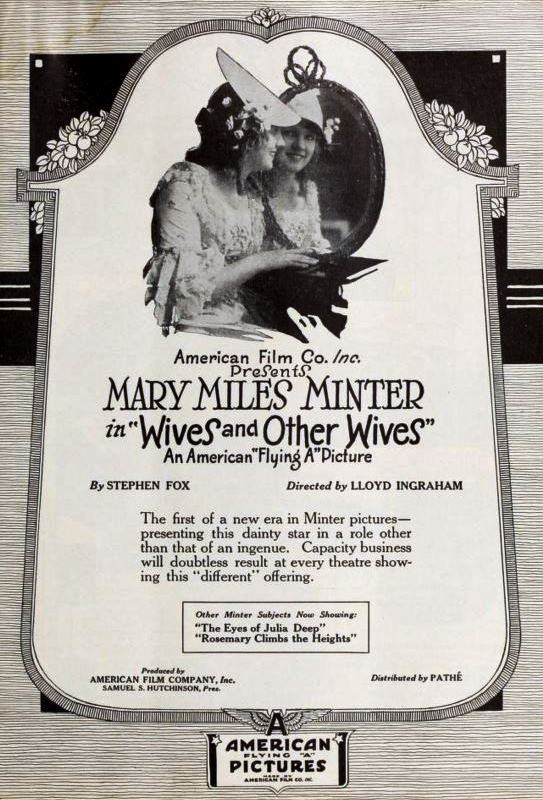
To navigate the celluloid landscape of 1918 is to witness a medium in the throes of a sophisticated adolescence. Wives and Other Wives, directed by Lloyd Ingraham and penned by the embryonic genius of Jules Furthman, stands as a fascinating specimen of the 'bedroom farce' before the Hays Code tightened its puritanical grip on Hollywood’s throat. This isn't merely a comedy of errors; it is a frantic, beautifully staged exploration of the volatility of the young American marriage, anchored by the luminescent presence of Mary Miles Minter. At a time when the industry was pivoting from the simplistic moralism seen in The Secret of the Old Cabinet toward more nuanced social satires, this film managed to weave together suspense, domestic drama, and slapstick with a dexterity that remains palpable even a century later.
The narrative engine is fueled by a trope as old as literature itself: the misunderstood letter. While modern audiences might find Geoffrey Challoner’s immediate leap to divorce somewhat histrionic, one must view it through the lens of early 20th-century melodrama. William Garwood portrays Geoffrey with a frantic energy that borders on the neurotic, providing a sharp contrast to Minter’s Robin. Robin is not the typical damsel in distress; she is a woman of action, however misguided those actions may be. When she fires that pistol at Norman Craig, the film shifts from a domestic squabble into a proto-noir suspense piece, albeit one played for laughs. It lacks the somber gravity of The Pursuing Shadow, opting instead for a pace that mirrors the quickening pulse of a city dweller caught in a web of their own making.
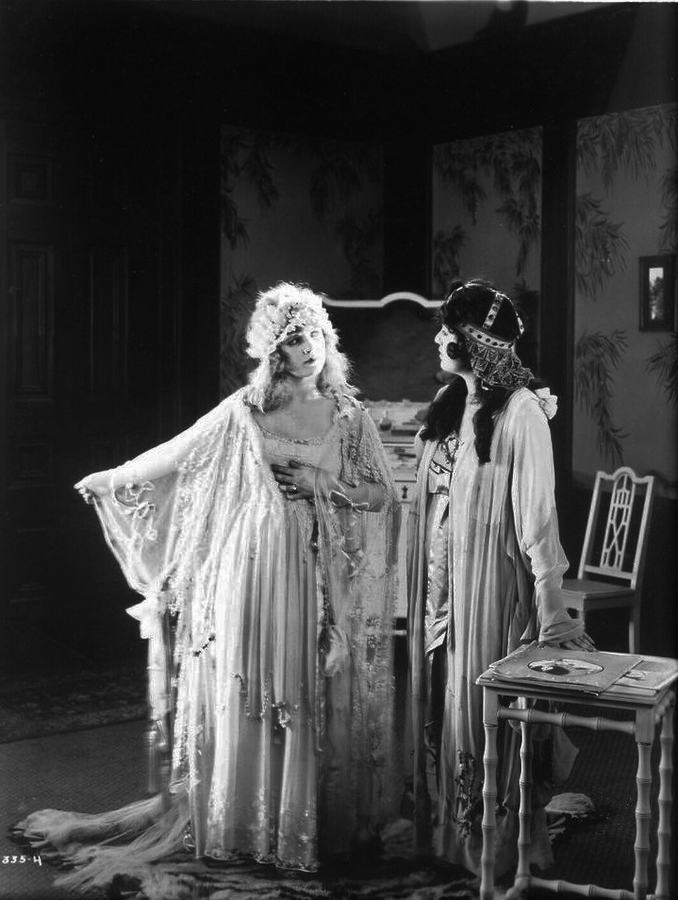
Jules Furthman, who would later go on to write masterpieces like 'The Big Sleep,' demonstrates here an early mastery of the 'overlapping' plot. The introduction of Judge Corcoran, played with a delightful, meddling gravitas by George Periolat, serves as the film’s moral and narrative anchor. The Judge’s weekend retreat functions as a microcosm where the characters' various neuroses are forced into collision. This setting is reminiscent of the social pressure cookers found in The Turmoil, though the stakes here are decidedly more intimate. The architecture of the house itself—with its multiple doors, hidden corridors, and shared balconies—becomes a character in its own right, facilitating the 'near-misses' that define the genre.
The cinematography, while constrained by the technology of 1918, utilizes depth of field in a way that emphasizes the isolation of the characters within their shared spaces. When Norman Craig (Carl Stockdale) drunkenly wanders into the wrong room, the framing captures the predatory nature of chance. It is a sequence that could have easily descended into the grotesque, yet Ingraham keeps the tone buoyant, focusing on the absurdity of the situation rather than the potential for tragedy. This tonal balance is something that many contemporary films of the era, such as The Man Who Would Not Die, often struggled to maintain.
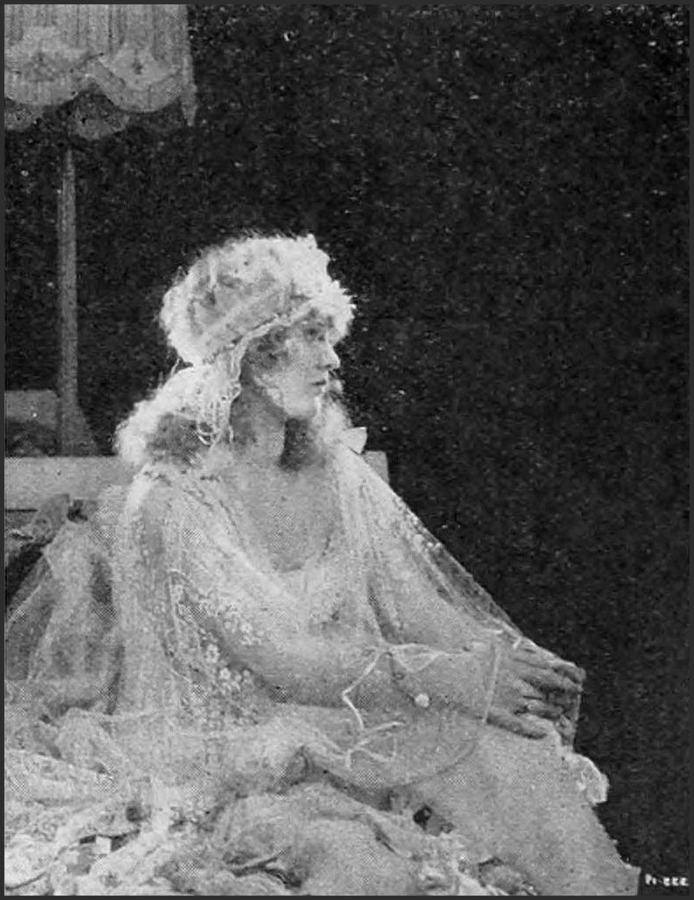
Mary Miles Minter is frequently compared to Mary Pickford, but in Wives and Other Wives, she displays a specific brand of comedic timing that is entirely her own. There is a luminous quality to her performance, a way she catches the light that makes her seem almost ethereal, yet her reactions to the chaos around her are grounded in a very human frustration. Unlike her roles in more whimsical fare like The Butterfly, here she is asked to play a woman grappling with the dissolution of her dignity. Her performance during the robbery sequence—where the maid and chauffeur attempt to capitalize on the household's disarray—is a masterclass in silent reaction. She conveys a spectrum of emotion, from terror to realization, without the need for excessive intertitles.
The inclusion of the criminal element—the domestic staff’s attempted heist—serves as a clever counterpoint to the central romantic conflict. It suggests that while the upper-middle-class protagonists are busy with their emotional theatrics, the world around them continues to operate on much more pragmatic, and often darker, motivations. This subversion of the household hierarchy is a theme that echoes through films like Indiscreet Corinne, highlighting a burgeoning interest in class dynamics within the American silent cinema.
The ultimate revelation—that the letters Robin was reading were actually Geoffrey’s own—is a stroke of narrative irony that elevates the film from a simple caper to a poignant commentary on the nature of memory and ego. It suggests that we are often the architects of our own romantic undoing, projecting our insecurities onto those we love. This psychological depth is what separates Furthman’s writing from the more procedural plots of Vendetta or the straightforward sentimentality of The Littlest Rebel. The film asks: how well do we truly know the person we share a bed with? And more importantly, how well do we know ourselves?
The reconciliation scene is handled with a surprising amount of restraint. There are no grand speeches; instead, the resolution is found in the physical proximity of the couple as they realize the absurdity of their situation. The Judge’s role in this reunion is crucial; he represents the institutional desire to maintain the status quo, yet his methods are delightfully unorthodox. This portrayal of the judiciary as a matchmaker is a trope that would be revisited in Nearly Married, reflecting a cultural obsession with the stability of the nuclear family in the wake of the Great War.
Viewing Wives and Other Wives today requires a certain amount of historical empathy, but the core of its humor is timeless. The panic of being caught in a compromising situation, the irrationality of jealousy, and the chaotic nature of chance are universal human experiences. While the film may not have the epic scale of His Holiness, the Late Pope Pius X, and the Vatican, its intimacy is its strength. It captures a specific moment in American life where the old world's manners were clashing with the new world's anxieties.
The film also serves as a reminder of the fragility of film history itself. Many of the actors, like Virginia Ware and Colin Chase, are now footnotes in the annals of Hollywood, yet here they are vital, breathing components of a complex comedic machine. Their performances, coupled with the sharp writing and confident direction, make this a must-watch for anyone interested in the evolution of the American screenplay. It lacks the bleakness of Forbandelsen or the rugged isolation of The Bushman's Bride, offering instead a sophisticated, urbanite perspective that was quite progressive for its time.
In the final analysis, Wives and Other Wives is a testament to the power of the 'small' story. It doesn't seek to explain the universe; it seeks to explain the heart of a husband and wife who have lost their way in a forest of their own making. It is a charming, witty, and surprisingly insightful piece of cinema that deserves a place in the conversation about the roots of the modern romantic comedy. Whether it's the frantic energy of the burglary attempt or the quiet realization at the end, the film remains a vibrant example of silent storytelling. It reminds us that while technology changes, the human capacity for making a mess of things—and eventually cleaning them up—remains gloriously constant. Much like the protagonist in Polly Redhead, Robin Challoner finds that her greatest strength lies in her ability to navigate a world that refuses to make sense. For those seeking a bridge between the primitive shorts of the early 1900s and the sophisticated features of the 1920s, this film is an essential, and utterly delightful, crossing.
IMDb —
1927
Community
Log in to comment.