DbcultAccessing Vault...
Cult Review
Senior Film Conservator
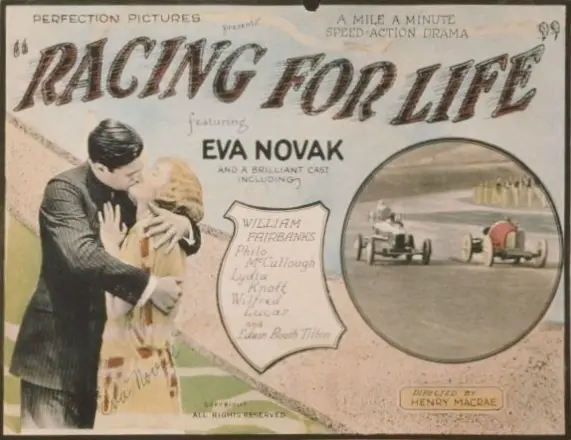
There is something inherently visceral about the way silent-era cinema approached the concept of speed. Long before CGI could manufacture the illusion of momentum, directors like Wilfred Lucas had to rely on the raw, clattering reality of steel and dust. In Racing for Life, we aren't just watching a story about a car race; we are witnessing a desperate scramble for dignity in an age where the machine was beginning to outpace the man. The film operates as a fascinating intersection between the Victorian melodrama of the previous century and the burgeoning industrial anxiety of the 1920s.
The narrative scaffolding of Racing for Life is built upon the crumbling foundations of the Danton estate. Edwin B. Tilton plays the elder Danton not as a caricature of a failed businessman, but as a man whose very identity is fused with the mechanical prowess of his racing team. When his star driver vanishes, it isn't just a professional setback; it’s a death knell for his social standing. This sense of impending doom mirrors the domestic fragility we see in films like The Desired Woman, where the stability of the household is constantly threatened by external financial pressures and internal moral lapses.
Enter Jack Grant, played by the formidable William Fairbanks. Fairbanks brings a physical gravitas to the role that distinguishes him from the more ethereal leading men of the era. He is a man of action, yet his motivations are deeply internal. The deal he strikes with Danton—to race in exchange for his brother’s freedom—elevates the film from a simple sports flick to a heavy-handed morality play. It’s a classic trope, yet Lucas handles it with a sincerity that prevents it from feeling derivative. We see echoes of this fraternal sacrifice in many contemporary works, though few capture the gritty desperation of the racetrack quite like this.
Eva Novak, as Grace Danton, provides the emotional North Star for the film. In an era where female roles were often relegated to the background, Novak manages to imbue Grace with a sense of agency, even within the confines of the plot's patriarchal demands. Her chemistry with Fairbanks is palpable, even through the flickering grain of a century-old print. While her character might seem less complex than the protagonists in Daddy-Long-Legs, Novak’s performance relies on a subtle, expressive language of glances and gestures that speaks volumes about her character's inner turmoil.
Wilfred Lucas, primarily known for his work with D.W. Griffith, brings a sophisticated understanding of pacing to the table. He knows exactly when to tighten the frame and when to let the landscape breathe. The way he captures the cars—monstrous, smoking entities of iron—suggests a director who was enamored with the technology of his time. The cinematography doesn't just record the race; it participates in it.
The second act takes a sharp turn into the realm of the thriller. Jack’s abduction by his own brother is a narrative pivot that adds a layer of psychological complexity. It’s not just a physical kidnapping; it’s a betrayal of blood. The tension here is reminiscent of the burgeoning suspense techniques seen in early Hitchcockian efforts like Blackmail, although Lucas leans more into the rugged, outdoor adventure style that was Fairbanks' trademark. The escape sequence is choreographed with a rugged efficiency—no wasted movements, just the raw determination of a man who has everything to lose.
The casting of Frankie Darro as a younger presence adds a touch of vulnerability to the ensemble. Darro, who would go on to have a prolific career, already shows the spark of the emotive power that made him a staple of the B-movie circuit. His presence reminds the audience of the stakes involved; this isn't just about Jack or Danton, but about the future generations caught in the crossfire of these adult machinations. It’s a thematic depth often found in the more social-conscious films of the time, such as Mothers of Men.
Technically, Racing for Life is a marvel of its period. The use of real locations and the involvement of professional drivers like Ralph De Palma lend an air of authenticity that studio-bound productions of the time simply couldn't replicate. The camera mounts on the cars—primitive by today's standards—provide a jarring, shaky perspective that places the viewer directly in the cockpit. This was the VR of 1924. When the cars skid around the dirt turns, you can almost feel the grit in your teeth.
Compare this to the more lyrical, staged movements in a film like Ruslan i Lyudmila, and you see the divergence in global cinema. While the Soviets were exploring montage and myth, the Americans were perfecting the art of the high-octane spectacle. Lucas manages to bridge these worlds by keeping the emotional stakes high while the speedometers climb. The editing during the final race is particularly noteworthy, cutting between the straining faces of the spectators and the blur of the wheels with a rhythmic precision that prefigures the modern action movie.
William Fairbanks was often overshadowed by his cousin Douglas, but in Racing for Life, he proves himself a master of the understated hero. Jack Grant isn't a swashbuckler; he’s a grease-monkey with a soul. This groundedness makes his eventual triumph feel earned rather than ordained. His character arc—from a man burdened by his brother's sins to a champion in his own right—is a classic American narrative. It’s the story of the self-made man, a theme that resonates through other films of the era like St. Elmo, where moral redemption is the ultimate finish line.
The supporting cast, including the likes of Philo McCullough and Edgar Kennedy, provide the necessary friction to keep the plot moving. Kennedy, in particular, offers a glimpse of the character acting that would make him a legend in the sound era. Here, his performance is more restrained, fitting the somber undertones of the Danton family's crisis. Even the minor roles, such as those played by Lydia Knott and Harry La Verne, contribute to a sense of a lived-in world, a community where everyone has a stake in the outcome of the race.
When we place Racing for Life alongside other films from the early 20s, its unique flavor becomes more apparent. It lacks the whimsical charm of Peg o' My Heart, opting instead for a gritty realism. It doesn't possess the gothic atmosphere of The Secret of the Swamp, yet it shares a similar interest in how environment shapes character. The racetrack is as much a character as Jack or Grace; it is a fickle god that demands sacrifice before it grants glory.
In many ways, the film is a precursor to the modern sports drama. It understands that the sport itself is secondary to the human drama unfolding in the pits. This is a lesson that many contemporary filmmakers still struggle to learn. By centering the conflict on Jack’s brother and Danton’s debts, Lucas ensures that every lap of the race has weight. We aren't just rooting for a car to cross a line; we are rooting for a family to be saved from the brink of destruction. This thematic density is what separates a mere entertainment from a work of lasting interest, much like the social critiques found in The Average Woman.
As the final frames of Racing for Life flicker to a close, the viewer is left with a profound sense of satisfaction. It is a film that fulfills its promises. It delivers the thrills, the romance, and the moral resolution that the audience of 1924 craved. But more than that, it stands as a testament to the ingenuity of early filmmakers. Without the benefit of modern sound or digital effects, they were able to create a world that feels urgent and alive.
The film’s exploration of honor and the lengths one will go to protect their kin remains timeless. Whether it's the high-stakes world of 1920s racing or the domestic dramas of Gyermekszív, the core human emotions remain unchanged. Wilfred Lucas may not be a household name today, but in Racing for Life, he left behind a vibrant, kinetic piece of history that deserves to be seen by more than just film historians. It is a reminder that cinema, at its heart, has always been about the race—the race for love, the race for survival, and the race for life itself.
In the end, Jack Grant’s victory is our own. We have navigated the treacherous turns of betrayal and the high-speed hazards of the track alongside him. As he takes Grace’s hand, the roar of the engines fades, leaving us with the quiet realization that some things are worth more than any trophy. It’s a sentiment that echoes through the halls of cinema, from the dusty tracks of 1924 to the neon-lit races of today.
Final Verdict: A high-octane relic that still manages to pulse with genuine human emotion. A must-watch for fans of silent-era action.
IMDb 5.7
1929
Community
Log in to comment.