DbcultAccessing Vault...
Cult Review
Senior Film Conservator
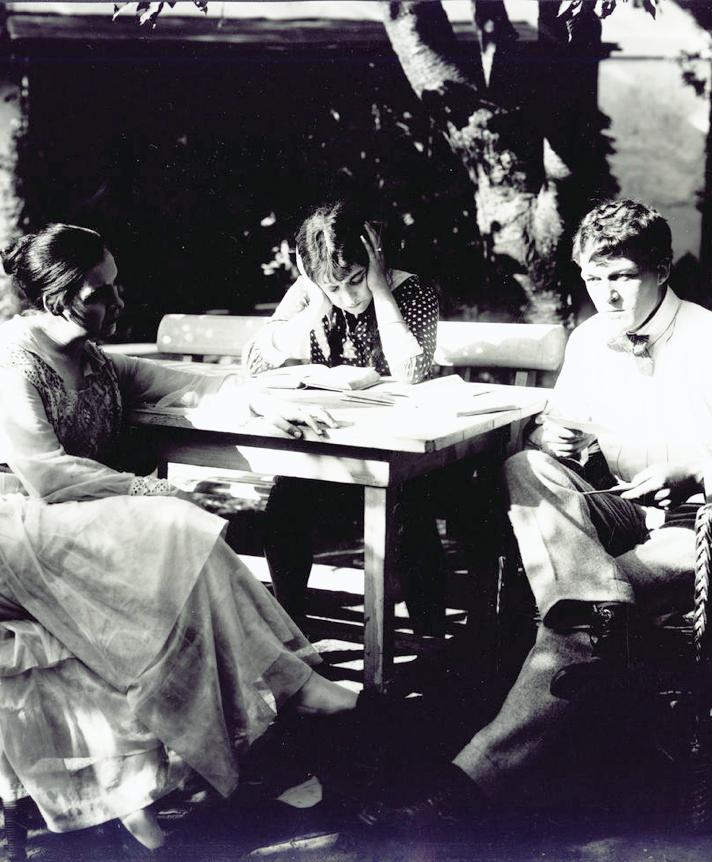
In the annals of early Danish cinema, Valdemar Andersen’s ‘Solskinsbørnene’ emerges not merely as a relic of a bygone era, but as a surprisingly prescient sociological study, cloaked in the dramatic conventions of its time. This isn't just a film; it's a window into the human condition, specifically as it manifests within the often-misunderstood world of the affluent. The title itself, roughly translating to 'Sunshine Children,' hints at a superficial brightness that belies the complex emotional currents churning beneath the surface of its characters' lives. What Andersen delivers is a nuanced portrayal of the good and bad days experienced by those who, by societal standards, seemingly have it all.
The film’s genius lies in its refusal to either demonize or lionize its well-heeled protagonists. Instead, it observes with a keen, almost anthropological eye, the specific anxieties and joys that accompany a life of privilege. We are not presented with caricatures of wealth, but with individuals grappling with universal emotions – love, loss, ambition, despair – filtered through the unique lens of their social standing. The 'good days' are often marked by lavish social gatherings, effortless travel, and the quiet satisfaction of maintaining a respectable facade, yet even these moments are tinged with the subtle pressures of expectation and the ever-present threat of scandal or financial downturn. Conversely, the 'bad days' are rarely catastrophic in the melodramatic sense, but rather a slow erosion of comfort, a public humiliation, or an internal crisis that, for these characters, feels as devastating as any more overt tragedy.
Andersen, as a writer, appears to have possessed an acute understanding of the delicate balance between appearance and reality in high society. The narrative, while not explicitly detailed in its surviving plot summary, surely navigates the treacherous waters of social standing, where a misstep can unravel years of careful cultivation. It's a world where emotional displays are often subdued, replaced by polite smiles and knowing glances, making the silent film medium particularly effective in conveying unspoken tensions and internal turmoil. The camera becomes a conspirator, allowing us to peer beyond the polished exteriors into the restless souls beneath. This thematic depth sets 'Solskinsbørnene' apart from more simplistic morality plays of the era, elevating it to a contemplative piece on the human condition.
Consider, for a moment, how this film might resonate with contemporary audiences. Despite the century that separates us, the anxieties of status, the pursuit of happiness, and the inherent fragility of even the most seemingly stable lives remain profoundly relevant. Andersen’s work prefigures later cinematic explorations of class and internal struggle, demonstrating a sophistication in storytelling that was ahead of its time. While other films of the period might have focused on overt crime, like Stop Thief!, or the stark contrasts of poverty, such as The Waifs, 'Solskinsbørnene' opts for a more introspective, psychological approach, examining the internal landscape of its characters rather than their external circumstances alone.
The success of any silent film hinges significantly on the expressive capabilities of its cast, and 'Solskinsbørnene' appears to have been blessed with a formidable ensemble. Karen Caspersen, a name synonymous with early Danish cinema, likely brought her characteristic intensity and nuanced understanding of character to the role. Her ability to convey complex emotions through gesture and facial expression would have been paramount in depicting the internal struggles of a well-to-do individual navigating life's peaks and troughs. One can imagine her portrayal of quiet dignity amidst adversity, or the subtle glimmer of joy during a moment of triumph, captivating audiences with her silent eloquence.
Ilse Morssing, another prominent figure, would have complemented Caspersen's performance, perhaps embodying a younger, more impetuous character, or a contrasting figure whose journey highlights the film's central themes. The interplay between these leading ladies would have formed the emotional core of the narrative, each contributing a distinct hue to Andersen’s cinematic palette. Their silent dialogues, conveyed through the language of the body and the eyes, would have been crucial in building the intricate relationships central to the plot.
Peter Malberg, a veteran of the stage and screen, undoubtedly lent his gravitas and experience to a pivotal male role. Malberg possessed a remarkable range, capable of portraying both comedic lightness and profound dramatic depth. In 'Solskinsbørnene,' he might have been cast as the patriarch, burdened by the responsibilities of his position, or a suitor whose fortunes fluctuate with the film’s narrative tide. His presence alone would have anchored the film, providing a steady counterpoint to the more volatile emotions of other characters. Similarly, Kate Fabian, known for her strong character portrayals, would have delivered a memorable performance, perhaps as a formidable matriarch or a shrewd socialite, her every glance laden with unspoken meaning.
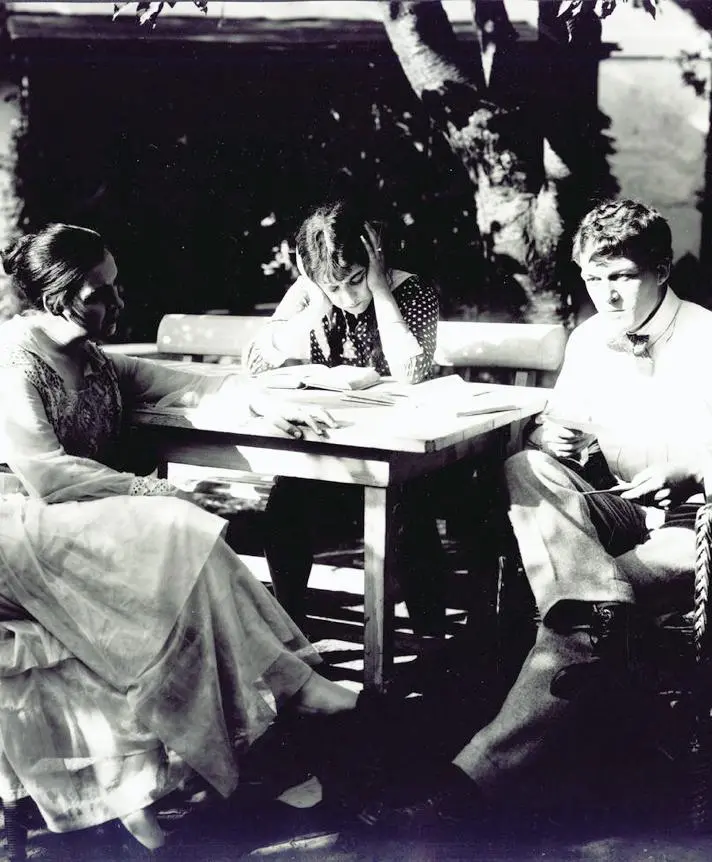
The supporting cast, featuring talents like Charles Wilken, Lizzie Ruge, Kai Heimann, Ulla Nielsen, Thorleif Lund, and Bertel Krause, would have filled out Andersen's world with authentic, believable personalities. Each actor, in their respective roles, no matter how minor, contributes to the overall verisimilitude of the film’s universe. Wilken, with his often stern demeanor, could have represented an authoritative figure or a stern family member, while Ruge might have brought a touch of youthful exuberance or innocence. Heimann, Nielsen, Lund, and Krause, all accomplished performers, would have skillfully navigated the non-verbal demands of silent acting, their collective efforts weaving a rich tapestry of human interaction that feels both specific to its time and universally resonant.
While specific directorial techniques for 'Solskinsbørnene' are not extensively documented, one can infer from the thematic complexity that the direction would have been meticulous. Silent film directors often relied heavily on mise-en-scène to convey meaning, employing elaborate sets, costumes, and props to establish character and atmosphere. For a film about the well-off, this would have translated into opulent interiors, elegant attire, and carefully chosen details that subtly communicate social status and personal taste. The use of lighting, too, would have been crucial – perhaps soft, diffused light for moments of domestic bliss, contrasting with sharper, more dramatic shadows during periods of crisis or emotional turmoil.
The pacing of the narrative would have been another key element. Silent films often employed a deliberate rhythm, allowing audiences to absorb the visual information and the emotional beats without the distraction of dialogue. Intertitles, sparingly used, would have provided essential plot points or character thoughts, guiding the audience through the story without over-explaining. The editing, therefore, would have been instrumental in maintaining narrative flow and building dramatic tension, ensuring that each scene contributed meaningfully to the overarching theme of life’s unpredictable ebb and flow. This approach to storytelling, focusing on visual narrative and emotional nuance, can be seen as a precursor to the more sophisticated psychological dramas that would emerge in later decades, distinguishing it from more action-oriented films like The Lone Star Rush.
'Solskinsbørnene' arrived during a vibrant period for Danish cinema, a time when the industry was producing a significant volume of films that found international audiences. This era, often overshadowed by its Swedish counterparts or the burgeoning Hollywood machine, nonetheless cultivated a distinct aesthetic, characterized by strong performances and often morally complex narratives. Valdemar Andersen’s contribution to this landscape, particularly with a film exploring the nuanced tribulations of the elite, offers a valuable counterpoint to the more common melodramas or adventure serials.
The film’s focus on the inner lives of its characters, rather than external spectacle, places it in a lineage with other thoughtful European productions of the time. While not directly comparable in plot, the thematic weight and character-driven approach might draw parallels to films like Die Insel der Seligen or Die liebe der Bajadere, which also delved into complex human relationships and societal expectations, albeit in different cultural contexts. It’s a testament to the universality of human experience that a film from over a century ago, with its specific cultural setting, can still speak volumes about the timeless challenges of existence, regardless of one's material comforts.
The exploration of societal pressures and personal integrity within a privileged setting also brings to mind the moral dilemmas often central to films like The Victory of Virtue or The Symbol of Sacrifice, though 'Solskinsbørnene' likely presents these struggles with a more understated elegance. Instead of overt declarations of right and wrong, we are probably shown the subtle compromises and quiet acts of defiance that define character when the stakes are not merely survival, but the preservation of one’s social standing and inner peace. This makes the film a compelling study in the psychology of reputation and the quiet battles waged within the confines of domesticity.
For modern audiences, the opportunity to re-evaluate 'Solskinsbørnene' is a rare treat. It offers a chance to appreciate the artistry of early filmmakers who, without the aid of sound or advanced visual effects, crafted narratives that were emotionally resonant and intellectually stimulating. The film’s longevity, even in its possibly fragmented state, speaks to the enduring power of its themes and the timeless appeal of well-crafted storytelling. It reminds us that cinema, from its earliest days, was not just about spectacle but also about introspection, about holding a mirror up to society and reflecting its complexities.
In a world often obsessed with the superficial trappings of success, ‘Solskinsbørnene’ serves as a gentle yet profound reminder that true happiness and sorrow transcend economic boundaries. It’s a film that asks us to look beyond the glittering facades and to recognize the shared humanity that unites us all, regardless of our station in life. Its exploration of 'good and bad days' becomes a universal metaphor for the human journey, a testament to the fact that even those basking in perpetual 'sunshine' are not immune to the occasional cloudburst. This nuanced perspective is what makes Valdemar Andersen’s 'Solskinsbørnene' a significant, if perhaps overlooked, piece of cinematic history, deserving of renewed attention and appreciation for its insightful portrayal of life's intricate dance between joy and despair.

IMDb —
1920
Community
Log in to comment.