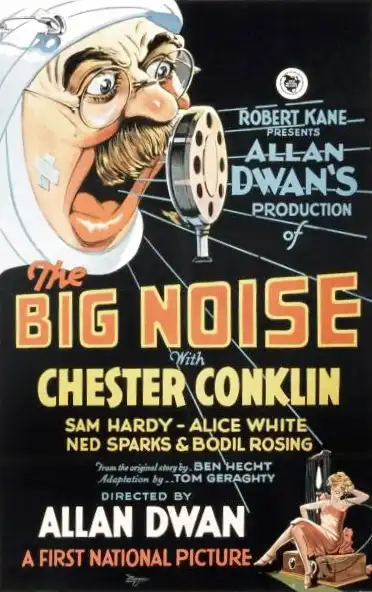
A definitive 6.4/10 rating for a film that redefined the boundaries of cult cinema. The Big Noise remains a cornerstone of transgressive art.
Is Allan Dwan’s 1928 feature, The Big Noise, worth seeking out today? For most casual viewers, probably not. Its narrative pace, common for its era, will feel sluggish, and its dramatic stakes often register as quaint rather than compelling. However, for those with a keen interest in early American cinema, the careers of its specific cast members like Ned Sparks and Alice White, or a fascination with cinematic depictions of 1920s New York City and Coney Island, there are certainly moments of historical curiosity. Modern audiences accustomed to rapid-fire storytelling and nuanced character development will likely find it a patience test.
Performances: Glances, Grimaces, and Gumption
The film’s emotional core, such as it is, rests heavily on the shoulders of its lead performers, often relying on broad gestures and expressive facial work typical of the late silent era. Ned Sparks as John Stoval, the conniving subway guard, is perhaps the most distinctive presence. Sparks, known for his deadpan, often melancholic delivery in later sound films, here communicates much through a series of world-weary glances and a perpetually slumped posture. His avarice for the Coney Island concession is clear in every calculating look he directs at Philip Hurd, even if his attempts to manipulate Sophie feel more like persistent nagging than genuine paternal concern. It’p a performance that verges on caricature but hints at the more subdued, iconic persona he would later perfect.
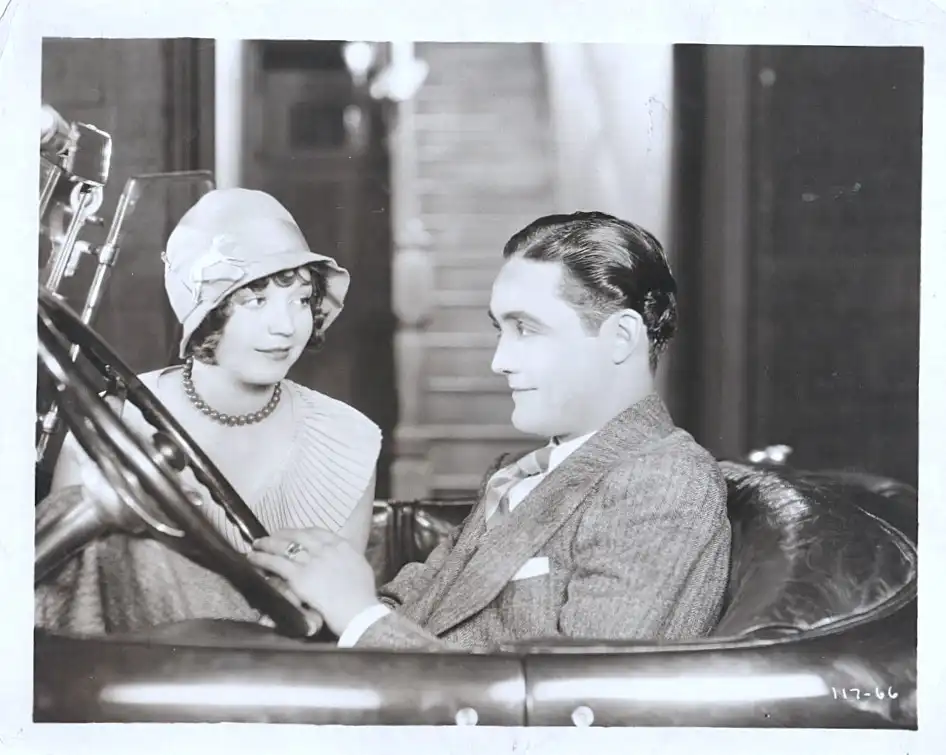
Scene from The Big Noise
Cinematic perspective: Exploring the visual vocabulary of The Big Noise (1928) through its definitive frames.
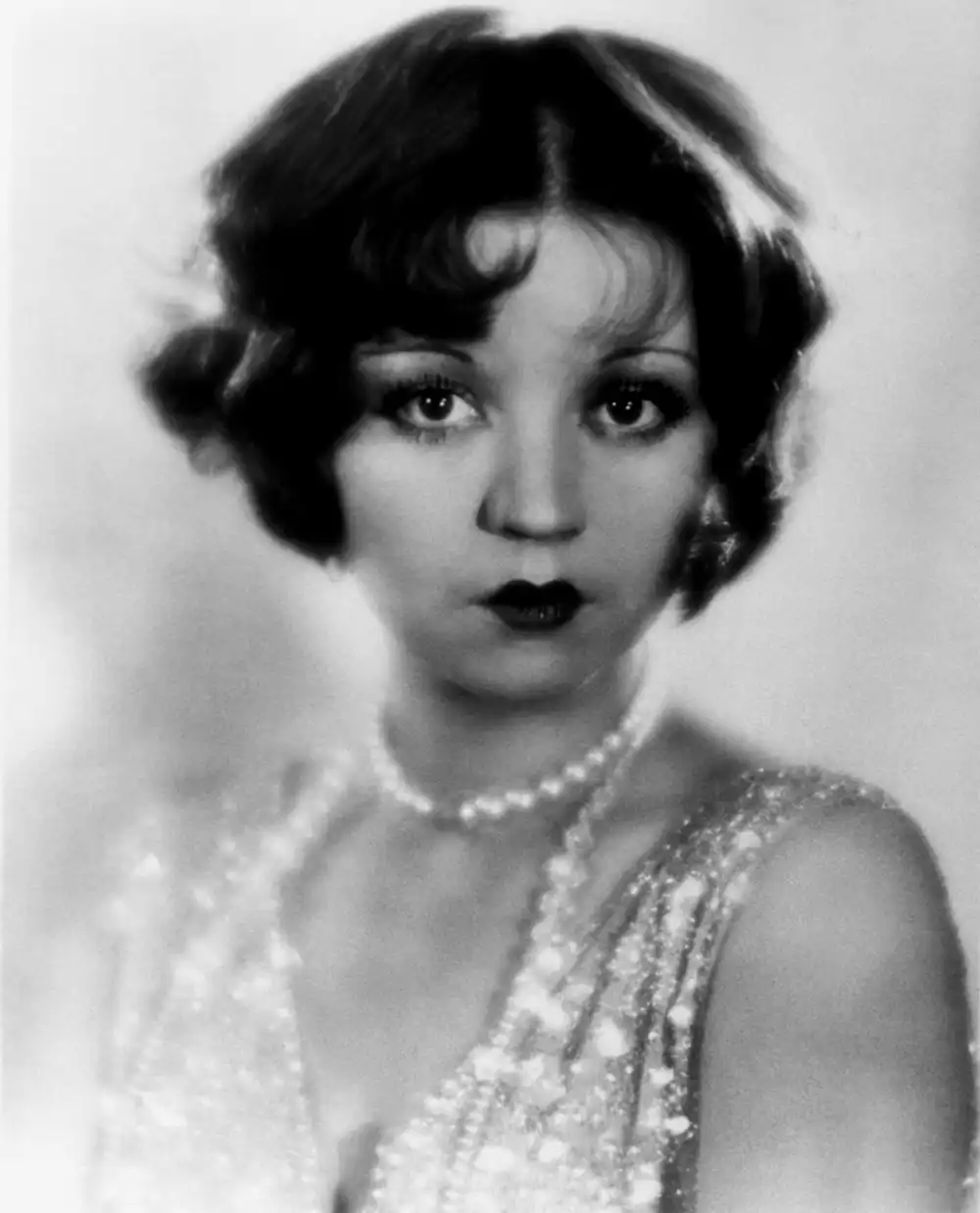
Alice White, as Sophie, embodies the spirited young woman caught between duty and desire. Her performance is energetic, if a little one-note. She carries a certain youthful vivacity, particularly in scenes where she subtly rebels against her father's schemes. Watch the way she deliberately turns her back on Hurd during their forced interactions, or the barely perceptible eye-roll she delivers when her father starts extolling Hurd's virtues. These small, physical rejections are more effective than any intertitle could convey. Her chemistry with Jack Egan as Bill Hedges is rudimentary, built on shared smiles and longing glances, but it serves its purpose in establishing a clear romantic alternative.
Sam Hardy as Philip Hurd, the unfortunate suitor, plays the role with a blend of eager ambition and a slightly bewildered sincerity. He’s not a villain, just a man oblivious to Sophie’s true affections, making his pursuit feel more pathetic than predatory. The film doesn't give him much room for complexity, portraying him mostly as a pawn in John Stoval's larger game.
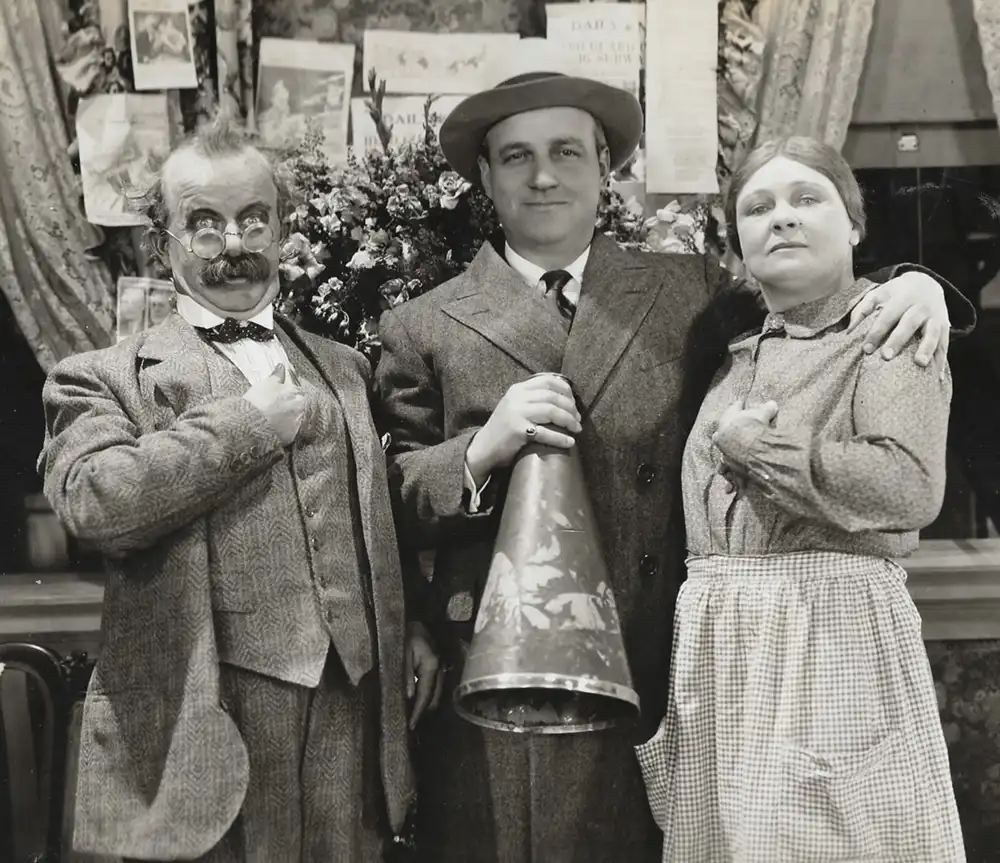
Scene from The Big Noise
Cinematic perspective: Exploring the visual vocabulary of The Big Noise (1928) through its definitive frames.
Pacing and Tone: A Stuttering Rhythm
The Big Noise moves at a pace that often feels dictated by the need to fill screen time rather than propel the narrative forward. The setup of John Stoval's scheme, for instance, involves several protracted scenes of negotiation and exposition that could have been condensed. There are moments, particularly in the domestic scenes within the Stoval apartment, where the action stalls, relying on extended reaction shots or repetitive visual cues to convey character thoughts. This isn't inherently bad for a silent film, but here it often lacks the visual dynamism needed to sustain interest.
The film's tonal shifts are also notable. It attempts a blend of domestic drama, light comedy, and even a touch of slapstick, especially around the pivotal subway accident. The scene where John Stoval slips from the platform is staged with a surprising abruptness that cuts through the preceding domestic tedium. It’s a moment of genuine, albeit brief, shock that momentarily injects urgency into the narrative, even if the subsequent scenes of his recovery feel drawn out.
Scene from The Big Noise
Cinematic perspective: Exploring the visual vocabulary of The Big Noise (1928) through its definitive frames.
The contrast between the bustling, vibrant Coney Island backdrop and the more confined, static interior scenes is striking. The film seems to breathe more freely when it allows its characters to move through the crowds and attractions of the amusement park, lending a sense of authenticity to the setting that the more stagey apartment scenes lack.
Visual Style: Glimpses of a Bygone Era
Dwan's direction is competent but rarely inspired. The cinematography is functional, serving to capture the performances and locations without much stylistic flourish. However, it’s in its depiction of New York City and Coney Island that The Big Noise truly shines as a historical document. The shots of the subway are particularly evocative, capturing the grit and daily grind of the city's underbelly. The crowd scenes at Coney Island are a chaotic delight, filled with period-appropriate costumes and attractions that offer a fascinating window into leisure activities of the late 1920s. You can almost feel the energy of the crowds, a detail that feels genuinely observed rather than merely staged.
There’s a particular shot during a Coney Island sequence where Sophie and Bill are trying to avoid her father, blending into a swirling mass of people. The camera holds, allowing the sheer density of the crowd to become a character in itself, momentarily dwarfing the protagonists and emphasizing their small rebellion within a vast urban landscape. It’s a small detail, but one that grounds the film in its specific time and place more effectively than any dialogue card.
Strengths and Weaknesses: A Mixed Bag
Strengths:
Historical Snapshot: The film offers a valuable visual record of 1920s New York City, particularly the subway and Coney Island, which is its most enduring appeal.
Ned Sparks' Early Work: His performance, even in this nascent stage of his career, offers a compelling preview of his unique screen persona.
Momentary Energy: The subway accident and the Coney Island sequences provide pockets of genuine visual and narrative interest.
Weaknesses:
Dated Pacing: The overall rhythm will test the patience of many modern viewers, with several scenes feeling unnecessarily prolonged.
Thin Characterization: Beyond basic motivations, most characters lack significant depth, making their struggles feel less impactful.
Predictable Plot: The narrative follows a well-worn path, offering few surprises beyond the initial inciting incident.
Tonal Inconsistencies: The shifts between lighthearted romance, domestic drama, and sudden physical comedy aren't always gracefully handled.
Final Verdict: For the Curious, Not the Casual
Ultimately, The Big Noise isn't a lost masterpiece, nor is it a particularly revelatory early work from Allan Dwan. It exists as a competent, if unremarkable, example of late silent-era filmmaking. Its primary value today lies in its historical context and as a curio for those interested in the evolving landscape of American cinema. It’s a film to be appreciated more for its glimpses into a bygone era and the developing craft of its actors than for any profound narrative or stylistic innovation. For the dedicated film historian or the specific enthusiast, it might be worth a look; for everyone else, there are countless other films from the period that offer a more engaging or artistically significant experience.