DbcultAccessing Vault...
Cult Review
Senior Film Conservator
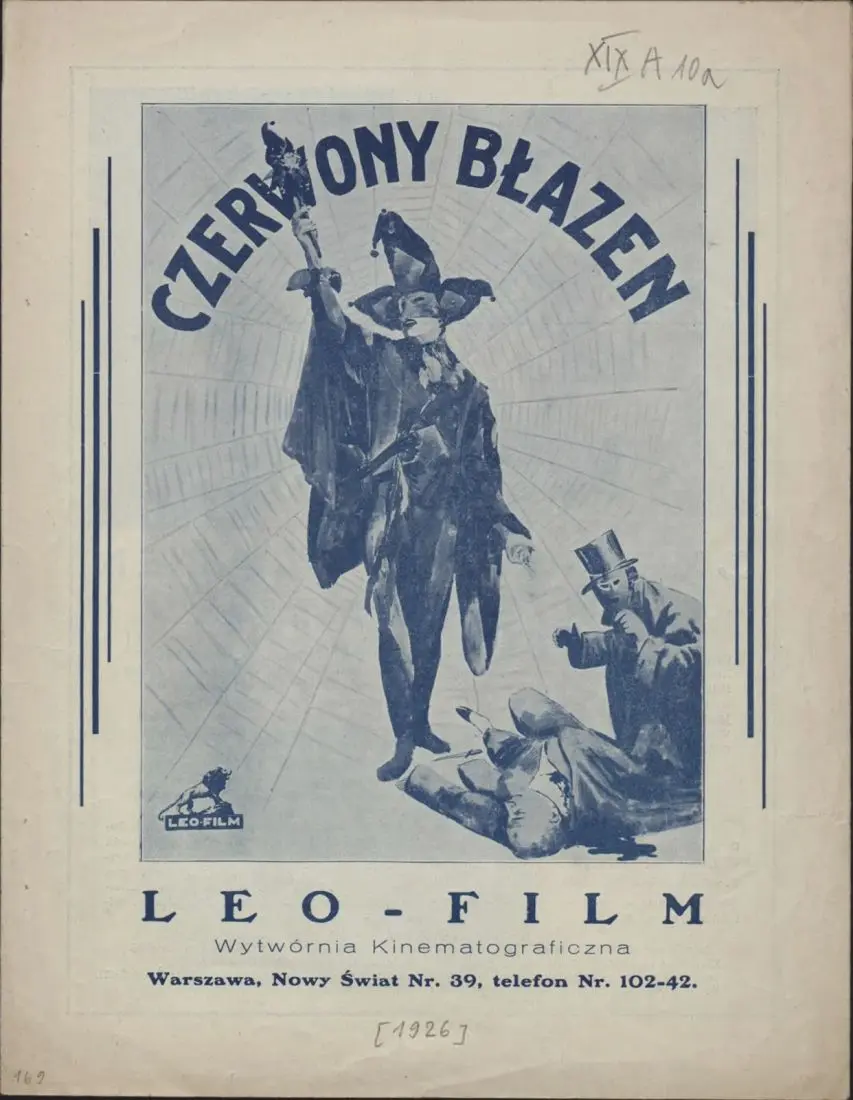
Should you seek out Czerwony błazen in the modern era? Short answer: yes, but only if you are willing to trade modern pacing for a thick, atmospheric dread that few contemporary films can replicate. This is a film for the cinematic archeologist and the lover of dark, European aesthetics; it is not for the casual viewer looking for a light popcorn flick.
This 1926 production stands as a monumental pillar in the history of Polish cinema, bridging the gap between theatrical melodrama and the emerging language of film noir. It is a gritty, often uncomfortable look at the intersection of fame, crime, and class warfare. If you have previously explored works like Trilby, you will recognize the fascination with psychological manipulation that permeates this era.
1) This film works because it utilizes the 'Jester' motif as a terrifying psychological mirror for the characters' own guilt.
2) This film fails because the middle act leans too heavily on theatrical blocking, occasionally losing the kinetic energy of the opening murder.
3) You should watch it if you want to see the legendary Eugeniusz Bodo and Adolf Dymsza in a roles that prioritize tension over their later comedic personas.
Czerwony błazen is absolutely worth watching for anyone interested in the evolution of the mystery genre. It provides a rare glimpse into the high-production values of the interwar Polish film industry. While some of the acting styles may feel heightened to modern eyes, the core tension of the 'Red Jester's' presence remains genuinely unsettling. It is a vital piece of cultural history that functions as a dark time capsule.
Henryk Szaro was a director who understood the power of the frame better than most of his contemporaries. In Czerwony błazen, he doesn't just record a play; he creates a visual world where the architecture of the theater becomes a prison. The use of low-angle shots during the Jester's appearances creates a sense of looming inevitability. It reminds me of the claustrophobic ship interiors in The Ship of Doom, where the environment itself feels like an antagonist.
Take, for example, the scene where the investigation first enters the backstage area. The shadows are long, jagged, and unmistakably influenced by German Expressionism. This isn't the bright, optimistic world of The Palm Beach Girl. This is a world of ink and soot. Szaro uses the contrast of the white clown makeup against the deep blacks of the velvet curtains to create a visual shorthand for the duality of his characters. It is simple. It is effective. It is brutal.
The ensemble gathered here is a 'who's who' of Polish cultural history. Seeing Eugeniusz Bodo and Adolf Dymsza share a screen in 1926 is like watching a young De Niro and Pacino. Dymsza, who would later become the king of Polish comedy, shows a surprising range here, grounding the more fantastical elements of the plot. His performance is a sharp contrast to the more stylized work found in Ihre Hoheit.
Wanda Smosarska, often called the 'queen of the Polish screen,' brings a level of pathos to the film that prevents it from becoming a mere 'whodunit.' Her ability to convey complex internal trauma through nothing but her eyes is a testament to the power of silent acting. When compared to the performances in The Artist's Model, Smosarska feels decades ahead of her time. She doesn't just play a victim; she plays a woman trapped by her own social standing.
The film’s greatest challenge is its middle section. Like many films of the mid-20s, including Dombey and Son, Czerwony błazen occasionally gets bogged down in the intricacies of its own plot. The transition from the high-stakes opening to the methodical police work can feel jarring. However, Szaro keeps the audience engaged by peppering the investigation with flashbacks that feel like fever dreams.
These flashbacks are where the film truly shines. They break the linear progression and allow for more experimental cinematography. We see the events leading up to the crime not as objective facts, but as distorted memories. This subjective storytelling was quite radical for 1926. It moves the film away from the simple morality of The Power Within and into a grey area where everyone is a suspect and no one is truly innocent.
The atmospheric lighting is some of the best in 1920s European cinema. The performances from Bodo and Smosarska are legendary for a reason. The film's ending is surprisingly cynical and avoids the easy 'happy ending' tropes found in contemporary American films like A Hickory Hick.
The print quality of surviving versions can be a barrier for some. The narrative complexity sometimes requires a second viewing to fully grasp the web of relationships. It lacks the breezy charm of something like Nerve Tonic, opting instead for a relentless somberness.
Most critics focus on the mystery, but the real star of Czerwony błazen is the class resentment. There is a palpable anger beneath the surface of this film. The Jester isn't just a killer; he is a symbol of the lower classes looking back at the elite with a mocking, blood-red grin. It’s a political statement disguised as a thriller. In that sense, it has more in common with the social commentary of A City Sparrow than it does with a standard detective story.
The film also makes a fascinating use of silence—obviously, it's a silent film—but Szaro directs in a way that emphasizes the 'quiet' parts of the theater. The empty seats, the dust motes in the spotlight, the stillness of the dressing rooms. It creates a vacuum that the Jester eventually fills. It is a masterclass in building tension through absence.
Czerwony błazen is a flawed but essential piece of cinema. It is a bridge between the old world and the new. It lacks the polish of modern thrillers, but it possesses a soul and a darkness that most CGI-heavy blockbusters can't touch. It works. But it’s flawed. It demands your attention and rewards it with a haunting, lingering image of a man in a red mask laughing at the world's vanity. If you enjoyed the structural risks of The Highest Trump or the tonal shifts of Bubbles, this is an mandatory addition to your watchlist. It remains one of the most significant achievements of Henryk Szaro, a director whose vision was cut tragically short by history.

IMDb 6.3
1936
Community
Log in to comment.