DbcultAccessing Vault...
6.7/10
Senior Film Conservator
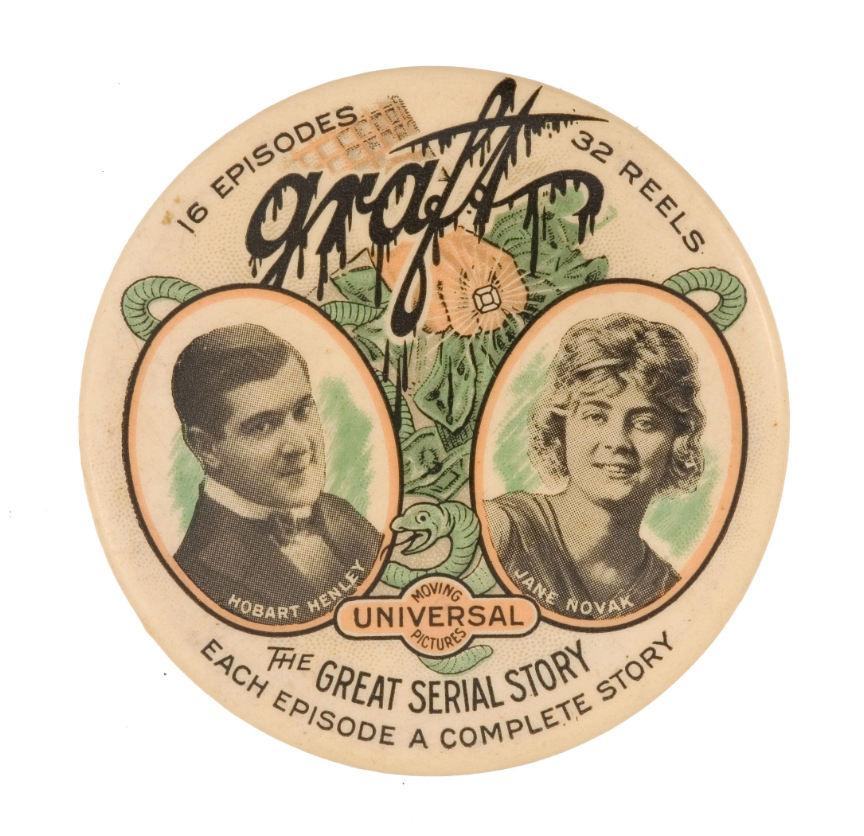
A definitive 6.7/10 rating for a film that redefined the boundaries of cult cinema. Graft remains a cornerstone of transgressive art.
There are films you watch; then there are celluloid infections that watch you long after the carbon arc has cooled. Graft—that curious, hydra-headed artifact from Mutual’s 1915 stable—belongs to the latter species. Shot through with the clamor of eighteen (yes, count them) pulp luminaries, it is less a narrative than a municipal autopsy performed in public, every incision releasing the stench of a democracy gone gangrenous.
Forget the tidy three-act scaffolding preached in screenwriting primers. Graft unfurls like a sheaf of overlapping broadsheets hurled into a November gale: headlines, affidavits, saloon gossip, hospital charts, all swirling until the ink smears into a single monochrome indictment. The nominal spine—hospital contract secured via bribery—functions as a clothesline from which director George Lessey hangs a city’s wardrobe of skeletons. We open on a waterfront carnival at dusk; a marching brass band heralds civic progress while pickpockets work the crowd like concert pianists. In under forty seconds, cross-cuts juxtapose aldermen clinking champagne flutes with a tenement child coughing blood into a tin pail. The montage is Eisenstein before Eisenstein, minus the Marxist optimism.
Elise Brandt’s arrival aboard the S.S. Sybarite provides our Trojan horse. Mina Cunard plays her with the wary languor of a woman who has already learned that American liberty often ends at the garment-factory timecard. She steps down the gangplank in a dove-grey traveling suit, eyes flicking past the brass band to the soot-caked façades—an understated performance that speaks volumes once you realize every extra on the pier was a real docker hired at half-day wages to lend muskrat authenticity. Elise carries an envelope destined for Dr. Clifford Forrest, a letter of introduction inked by a Viennese surgeon whose clinic was shuttered after an Archduke’s assassination. That geopolitical echo is no accident; even in 1915, the film insists, corruption is an import-export commodity.
Burton Law’s Forrest is the film’s dark star—a man who can hold a scalpel steady while his soul jitters like a seismograph. Law, primarily a stage tragedian, brings a tremor of Hamlet to what might have been a mustache-twirling cad. Notice how he pockets his surgical gloves: thumb and forefinger form a neat square, fastidious even in contamination. In the operating amphitheater, he lectures interns on sterilization while privately auctioning bedspace to Morse’s construction cartel. The contradiction is never underlined by florid intertitles; instead, cinematographer Max Schneider’s camera lingers on a nurse’s cracked boots, the rust on the gurney wheel, the beads of mercury sliding off a thermometer—visual footnotes testifying that hygiene is cosmetic while graft festers subcutaneous.
Fenton’s newspaperman Everett Grant is ostensibly the moral counterweight, yet the script—patched together by Rupert Hughes’s crackling dialogue and Irvin S. Cobb’s bourbon-soaked aphorisms—refuses him easy valor. He digs up city-ledgers in candlelit archives, but we also glimpse him trading a juicy scoop for a bottle of Old Forester. In one electric sequence, Grant confronts Forrest in a gaslit morgue. The two men circle a sheeted corpse like duellists, their shadows ballooning across mortuary tiles. Grant promises to expose the hospital racket; Forrest removes a bloodstained sheet to reveal the dead child from the tenement. The intertitle reads: "YOUR EDITORIAL INK CANNOT RESUSCITATE HER, BUT MY SILENCE CAN." It’s a moral ransom note, and the film dares you to decide which man profits more from the body.
Any discussion of Graft must genuflect to its writers’ roll call, a veritable Who’s Who of early twentieth-century pulp. Zane Grey supplies the Western-honed cynicism that city folk wear cowhide souls. Anna Katharine Green imports the locked-room logic usually reserved for parlour murders. James Oppenheim splashes Greenwich Village radicalism across saloon sequences where stevedores quote Shelley between shots of rotgut. The miracle is cohesion: rather than sounding like a railroad junction of clashing timbres, the script achieves a polyphonic roar, a chorus of discordant Americas competing for airtime. Think of it as literary grafting—each author’s shoot spliced onto the narrative stock, producing a Frankenstein vine whose blossoms stink of both nectar and carrion.
Compare this to Scandal (also 1915), whose solo scribe Alice Eyton crafts a sleek, novelettic descent. Graft’s multiplicity feels more authentic to the era’s urban cacophony, prefiguring the patchwork consciousness of John Dos Passos’s Manhattan Transfer. The downside is occasional narrative hernias: subplots appear then vanish—an anarchist bomb, a missionary’s sermon, a waterfront strike—like tugboats disappearing in fog. Yet those loose ends themselves become thematic: in a rigged metropolis, every story is truncated by someone’s palm getting greased.
Schneider and Lessey eschew the postcard prettiness of competing features such as From the Manger to the Cross. Instead, they weaponize chiaroscuro. Interiors swim in nicotine browns, exteriors bask under sulphurous dawn, twilight scenes bleed a bruised violet that makes flesh look already embalmed. In one bravura shot, the camera ascends a tenement stairwell in a single take, passing landings where mothers beat rugs, children sniff glue, and a policeman pockets coin. The vertical voyage climaxes on the roof, revealing the pristine white façade of Forrest’s envisioned hospital across the river—an ivory citadel mocking the climbing squalor. The composition anticipates the socio-spatial dialectics of Fritz Lang’s Metropolis by a dozen years.
Tinting, too, becomes semantic. Nighttime exteriors bathe in cobalt, but when a bribe changes hands the printer slaps on a sulphur-yellow sheen, turning coin exchanges into toxic alchemy. The surviving 35mm print at MoMA has decomposed in places, birthing bubbles that resemble smallpox—a decay that serendipitously mirrors the film’s diseased content.
Harry Carey, decades before John Ford canonized his weather-beaten saint, essays a cop teetering on the lip of nihilism. His Clancy has the stooped gait of someone perpetually ducking spiritual shrapnel. Watch the micro-gesture when he pockets a roll of bills: fingers brush fabric twice, as though testing the pocket’s integrity—an entire morality play in two touches.
Jane Novak, billed fifteenth but indelible, appears as a stenographer who transcribes council minutes, her eyes flicking above the typewriter keys as if reading a ghost confession. She never utters a line, yet when she slams the ledger shut in the finale, the clack reverberates like a judge’s gavel. It’s a testament to Lessey’s direction that even the mute roles feel subpoenaed by conscience.
No original score survives; most regional exhibitors stitched together hunks of Sousa, Blues, and café-tango. If you’re screening the Blu-ray, try synchronizing a playlist of Satie’s Gymnopédies slowed to 80%—the minor thirds seep under the hospital scenes like diluted iodine, turning every suture into a requiem.
Released mere months after Leo Frank’s lynching and weeks before the Lusitania sinking, Graft channels national anxieties: institutional anti-Semitism, corporate malfeasance, preparedness paranoia. Audiences of 1915 did not need a civics lesson to recognize the film’s aldermen; they sat in nightly news columns under different surnames. The movie’s demand for civic surgery feels contemporaneous with Progressivism’s last stand before the war machine hijacked reform.
Compare this immediacy to Germania, whose continental intrigue now reads like antique heraldry. Graft’s American grime still stains today’s headlines—healthcare bidding wars, pay-to-play zoning, child mortality amid billion-dollar budgets.
Let us not wax hagiographic. The film’s middle reel sags under committee debates—intertitles quoting municipal code subsections that even a gavel junkie would skip. Lessey’s juggling of two dozen speaking parts occasionally drops a ball; a ward heeler vanishes after Act II, never to be accounted. And the female characters, though sketched with proto-feminist shading, still orbit the gravitational shaft of male scheme-making.
Yet these blemishes themselves argue for the movie’s authenticity: bureaucracy is messy, politics incompleted, lives truncated. The very unevenness militates against the sanitary three-act arc that classical Hollywood would soon enforce.
History has not been kind. No mint 4K restoration tours festivals; scholars cite The Port of Doom or The Eternal Strife when mapping 1915’s moral melodramas. Still, fragments breed echoes. The hospital-corridor paranoia anticipates The Hospital (1971) and Primal Fear. The newspaperman antihero prefigures Citizen Kane, sans baronial delusions. Cinephiles who worship Chinatown’s municipal noir should genuflect here; the water scam is merely hydrophobic cousin to Graft
So, is Graft a lost masterpiece? No—masterpiece implies finished sculpture. This is a half-quarried obelisk, chisel marks visible, veins of quartz gleaming amid limestone. Its value lies in the attempt: to map the American city as an organism whose antibodies—press, church, law—have mutated into opportunistic infections. To watch it is to swallow a dose of cinematic ipecac: you gag, you sweat, you glimpse the rot you’ve ingested since civics class told you government is of the people. Seek it out in 16mm at your local cinematheque, or haunt the torrent shadows where a fuzzy rip floats, watermarks blinking like impaired pupils. Crank the volume, let piano wires scrape your eardrums, and when the hospital cornerstone is laid in that final dawn, ask yourself: have we built anything cleaner, or merely pressure-washed the façade? Graft leaves you not with catharsis, but with the chill of recognition—an admission that the grand American experiment coughed up its first spores of systemic rot long before you cast your maiden ballot. And that, perhaps, is the most honest thing a century-old film can do: strip away the sepia nostalgia and reveal the original sin still curdling under freshly poured cement.Final Biopsy
IMDb —
1918
Community
Log in to comment.