DbcultAccessing Vault...
Cult Review
Senior Film Conservator
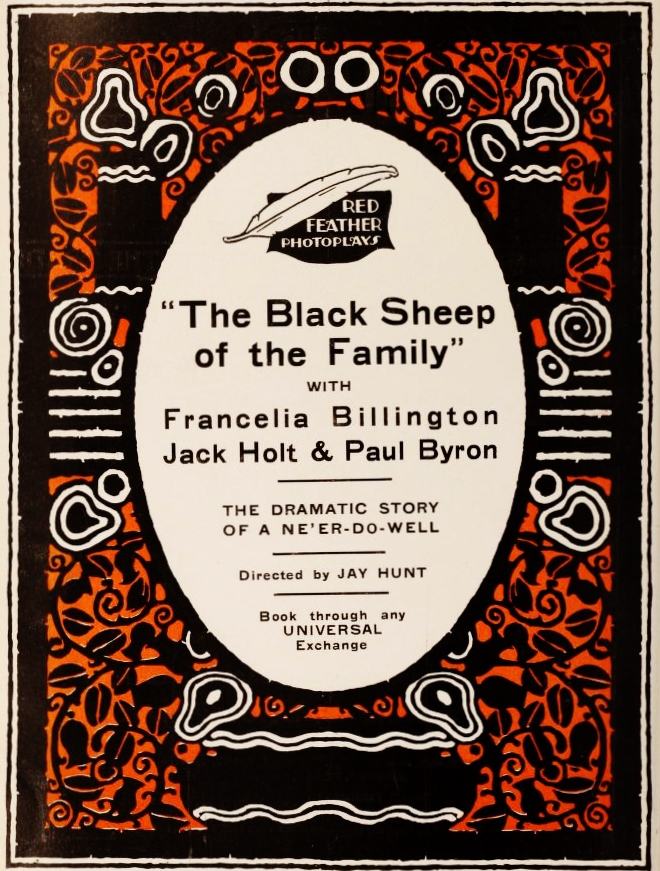
Stepping back into the flickering shadows of the silent era, one encounters a cinematic gem like The Black Sheep of the Family, a film that, despite its vintage, resonates with a profound emotional complexity and a narrative richness that many contemporary dramas struggle to achieve. Directed with a keen eye for human frailty and the cruel twists of fate, this 1917 production is far more than a historical curiosity; it is a masterclass in visual storytelling, presenting a moral quandary so agonizingly intricate that it ensnares the viewer in its web of impossible choices. It’s a stark reminder that the fundamental human struggles—love, loyalty, sacrifice, and the relentless pursuit of justice—are timeless, transcending the spoken word and finding eloquent expression in the subtle gestures and intense gazes of its performers.
At its core, The Black Sheep of the Family weaves a tapestry of tragic irony around its protagonist, Esther, portrayed with an astonishing depth of feeling by Francelia Billington. Her predicament is nothing short of Shakespearean: to save her brother, Bert—a wanted criminal whose shadow looms large over her life—she enters into a loveless marriage with the very detective tasked with his capture. This isn't a union born of affection, but a desperate, calculated gamble, predicated on the detective's promise to cease his relentless pursuit. Yet, her heart, a rebellious entity, belongs unequivocally to Kenneth, a man with whom she shares a genuine, burgeoning connection. This initial setup immediately plunges the audience into a maelstrom of ethical dilemmas and emotional turmoil, establishing a high-stakes psychological drama where every smile is a mask and every touch a betrayal of the heart.
The narrative intensifies dramatically when Bert, played with a compelling urgency by Paul Byron, finds himself on the run again, seeking refuge in the most dangerous of places: his sister's home, where she and Kenneth are present. This clandestine meeting, fraught with palpable tension, sets the stage for a calamitous turn of events. That very night, Kenneth's father is brutally murdered, and the tendrils of suspicion, fueled by circumstantial evidence, begin to coil around Kenneth. His subsequent arrest is a cruel twist of fate, made all the more agonizing by his inability to account for his whereabouts. To reveal his true activities that fateful night—to admit he was with Esther and her fugitive brother—would not only implicate Esther in aiding a criminal but, more devastatingly, expose her infidelity to her detective husband. Kenneth’s silence, therefore, becomes a profound act of sacrifice, a silent testament to his love and loyalty, even as it condemns him to a fate he does not deserve. This intricate web of secrets, loyalties, and self-sacrifice elevates the film beyond a mere melodrama, transforming it into a poignant exploration of moral fortitude and the crushing weight of impossible choices. The sheer audacity of the plot, penned by Frank Wiltermood and Jay Hunt, is a testament to the era's storytelling prowess, demanding a sophisticated understanding of human psychology from its audience.
In an age before synchronized sound, the power of a film rested almost entirely on the shoulders of its performers, whose ability to convey complex emotions through gesture, expression, and physicality was paramount. Francelia Billington, as Esther, delivers a performance that is nothing short of captivating. Her eyes, often downcast in sorrow or blazing with defiance, tell a story of a woman trapped between an unyielding duty to her kin and an undeniable yearning for true love. Billington masterfully navigates Esther's internal conflict, allowing the audience to feel the crushing weight of her choices without a single line of dialogue. Her portrayal is a delicate balance of vulnerability and quiet strength, making Esther a figure of immense tragic appeal.
Jack Holt, likely embodying the role of Kenneth, brings a stoic intensity to his character. Holt, a prominent leading man of the era, imbues Kenneth with a quiet dignity and an unwavering resolve. His scenes of silent suffering, particularly after his arrest, are profoundly moving, showcasing an actor capable of conveying deep emotional turmoil through subtle shifts in posture and the anguished flicker in his gaze. The chemistry between Billington and Holt, though often expressed through longing glances and fleeting touches, is palpable, underscoring the tragedy of their forbidden affection. Their performances elevate the central romance from a mere plot device to the aching heart of the film.
The supporting cast contributes significantly to the film's immersive atmosphere. Gilmore Hammond, presumably as the detective-husband, portrays a figure of authority whose rigid adherence to the law is ironically undermined by his unwitting entanglement in Esther's deception. His stern demeanor and occasional flashes of possessiveness create a formidable barrier to Esther's happiness. Florence Hale, Mina Cunard, C. Norman Hammond, Hector V. Sarno, and William Musgrave each contribute vital strokes to this intricate portrait of a community grappling with crime, secrecy, and the pervasive shadow of moral compromise. Their collective efforts demonstrate the collaborative artistry inherent in silent film production, where every actor, no matter how small their role, was crucial in conveying the narrative's emotional beats and thematic complexities. This ensemble work is particularly striking when juxtaposed with other films of the period, such as The Next in Command or The Man Who Could Not Lose, where often a single star carried the bulk of the dramatic weight. Here, a collective anguish and determination are beautifully rendered through a confluence of performances.
The success of The Black Sheep of the Family owes much to the astute direction and the remarkably well-structured screenplay by Frank Wiltermood and Jay Hunt. In an era where cinematic language was still evolving, the ability to communicate a complex plot and nuanced character motivations without audible dialogue required a profound understanding of visual grammar. The filmmakers employ a sophisticated array of techniques, from careful framing that emphasizes isolation or clandestine intimacy, to close-ups that magnify the actors' expressive faces, drawing the audience into their unspoken thoughts and feelings. The pacing is deliberate, allowing moments of tension to build organically, punctuated by sudden, dramatic revelations that propel the story forward with relentless momentum.
The screenwriters, Wiltermood and Hunt, deserve particular commendation for constructing a narrative that is both intricate and emotionally coherent. They resist simplistic moralizing, instead presenting a world where good intentions can lead to tragic outcomes, and where the lines between right and wrong are blurred by the demands of love and loyalty. The plot's central conceit—Esther's forced marriage and Kenneth's subsequent framing—is a masterstroke of dramatic engineering, creating a sense of inescapable doom that grips the viewer from the outset. This kind of nuanced storytelling, which delves into the moral gray areas of human experience, distinguishes The Black Sheep of the Family from more straightforward melodramas of its time, such as perhaps The Infant at Snakeville, which leaned more towards comedic situational drama, or even the more overtly heroic narratives like For $5,000 a Year. The film's strength lies in its unflinching portrayal of characters caught in a web of their own making, where every choice, no matter how well-intentioned, carries devastating consequences. The use of intertitles is judicious, providing essential plot information or character dialogue without overwhelming the visual flow, allowing the actors' performances to remain the primary vehicle for emotional expression.
Beyond its compelling plot, The Black Sheep of the Family delves into universal themes that resonate as powerfully today as they did over a century ago. The central conflict between personal desire and familial duty is explored with heartbreaking sincerity. Esther's sacrifice of her own happiness for her brother's safety is a profound act of love, yet it simultaneously creates a ripple effect of suffering, ensnaring Kenneth in its tragic wake. This exploration of sacrifice finds parallels in other silent era dramas like Her Atonement, where characters often bear immense burdens for the sake of others, or Rebecca the Jewess, which also explored the profound personal costs of loyalty and faith in a hostile world. The film also examines the nature of justice, questioning whether the letter of the law can truly account for the complexities of human motivation and circumstance. Kenneth's wrongful arrest highlights the inherent flaws in a system that relies solely on observable facts, overlooking the hidden truths that drive human actions. This thematic thread echoes in later, more overt social commentaries like Strike, though with a vastly different stylistic approach.
The concept of the 'black sheep' itself is central, not just to Bert, the criminal, but perhaps metaphorically to Esther and Kenneth, whose love exists outside the societal norms enforced by Esther's marriage. Their clandestine meetings, their shared secret, mark them as outsiders, forced to operate in the shadows. This tension between public persona and private anguish is a leitmotif throughout the film, giving it a psychological depth reminiscent of tales like Queen of Spades, which delves into the darker recesses of the human mind, or even In the Shadow, where hidden motives and obscured truths drive the narrative. The film's ability to tackle such weighty subjects with grace and poignancy, using only the visual language of cinema, is a testament to its enduring artistic merit and the profound capabilities of the silent film medium. It captures the essence of human tragedy and resilience, making it a compelling study for any cinephile.
While not as widely remembered as some of its contemporaries, The Black Sheep of the Family stands as a compelling example of the sophisticated storytelling and emotional power achievable in the early decades of cinema. Its intricate plot, driven by moral compromises and heartfelt sacrifices, holds up remarkably well, proving that a strong narrative foundation is truly timeless. The performances, particularly from Francelia Billington and Jack Holt, are a masterclass in silent acting, demonstrating how profoundly an actor can convey internal conflict and deep emotion without uttering a single word. This film serves as an invaluable artifact for understanding the evolution of cinematic narrative and performance, offering a glimpse into an era where visual artistry was paramount.
For those interested in the rich tapestry of silent film, The Black Sheep of the Family offers a deeply rewarding experience. It provides a fascinating counterpoint to more lighthearted fare like The Infant at Snakeville or social commentaries like Who's Who in Society, showcasing the breadth of genres and thematic depth explored during this formative period. Its exploration of themes like duty, sacrifice, and the hidden costs of loyalty connects it to a long tradition of dramatic storytelling, from classical literature to modern thrillers. Even when comparing it to other works of its time, such as The Face in the Moonlight, which might focus on mystery, or Cora, which could be a character study, The Black Sheep of the Family distinguishes itself through its relentless exploration of moral ambiguity and the tragic consequences of love caught in a web of deceit. It reminds us that the human heart, in all its complexity, has always been the most fertile ground for compelling drama, a truth beautifully rendered in this poignant silent classic. The film, therefore, is not merely a historical relic, but a vibrant piece of cinematic art that continues to speak to the human condition with remarkable clarity and emotional force, inviting contemporary audiences to appreciate the enduring power of its visual poetry and profound narrative.
IMDb 5
1920
Community
Log in to comment.