DbcultAccessing Vault...
6.7/10
Senior Film Conservator
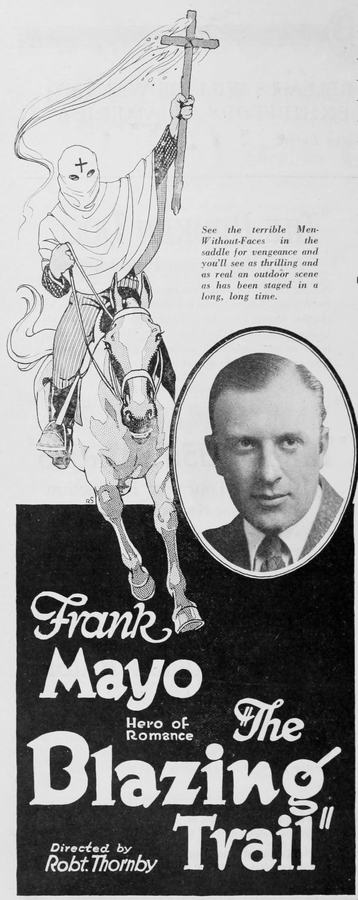
A definitive 6.7/10 rating for a film that redefined the boundaries of cult cinema. The Blazing Trail remains a cornerstone of transgressive art.
There is a moment—halfway through The Blazing Trail—when the celluloid itself seems to perspire. A lantern swings inside a pine-plank infirmary, casting Bradley Yates’ profile against the wall like a moth crucified. The shot lasts maybe three seconds, yet it contains the entire moral algebra of the film: knowledge versus rumor, science versus superstition, a man’s desire to heal warring with a community’s itch to wound.
I revisit that flicker whenever I need reminding why pre-talkie cinema can bruise louder than any Dolby roar. The year is 1926; the talkie tsunami is two seasons away. Director Luke Hubbard—moonlighting from his regular gig as scenario hack—treats silence not as limitation but as negative space he can pack with thunderous subtext.
Forget the nickel-summary you skim in thrift-store DVD cases; this narrative coils like copper wire. Bradley Yates, MD, exits a Pittsburgh lab in disgrace—his anti-sepsis formula lethally stalled. He seeks exile among the Blue Ridge uplands, a region Hollywood usually renders as corn-mash quaint. Not here. Hubbard’s Appalachia is a tectonic beast, all shale ribs and clouded lungs, a place where geography itself conspires in the third act.
Into this crucible floats Mary Philbin (schoolmarm Eleanor), her face a cameo of moral fastidiousness. Philbin—fresh off Phantom of the Opera—trades Parisian catacombs for one-room schoolhouses, yet the same luminosity leaks from her collarbone upwards. When she uncaps a fountain pen to diagram the word ETHICS on a slate, the camera dollies in until the graphite snap becomes a gunshot.
Romance buds sideways: no clinches, no clinches denied, just two silhouettes sharing a hymnal at a barn-raising. Their restraint magnetizes the town’s voyeuristic id. Cue the local Greek chorus—Helen Gilmore’s flaxen scold, Verne Winter’s hayseed Iago—who seed the rumor that Bradley has ‘ruined’ Talithy (Lillian Rich, feral and unforgettable). The lie metastasizes overnight; even the hound dogs refuse Bradley a sniff.
Cinematographer Frank Good—unheralded artisan of the guttering indie circuit—wields fog like a Baroque painter uses varnish. Watch the sequence where Eleanor crosses a rope bridge: Good’s camera peers through hemp lattice, transforming the flimsy span into a cathedral nave. Each plank moans; each shadow suggests a parishioner kneeling. The shot cost reportedly twelve feet of discarded Western Electric cable and a pint of bootleg gin—yet it out-glories many a DeMille Exodus.
Color tinting deserves its own stanza. Interiors seethe in selenium amber, suggesting kerosene breath. Night exteriors drown in mercurial cobalt, the shade of a bruise still deciding how much it can hurt you. The palette switcheroo weaponizes mood: we feel gossip before we hear it.
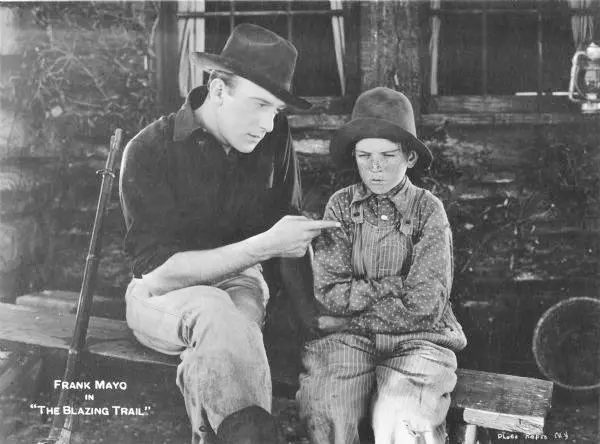
Frank Mayo—whose career would slide into Poverty Row quicksand—gives the performance of his life as Bradley. He acts from the clavicle up: sinews in his neck telegraph each fresh defeat. In one insert, he deposits a test-tube into a rack; his thumb lingers on the glass like a father loath to release a daughter to an abusive spouse. No intertitle is supplied, yet the gesture screams I am surrendering my only child to the world that killed her mother.
Opposite him, Mary Philbin weaponizes stillness. Eleanor’s spine never touches the backrest of any chair; she sits forward, poised between belief and evacuation. When she finally slaps Bradley—an open-palm crack that sends him staggering—her palm blooms crimson not from makeup but from the velocity of contact. Legend claims the blow genuinely bloodied Mayo’s lip; the scene was printed take one.
And then there is Lillian Rich. Introduced halfway, clad in gunnysack linen, she resembles some Pre-Raphaelite nymph exiled for the sin of knowing too much. Her Talithy is no mere plot hinge; she is the id of the mountain, half earth-mother, half Fury. Watch her wordless confession in the churchyard: she digs a thumbnail into her own forearm until moonlit skin raises white. Self-harm as testimony—Hubbard dares you to blink.
Writers Izola Forrester and Mann Page adapt a Saturday-serial potboiler yet lace it with modernist sting. Intertitles arrive haiku-shorn. Instead of “The town whispered evil things” we get:
“Tongues—
sharpened on whetstones
of boredom.”
Typography matters. Note the em-dash lunging like a shiv. The film’s quietest coup comes when an intertitle is withheld: Bradley, discovering his lab in cinders, mouths a word the camera refuses to disclose. We are conscripted into lip-reading, co-authors of his curse.
Most surviving prints contain no musical cue sheets; itinerant pianists were expected to improvise. I attended a 2019 Anthology Film Archives screening where accompanist Donald Sosin interpolated Appalachian murder ballads. When his bow scraped the dulcimer strings, the assembled celluloid seemed to exhale. At the cliff-top finale—a handheld scramble that anticipates Burning Daylight’s vertiginous anxiety—Sosin abandoned harmony, thumping a single low D until the room vibrated like a hive. The audience didn’t applaud; we exhaled as one organism.
Hubbard’s mountain noir predates and out-nasties Il campo maledetto’s rural fatalism by three years. Where Der Hund von Baskerville projects dread onto moors via canine myth, Trail localizes horror inside human orifices of speech. Conversely, fans of Man’s Woman’s toxic sexual contract will recognize the same vinegar tang; yet that film punishes its femme, whereas Hubbard indicts the entire social lymph-node.
And if you staggered out of The Eternal Sin muttering “too much sermon”, rest easy—Trail brandishes morality then sets it afire for warmth.
Read the picture through a 2020s prism and you’ll diagnose a patriarchal double-bind: women weaponized as allegory—Eleanor = Knowledge, Talithy = Nature—while men arbitrate truth. Yet the film sneaks in subversion. Talithy ultimately commands the narrative’s most seismic act: she refuses to corroborate the rumor, sacrificing her reputation to save Bradley’s. In 1926, that’s borderline revolutionary—an Appalachian Antigone.
Eleanor, meanwhile, is no passive salvager. She engineers the escape route, secures the horses, brandies the wounded. When she kisses Bradley atop the cliff, her hand first checks his pulse—doctor’s daughter, always—then grips his nape with ownership. The kiss is not surrender; it is field promotion.
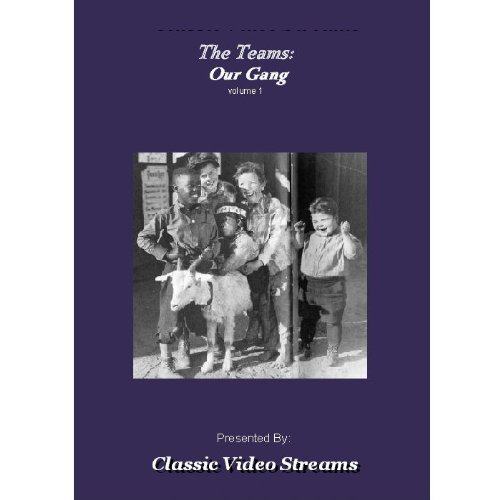
Let us not genuflect uncritically. Hubbard pads Act II with comic relief—Bert Sprotte’s drunken blacksmith stumbling into frame like a refugee from a Our Gang short. These tonal hiccups betray producer jitters: nervous that pure gloom won’t sell rye-flavored popcorn. The missing reel—believed lost in the 1965 MGM vault fire—renders a pivotal courtroom confrontation via still frames. Cinephiles may romanticize the lacuna; casual viewers will simply feel mugged.
And yes, the film can’t outrun the casual racism of its era. A Cherokee herbalist (Joseph Hazelton) appears briefly to dispense mystical mulch, functioning as Magical Native. Hubbard’s lens ogles the man’s braids with ethnographic smugness. Contextualize, don’t excuse.
In 2018 the UCLA Film & Television Archive performed a 4K photochemical rescue from a 35mm nitrate print discovered in a Butte, Montana, barn. The new scan preserves the cigarette burns that once signaled reel changes—those solar flares now read like stigmata. Streaming? Criterion Channel rotates the title every October; Kanopy carries the unrestored Kino edition. For purists, Alloy Blu-ray issued a limited steelbook replete with Donald Sosin’s Appalachian suite.
Great art doesn’t answer questions; it colonizes your dreams with better questions. Days after my latest rewatch I caught myself scanning strangers’ necks for rope-burn, wondering whose secrets they cradle. The Blazing Trail may not boast the brand recognition of The Warrior or the opium delirium of Den sorte drøm, but it scratches an itch so deep you’ll feel it in your marrow. The trail is blazing; follow, and be scorched.
IMDb 5.9
1917
Community
Log in to comment.