DbcultAccessing Vault...
5.9/10
Senior Film Conservator
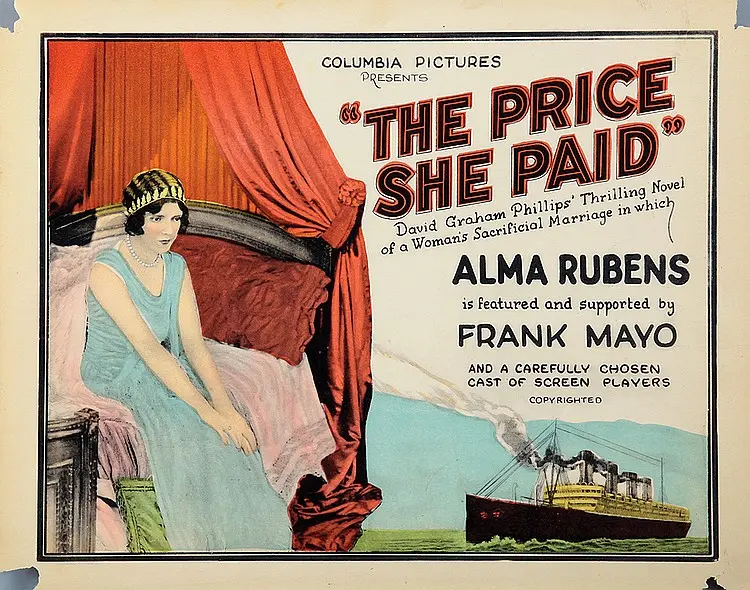
A definitive 5.9/10 rating for a film that redefined the boundaries of cult cinema. The Price She Paid remains a cornerstone of transgressive art.
Cinema in the mid-1920s was frequently a mirror for the tectonic shifts in social mobility and the precarious nature of the American aristocracy. In The Price She Paid (1924), we find a narrative that eschews the flapper-era frivolity for something far more subterranean and sinister. The film, directed with a keen eye for architectural claustrophobia, positions Mildred Gower as the ultimate martyr to the altar of maternal vanity. Unlike the more whimsical explorations of romance found in Distilled Love, this production leans heavily into the psychological toll of financial desperation.
Alma Rubens, an actress whose own life was often shadowed by the very melancholia she portrayed, delivers a performance of startling interiority. As Mildred, she doesn't merely act out the plot; she embodies the physical weight of a woman being slowly crushed by silk and pearls. When she stands before Lemuel Sidall, played with a chilling, possessive arrogance by William Welsh, one can almost feel the temperature of the room drop. The cinematography emphasizes the distance between them, even when they occupy the same frame, using shadows to delineate the chasm between her refined despair and his vulgar triumph.
The screenplay, adapted from David Graham Phillips' work, functions as a scathing indictment of the economic dependency of women. Mrs. Elton Gower, portrayed by Eugenie Besserer with a frantic, superficial elegance, is not a villain in the traditional sense, but rather a byproduct of a system that treats status as a survival mechanism. Her fear of bankruptcy isn't just about losing money; it's about the erasure of identity. In this regard, the film shares a thematic kinship with the European sensibilities of A Tüz, where the heat of passion is often extinguished by the cold reality of social standing.
The visual language of the film is surprisingly modern. The director utilizes deep focus to show Mildred in the foreground, trapped in her mother’s demands, while the background reveals the looming presence of the creditors or the predatory Sidall. It’s a visual representation of the lack of escape. While films like The Ne'er-Do-Well often focus on the male struggle for redemption, The Price She Paid is resolutely focused on the feminine experience of being a commodity. There is no easy redemption here; every choice comes with a ledger of loss.
Few actresses of the silent era could convey the concept of 'soul-sickness' as effectively as Alma Rubens. In Bella Donna, she explored the darker, more manipulative side of feminine power, but here, she is the victim of power’s absence. Her eyes, often filmed in tight close-ups that were revolutionary for the time, act as the primary narrative engine. They communicate the 'price' of the title more effectively than any intertitle could. When she eventually encounters characters like the one played by Frank Mayo, the contrast between what her life is and what it could have been becomes almost unbearable.
The supporting cast adds layers of texture to this social tapestry. Otto Hoffman and Wilfred Lucas provide the necessary grounding, representing the rigid structures of the era. However, it is the interaction between Rubens and Besserer that provides the film’s emotional core. The mother-daughter dynamic is portrayed as a parasitic loop, where love is inextricably tied to financial security. It’s a far cry from the more idealized family units seen in Trois familles, offering instead a cynical, albeit realistic, look at domestic survival.
From a production standpoint, the film is a masterclass in silent era art direction. The Gower estate is a character in itself—a sprawling, ornate tomb that reflects the emptiness of its inhabitants. The contrast between these lush interiors and the starker, colder environments Mildred inhabits after her marriage to Sidall serves as a visual metaphor for her diminishing autonomy. The lighting design often favors a chiaroscuro effect, particularly in scenes where Mildred contemplates her fate, casting half her face in shadow to represent her fractured self.
Comparisons to Pyotr Velikiy might seem far-fetched due to the historical scale, but both films deal with the crushing weight of duty and the sacrifice of personal happiness for the sake of a larger 'empire'—be it a nation or a family name. In The Price She Paid, the empire is the Gower reputation, and Mildred is the tribute paid to keep the borders secure. The pacing of the film is deliberate, allowing the audience to sit with the discomfort of Mildred’s situation, a technique also employed in the brooding atmosphere of Body and Soul.
Why does this film resonate nearly a century later? Perhaps because the 'price' remains a contemporary concern, albeit in different guises. The film doesn't offer the easy catharsis of a happy ending; instead, it leaves the viewer with a sense of lingering disquiet. It challenges the notion that virtue is its own reward, suggesting instead that in a world governed by capital, virtue is often just another item for sale. This cynical edge makes it feel more aligned with modern noir than the melodramas of its own time, such as Humility or The Man Worthwhile.
In the broader context of 1924 cinema, which saw the release of everything from Forbidden Paths to Alias Ladyfingers, The Price She Paid stands out for its refusal to sugarcoat the pill of social reality. It is a film about the loss of agency, the erosion of the self, and the terrifying realization that some debts can never be fully discharged. The performance by Rubens remains a high-water mark for the era, a poignant reminder of an actress who understood the nuances of suffering better than almost anyone else in Hollywood.
The direction manages to balance the grandiosity of the sets with the intimacy of the tragedy. Whether it’s the way a veil falls over Mildred’s face or the specific angle at which Sidall looks at his bank book, every frame is meticulously crafted to reinforce the theme of entrapment. It lacks the overt theatricality of Bride of Vengeance, opting instead for a grounded, almost claustrophobic realism that makes the emotional stakes feel visceral and immediate.
As the final reels flicker to a close, the audience is left not with a sense of triumph, but with a profound contemplation of cost. The film asks us to define what we are willing to sell to maintain a facade. Is the preservation of a mother’s comfort worth the annihilation of a daughter’s future? The film answers with a resounding, tragic 'no,' yet acknowledges the lack of alternatives in the rigid social strata of the 1920s. It is as much a ghost story as it is a drama—the ghost being the life Mildred might have lived had she not been forced to pay a price she never owed.
For those interested in the evolution of the social drama, this film is essential viewing. It bridges the gap between the moralistic fables of the early 1910s, like Man and His Soul or Inspiration, and the more cynical, sophisticated narratives that would emerge in the 1930s. It is a haunting, beautifully realized piece of cinema that deserves a place in the pantheon of silent greats, right alongside the experimental vibrance of Fresh Paint. Alma Rubens’ Mildred Gower remains a definitive portrait of the high cost of living in a world that knows the price of everything and the value of nothing.
IMDb —
1917
Community
Log in to comment.