DbcultAccessing Vault...
Cult Review
Senior Film Conservator
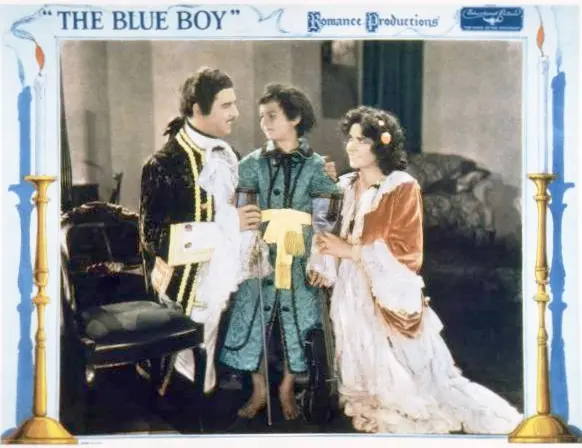
Is The Blue Boy worth watching today? Short answer: yes, but with significant caveats. This silent-era drama, a relic from 1923, offers a fascinating glimpse into early cinematic storytelling and a surprisingly potent emotional core, provided you approach it with the right expectations.
It's a film for those who appreciate historical cinema, the nuances of silent acting, and narratives that prioritize sentiment over intricate plotting. Conversely, it is decidedly not for viewers accustomed to modern pacing, complex character development, or high-octane action. If your patience for intertitles runs thin, or if you demand sophisticated psychological depth from your protagonists, this might prove a challenging watch.
This film works because of its straightforward, universally resonant themes of loss, familial reunion, and social identity, delivered with an earnestness that transcends its technical limitations. Its central child performance is remarkably effective for the period.
This film fails because its melodramatic tendencies occasionally border on the simplistic, and its resolution, while satisfying, feels somewhat abrupt given the years of implied suffering. Supporting characters often serve more as plot devices than fully fleshed individuals.
You should watch it if you are a film historian, a silent cinema enthusiast, or someone curious about how foundational narratives were constructed before the advent of sound. It's also an intriguing study in the visual communication of emotion.
At its heart, The Blue Boy is a story deeply rooted in the anxieties of its time: class distinction, the sanctity of family, and the brutal randomness of fate. The initial sequence, depicting Sir Harry's playful negligence leading to his infant son's abduction, is a stark and effective opening. It immediately establishes a sense of tragic irony – a momentary lapse in judgment leading to years of profound grief. This setup is classic melodrama, yet it retains a primal power.
The subsequent eight-year jump is handled with the economy typical of silent film, relying on intertitles and the changed demeanor of the Lonsdales to convey the passage of time and the weight of their sorrow. The reintroduction of their son, now a reluctant participant in a gypsy band, is where the film truly begins to explore its central conflict. The boy, played by Philippe De Lacy, is portrayed as inherently good, resisting the life of crime forced upon him. This moral clarity, while perhaps a touch idealistic, serves to heighten the audience's empathy and anticipation for his eventual return.
The plot, penned by Arthur Maude, leans heavily on coincidence for its resolution. The gypsy band just happens to camp near the Lonsdale castle. The boy just happens to be the one caught. The leader's daughter just happens to know the full history. While modern audiences might scoff at such contrivances, in the context of early cinema, these were acceptable narrative shortcuts designed to move the story efficiently towards its emotional climax. The film's strength here lies not in its originality of plot, but in its unwavering commitment to the emotional arc. It's a testament to the power of archetypal storytelling.
The theme of identity is paramount. The boy, having lived as a gypsy, must shed that identity to reclaim his aristocratic birthright. The final scene, where he descends the stairs in his blue court costume, is not merely a reunion; it's a symbolic rebirth, a visual declaration of his reclaimed status. This moment, while perhaps overly sentimental for some, is undeniably potent, tapping into universal desires for belonging and justice. It’s a simple story, yes, but its emotional resonance is undeniable.
Silent film acting is a unique beast, often characterized by exaggerated expressions and gestures necessary to convey emotion without dialogue. The Blue Boy is no exception, yet it offers some surprisingly nuanced performances alongside the more theatrical turns.
C. Montague Shaw as Sir Harry Lonsdale delivers a performance that, while occasionally broad, effectively conveys the man's initial joy, profound grief, and subsequent sternness. His body language in the scenes of mourning is particularly strong, communicating a palpable sense of loss that transcends the lack of spoken words. You feel the weight of his regret and his unwavering hope, even when he maintains a stoic facade.
The real standout, however, is young Philippe De Lacy as the titular 'Blue Boy.' De Lacy's performance is remarkably naturalistic for the era. His discomfort with the gypsy life, his inherent goodness, and his fear are communicated through subtle facial expressions and restrained gestures that feel surprisingly modern. There's a particular scene where he is forced to participate in the robbery, and his internal conflict is beautifully etched on his face, making him an incredibly sympathetic figure. This isn't just a child actor; it's a genuine performance that anchors the film's emotional core. He manages to convey a world of unspoken hardship with just a glance, something many adult actors of the period struggled to achieve.
The supporting cast, including Jane Thomas as Lady Lonsdale and the various gypsy actors, mostly fulfill their archetypal roles. Lady Lonsdale's grief is appropriately intense, though perhaps less varied than Sir Harry's. The gypsy characters are, unfortunately, often portrayed as caricatures, reinforcing stereotypes common in films of this period. This is a noticeable flaw, typical of the era, but one that pulls the film back from achieving truly universal timelessness. They exist primarily to facilitate the plot, rather than to add depth to the social commentary.
Directed by Arthur Maude, The Blue Boy showcases the visual storytelling techniques prevalent in the early 1920s. The direction is competent, if not groundbreaking. Maude understands the power of contrast, particularly in juxtaposing the opulent, ordered world of the Lonsdale castle with the rugged, wild environment of the gypsy camp. These visual cues are essential in establishing the two distinct worlds the boy inhabits.
The cinematography, while not attributed to a specific individual in the provided context, effectively uses composition to convey narrative beats. Close-ups are employed judiciously to highlight emotional moments, such as Lady Lonsdale's tear-streaked face or the boy's expressions of distress. Wider shots establish the grandeur of the estate or the humble setting of the gypsy encampment. There’s a particular shot of the Lonsdale home, stately and imposing, that immediately conveys the family's social standing without a single word. This visual shorthand is quite effective.
Lighting is used to create atmosphere, though it's often functional rather than artistic. Interiors are generally well-lit, ensuring clarity, while some exterior scenes benefit from natural light, adding a sense of realism. The film's visual language is straightforward, focusing on clarity and direct emotional impact, rather than experimental artistry. It's a film that prioritizes telling its story effectively over stylistic flourishes. This directness, however, can be seen as a strength, allowing the emotional core to shine through without distraction.
The use of intertitles is standard for the period, providing necessary dialogue and exposition. They are integrated smoothly, ensuring that the narrative flow isn't unduly interrupted. While modern viewers might find them intrusive, they are an integral part of the silent film experience and are handled here with appropriate discretion. They serve their purpose without overstaying their welcome.
The pacing of The Blue Boy is characteristic of its era. It begins with a swift, impactful event—the kidnapping—which immediately hooks the audience. The subsequent period of grief is conveyed with a more deliberate, almost mournful rhythm, allowing the audience to feel the passage of time and the weight of the Lonsdales' sorrow. This slower pace might test the patience of viewers accustomed to the rapid-fire editing of contemporary cinema, but it’s crucial for building empathy.
When the narrative shifts to the boy's life with the gypsies, the pace picks up slightly, introducing elements of tension and moral conflict. The attempted robbery sequence, while not an action spectacle, generates a palpable sense of urgency. The climax, with the revelation of the boy's identity, is handled with a dramatic flourish that feels earned after the long buildup. The final scenes, leading to the boy's formal reintroduction, are played for emotional catharsis, culminating in a satisfying, if somewhat swift, resolution.
The tone is overtly melodramatic, swinging between profound tragedy and heartwarming sentimentality. This isn't a film concerned with ambiguity or moral gray areas; it's a clear-cut tale of good versus evil, of rightful inheritance versus unjust displacement. While some might find this lack of complexity dated, it allows the film to deliver a powerful emotional punch. The film doesn't shy away from tugging at the heartstrings, and for the most part, it succeeds. The earnestness of its emotional appeals is surprisingly effective.
One surprising observation is how the film, despite its melodramatic frame, subtly critiques the societal structures that allow such a tragedy to unfold. Sir Harry's initial carelessness, while quickly forgotten in the larger narrative of loss, is a critical point. The film inadvertently highlights the vulnerability of even the most privileged when faced with external forces, and the stark divide between the 'civilized' and 'outsider' worlds. It’s a simple story, but it touches upon deeper societal anxieties of the time.
Yes, The Blue Boy is worth watching for specific audiences. It offers a genuine window into early 20th-century filmmaking. It's a poignant drama that explores timeless themes of family, identity, and social class. Viewers interested in film history will find much to appreciate. It's also suitable for those who enjoy classic, emotionally driven narratives. However, if you prefer fast-paced, action-packed, or highly nuanced modern cinema, this film might not be for you. It requires a willingness to engage with the conventions of a bygone era.
The Blue Boy is more than just a historical artifact; it's a surprisingly effective silent drama that manages to convey profound emotion through its earnest storytelling and a remarkable central performance. It works. But it’s flawed. Its melodramatic leanings and the stereotypical portrayal of its 'outsider' characters firmly root it in its time, preventing it from achieving truly universal timelessness.
However, for those willing to engage with the conventions of early cinema, there's a genuine, poignant story to be found. Philippe De Lacy's performance alone is worth the price of admission, offering a rare glimpse of naturalism amidst the broader gestures of the silent screen. It's a testament to the enduring power of simple, heartfelt narratives, even when delivered without a single spoken word. While it won't appeal to everyone, its historical value and emotional sincerity make it a worthwhile exploration for the curious and the cinephile alike. It’s a film that reminds us where cinematic storytelling began, and how far it has come, while still holding a mirror to unchanging human emotions.
IMDb 6.1
1924
Community
Log in to comment.