DbcultAccessing Vault...
Cult Review
Senior Film Conservator
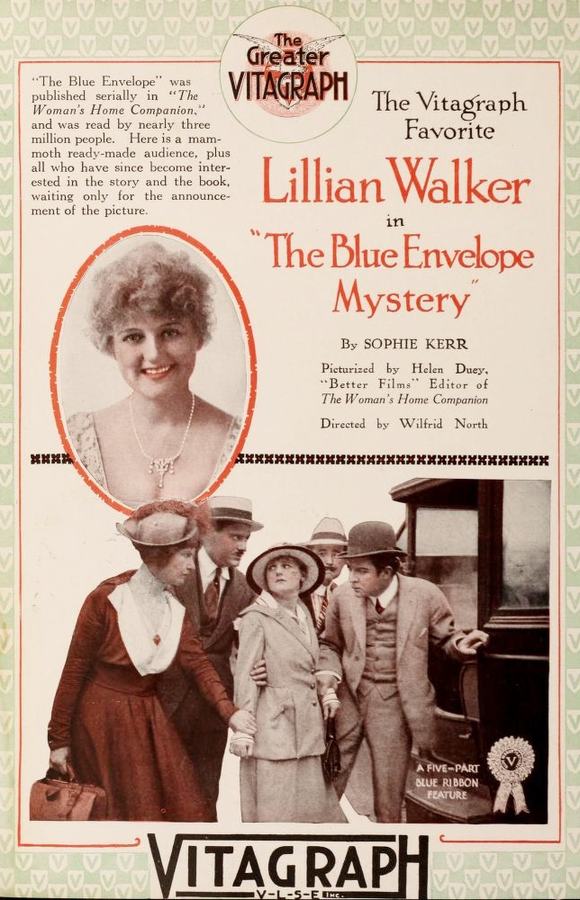
In an era brimming with cinematic innovation, where narratives unfolded through the exquisite ballet of gesture and expression, 1916 gifted us The Blue Envelope Mystery. This silent film gem, a compelling blend of social commentary, burgeoning romance, and high-stakes espionage, offers far more than a simple period piece. It's a fascinating look into the anxieties and aspirations of early 20th-century America, filtered through the lens of a remarkably resilient heroine. For those accustomed to the bombast of modern thrillers, this picture provides a captivating glimpse into how suspense was meticulously crafted in a world devoid of synchronous sound, relying instead on visual storytelling, stellar performances, and the sheer power of human drama.
At its heart, The Blue Envelope Mystery introduces us to Leslie Brennan, portrayed with a captivating blend of initial naiveté and burgeoning strength by Lillian Walker. Leslie is, by all accounts, an heiress, living a life of presumed comfort and social standing. However, her world is abruptly upended by a devastating revelation: her family fortune has evaporated, leaving her virtually penniless. This seismic shift isn't merely a plot device; it's the catalyst for her profound transformation. Before this financial upheaval, Leslie had been utterly captivated by a certain fortune hunter, a man whose polished society manners masked a cold, calculating heart. His charm was superficial, his affections contingent entirely on her supposed wealth. The moment she discovers his true mercenary nature, the scales fall from her eyes, and her disillusionment is complete. This isn't just a jilted romance; it's a brutal education in the harsh realities of human greed and the superficiality of a class system built on material possessions.
Her decision to leave behind the vestiges of her former life and seek an honest livelihood in the bustling crucible of New York City is perhaps the film's most powerful initial statement. It speaks to an underlying feminist current, a desire for self-reliance that transcends the societal expectations placed upon women of her station. This journey of self-discovery, from pampered heiress to self-sufficient working woman, provides a rich emotional core that resonates even today. One might draw parallels to other narratives of social ascent or descent, though few capture the personal agency of the protagonist with such clarity. For instance, while a film like A Yoke of Gold (also from 1916) might explore the broader societal pressures, Leslie's arc is singularly focused on her individual strength in the face of adversity.
New York City, with its towering ambitions and teeming masses, becomes both her sanctuary and her proving ground. Leslie doesn't wallow in self-pity; instead, she actively seeks to equip herself with practical skills, immersing herself in the study of typing. This seemingly mundane pursuit is a testament to her pragmatism and adaptability. During this period, she forges genuine friendships among the city's working class, individuals whose authenticity stands in stark contrast to the hollow pretenses of her former social circle. These relationships, though perhaps not deeply explored in a silent film format, subtly underscore her evolving values and her growing appreciation for genuine human connection over superficial status.
Her perseverance pays off when she secures a position as a secretary to a young, brusque, and intensely preoccupied chemist. This character, brilliantly conceived as a counterpoint to her previous romantic entanglement, is consumed by his work, engaged in a groundbreaking discovery of immense value to the government. This is where the film's narrative truly shifts gears, transforming from a social drama into a taut spy thriller. The chemist, though initially oblivious to the world outside his laboratory, represents a different kind of integrity—one driven by intellectual pursuit and national duty rather than social climbing.
The discovery, shrouded in the titular 'blue envelope,' is not merely a scientific breakthrough but a matter of national security. It's a MacGuffin that propels Leslie into a world of danger and intrigue, far removed from her typing lessons. Soon, she becomes acutely aware of the sinister machinations of a foreign spy, whose shadowy presence threatens to compromise the invaluable research. This element of international espionage was a burgeoning genre in early cinema, often tapping into contemporary geopolitical anxieties. Films like the Protéa series, starring Josette Andriot, had already established a precedent for female agents in thrilling escapades, and The Blue Envelope Mystery deftly taps into this fascination, placing an unsuspecting civilian at the heart of the action.
Leslie's transition from an observer to an active participant in safeguarding the secret is nothing short of heroic. Through a series of compelling encounters, she demonstrates remarkable courage, quick thinking, and an unwavering commitment to her employer and, by extension, her country. These scenes, undoubtedly crafted with dynamic visual flair typical of the era, would have relied heavily on rapid cuts, dramatic close-ups, and exaggerated physical performances to convey urgency and danger without dialogue. The film's ability to maintain suspense through purely visual means speaks volumes about the ingenuity of its creators. The tension, the close calls, and the clever deceptions would have kept audiences on the edge of their seats, much like the more overtly action-packed In the Nick of Time, albeit with a more refined, character-driven focus.
The success of such a narrative hinges critically on its cast, and The Blue Envelope Mystery boasts a roster of talented performers. Lillian Walker, as Leslie Brennan, carries the emotional weight of the film with grace and conviction. Her transformation from an ornamental figure to a resourceful protagonist is conveyed through nuanced expressions and purposeful movements, a testament to the unique demands of silent acting. She embodies the resilience that makes Leslie such a relatable and admirable character, her journey from vulnerability to strength a compelling visual narrative.
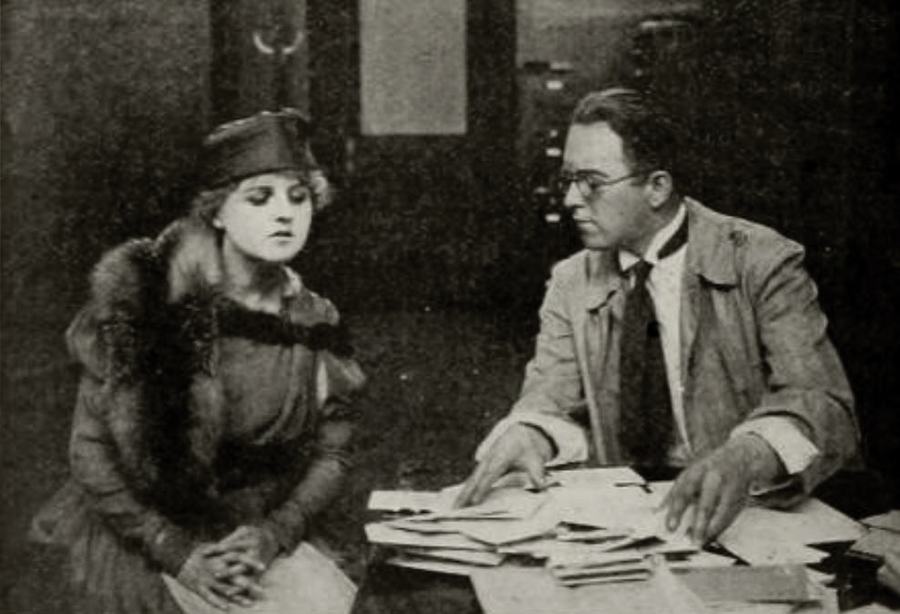
Charles Kent, likely portraying the brusque chemist, would have had the challenging task of conveying intellectual intensity and eventual romantic warmth without words. His performance would have relied on subtle shifts in posture, gaze, and gesture to reveal the character's internal life and growing affection for Leslie. Isabel West, Florence Radinoff, and John Drew Bennett, along with William Shea, Bob Hay, and Josephine Earle, contribute to the tapestry of supporting characters, each playing a vital role in populating Leslie's new world. Notably, the film also features Harry Northrup and a young Adolphe Menjou, who, even in what might have been a smaller role, would have brought his distinctive screen presence. Menjou, later to become a celebrated dapper leading man, would have already possessed the magnetic quality that hinted at his future stardom, adding a layer of historical intrigue for modern viewers.
Writers Helen Duey and Sophie Kerr crafted a narrative that is surprisingly intricate for its time, weaving together elements of social critique, romantic development, and thrilling espionage. Their ability to construct a plot that could be effectively communicated through visual cues and intertitles speaks to their mastery of the silent film medium. The direction, though not explicitly attributed in the provided synopsis, would have been pivotal in translating this complex script onto the screen. It would have required a keen understanding of cinematic rhythm, shot composition, and the psychological impact of framing and movement.
Silent films often excelled in their visual ingenuity, using elaborate sets, striking costumes, and expressive lighting to create atmosphere and convey meaning. One can imagine the shadowy figures of the foreign spy, the bustling energy of New York streets, and the intense focus of the chemist's laboratory all brought to life with a visual poetry that compensated for the absence of dialogue. The 'blue envelope' itself, as a recurring visual motif, would have served as a powerful symbol of the secret at the heart of the story, its color perhaps chosen for its association with trust, loyalty, or even a certain cold detachment.
Beyond the thrilling chase and the romantic undertones, The Blue Envelope Mystery explores several enduring themes. The most prominent is the idea of true worth. Leslie's initial belief that wealth defined her, and her subsequent disillusionment with the fortune hunter, paves the way for her to discover value in self-reliance, hard work, and genuine connection. Her journey is a powerful affirmation that character and integrity far outweigh superficial riches.
The blossoming romance between Leslie and the chemist is another central theme. It's a love story built not on societal expectations or financial gain, but on shared purpose, mutual respect, and a nascent appreciation for each other's intrinsic qualities. Leslie comes to recognize that her employer, initially perceived as brusque, possesses a profound dedication and an authentic character that her previous suitor lacked entirely. This realization that he is 'one who is really worthy of her' forms the emotional climax of her personal journey, intertwining her professional heroism with her romantic fulfillment. This narrative arc, where love develops out of professional collaboration and shared danger, offers a refreshing contrast to the more traditional, often passive, romantic plots of the era.
Furthermore, the film subtly touches upon themes of national loyalty and duty. The chemist's discovery is 'of value to the government,' elevating the stakes beyond personal gain to a matter of collective good. Leslie's actions, therefore, aren't just about saving her employer; they are about protecting a national asset, aligning her personal heroism with a broader sense of patriotism. This echoes the strong sense of duty found in films like A Message to Garcia, which often celebrated individual heroism in service of a greater cause.
The Blue Envelope Mystery, while a product of its time, retains a remarkable freshness due to its engaging plot and its compelling heroine. It’s a testament to the enduring power of good storytelling, regardless of technological limitations. For silent film enthusiasts, it offers a rich tapestry of period detail, acting prowess, and innovative direction. For casual viewers, it presents an accessible entry point into the world of early cinema, demonstrating that silent films were anything but simplistic or static.
The film's exploration of a woman's journey to independence, her capacity for heroism, and the discovery of authentic love in unexpected places, renders it timeless. It reminds us that courage, integrity, and self-worth are not dictated by one's bank account or social standing, but by one's actions and character. In an era when cinema was still finding its voice, The Blue Envelope Mystery spoke volumes, delivering a narrative rich in suspense, romance, and profound human insight.
Ultimately, The Blue Envelope Mystery is more than just a historical curiosity; it's a vibrant, compelling piece of cinematic art that deserves wider recognition. Its seamless integration of social drama, thrilling espionage, and heartfelt romance, all conveyed through the beautiful artistry of silent film, makes it a truly rewarding watch. It's a reminder that compelling narratives and deeply resonant themes have been the bedrock of cinema since its earliest days. Seek it out, and allow yourself to be transported to a time when a single blue envelope could hold the fate of a nation, and the destiny of a remarkable woman, in its delicate folds.
IMDb —
1923
Community
Log in to comment.