DbcultAccessing Vault...
Cult Review
Senior Film Conservator
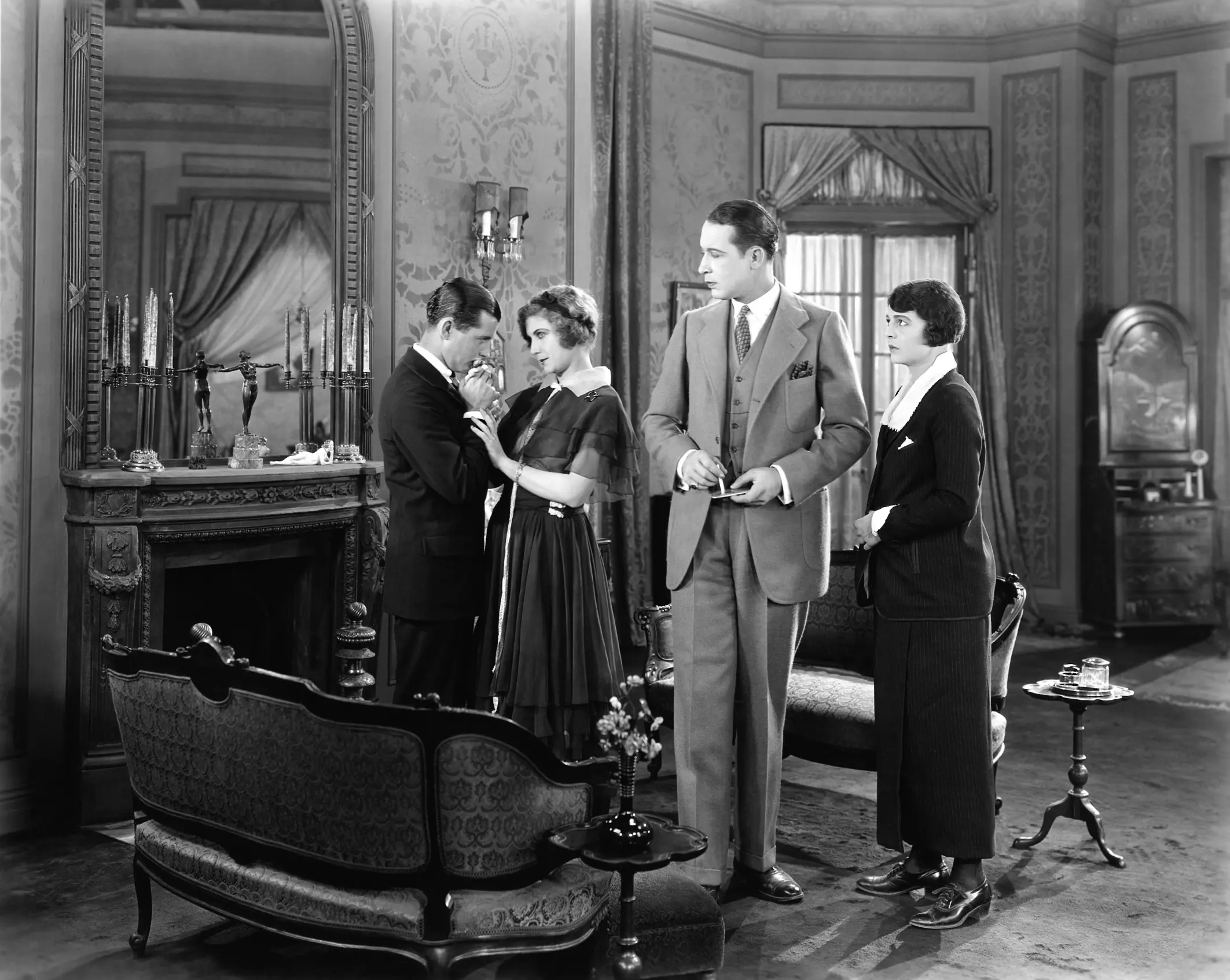
Cinema in 1924 was a medium grappling with its own maturity, moving beyond the simplistic moralities of the Victorian era into a more nuanced, often cynical exploration of human fallibility. The Dark Swan, directed with a keen eye for social stratification, stands as a quintessential artifact of this transition. It is a film that doesn't merely present a love triangle; it deconstructs the very architecture of desire and the often-painful discrepancy between appearance and essence.
At the epicenter of this narrative are the Quinn sisters, portrayed with remarkable contrast by Marie Prevost and Helene Chadwick. Prevost, as Eve, is a revelation of the 'vamp' archetype—a role she inhabited with a terrifyingly effortless grace. Her Eve is not a cartoonish villain but a woman who understands the transactional nature of her beauty. She navigates the social landscape with the precision of a master tactician, seeing men not as partners but as trophies or ladders. This predatory charisma is what draws Lewis Dike (Monte Blue) into her orbit, a man blinded by the sheer luminosity of her surface-level charm.
Conversely, Helene Chadwick’s Cornelia represents the 'Dark Swan' of the title—the overlooked, the soulful, and the authentically profound. Chadwick delivers a performance of quiet desperation. In an era where silent film acting often leaned toward the histrionic, her restraint is haunting. She captures the agony of the bystander, the one who perceives the truth but lacks the weapons of artifice to combat the lies. This dynamic reminds one of the subtle character studies found in contemporary works like Heart o' the Hills, though transplanted into an urban, sophisticated milieu.
Monte Blue’s portrayal of Lewis Dike is a fascinating study in masculine vulnerability and intellectual myopia. Lewis is presented as a man of substance, yet he is easily undone by the aesthetic allure of Eve. His marriage to her is a testament to the triumph of the image over the soul. The screenplay, penned by Frederick J. Jackson and Ernest Pascal, does not let Lewis off the hook easily. His realization of Eve’s infidelity with Wilfred Meadows (John Patrick) is not just a moment of personal betrayal; it is an existential crisis. He must confront the fact that he chose the glitter over the gold.
The pacing of this realization is handled with a slow-burn intensity. Unlike the more frantic energy of films such as Put and Take or the slapstick lightness of He Got It, The Dark Swan allows the weight of regret to settle on the viewer. When Lewis attempts to reason with Eve, the futility of his logic against her narcissism is palpable. It highlights a common theme in 1920s drama: the inability of traditional values to survive the onslaught of modern, self-centered hedonism.
Technically, the film utilizes the chiaroscuro lighting of the mid-20s to great effect. The interiors of the Quinn household are often shrouded in shadows that mirror the moral ambiguity of Eve’s actions. The cinematography captures the textures of the era—the silk of the gowns, the cold stone of the dockyards—creating a sensory experience that compensates for the lack of spoken dialogue. The visual storytelling here is far more sophisticated than the exoticized landscapes of The Jungle Goddess or the theatrical staginess of The Beauty Shop.
"The Dark Swan is a mirror held up to the vanity of the Jazz Age, reflecting the hollow core of the flapper myth through the lens of domestic tragedy."
The dock scene, where Lewis finally meets Cornelia as she prepares to flee to Europe, is perhaps one of the most emotionally resonant sequences in silent cinema. The mist, the looming hull of the ship, and the stark honesty of their exchange provide a catharsis that feels earned. It lacks the forced sentimentality found in Love's Old Sweet Song, opting instead for a bittersweet recognition of lost time and new beginnings.
The ensemble cast provides a rich tapestry of social archetypes. Lilyan Tashman and Marie Prevost together create a formidable presence of socialite cynicism. The inclusion of actors like Arthur Rankin and John Patrick adds layers to the social world the Quinns inhabit—a world where reputation is a currency and scandal is a lurking shadow. This isn't just a story about three people; it's a story about a society that facilitates Eve's behavior while punishing Cornelia’s sincerity.
When comparing this to other contemporary releases, one can see the evolution of the genre. While Der Yoghi explored the mystical and The Busybody leaned into comedic social observation, The Dark Swan dives into the psychological. It shares a certain grim realism with The Last Hour, though it swaps physical peril for emotional devastation. Even compared to the historical grandeur of When Rome Ruled, the intimate stakes of The Dark Swan feel more immediate and relatable to a modern audience.
The writing deserves special mention. Adapting this story required a delicate balance to ensure Eve didn't become a caricature. Jackson and Pascal succeeded by giving Eve a sense of agency that was quite radical for 1924. She isn't a victim of circumstance; she is the architect of her own chaos. This level of character complexity is often missing in lighter fare like Sunshine and Ice or the whimsical Scratch My Back. The dialogue (conveyed through intertitles) is sharp, avoiding the flowery prose that often bogged down silent melodramas.
The thematic resonance of a man realizing he married the wrong sister is a trope as old as time, yet here it feels fresh because of the psychological grounding. It echoes the moral weight found in Gambler's Gold or the domestic tensions of Daddies, but with a more pronounced sense of tragedy. The film even touches upon the cultural shifts seen in international cinema of the time, such as the Scandinavian influences in Lasse Månsson fra Skaane, particularly in its somber, reflective ending.
Ultimately, The Dark Swan is a testament to the power of silent storytelling. It reminds us that before the advent of synchronized sound, cinema had already mastered the art of the psychological profile. Marie Prevost’s performance remains a high-water mark for the 'vamp' role, providing a blueprint for the femmes fatales of the noir era that would follow decades later. Helene Chadwick, as the titular swan, provides the emotional anchor that prevents the film from drifting into mere tabloid sensationalism.
For the modern viewer, the film is more than just a historical curiosity. It is a vibrant, breathing piece of art that speaks to the perennial human struggle between the superficial and the substantial. In the pantheon of 1924 cinema, it stands tall, a dark, elegant bird amidst a flock of lesser works. It is a mandatory viewing for anyone seeking to understand the roots of the modern romantic drama and the enduring power of a well-told story of the heart's redirection.
Reviewer: Senior Film Critic | Date: October 2023 | Genre: Silent Drama / Romance
IMDb 7.4
1926
Community
Log in to comment.